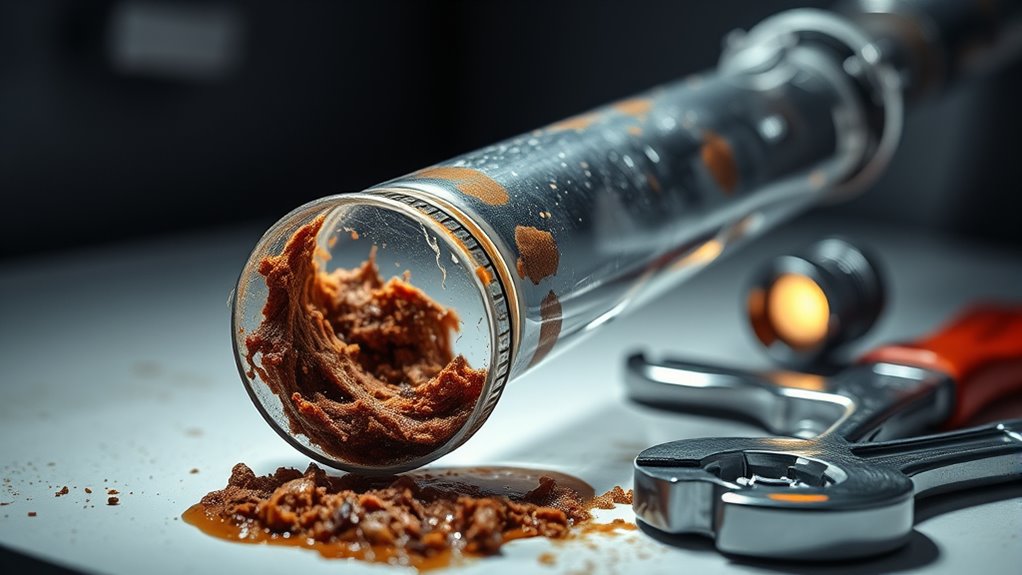

To prevent drain line blockages, you should regularly use drain screens, avoid pouring grease down the drain, and schedule professional cleanings like hydro-jetting. Common causes include buildup of debris, hair, soap scum, and mineral deposits, along with tree roots invading pipes over time. Neglecting maintenance can lead to costly repairs and damage. Keep these tips in mind, and you’ll discover more ways to maintain a clear, efficient drain system.
Key Takeaways
- Common causes include debris buildup, grease, hair, soap scum, and tree root intrusion.
- Hard water deposits, sediment, and poor installation contribute to pipe blockages.
- Preventative measures involve using drain screens, avoiding grease disposal, and regular professional cleanings.
- Neglecting maintenance leads to severe blockages, pipe damage, and costly repairs over time.
- Proper drain care maintains efficiency, prevents issues, and extends the lifespan of plumbing systems.
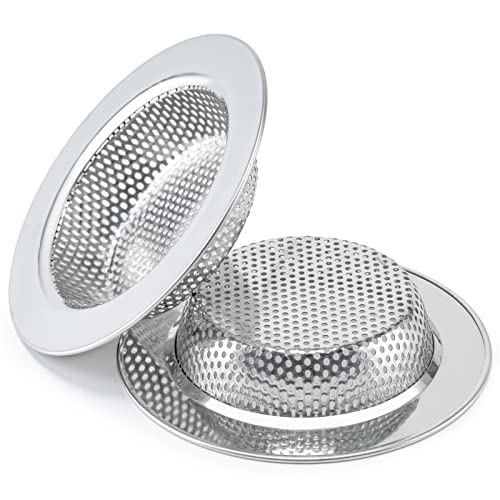
2 Pcs Sink Strainer Double-Layer Safe Design for Kitchen Sink Drain Basket
- Material: Stainless steel, rustproof and durable
- Design: Double-layer safety design prevents cuts
- Ease of Use: Tool-free, easy to install and clean
As an affiliate, we earn on qualifying purchases.
As an affiliate, we earn on qualifying purchases.
Common Causes and Prevention of Drain Line Blockages

Drain line blockages are common plumbing issues that can disrupt your home’s everyday activities. When your drains slow down or stop flowing altogether, it’s often a sign that something is blocking the line. To prevent these issues, regular plumbing maintenance is essential. Proper upkeep helps identify potential problems early, reducing the chances of severe blockages that can cause costly repairs. Understanding the common causes of drain line blockages can help you take proactive steps to keep your plumbing system in good shape.
Regular maintenance helps prevent drain blockages and costly repairs by catching issues early.
The most frequent causes of drain line blockages include the buildup of debris, grease, hair, and soap scum. Over time, these materials accumulate inside pipes, narrowing the passage and eventually leading to a clog. For example, in the kitchen sink, grease and food particles often stick to the pipe walls, especially if you rinse dishes with fats and oils. These substances harden as they cool, creating a stubborn blockage. In bathrooms, hair and soap scum are typical culprits. Hair easily binds with soap residue, forming a dense mass that obstructs water flow.
Another common cause is foreign objects accidentally falling into drains. Small items like jewelry, cotton swabs, or dental floss can get lodged in pipes, especially if you’re not careful. These objects often don’t dissolve or break down, and they can cause partial or complete blockages. Additionally, tree roots pose a significant threat to underground drain lines. Roots are naturally drawn to moisture and often invade pipes through tiny cracks or joints, causing serious damage and blockages that are hard to detect until symptoms worsen.
Neglecting regular plumbing maintenance can exacerbate these issues. Over time, mineral deposits from hard water—such as calcium and lime—build up inside pipes, reducing their diameter and making blockages more likely. Sediment and debris from the environment can also enter drainage systems and settle inside pipes, especially if the system isn’t cleaned periodically. Poor installation practices or aging pipes can develop cracks or joints that leak or allow intrusions, further increasing the risk of clogs.
To avoid these problems, practice regular plumbing maintenance. Use drain screens to catch hair, food particles, and other debris. Avoid pouring grease or oils down the drain, and schedule periodic professional inspections to clear out buildup before it becomes a serious blockage. Additionally, advancements in drain cleaning technology such as hydro-jetting can effectively remove stubborn obstructions and buildup inside pipes. Being aware of the common causes of drain line blockages empowers you to take preventative steps, saving you money and hassle in the long run. Taking care of your plumbing system isn’t just about fixing problems; it’s about maintaining a reliable, efficient drainage system that supports your daily life.
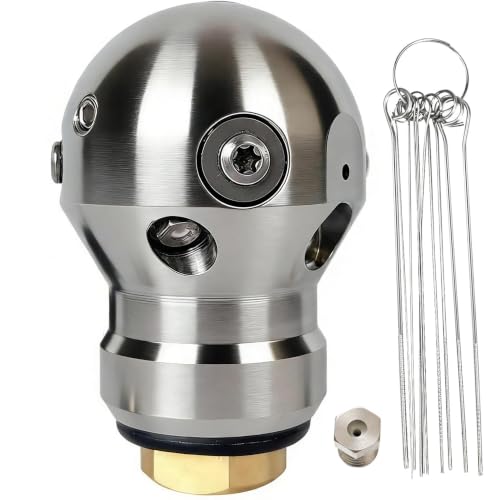
3/8 Rotary Sewer Jetter Nozzle Kit for Pressure Washer,40L/min (10.6 GPM)
- Ceramic Hydro Jetting Head: Wear-resistant ceramic inserts for durability
- Heavy Torpedo Design: Self-propelling weight for pipe cleaning
- Stainless Steel Root Cutter: Effective root and clog removal
As an affiliate, we earn on qualifying purchases.
As an affiliate, we earn on qualifying purchases.
Frequently Asked Questions
How Often Should I Have My Drain Lines Professionally Inspected?
You should have your drain lines professionally inspected at least once every one to two years. An inspection schedule like this helps catch potential blockages or damage early, preventing costly repairs later. A professional assessment can identify issues before they become serious, ensuring your plumbing stays in good shape. If you notice slow drains or unpleasant odors, schedule an inspection sooner to avoid more extensive problems down the line.
Can Certain Household Items Improve Drain Line Longevity?
Think of your drain lines as a garden hose; with proper care, it lasts longer. Household remedies like baking soda and vinegar act as gentle cleaners, breaking down buildup before it hardens. Regular maintenance tips, such as flushing with hot water and avoiding grease or hair, help prevent blockages. Using these simple methods keeps your drain lines flowing smoothly, reducing the need for costly repairs and extending their lifespan.
What Are the Signs of a Developing Drain Line Blockage?
You’ll notice clog symptoms like slow-draining sinks or bathtubs, which are clear drain warning signs. You might also hear gurgling noises or see unpleasant odors, indicating a developing blockage. Keep an eye out for water backing up or pooling around fixtures, as these are signs your drain line is starting to clog. Addressing these signs early can prevent bigger problems and costly repairs later on.
Are Chemical Drain Cleaners Safe for All Plumbing Systems?
Think of chemical drain cleaners like harsh medicines—they’re not suitable for every plumbing system. While they can be effective, their chemical safety and plumbing compatibility vary. I once used a strong cleaner on an old pipe, and it caused cracks. Always check labels and consult a plumber. Not all systems tolerate these chemicals, so using them without caution risks damage, leaks, or costly repairs.
How Do I Differentiate Between Minor Clogs and Major Blockages?
To differentiate between minor clogs and major blockages, watch for clog severity and blockage indicators. Minor clogs usually cause slow draining, gurgling sounds, or frequent backups. Major blockages often lead to complete backups, persistent odors, or water rising quickly in multiple fixtures. If you notice these blockage indicators, it’s time to act fast or call a professional. Addressing minor issues early can prevent major plumbing problems and costly repairs.

zaa Bathtub Drain Hair Catcher, Premium Silicone Shower Hair Catcher, 1Pack Collapsible Hair Stopper for Pop Up and Regular Drains of Shower, Bathtub, Bathroom Sink, Bathroom Fixture Accessories, Gray
- Drain Hair Catcher: Prevents hair and jewelry from clogging
- Universal Fit: Fits most US standard drains, no tools needed
- Multi-Scenario Use: Suitable for bathtubs, showers, sinks, laundry
As an affiliate, we earn on qualifying purchases.
As an affiliate, we earn on qualifying purchases.
Conclusion
Now that you understand the common causes and prevention tips, you have the power to keep your drain lines clear. Imagine the frustration of a sudden blockage versus the peace of knowing you’ve taken simple steps to avoid it. Don’t wait for that nightmare—act now and maintain a smooth, worry-free plumbing system. Prevention isn’t just practical; it’s your safeguard against costly repairs and unnecessary stress. Stay vigilant, and your drains will thank you.

NEXON Broken Pipe Extractor Tool – Broken Faucet Removal Tool for 1/2", 3/4", 1" Pipes | Removes Rusted/Damaged Faucet Bolts & Pipe Threads (Red)
- Effortless Removal of Damaged Threads: The NEXON Broken Threaded Pipe…
- Reverse Groove Design for Maximum Grip: Featuring a unique reverse groove…
- Universal Size Compatibility: This versatile water pipe extractor…
As an affiliate, we earn on qualifying purchases.
As an affiliate, we earn on qualifying purchases.