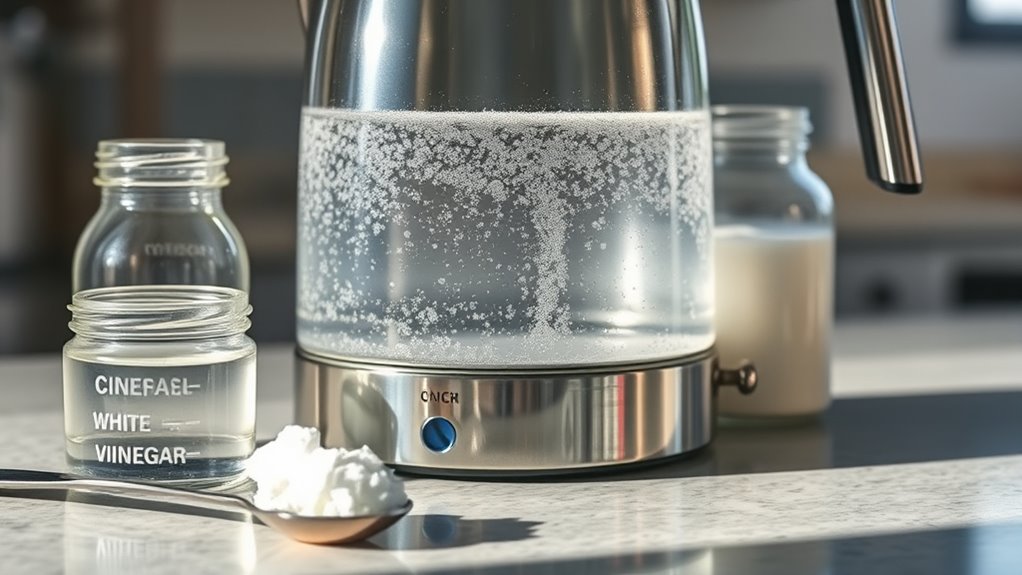

To safely descale your appliances using citric acid or vinegar, start by dissolving a few tablespoons of citric acid in water or using vinegar directly. Pour the solution into the appliance and let it sit for 15-30 minutes to break down mineral deposits. Then, run a cycle with clean water to flush out residues. For more tips on effective natural descaling, keep exploring these methods.
Key Takeaways
- Dissolve a few tablespoons of citric acid or vinegar in water for an effective, natural descaling solution.
- Allow the solution to sit in appliances like kettles or coffee makers for 15-30 minutes before rinsing.
- Always follow manufacturer instructions and avoid using natural descalers on delicate or sensitive appliances.
- Rinse thoroughly with water after descaling to remove any residues and prevent taste or odor transfer.
- Use natural solutions regularly to maintain appliance efficiency, prolong lifespan, and reduce chemical exposure.
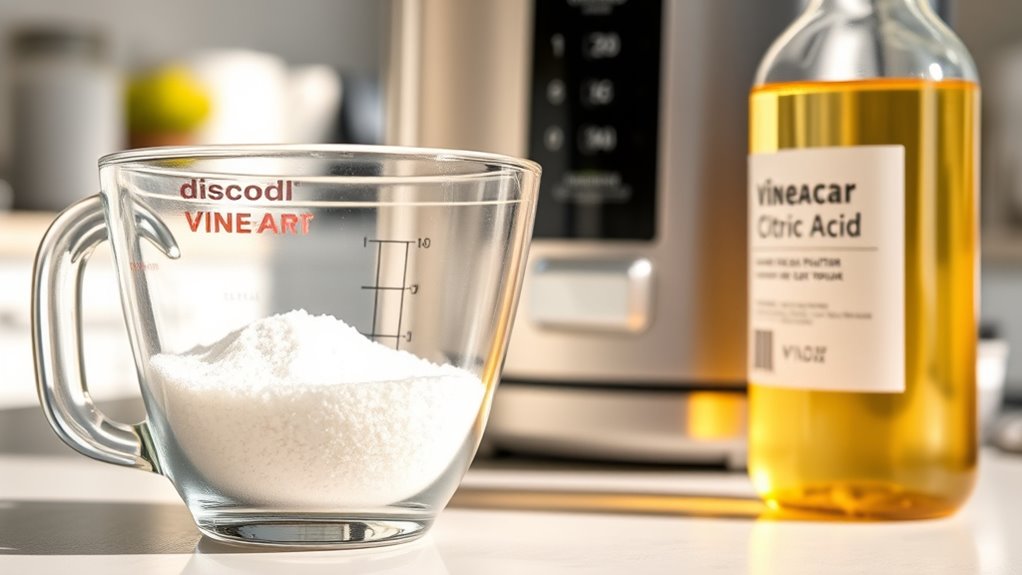
Descaling appliances is essential to keep them running efficiently, and using natural solutions like citric acid and vinegar is a safe, eco-friendly way to do it. When it comes to appliance maintenance, choosing eco-friendly cleaning methods not only helps the environment but also prolongs the lifespan of your devices. Regularly removing mineral buildup prevents clogs and ensures ideal performance without relying on harsh chemicals that can be harmful to both your health and the planet.
Citric acid is a powerful, natural descaler that’s easy to use. You simply dissolve a few tablespoons in water, creating a solution that can break down hard water deposits. Pour this mixture into your kettle, coffee maker, or even your dishwasher, and let it sit for 15-30 minutes. Afterward, run a cycle with just water to rinse out any residual buildup. Vinegar, on the other hand, is a versatile cleaning agent that’s readily available and equally effective. You can fill your appliances with white vinegar, or create a diluted solution—typically one part vinegar to one part water—and run a cycle or soak the parts as needed. Vinegar’s acidity dissolves mineral deposits while also helping to eliminate any odors.
Use citric acid or vinegar to naturally and effectively descale appliances easily.
Using these natural substances for appliance cleaning is not only safe but also cost-effective. Unlike commercial descaling products filled with chemicals, citric acid and vinegar pose minimal risks to your skin or respiratory system. Plus, they’re biodegradable, making them an excellent choice for eco-friendly cleaning routines. When maintaining appliances with these solutions, always follow the manufacturer’s guidelines to avoid damage. For instance, some appliances may require a specific cleaning method or frequency. Regular descaling using natural solutions ensures your appliances operate efficiently, consume less energy, and last longer.
Another benefit of natural descaling is that it can help maintain the color accuracy of your appliances, especially in devices like coffee makers and espresso machines, which rely on precise temperature and water quality. Incorporating citric acid and vinegar into your appliance maintenance routine creates a cleaner, greener home environment. These natural descalers help you avoid the buildup that can cause appliances to work harder, reducing energy consumption and extending their lifespan. As part of your eco-conscious approach, you’re not only protecting your appliances but also minimizing your chemical footprint. With a little effort, you can keep your appliances running smoothly, save money on repairs or replacements, and contribute to a healthier planet—all while practicing eco-friendly cleaning. Overall, descaling with citric acid and vinegar is an effective, safe, and sustainable method that supports a cleaner home and a healthier environment.
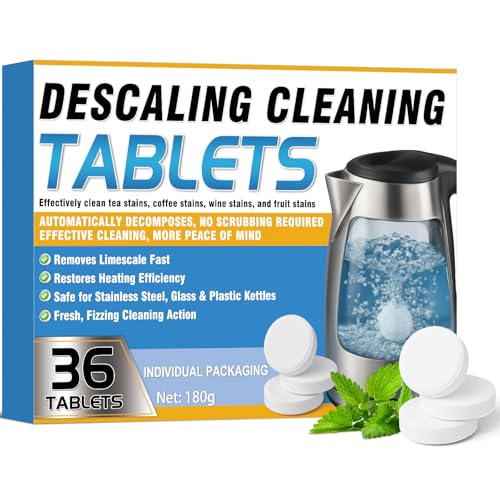
Erigathe Kettle Descaler Tablet 36 Packs, Powerful Limescale Remover for Coffee Maker, Electric Kettle, Natural Citric Acid Formula, Hard Water Remover Tablets
- Powerful Descaling Action: Rapidly dissolves limescale and mineral buildup
- Universal Compatibility: Suitable for kettles, coffee makers, and more
- Extends Appliance Lifespan: Prevents damage and maintains efficiency
As an affiliate, we earn on qualifying purchases.
As an affiliate, we earn on qualifying purchases.
Frequently Asked Questions
Can Citric Acid and Vinegar Damage Stainless Steel Appliances?
Citric acid and vinegar generally won’t damage stainless steel appliances if you use them properly. To prevent corrosion, avoid prolonged contact and frequent use, which can erode the surface over time. Regular cleaning with diluted solutions helps maintain appliance longevity. Always rinse thoroughly after cleaning and dry surfaces to prevent water spots. Proper corrosion prevention and sensible cleaning frequency guarantee your appliances stay shiny and intact without risk of damage.
How Long Should Descaling Solutions Sit Inside Appliances?
You should let descaling solutions sit inside appliances for the ideal duration of about 20 to 30 minutes. This timing ensures the citric acid or vinegar effectively dissolves mineral buildup without risking damage. Avoid leaving the solution too long, as it may cause corrosion or harm to your appliance’s surfaces. Check manufacturer recommendations for specific appliances, but generally, 20-30 minutes is suitable for safe and effective descaling.
Are There Appliances That Shouldn’t Be Descaled With Acids?
If you have a stainless steel coffee maker, acids like vinegar or citric acid usually work well. However, avoid descaling aluminum appliances because acids can damage their material compatibility, causing corrosion or discoloration. For these, consider alternative cleaning methods such as baking soda solutions or commercial descaling products designed specifically for aluminum. Always check your appliance’s manual to guarantee you’re choosing the safest, most effective cleaning approach.
Can Using Too Much Vinegar Harm Plastic Parts?
Yes, using too much vinegar can harm plastic parts because it may cause plastic degradation and acid corrosion over time. You’re risking weakening or cracking the plastic, which could lead to leaks or appliance failure. To avoid this, dilute the vinegar properly and limit exposure. Always check your appliance’s manufacturer guidelines to verify vinegar use won’t damage plastic components, and rinse thoroughly after descaling.
What Are Signs of Appliance Damage After Descaling?
If your appliance shows signs of corrosion or you notice residue buildup after descaling, it’s a warning. You might see discoloration, strange smells, or reduced performance. These signs indicate potential damage from harsh chemicals or improper cleaning. To prevent further harm, rinse thoroughly after descaling and inspect parts regularly. Addressing these issues early helps maintain your appliance’s longevity and prevents costly repairs.

IMPRESA Coffee Machine Descaler, 2-Pack (1-Year Supply) Universal Descaling
- Pack Size: 2 bottles, 4 uses total
- Made in: USA
- Compatibility: Universal for coffee machines
As an affiliate, we earn on qualifying purchases.
As an affiliate, we earn on qualifying purchases.
Conclusion
Using citric acid and vinegar is a safe, natural way to descale your appliances, but some believe combining them enhances cleaning power. While there’s limited scientific proof, their acidity effectively dissolves mineral buildup without harsh chemicals. Just remember, always rinse thoroughly to avoid lingering residues. Trust your judgment and monitor your appliances during descaling—if you notice any unusual behavior, stop and reassess. With proper use, you’ll keep your appliances clean and functioning smoothly.

Dri-Pak Citric Acid Natural Appliance Descaler – Limescale Remover – 2 Packs of 250g
- Effective Limescale Removal: Prevents buildup on appliances
- Suitable for Various Appliances: Showerheads, coffee machines, sterilizers
- Washing Machine Use: Add to stainless steel drum, run cycle
As an affiliate, we earn on qualifying purchases.
As an affiliate, we earn on qualifying purchases.

Renuv® Heavy Duty Dishwasher Cleaner & Deodorizer, Descaler, 12 XL Tablets
- Large 20 Gram Tablets: Cleans up to twice as much as smaller tablets
- Odor Eliminator: Freshens and removes odors from dishwasher
- Time-Release Formula: Dissolves slowly for maximum cleaning efficiency
As an affiliate, we earn on qualifying purchases.
As an affiliate, we earn on qualifying purchases.