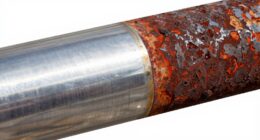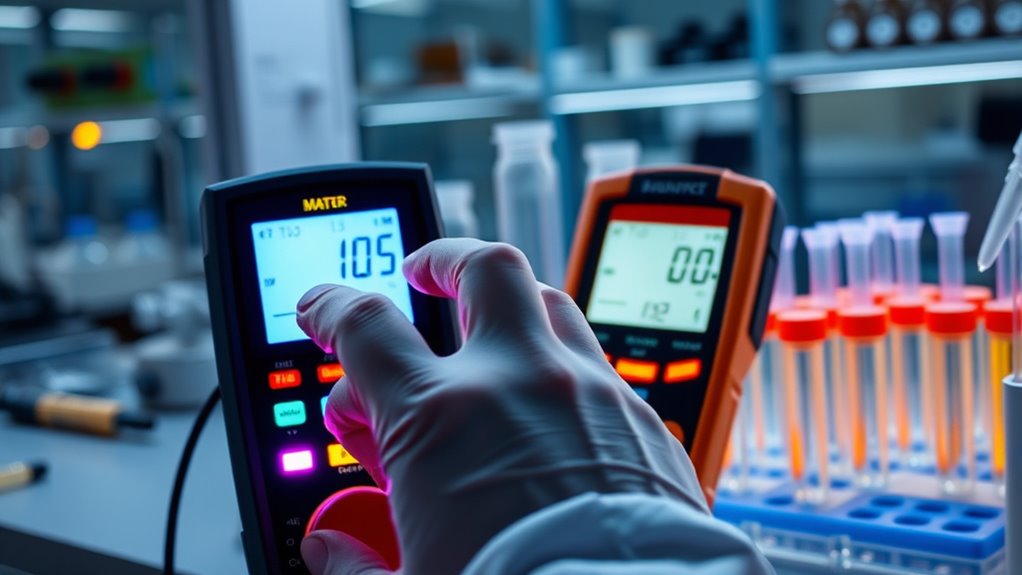
To quickly troubleshoot hardness versus TDS issues, start by recognizing the signs—scale buildup, cloudy water, or poor soap lather suggest hardness, while a high TDS meter reading indicates elevated solids. Use simple tests like a TDS meter or hardness test kits to differentiate them. Address hardness with water softeners and TDS with filtration systems. Keep this guide handy; you’ll discover how to better manage your water quality with just a few straightforward steps.
Key Takeaways
- Use a TDS meter for a quick overall solids estimate; high TDS indicates dissolved minerals affecting water quality.
- Conduct a simple hardness test to identify calcium and magnesium levels causing scale buildup.
- Compare TDS and hardness results to determine if mineral content or total solids are the main issue.
- Install appropriate treatment systems, like water softeners for hardness or reverse osmosis for TDS reduction.
- Regularly test water parameters to monitor improvements and troubleshoot effectively within 15 minutes.
Understanding the Basics: What Are Hardness and TDS?
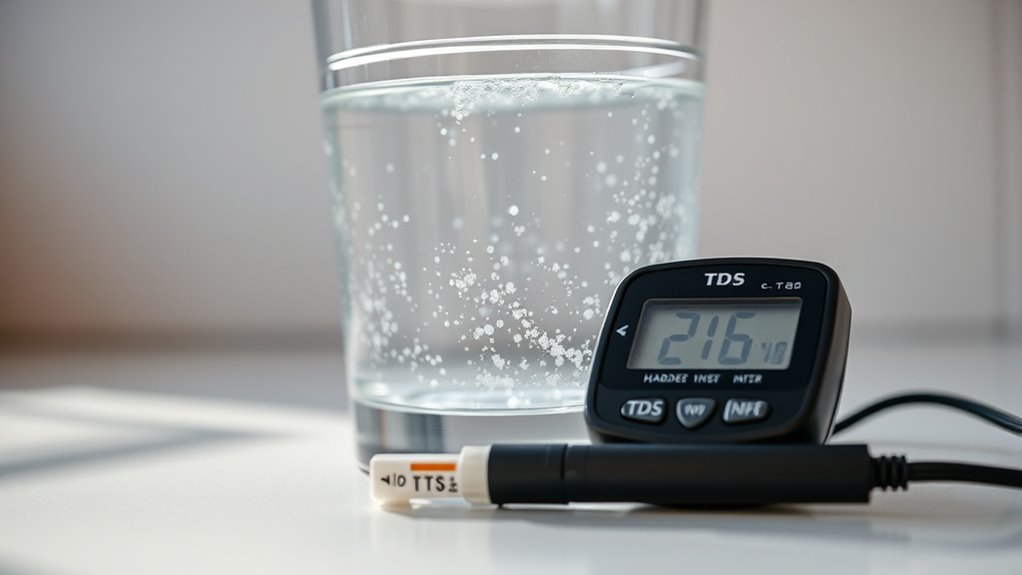
Have you ever wondered what makes your water hard or why it tastes different? Hardness primarily results from calcium levels in your water, which can cause buildup in pipes and appliances. It’s measured by its ability to form soap scum and scale. TDS, or total dissolved solids, reflects all inorganic and organic substances dissolved in water, including minerals, salts, and metals. You can get a quick idea of TDS by checking electrical conductivity—the higher the conductivity, the more dissolved solids present. While hardness focuses on calcium and other minerals that cause scaling, TDS gives a broader picture of water quality. Both concepts help you understand what’s in your water and guide you toward proper troubleshooting or treatment. Additionally, projector technology such as DLP and LCD impacts image quality and color accuracy in home cinema setups.
Common Signs That Indicate Water Quality Problems
Water quality issues often reveal themselves through noticeable signs in your daily life. You may notice a strange taste or smell in your tap water, indicating possible contamination or mineral buildup. Discolored water, such as brown or cloudy hues, signals rust or impurities that water filtration systems can’t fully remove. You might also experience soap not lathering properly or leaving residues, which points to high levels of dissolved solids like TDS. Conducting chemical testing can help identify specific contaminants or mineral concentrations causing these problems. Additionally, mineral deposits around faucets or on dishes suggest hard water issues. Recognizing these signs early allows you to address water quality problems promptly, ensuring safe, clean water for your household. Water testing methods can further assist in diagnosing specific issues affecting your water supply.
Rapid Testing Methods to Differentiate Hardness From TDS
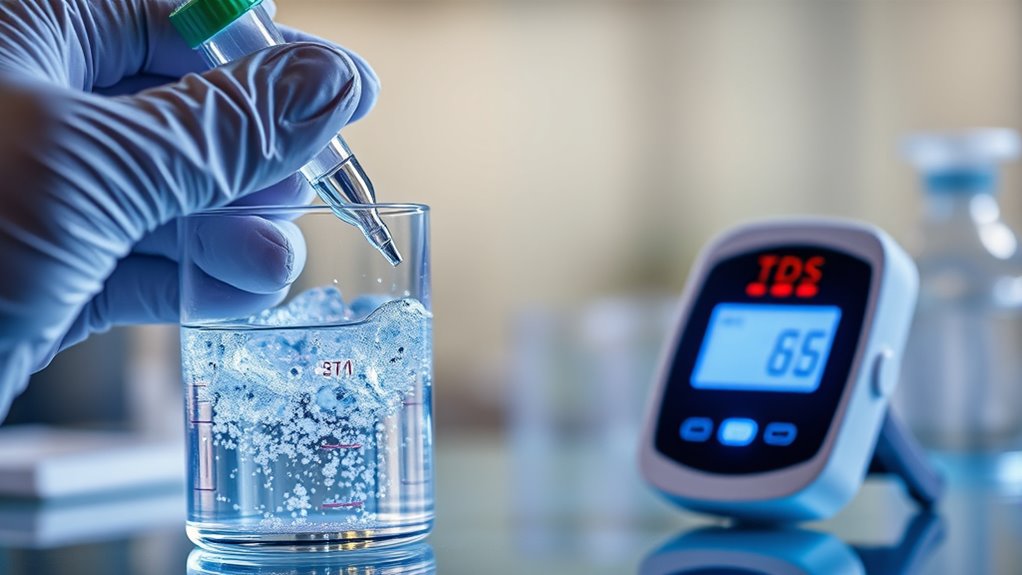
To quickly determine whether water issues stem from hardness or high TDS levels, simple on-site testing methods are essential. You can perform quick tests like a titration for hardness, which measures calcium and magnesium ions, or use TDS meters to gauge total dissolved solids. For clarity, conduct a pH test—hard water often causes pH shifts, while high TDS may not. Filtration techniques, such as activated carbon filters, can help remove TDS but don’t affect hardness. Use this table to guide you:
| Test Type | Indicator | What It Reveals |
|---|---|---|
| Hardness test | Calcium/Magnesium levels | Hard water presence |
| TDS meter | Total dissolved solids | Overall solute concentration |
| pH test | pH variation | Water balance issues |
| Filtration check | Post-filtration TDS | Effectiveness of filtration |
These methods help you identify whether hardness or TDS is the culprit. Additionally, understanding industry transformations can help you stay ahead of water quality management trends.
Practical Steps to Address Hardness and TDS Issues Quickly
Once you’ve identified whether hardness or TDS is causing water quality issues, implementing targeted solutions can provide quick relief. To address hardness, consider water filtration methods like ion exchange systems or reverse osmosis units, which effectively remove minerals causing scale buildup. For TDS issues, using appropriate filtration systems can reduce dissolved solids efficiently. If pH imbalance is involved, pH balancing treatments or conditioners can stabilize water chemistry. Additionally, understanding home theatre projectors and their specifications can help optimize your setup for the best viewing experience. Here are some practical steps:
- Install a water filtration system tailored to your water’s specific needs
- Use water softeners to reduce hardness levels
- Incorporate pH balancing agents to stabilize acidity or alkalinity
- Regularly test water parameters to monitor improvements and prevent future issues
These quick fixes can improve water quality, ensuring safe, balanced water for your needs.
Preventative Measures and Best Practices for Long-Term Water Quality Control
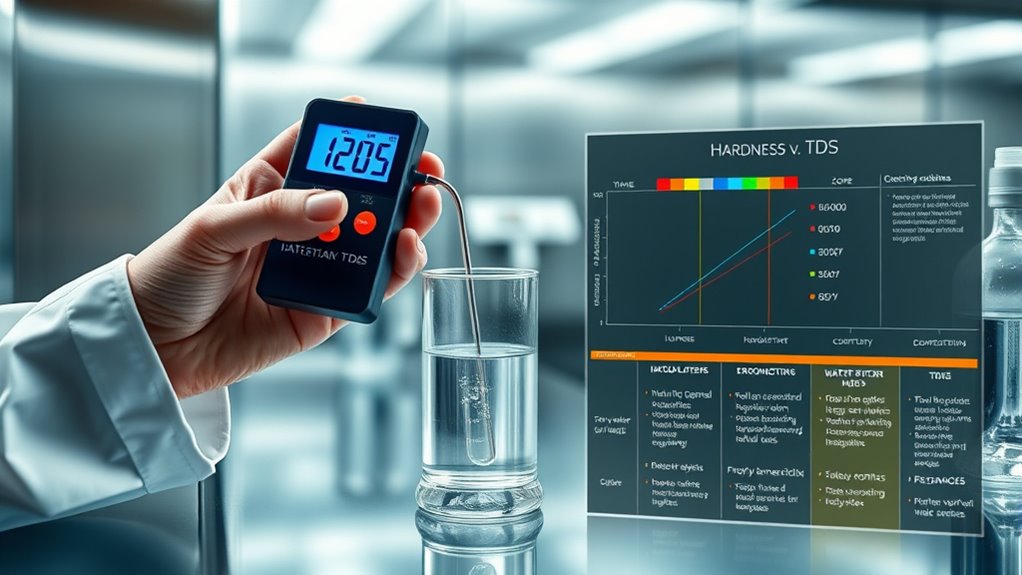
Implementing proactive maintenance and regular monitoring is essential to guarantee long-term water quality. You should routinely inspect and maintain your water treatment systems to prevent buildup and system failures. Using effective filtration techniques helps remove minerals that contribute to hardness and high TDS levels, ensuring cleaner water over time. Incorporate appropriate water treatment systems, such as softeners and reverse osmosis units, tailored to your specific water conditions. Regular testing allows you to detect changes early, enabling timely adjustments. Keep filters clean, replace media as needed, and stay updated on new filtration technologies. By staying proactive, you minimize the risk of long-term issues, extend equipment lifespan, and consistently provide high-quality water for your needs. Understanding angel numbers can also help you recognize patterns and signals that may indicate underlying issues or opportunities for improvement in your water management practices.
Frequently Asked Questions
How Often Should I Test My Water for Hardness and TDS?
You should test your water for hardness and TDS at least once every three to six months. Regular water testing frequency helps you catch changes early. Use DIY testing methods like test strips or portable meters for convenience and quick results. If your water source is new, has undergone repairs, or shows any changes in taste or appearance, test more frequently to ensure water quality stays safe and ideal.
Can High TDS Levels Impact Water Taste or Odor?
High TDS levels can be like a fog rolling in, subtly altering your water’s taste and odor. You might notice a metallic or salty flavor, or an unpleasant smell that lingers. These taste alterations and odor issues signal that your water’s mineral content is too high, affecting both flavor and smell. Regular testing helps catch these changes early, so you can address them before they turn your water into an uninviting stream.
Are There Eco-Friendly Solutions for Reducing Hardness and TDS?
Yes, you can use eco-friendly filtration methods like ceramic or activated carbon filters, which effectively reduce hardness and TDS without harming the environment. Additionally, natural mineral balancing techniques, such as adding mineral stones or using remineralization filters, help restore essential minerals while lowering TDS naturally. These solutions are sustainable, cost-effective, and safe for your water, making them ideal choices for eco-conscious households aiming to improve water quality.
What Are the Costs Associated With Professional Water Testing?
Did you know that professional water testing costs can range from $50 to over $300? You’ll want to take into account the cost comparison between different options. Professional water testing involves using water testing kits and expert analysis, which can provide precise results. These costs vary based on the complexity of tests needed. Investing in professional testing ensures you get accurate data, especially if you’re dealing with significant water quality concerns or troubleshooting hard water issues.
How Do Water Softeners and Deionizers Specifically Target Hardness and TDS?
Water softeners use ion exchange to target hardness, swapping calcium and magnesium ions with sodium ions, which effectively removes these minerals. Deionizers focus on mineral removal by exchanging ions with hydrogen and hydroxide, lowering TDS levels. Both systems actively treat water, with softeners specifically reducing hardness and deionizers decreasing overall dissolved solids, ensuring cleaner, softer water tailored to your needs.
Conclusion
By understanding the difference between hardness and TDS, you can troubleshoot water issues swiftly, like a detective solving a mystery. With quick testing methods and practical steps, you’ll stay ahead of problems before they escalate. Think of it as tending to your water system like a well-oiled machine—regular maintenance keeps everything running smoothly. Mastering these quick wins guarantees your water stays clean and clear, so you can enjoy peace of mind every time you turn on the tap.