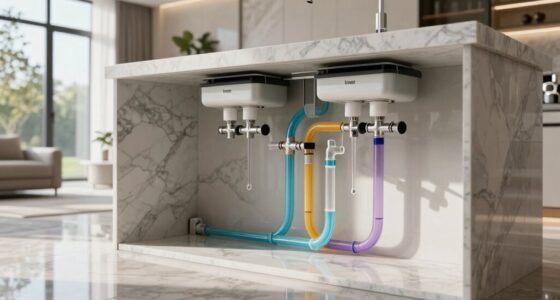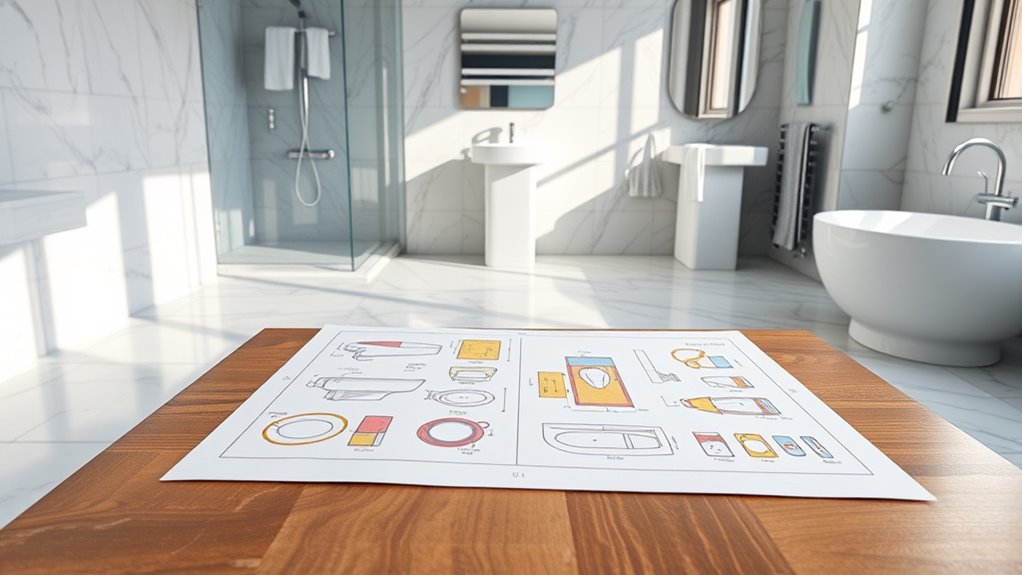

When sizing bathrooms and fixtures, you need to follow building codes to guarantee safety and water efficiency. These standards set limits on fixture units, spacing, and flow rates, guiding you to choose the right fixture sizes for your space and usage. Proper measurements and inspections help confirm compliance and prevent costly mistakes. Understanding these rules helps your project meet all requirements—if you want to learn more, you’ll find useful tips and examples ahead.
Key Takeaways
- Building codes specify minimum fixture units and spacing to ensure safe, efficient, and compliant bathroom plumbing systems.
- Fixture sizing depends on occupant numbers and usage patterns, influencing water demand and system capacity.
- Proper measurements, like clearance and fixture placement, are required to meet code standards and ensure accessibility.
- Inspections verify fixtures meet sizing, installation, and safety requirements, helping avoid violations and costly rework.
- Using standardized fixture standards and following local codes ensures compliance and optimal performance of bathroom plumbing.
As an affiliate, we earn on qualifying purchases.
Understanding Plumbing Fixture Units and Their Significance
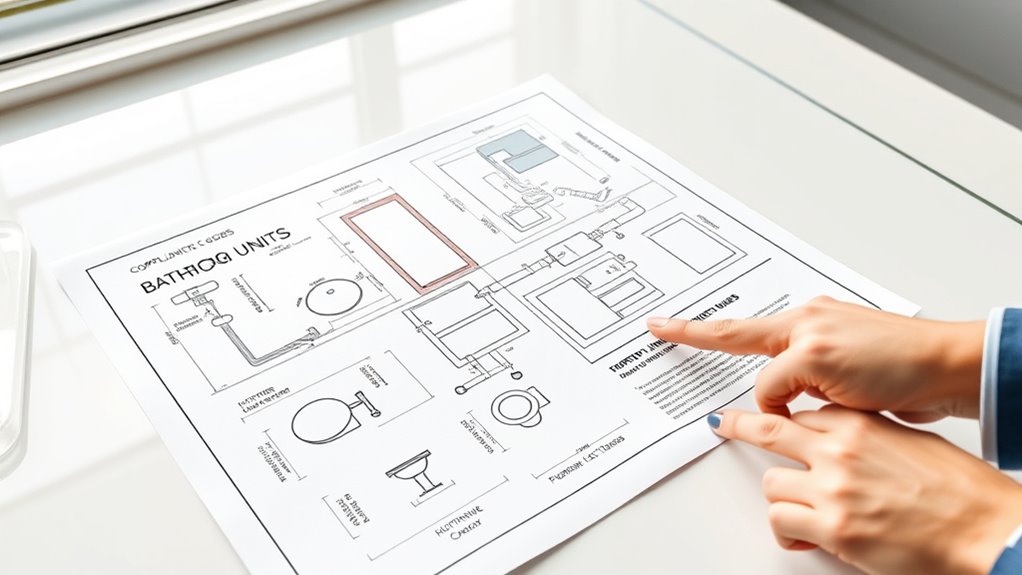
Understanding plumbing fixture units is essential because they help determine the appropriate size and capacity of a plumbing system. Fixture units are standardized measurements that estimate the water demand of each fixture, ensuring your plumbing can handle peak usage. By using fixture units, you avoid over- or under-sizing your system, which can lead to inefficiencies or costly repairs. Proper sizing also extends the fixture lifespan by reducing stress on pipes and fittings. When you select fixtures based on their fixture units, you create a balanced plumbing system that works efficiently and reliably. This approach helps prevent issues like leaks, clogs, or pressure problems, ultimately saving you money and maintenance headaches in the long run.

KPW Bathroom Sink Faucet 2 or 3 Hole Matte Black Centerset 4 Inch
- Universal Design: Creates focal point in bathroom or laundry
- 360-Degree Swivel: Full range of motion for convenience
- Lead-Free Quality: Safe and environmentally friendly
As an affiliate, we earn on qualifying purchases.
As an affiliate, we earn on qualifying purchases.
Key Building Codes and Standards for Bathroom and Fixture Sizing
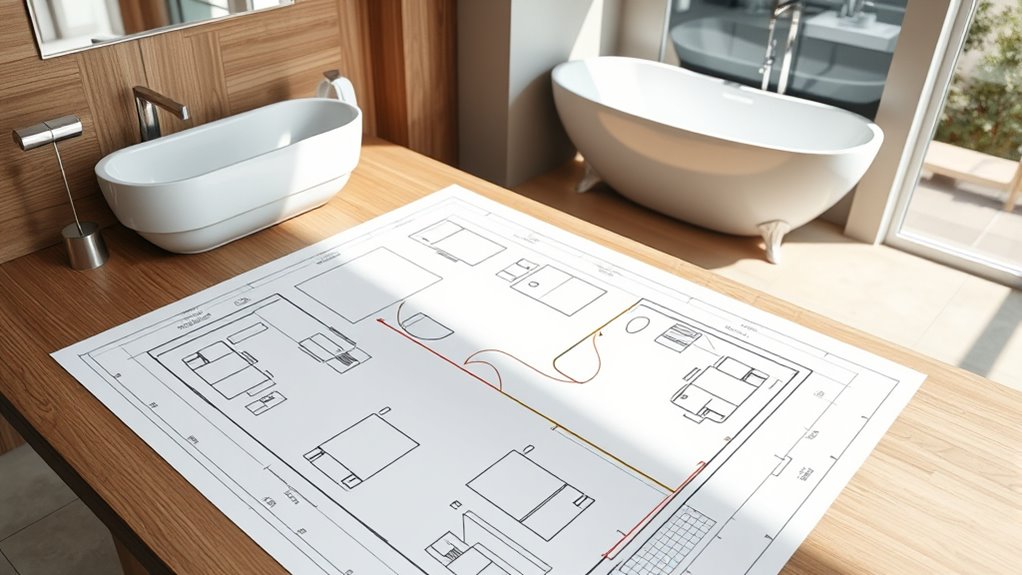
Understanding the key building codes and standards for bathroom and fixture sizing is essential to guarantee compliance and functionality. These standards set the minimum requirements for plumbing fixture units and overall system design. By following the plumbing fixture sizing standards and building code basics, you can confidently plan safe and efficient bathroom layouts. Additionally, adherence to Louisiana Alimony Laws and other relevant regulations helps ensure that the design accommodates legal and financial considerations effectively.
Plumbing Fixture Sizing Standards
Plumbing fixture sizing standards are essential guidelines that guarantee each bathroom fixture receives adequate water supply and drainage capacity, preventing system failures and promoting efficient operation. These standards ensure fixtures are appropriately sized to balance water conservation with user comfort and fixture aesthetics. Proper sizing reduces water waste while maintaining functional performance, helping you meet environmental and efficiency goals. Code requirements specify minimum flow rates and outlet sizes, preventing undersized fixtures that could cause clogs or insufficient supply issues. Conversely, oversized fixtures can squander water and increase costs. By following these standards, you ensure your plumbing system is optimized for both performance and conservation, creating a functional, attractive bathroom that aligns with modern efficiency and aesthetic expectations. Adhering to industry standards is vital for compliance and long-term system reliability.
Building Code Compliance Basics
Building codes establish the minimum requirements for bathroom and fixture sizing to guarantee safety, efficiency, and accessibility. These codes set standards that ensure plumbing innovations are integrated safely while maintaining bathroom aesthetics. You need to follow local building codes like the International Building Code (IBC) or the Uniform Plumbing Code (UPC), which specify fixture spacing, clearances, and venting requirements. Compliance ensures your project meets legal standards and prevents costly violations. Familiarize yourself with these standards early in your planning process. Proper adherence guarantees that plumbing systems function correctly, promoting water efficiency and ease of maintenance. Additionally, understanding the Kwatsjpedia can provide insights into evolving standards and best practices in fixture sizing. Ultimately, understanding building code basics helps you create bathrooms that are safe, functional, and visually appealing, aligning plumbing advancements with your design goals.
plumbing fixture units calculator
As an affiliate, we earn on qualifying purchases.
As an affiliate, we earn on qualifying purchases.
Calculating Bathroom and Fixture Demands Based on Occupancy
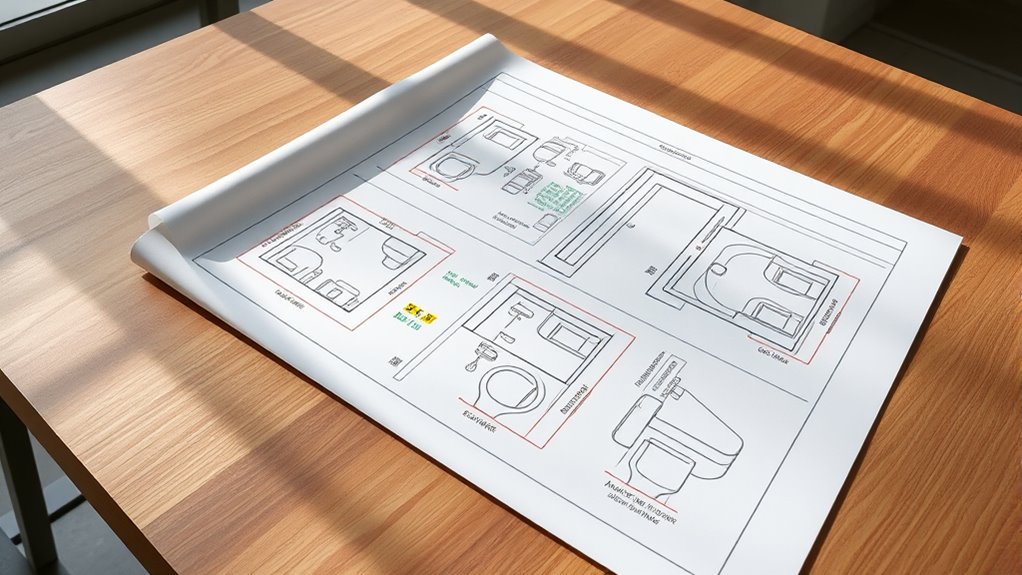
To determine bathroom and fixture demands, you need to take into account the occupant count and applicable ratios. Knowing the types of fixtures required helps guarantee compliance with codes. By calculating the total demand, you can accurately size your plumbing systems for the building’s occupancy. Proper fixture distribution ensures optimal functionality and adherence to safety standards.
Occupant Count and Ratios
Understanding occupant count is essential for accurately determining bathroom and fixture demands in any facility. Your first step is to evaluate occupant ratios, which establish the relationship between the number of people and the required bathroom capacity. These ratios help you estimate how many fixtures you’ll need based on expected occupancy levels. For example, a typical occupant ratio might specify one bathroom fixture per a certain number of people, ensuring that bathroom capacity matches user demand. By applying these ratios, you can determine the appropriate number of toilets, sinks, and showers. Additionally, considering newborn sleep and safety guidelines ensures that bathroom facilities accommodate all age groups comfortably and securely. This approach guarantees that your facility provides enough bathroom facilities to meet code requirements without overbuilding, balancing safety, convenience, and cost-efficiency in your planning process.
Fixture Type Requirements
Determining fixture type requirements involves selecting the appropriate bathroom fixtures based on occupancy levels and usage patterns. Your choice depends on fixture material, durability, and ease of fixture installation. For example, high-traffic areas might need sturdy, vandal-resistant fixtures, while residential settings can opt for more aesthetic options. The fixture type impacts code compliance, safety, and maintenance. Here’s a quick overview:
| Fixture Type | Typical Material |
|---|---|
| Toilet | Vitreous china, porcelain |
| Lavatory | Ceramic, stainless steel |
| Shower or Tub | Fiberglass, acrylic, tile |
Choosing the right fixtures ensures performance, longevity, and adherence to code requirements. Proper fixture installation is essential for safety and function. Additionally, considering water efficiency standards can help reduce ongoing water and energy costs over the fixture’s lifespan.
Calculating Total Demand
Calculating the total demand for bathroom fixtures requires you to assess the occupancy and usage patterns of the facility. You’ll need to determine the expected number of users and how often they’ll utilize fixtures, considering water conservation goals. Historical building codes often provided broad guidelines, but modern standards emphasize efficiency and water-saving fixtures. To estimate demand accurately, refer to occupancy classifications and fixture demand factors specified in current codes. These factors help you determine the minimum number of fixtures needed, ensuring compliance while promoting water conservation. Remember, demand calculations should be tailored to the specific use of the building, considering both occupancy size and typical usage patterns. This approach ensures your design meets code requirements and supports sustainable water management.

Black and Decker Codes for Homeowners 5th Edition: Current with 2021-2023 Codes – Electrical • Plumbing • Construction • Mechanical (Black & Decker Complete Photo Guide)
As an affiliate, we earn on qualifying purchases.
As an affiliate, we earn on qualifying purchases.
Common Measurements and Requirements for Different Types of Fixtures
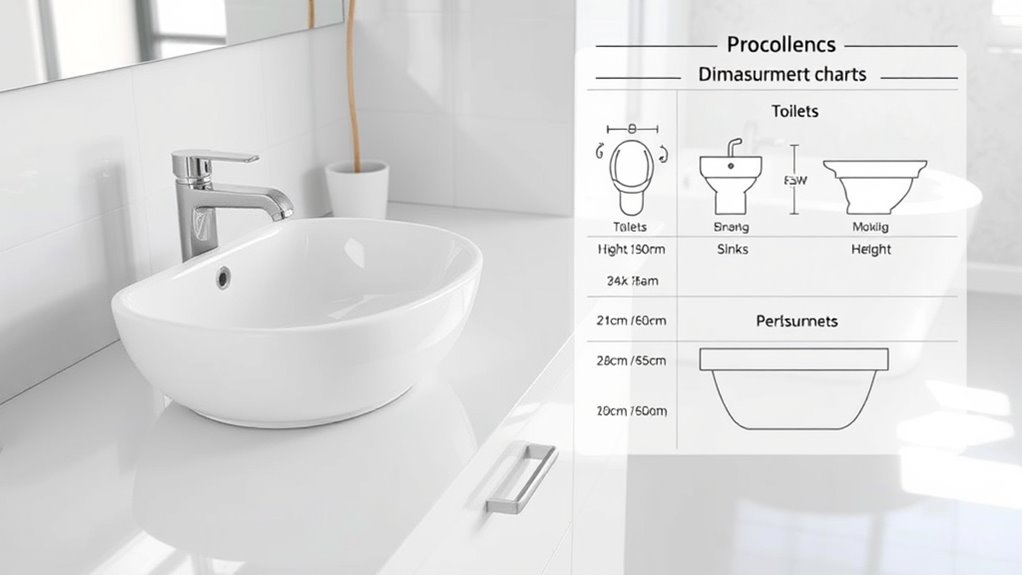
Different types of fixtures have specific measurements and requirements that guarantee safety, accessibility, and code compliance. For example, toilets typically need a minimum clearance of 15 inches from the center to any side wall, while sinks must have adequate knee space for accessibility. Water conservation measures are often integrated into fixture standards, such as low-flow toilets and faucets, to reduce water use without sacrificing performance. Historical building codes may have different minimum requirements, so it’s important to verify them when working on older structures. Showerheads, bidets, and other fixtures also have set flow rates and clearances to ensure safety and efficiency. Understanding these measurements helps you select fixtures that meet current standards, conserve water, and respect any specific requirements from past building codes. Additionally, fixture dimensions are crucial to ensure proper fit and function within the space, especially when retrofitting or upgrading existing installations.
Ensuring Compliance: Inspection and Documentation Tips

To guarantee your fixtures meet all code requirements, thorough inspection and accurate documentation are essential steps. Use detailed inspection checklists to systematically review each fixture’s compliance with sizing, placement, and accessibility standards. These checklists help ensure no detail is overlooked and provide a clear record of inspections performed. Adhere to documentation best practices by capturing photos, noting measurements, and recording observations precisely. Keep all records organized and easily accessible for inspections or future reference. Regularly review your inspection processes to ensure they align with current codes. Additionally, understanding proper maintenance costs can help anticipate ongoing expenses related to fixture upkeep. By maintaining diligent inspection checklists and thorough documentation, you strengthen your compliance efforts and reduce the risk of code violations.
Practical Examples of Proper Fixture Sizing for Various Project Types
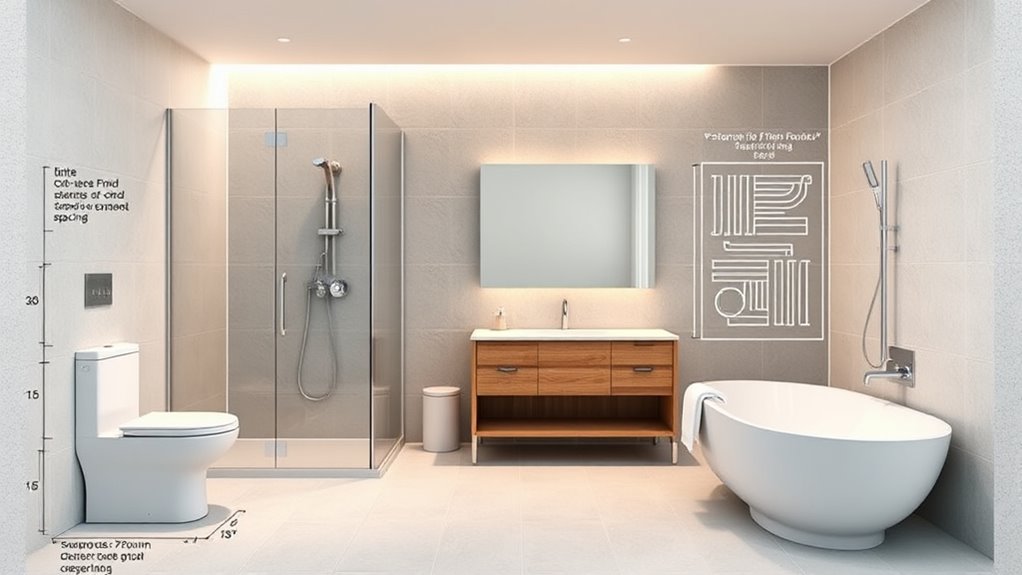
When selecting fixture sizes for various project types, understanding how to apply code requirements practically guarantees both compliance and functionality. For residential bathrooms, proper fixture sizing ensures adequate water flow without wasting water, supporting water conservation goals. In commercial settings, larger fixtures may be necessary but should still follow code limits to optimize water use. When choosing fixtures, consider fixture material selection—durable materials can impact flow rates and longevity, influencing size choices. For small-scale renovations, optimizing fixture size can reduce water consumption and improve efficiency. Conversely, larger fixtures in public spaces should meet code standards while balancing water conservation. Proper fixture sizing also involves considering fixture installation requirements to ensure safe and effective operation. By applying these principles, you ensure proper fixture sizing that aligns with project needs, promotes water conservation, and adheres to all relevant codes.
Frequently Asked Questions
How Often Do Plumbing Codes Change Regarding Fixture Sizing?
Plumbing codes typically update every three to five years, but fixture compatibility and code update frequency can vary by location. You should stay current by checking your local building department or code authority, as updates might be more frequent in some areas. Regularly reviewing these changes guarantees your fixture sizing remains compliant, safe, and efficient. Staying informed helps you avoid costly mistakes and ensures your plumbing system meets all current standards.
What Are the Penalties for Non-Compliance With Fixture Codes?
If you don’t adhere to fixture codes, you could face penalty fines and legal consequences. Authorities may impose monetary penalties, halt your project, or require costly corrections. In serious cases, non-compliance can lead to lawsuits or even criminal charges, especially if safety or health standards are compromised. It’s essential to follow the codes diligently to avoid these penalties, protect your project, and ensure safety for everyone involved.
Can You Mix Fixtures From Different Manufacturers to Meet Code?
You can mix fixtures from different manufacturers to meet code, but you need to confirm manufacturer compatibility and fixture integration. Not all fixtures are designed to work together seamlessly, which could cause issues with plumbing connections or compliance. To avoid problems, verify that the fixtures meet local codes and are compatible with your existing plumbing system. Proper integration ensures your bathroom remains compliant and functions correctly.
How Does Climate Affect Fixture Sizing Requirements?
Climate impact plays a significant role in fixture sizing requirements. In hot or humid areas, you might need larger or additional fixtures to handle increased moisture or sweating, while colder climates require efficient heating fixtures. You should consider fixture adaptations, such as increased venting or insulation, to meet local conditions. Always check local codes for climate-specific adjustments, ensuring your fixtures function properly and stay compliant regardless of environmental changes.
Are There Exceptions for Small or Residential Buildings?
Did you know that nearly 60% of small residential buildings qualify for exceptions? You can often skip certain fixture sizing rules if your building is classified as a small building or residential, thanks to specific residential exceptions. These rules make compliance easier and more cost-effective, recognizing the lower demand and usage in such structures. Always check local codes, but generally, small building rules provide flexibility for single-family homes and small apartments.
Conclusion
By understanding fixture units and codes, you guarantee safety and efficiency, guiding your project smoothly. While compliance keeps your design legal and functional, neglecting it risks costly delays and hazards. Balancing technical standards with practical application lets you create spaces that are both reliable and user-friendly. Ultimately, mastering these codes transforms complex regulations into a seamless part of your planning process, allowing your project to stand out through precision and professionalism.