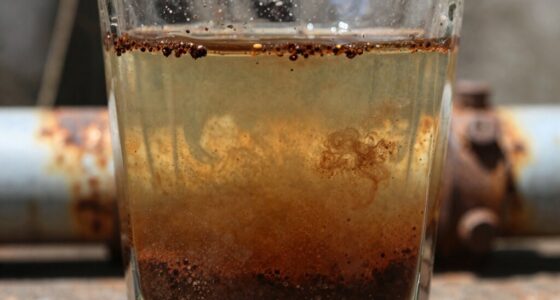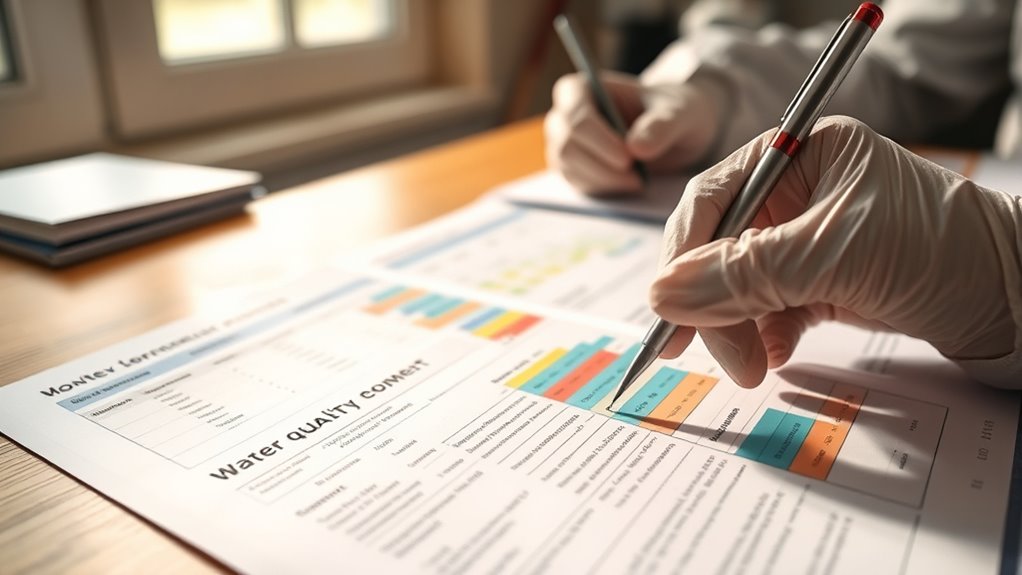

When you look at a water quality report, you’ll find details on sampling methods, contaminant levels, safety standards, and actions to take if issues are found. To understand it, compare contaminant levels to regulatory thresholds and see if any exceed safe limits. Knowing what these standards mean helps you assess water safety. The report usually updates annually, and if contaminants are present, it’s important to follow recommended measures. Keep exploring for more insights and guidance.
Key Takeaways
- Understand sampling methods, testing frequency, and parameters analyzed for accurate water safety assessment.
- Compare contaminant levels to EPA standards to determine potential health risks.
- Review report formats like tables and summaries for clear interpretation of water quality data.
- Identify any violations of safety standards and note recommended corrective actions.
- Stay informed about annual updates and additional testing results for ongoing water safety monitoring.
What Information Is Included in a Water Quality Report?

A water quality report provides essential information about your tap water’s safety and cleanliness. It typically includes details on sampling methods used to test water, ensuring accurate detection of contaminants. The report also outlines the testing frequency and the specific parameters analyzed, such as bacteria, lead, or chlorine levels. Reporting formats vary but generally present data in clear tables and summaries, making it easier for you to understand the water’s condition. You’ll find information about any violations of safe water standards and the measures taken to address issues. By reviewing these details, you can assess whether your water meets health standards and identify potential concerns. Understanding the importance of indoor air quality and how it affects overall health can also help you interpret water quality data more effectively. This organized presentation helps you stay informed and confident about your tap water’s quality.
How Can I Interpret the Test Results and Contaminant Levels?

Interpreting test results and contaminant levels in your water report helps you understand what the data really means for your health. When reviewing the results, compare the contaminant levels to safety standards to see if they exceed limits. Understanding contaminant health effects is essential; some contaminants can cause short-term issues, while others pose long-term health risks. Use a test result comparison to evaluate whether your water contains contaminants at concerning levels. If levels are close to or above safety thresholds, it’s a sign to take action or seek further testing. Keep in mind that even low levels of certain contaminants might still impact vulnerable groups. Additionally, being aware of air purifier features and technology can help you improve indoor air quality if water contamination issues persist. By carefully analyzing these results, you can make informed decisions about your water’s safety and necessary precautions.
What Do the Regulatory Standards Mean for My Water Safety?

Ever wonder what the regulatory standards in your water quality report really mean for your safety? These standards, set by agencies like the EPA, define safety thresholds for contaminants in drinking water. When your water system meets these standards, it means they are in regulatory compliance, ensuring the water is safe to drink. The safety thresholds serve as maximum allowable levels for harmful substances like lead, bacteria, or chemicals. If contaminant levels stay below these limits, your water is considered safe. However, exceeding these thresholds indicates potential health risks. Understanding these standards helps you assess your water’s safety and whether action is needed. Remember, regulatory compliance doesn’t mean your water is completely free of all risks, but it does indicate that it adheres to safety guidelines designed to protect public health.
How Often Are Water Quality Reports Released and Updated?

Water quality reports are typically released annually, providing residents with updated information about their drinking water. These reports are based on water testing that measures contaminant levels in your water supply. Utilities analyze samples to guarantee safety and compliance with regulatory standards. The annual update helps you stay informed about any changes or concerns related to water quality. Sometimes, additional reports or updates may occur if there’s a significant change in contaminant levels or if a problem is detected. While the primary report is yearly, water providers may communicate more frequently if urgent issues arise. Regular updates allow you to understand the safety of your water and whether any actions are necessary to protect your health. Many water providers also publish water park safety standards to ensure recreational water facilities maintain high-quality water conditions.
What Should I Do If My Water Quality Report Shows Contaminants?
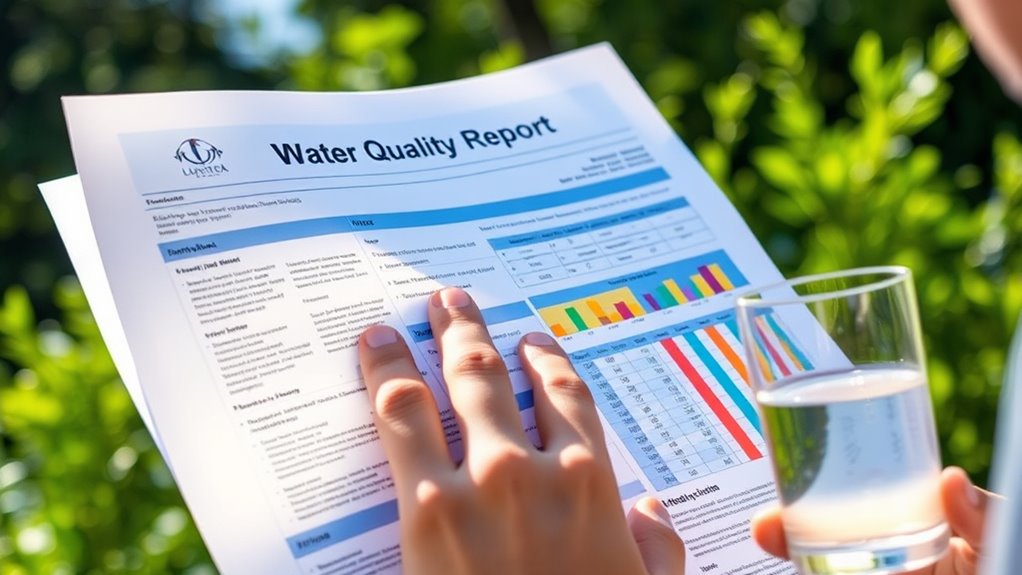
If your water quality report reveals the presence of contaminants, it’s important to take prompt and informed action to protect your health. First, review the report to understand which contaminants are detected and at what levels. Conduct a health risk assessment to determine if the levels pose a serious threat. If they do, consider contaminant mitigation strategies like installing filters, using bottled water, or upgrading your plumbing system. Contact your local water authority for guidance and additional testing if needed. Stay informed about recommended safety thresholds and follow any advisories issued. Taking these steps helps minimize potential health risks and ensures your water remains safe for daily use. Acting quickly and responsibly is key to safeguarding your family’s health. Additionally, consulting a whole-house filtration system can provide comprehensive protection against multiple contaminants.
Frequently Asked Questions
How Can I Compare Water Quality Reports From Different Providers?
To compare water quality reports from different providers, start with data comparison by checking key parameters like contaminants, pH levels, and treatment methods. Conduct report analysis by reviewing the testing dates, sources, and any violations or advisories. Look for consistent measurement units and note any differences in reporting formats. This way, you can make an informed decision based on a clear understanding of each provider’s water safety and quality standards.
Are Private Well Water Reports Included in Public Water Quality Reports?
Think of public water quality reports as a window into community water, but private well data is like a secret room, often left out. Generally, private well water reports aren’t included in public reports because they serve individual properties. To compare, you’ll need to look at each report separately, noting the differences between public water quality data and private well results. This way, you get a full picture of your water’s health.
What Are the Health Risks of Detected Contaminants at Certain Levels?
You should know that when contaminant levels exceed safe thresholds, it can pose health risks, especially for vulnerable groups like children or pregnant women. Elevated contaminant health risks include increased chances of illness, long-term health issues, or developmental problems. Always pay attention to the risk levels indicated in your water quality report, and if contaminants surpass safe limits, consider treatment options or alternative water sources to protect your health.
How Can I Improve My Home’s Water Quality Based on Report Results?
To improve your home’s water quality based on the report results, consider installing water treatment or filtration systems tailored to remove specific contaminants. You can choose activated carbon filters for chemicals and odors or reverse osmosis units for heavy metals and impurities. Regular maintenance of these systems ensures peak performance, providing safer, cleaner water for your household and reducing health risks associated with detected contaminants.
Are There Specific Filters Recommended for Removing Common Contaminants?
Imagine you’re concerned about lead and chlorine in your water. For contaminant removal, a activated carbon filter is highly recommended, as it effectively reduces chlorine, volatile organic compounds, and some pesticides. When choosing filter recommendations, look for one certified by NSF International for lead or chlorine reduction. This guarantees you’re targeting the specific contaminants in your water, making your home safer and your water taste better.
Conclusion
Now that you know how to read your water quality report, you can confidently spot potential issues and take action if needed. Remember, staying informed is your best defense—think of it as having a trusty lantern in the dark ages of water safety. Regularly review updates, understand the contaminant levels, and don’t hesitate to reach out if something seems amiss. Your water’s health is worth the effort—after all, even a knight needs to protect his kingdom!