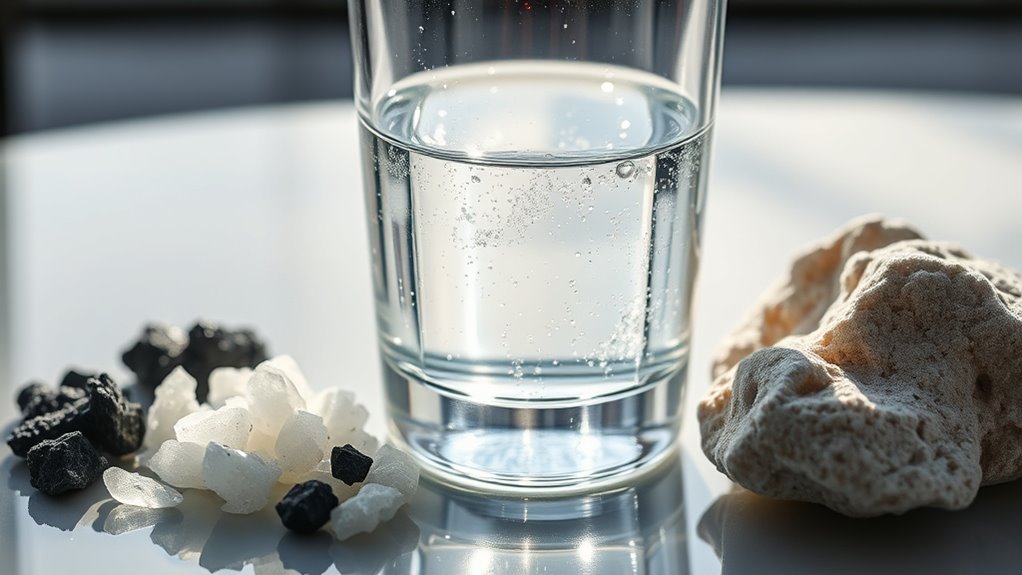

Minerals in your drinking water play a crucial role in supporting your health, providing essential nutrients like calcium and magnesium that promote bone strength and muscle function. The mineral content varies naturally depending on where the water comes from, influencing both taste and health benefits. While some minerals are good for you, too much, like sodium, might pose risks for certain conditions. Discovering how mineral levels impact your health helps you make better hydration choices and enjoy safe, tasty water.
Key Takeaways
- Minerals like calcium and magnesium in water support bone health and muscle function.
- Excessive sodium or minerals may pose health risks for individuals with specific conditions.
- Mineral content varies naturally based on water source geology, influencing health benefits and taste.
- Consuming mineral-rich water can provide essential nutrients, but overconsumption may lead to health concerns.
- Understanding mineral levels helps consumers choose water that aligns with their health needs and preferences.
Have you ever wondered what minerals are lurking in your drinking water? The mineral content variability in tap and bottled water can be surprising. Depending on where your water comes from, the types and amounts of minerals present can differ markedly. Some sources are rich in calcium and magnesium, giving water a mineral-rich profile, while others may have minimal mineral content. This variability isn’t just a technical detail—it’s something you can notice in the taste of your water. For instance, high mineral content often results in a water that tastes more robust, sometimes described as slightly salty or metallic, which can be off-putting or invigorating, depending on your preference. Conversely, water with low mineral levels tends to have a more neutral flavor but might lack the crispness associated with mineral-rich sources. These differences can influence your drinking experience, making some waters more appealing while others seem flat or dull.
Understanding that mineral content variability impacts taste helps you make more informed choices about your water consumption. If you prefer water with a distinctive flavor, you might seek out mineral waters known for their rich mineral profiles. On the other hand, if you’re sensitive to taste or prefer a neutral flavor, you might opt for filtered or purified water that minimizes mineral content. It’s also important to recognize that natural mineral composition is often a reflection of the water’s source and geology. Mountains, underground springs, and aquifers can all impart different minerals into the water, causing the taste to shift accordingly. Additionally, water mineral composition can influence the health benefits or risks associated with your drinking water.
Beyond taste, mineral content variability also has health implications. Some minerals, like calcium and magnesium, are beneficial for your body, supporting bone health, muscle function, and overall well-being. But too much of certain minerals can be problematic, especially if your water contains elevated levels of sodium or other elements that might impact those with specific health concerns. That’s why understanding the natural variability in mineral content is essential. It helps you evaluate whether your water provides health benefits or if it might pose risks, particularly if it’s your primary source of hydration.
Frequently Asked Questions
How Do Mineral Levels Vary Across Different Geographic Regions?
You’ll notice that mineral levels vary across different geographic regions due to local geology and water sources. Geographic variation impacts mineral distribution, causing some areas to have higher calcium or magnesium levels, while others may have more trace elements. This natural diversity influences water taste, quality, and potential health benefits, making it essential to take regional differences into account when evaluating the mineral content of your drinking water.
Can Mineral Content in Water Change Over Time?
Yes, mineral content in water can change over time due to factors like mineral stability and water composition. You might notice fluctuations caused by seasonal changes, groundwater movement, or treatment processes. These shifts occur as minerals dissolve, precipitate, or are added through contamination or filtration. Staying aware of your water’s mineral levels helps you understand potential health impacts and guarantees your water remains safe and balanced for consumption.
Are There Any Risks of Consuming Too Many Minerals From Water?
Think of your water like a finely balanced scale. Consuming too many minerals can lead to mineral overdose, risking water toxicity and health issues. While minerals are essential, excess intake from water might cause problems like kidney stones or high blood pressure. Stay mindful of your water’s mineral levels, and if you’re concerned, consider testing or using filters to prevent mineral overdose and protect your health.
How Do Minerals in Water Interact With Other Dietary Nutrients?
Minerals in water can enhance mineral absorption and promote nutrient synergy, which helps your body utilize nutrients more effectively. For example, calcium and magnesium from water work with dietary vitamins to strengthen bones and support muscle function. However, excessive minerals might interfere with the absorption of other nutrients, so maintaining a balanced intake guarantees ideal nutrient synergy and health benefits. Keep an eye on your overall mineral consumption for best results.
What Are the Best Methods to Test Mineral Levels in Drinking Water?
Did you know that over 50% of households test their water for mineral levels? To get accurate results, you can use home testing kits or opt for lab analysis. Home testing is quick and convenient, providing immediate insights, while lab analysis offers precise, detailed data. Both methods help you monitor mineral levels, ensuring your water is safe and beneficial to your health. Choose based on your needs and confidence in testing accuracy.
Conclusion
Just as rivers nourish the land, minerals in your drinking water support your health. By choosing water rich in essential minerals, you embrace a natural gift that promotes wellness and vibrancy. Remember, like the legendary fountain of youth, clean, mineral-rich water can refresh your body and mind. So, stay mindful of what flows from your tap—it’s more than just water; it’s a vital source of life, echoing the timeless wisdom of nature’s own remedy.