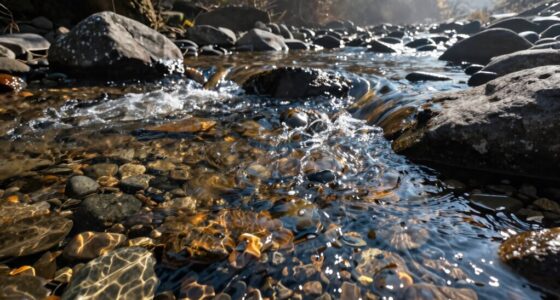
Groundwater is stored underground in aquifers, moving slowly and less visibly, while surface water exists in lakes, rivers, and streams that are easy to see and access. Groundwater’s movement takes months or years, making it more stable but less responsive to immediate changes. It’s less vulnerable to pollution from surface runoff but can still be contaminated through seepage. Surface water is more exposed and changes quickly with weather, but easier to monitor. To learn more about these differences, keep exploring the details.

Get home appliances delivered free — and shop member deals
- Fast, free delivery on millions of items
- Access to Prime Big Deal Days deals on October 6–7
- Prime Video, Amazon Music and more included
Key Takeaways
- Groundwater is stored underground in aquifers, while surface water is visible in lakes, rivers, and streams.
- Recharge of groundwater occurs slowly through seepage, whereas surface water is replenished more rapidly by rainfall.
- Groundwater moves slowly beneath the surface; surface water flows more quickly and is more accessible.
- Groundwater is less vulnerable to surface pollution but can be contaminated through seepage; surface water is more exposed to pollutants.
- Fluctuations in groundwater levels reflect underground water availability, unlike the more noticeable changes in surface water levels.

Have you ever wondered what sets groundwater apart from surface water? The key lies in how each source is stored, replenished, and accessed. Groundwater resides beneath the Earth’s surface in porous rock and soil formations called aquifers. These underground reservoirs slowly fill through a process known as aquifer recharge, which occurs when water from precipitation, rivers, or other sources seeps down through the soil. This process isn’t instant; it can take months or even years for water to percolate deep enough to recharge aquifers fully. As this happens, the water table—the upper surface of the saturated zone—fluctuates depending on factors like rainfall, groundwater extraction, and seasonal changes. When rainfall is abundant, the water table rises, bringing groundwater closer to the surface, making wells easier to access. During dry periods, the water table drops, which can lead to wells running dry or requiring deeper drilling. These fluctuations are less noticeable in surface water sources but are essential indicators of underground water availability.
Unlike surface water, which is readily visible in lakes, rivers, and streams, groundwater is hidden beneath the surface. You can’t see it flowing or collect it directly without drilling wells. This underground water moves slowly, often taking months or even years to travel through aquifers, making it a more stable but less immediately responsive water source. Its slow movement and underground storage mean that groundwater is less susceptible to quick changes in weather but can be affected by long-term overuse and contamination. This makes managing aquifer recharge critical for maintaining a sustainable supply of groundwater, especially in regions where surface water is scarce or heavily polluted.
Because groundwater is stored underground, it tends to be less vulnerable to pollution from surface runoff, but it isn’t immune. Contaminants can seep down and pollute aquifers if proper safeguards aren’t in place. Meanwhile, surface water sources are more exposed to pollutants from agriculture, industry, and urban runoff, making surface water more vulnerable to contamination but easier to treat and monitor. The differences between these two water sources are fundamental for water management, as they influence how we access, conserve, and protect our water supplies. Understanding aquifer recharge and water table fluctuations helps you appreciate the complex balance required to sustain groundwater resources, especially as human demand grows and climate patterns shift.
As an affiliate, we earn on qualifying purchases.
Frequently Asked Questions
How Do Seasonal Changes Affect Groundwater and Surface Water Levels?
Seasonal fluctuations markedly impact both groundwater and surface water levels. During dry seasons, water table variation causes groundwater levels to drop, making wells harder to access. Surface water sources like rivers and lakes also decrease, risking drought conditions. Conversely, wet seasons cause levels to rise as rainfall replenishes both sources. You’ll notice these changes in water availability, which directly affect your water use and the health of local ecosystems.
What Are the Main Contaminants Unique to Groundwater and Surface Water?
You see murky, stagnant groundwater often contaminated by heavy metals and nitrates from agricultural runoff, while surface water faces pollution from bacteria, algae toxins, and oil spills. Contaminant types vary because of pollution sources—industrial waste and sewage seep into underground aquifers, whereas surface waters absorb pollutants from urban runoff and spills. Recognizing these unique contaminants helps you understand the distinct risks each water source faces and how to protect them.
How Does Climate Change Impact Groundwater Recharge and Surface Water Flow?
Climate change affects your water sources by disrupting recharge variability and challenging climate resilience. As temperatures rise and precipitation patterns shift, groundwater recharge decreases in some areas, risking shortages. Surface water flow becomes more unpredictable with intense storms or prolonged droughts. These changes make it harder to manage water supplies, requiring you to adapt by conserving water and supporting sustainable practices that bolster climate resilience and maintain reliable water availability.
Can Groundwater and Surface Water Sources Be Easily Interconnected?
Oh, absolutely, connecting groundwater and surface water sources is as simple as flipping a switch. Aquifer interaction and water transfer make it seem effortless, but in reality, it’s a complex dance of geology and hydrology. You need to carefully manage these links, or risk unintended consequences. So, yes, with proper engineering and understanding, they can be interconnected, but don’t expect it to be a walk in the park.
What Are the Challenges in Monitoring Groundwater Versus Surface Water Quality?
You face challenges in monitoring groundwater quality because detection methods are often limited by accessibility and variability in contamination sources. Unlike surface water, which is easier to observe directly and test regularly, groundwater requires invasive sampling and complex analysis. Contamination sources like underground tanks or leaching pollutants make it difficult to pinpoint issues accurately. These factors demand more advanced, frequent testing to guarantee safe, clean water supplies.
As an affiliate, we earn on qualifying purchases.
Conclusion
Now that you see how groundwater hides beneath the surface like a secret treasure and surface water dances openly on the land, you can appreciate their unique roles. Think of groundwater as a quiet, steady heartbeat beneath your feet, while surface water is the lively song echoing across the landscape. Both are essential, each with its own story to tell. Understanding their differences helps you protect these precious sources, ensuring they flow for generations to come.
As an affiliate, we earn on qualifying purchases.
As an affiliate, we earn on qualifying purchases.
NFL season / tailgating Picks
team gear
As an affiliate, we earn on qualifying purchases.