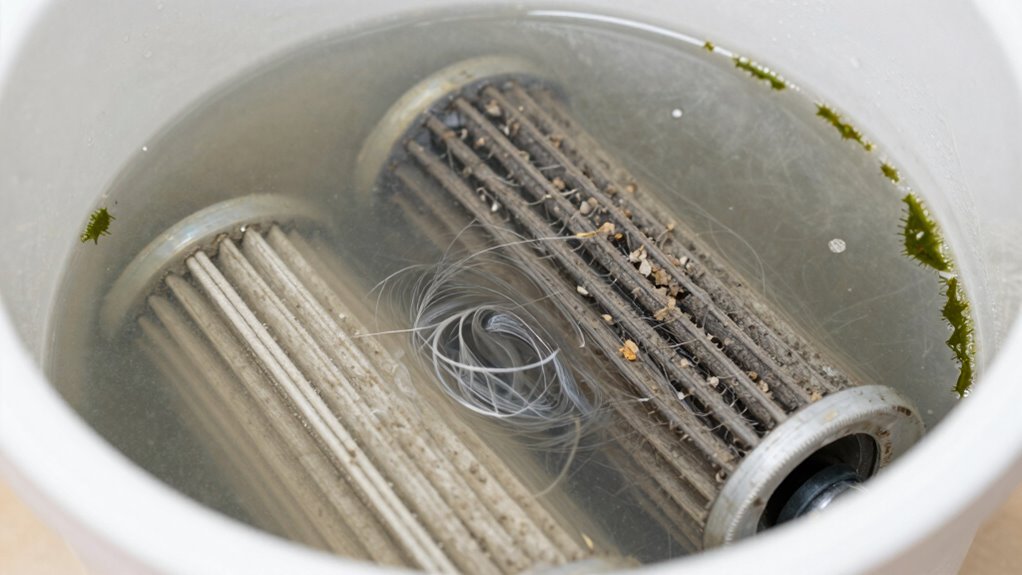

If your filter won’t rinse properly, check if the valve is set correctly to rinse after backwashing. Make sure the flow rate is adequate and that the filter media isn’t clogged or dirty. Poor rinsing can also happen if debris or oils are blocking the media or if the rinse cycle is too short. Addressing these issues and ensuring the proper cycle length can improve rinse effectiveness. Continue exploring to learn more about fixing these common problems.
Key Takeaways
- Ensure the valve is correctly set to the rinse position after backwashing to avoid improper rinsing.
- Run the rinse cycle for at least 1-2 minutes or until water runs clear to flush out debris.
- Check for clogs or buildup in filter media that may hinder proper rinsing.
- Confirm the flow rate during rinse is adequate; low flow can compromise rinsing effectiveness.
- Regularly inspect and maintain filter components to prevent debris accumulation and ensure proper operation.

Have you ever noticed cloudy water or strange odors in your pool? If so, it could be a sign that your filter isn’t rinsing properly during backwashing. When your filter isn’t functioning correctly, it can disrupt your pool’s water chemistry, leading to poor clarity and imbalance that can cause algae growth or irritate swimmers’ eyes and skin. To prevent these issues, it’s essential to understand what might be causing your filter to malfunction during the rinse cycle and how to troubleshoot effectively.
One common problem is that your filter may be clogged or dirty, which hampers its ability to rinse properly. Over time, debris, oils, and minerals accumulate within the filter media, restricting water flow and reducing filtration efficiency. Regular filter maintenance is crucial to keep things running smoothly. This includes backwashing your sand or DE filters when the pressure gauge indicates a rise, typically about 8-10 psi above the normal operating level. During backwash, you must ensure you set the valve correctly to the rinse setting afterward, which allows the filter media to flush out trapped debris and reset the flow pattern. If you skip this step or forget to switch to rinse, you risk contaminating your pool water with debris or unfiltered particles.
Another issue could be that your backwash process isn’t thorough enough. Sometimes, debris can be stubborn, or the flow rate isn’t sufficient, leaving contaminants behind. Make sure you run the rinse cycle long enough—usually around 1-2 minutes—until the water runs clear. If you notice persistent cloudiness or odors, it might be time to check your filter media. For sand filters, sometimes a deep cleaning or replacing the sand every 3-5 years helps restore proper flow. For DE filters, new grids or recharging the DE powder can make a big difference. Proper water chemistry also plays an essential role; if pH, alkalinity, or sanitizer levels are off, it can cause scaling or corrosion that clogs the filter media or affects its rinsing ability. Additionally, understanding the filter media materials can help you select the best maintenance practices for your specific type of filter.
Finally, don’t overlook the importance of routine filter maintenance in preventing backwash problems. Regular inspections, cleaning, and replacing worn parts can extend the life of your filter and improve overall water quality. When your filter isn’t rinsing properly, it’s a sign to review your maintenance schedule, ensure correct backwash procedures, and keep an eye on water chemistry. Addressing these issues promptly helps keep your pool water crystal clear, safe, and inviting for every swim.
Frequently Asked Questions
Can Backwash Issues Cause Long-Term Damage to the Filter?
Yes, backwash issues can cause long-term damage to your filter if you neglect proper filter maintenance and ignore water chemistry problems. When the filter doesn’t rinse correctly, debris and contaminants can accumulate, straining the system and degrading filter media. Over time, this can lead to reduced efficiency, cracks, or leaks. Regularly check and maintain your filter, and keep water chemistry balanced to prevent lasting damage and guarantee ideal performance.
How Often Should I Perform Backwash to Prevent Problems?
You should perform backwash about once a week to maintain filter efficiency and guarantee water clarity. Regular filter maintenance prevents debris buildup that can hinder proper rinsing. If you notice murky water or reduced flow, backwash more frequently. Consistent backwashing helps keep your filter in top condition, avoiding problems with rinsing and prolonging its lifespan. Always follow your filter manufacturer’s guidelines for best results.
Are There Specific Filter Types More Prone to Backwash Issues?
Some filters are like drama queens—they’re way more prone to backwash issues because of their design. Cartridge filters, for example, often get clogged and stubborn, making rinsing a nightmare. Sand filters can be more forgiving but still need proper maintenance routines. You’ll find that filters with complex or less durable filter design tend to give you more trouble. Regular maintenance keeps these troublemakers in check and guarantees smooth rinsing every time.
What Are Signs My Filter Needs Professional Repair?
You’ll know your filter needs professional repair if it’s showing signs like persistent backwash issues, decreased water flow, or unusual noises. If your filter is nearing the end of its lifespan, repair costs might outweigh replacement. Addressing issues early can save you money and guarantee peak performance. Don’t ignore these signs, as delaying repair can lead to more extensive damage and higher costs down the line.
Can Environmental Factors Affect Backwash Efficiency?
Imagine your pool’s water shimmering under the sun, but environmental factors like water chemistry and ambient temperature can mess with your filter’s backwash. If the water’s pH or chemical balance is off, debris sticks, making rinsing less effective. Similarly, low or high temperatures affect water flow and filter performance. You might notice poor rinsing, cloudy water, or lingering debris, signaling environmental factors are hampering your filter’s efficiency.
Conclusion
When your filter won’t rinse properly, it’s like trying to clear a foggy mirror—no matter how much you wipe, the reflection remains obscured. Backwash problems symbolize the need to look beneath the surface, to address unseen issues before they distort the bigger picture. Just as a mirror needs clarity, your system needs proper maintenance. Resolve these issues now, so clarity can shine through, revealing a clean, refreshed pool ready to mirror your efforts.