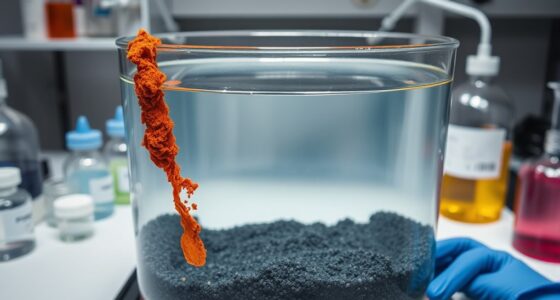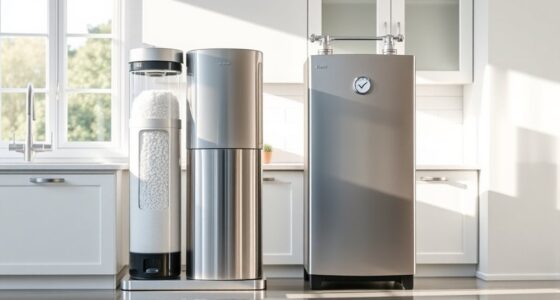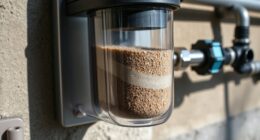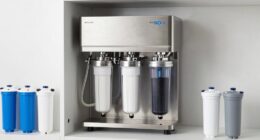

To select the right pre-filter for sediment and turbidity, consider your water’s sediment levels and flow rate needs. Match the pre-filter’s pore size to your turbidity—larger pores for high sediment loads, finer ones for clearer water. Make certain it’s compatible with your membrane material to prevent clogging or damage. Balancing flow rate and sediment removal improves system efficiency and lifespan. Keep exploring to discover how to fine-tune your filter choice for ideal results.
Key Takeaways
- Match pre-filter pore size and material with membrane specifications to prevent clogging and damage.
- Consider water sediment levels; higher turbidity requires larger pore size pre-filters initially.
- Balance flow rate with system capacity to avoid bypassing sediment or reducing efficiency.
- Ensure pre-filter compatibility with membrane type to maintain system longevity and performance.
- Regularly monitor water quality to adjust pre-filter choice and optimize filtration effectiveness.
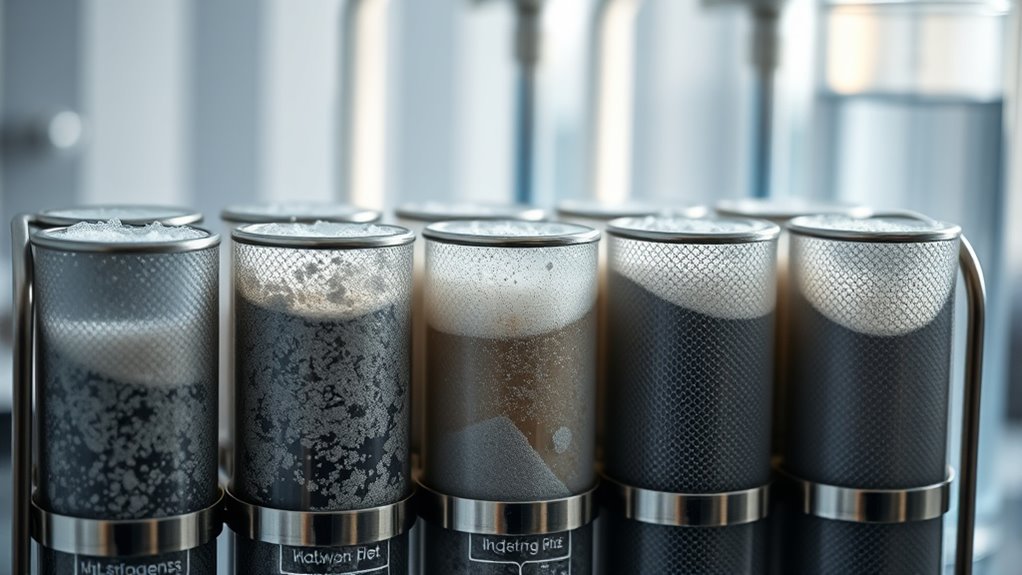
Choosing the right pre-filter is essential for maintaining your filtration system’s efficiency and extending its lifespan. When you select a pre-filter, one of the most critical factors to consider is membrane compatibility. Not all pre-filters work seamlessly with every type of membrane, so it’s vital to ensure that the filter you choose is compatible with your specific membrane material. Using an incompatible pre-filter can lead to clogging, reduced flow, or even damage to the membrane itself. To avoid these issues, check the manufacturer’s specifications and confirm that the pre-filter’s pore size and construction match your membrane’s requirements. Proper membrane compatibility ensures your system operates smoothly, reduces maintenance needs, and prevents costly replacements.
Choosing a compatible pre-filter ensures system efficiency and extends membrane lifespan.
Flow rate optimization is another key aspect of selecting a pre-filter. Your system’s flow rate directly impacts how effectively water passes through the filter and into the membrane. If the flow rate is too high, sediments and turbidity may bypass the pre-filter, causing premature fouling or clogging of the membrane. Conversely, a flow rate that’s too low can decrease efficiency and increase processing time. You want a pre-filter that strikes the right balance, allowing a steady, optimal flow without stressing the system or sacrificing filtration quality. When choosing a pre-filter, consider your typical water input volume and pressure conditions. Some filters are designed to handle higher flow rates, which can be beneficial if you’re dealing with large volumes of water or high turbidity levels. Proper flow rate optimization not only protects your membrane but also ensures the system runs at peak performance, saving you energy and reducing operational costs.
In addition to compatibility and flow rate, think about the sediment and turbidity levels in your water source. If your water has high sediment loads, you’ll need a pre-filter with a larger pore size initially, which can be fine-tuned or replaced as sediment levels decrease over time. For water with low turbidity, a finer pre-filter will help extend the life of your membrane and improve overall water quality. Regularly monitoring your water quality and filter performance allows you to adjust your pre-filter choice accordingly, maintaining system efficiency and avoiding unnecessary replacements.
Ultimately, selecting the right pre-filter isn’t just about filtering out sediments; it’s about creating a harmonious setup that works effectively with your membrane and water conditions. By focusing on membrane compatibility and flow rate optimization, you ensure your system operates reliably, efficiently, and with minimal maintenance, giving you cleaner water and a longer-lasting filtration system.
Frequently Asked Questions
How Often Should Pre-Filters Be Replaced?
You should replace your pre-filters based on their filter lifespan, which typically ranges from 2 to 6 months, depending on water quality and usage. Keep an eye on the replacement schedule and monitor for signs like reduced flow or increased turbidity. Regular checks help prevent clogging and guarantee your system functions effectively. Stick to the recommended replacement schedule for peak performance and to avoid potential damage to your main filter.
Can Pre-Filters Remove Chemicals or Bacteria?
Pre-filters mainly focus on removing sediment and turbidity; they aren’t designed for chemical removal or bacterial filtration. If you need to eliminate chemicals or bacteria, you should look for specialized filters like activated carbon or UV purification systems. Pre-filters help protect these more advanced filters, but they don’t directly remove chemicals or bacteria themselves. Always choose the right combination of filters to guarantee your water is safe and clean.
What Is the Cost Difference Between Filter Types?
Imagine holding a clear, pristine drop of water—now, think about the cost comparison between filter types. Basic sediment filters are budget-friendly, often costing less than $10, with simple filter pricing. High-performance options, like multi-stage filters, can range from $20 to $50 or more. You’ll pay more upfront for advanced filtration, but it may save you money long-term by reducing the need for frequent replacements.
Are Pre-Filters Suitable for Commercial or Industrial Use?
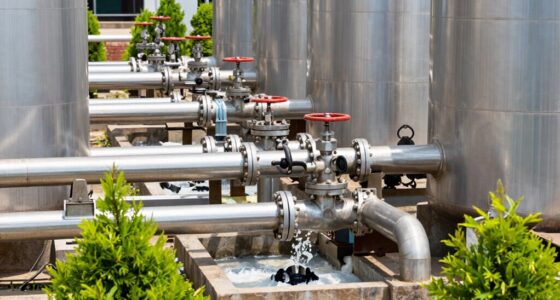
Yes, pre-filters are suitable for industrial applications and commercial filtration. They effectively remove sediment and turbidity, protecting downstream equipment and ensuring water quality. You’ll find pre-filters used in manufacturing, water treatment plants, and food processing facilities. They’re versatile, durable, and customizable to meet specific flow rates and contaminant levels, helping you maintain efficient operations while extending the lifespan of your main filtration systems.
How Do Pre-Filters Affect Overall Water Flow Rate?
Imagine you’re operating a spaceship, and a pre-filter is like an air filter. It impacts your water flow rate by potentially reducing it due to filter clogging. As sediment and turbidity particles get caught, the flow rate impact becomes more significant over time. Regular maintenance prevents clogging, ensuring your water keeps flowing smoothly. Keep an eye on the filter to maintain ideal water flow and avoid unnecessary pressure drops.
Conclusion
Choosing the right pre-filter can critically improve your water quality and extend your filtration system’s lifespan. Did you know that improper filtering accounts for over 30% of system failures? By selecting a pre-filter tailored to your sediment and turbidity levels, you guarantee cleaner water and save money in the long run. Don’t overlook this essential step—making the right choice now means better, safer water for years to come.