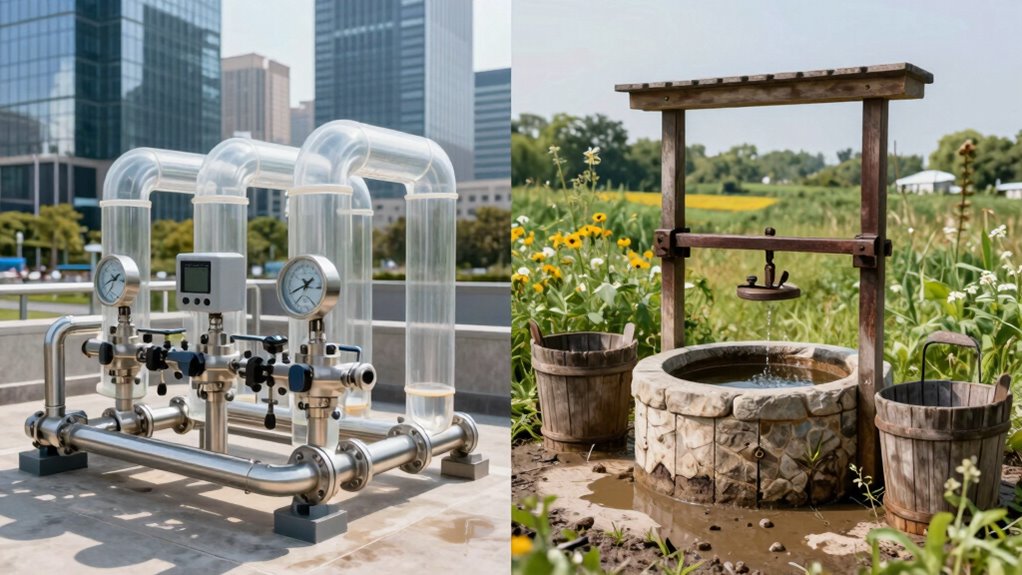

When designing your plumbing system, you need to consider whether you’re using city or well water, as each has unique needs. City water typically requires minimal filtration and compatible materials like copper or PEX, while well water often needs specialized filters, water softeners, and resistant materials due to mineral content. Ignoring these differences can lead to system failures or costly repairs. Understanding how each source impacts your setup helps ensure long-term safety and durability—you’ll find tips that fit your water type as you explore further.

Get home appliances delivered free with Prime
- Fast, free delivery on millions of items
- Prime Video, Amazon Music and more included
- Member-only deals all year
Key Takeaways
- Water source dictates filtration needs: city water requires minimal treatment, while well water needs specialized filtration systems.
- Plumbing materials must be compatible with water chemistry; copper or PEX for city water, plastics or brass for well water.
- Well water systems need additional components like sediment filters and water softeners to handle mineral content.
- Maintenance routines vary; city water systems need less frequent upkeep, while well water systems require regular monitoring and filter changes.
- System design should be tailored to source characteristics to ensure durability, safety, and cost-effectiveness.
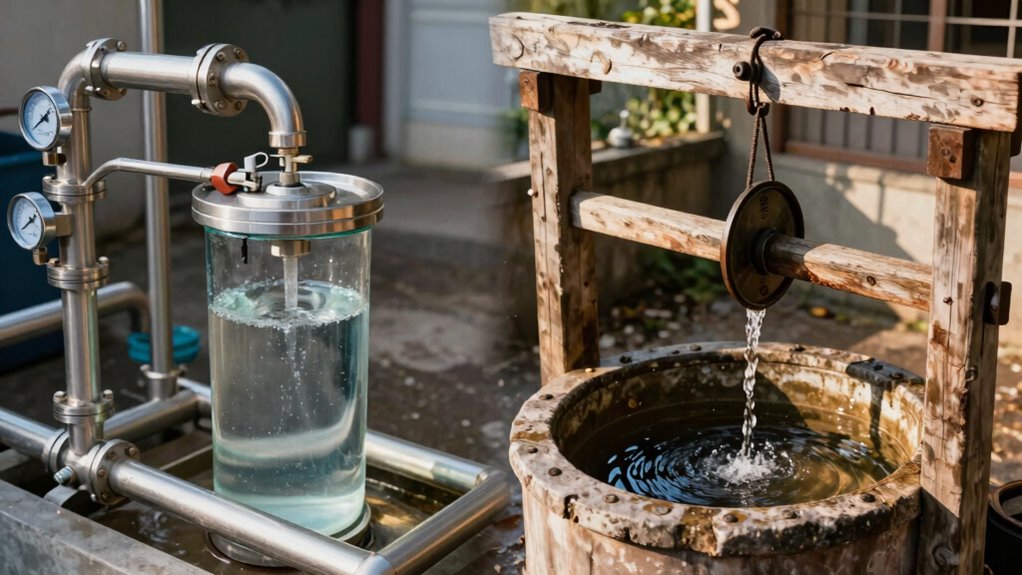
Have you ever considered how different water types influence your design choices? When planning a plumbing system, understanding whether your source is city water or well water is vital, as each demands a different approach to guarantee safety, efficiency, and longevity. City water typically comes pre-treated and monitored, so your focus might be on maintaining flow and pressure. Well water, on the other hand, often contains minerals, sediments, or other impurities that require specialized treatment. This distinction impacts everything from the choice of filtration systems to the plumbing materials you select.
Understanding whether your water source is city or well water guides your plumbing design choices.
For city water, you usually don’t need overly complex filtration systems. Basic sediment filters and chlorine disinfectants often suffice, since municipal systems already treat the water to meet safety standards. Your primary concern is guaranteeing that your plumbing materials can handle consistent water quality, pressure, and flow. Plumbing materials like copper, PEX, or CPVC are common choices because they resist corrosion and are compatible with treated city water. These materials tend to be more forgiving with standard chlorinated water, reducing the risk of degradation over time.
Well water, however, demands more careful consideration. It often contains minerals such as iron, manganese, or calcium, which can lead to buildup and clogging in pipes and fixtures. To combat this, you need robust filtration systems—such as sediment filters, water softeners, or reverse osmosis units—that can effectively remove or reduce impurities. Choosing the right plumbing materials is equally critical; some materials, like galvanized steel, may corrode or degrade quickly when exposed to mineral-rich water. Instead, you might opt for corrosion-resistant plastics or brass, which hold up better under these conditions.
Designing for well water also means planning for ongoing maintenance. Regularly replacing filters and monitoring water quality helps prevent damage to your plumbing system and guarantees your water remains safe and clean. Conversely, city water systems generally require less maintenance, though occasional disinfecting or flushing might be necessary after repairs or outages.
Ultimately, your design has to adapt to the specific water source. For city water, simplicity and compatibility with municipal standards are key. For well water, a tailored approach involving advanced filtration systems and appropriate plumbing materials becomes vital. Recognizing these differences upfront can save you time, money, and headaches down the line. By understanding how each water type impacts your setup, you can create a reliable, efficient system that meets your needs and withstands the unique challenges posed by your water source.
sediment water filter for well water
As an affiliate, we earn on qualifying purchases.
As an affiliate, we earn on qualifying purchases.
Frequently Asked Questions
Can a Single Water System Serve Both City and Well Water?
You can’t use a single water system for both city and well water due to dual system challenges and water quality considerations. Mixing these sources can cause corrosion, sediment buildup, and health risks. To guarantee safety and efficiency, you need separate setups or specialized filtration systems tailored to each water type. This approach helps address differences in mineral content, contaminants, and pressure, maintaining water quality and system longevity.
How Do Water Taste Differences Affect System Design?
You should prioritize taste considerations when designing your water system, as mineral content considerably impacts flavor. For example, city water often has added chlorine, affecting taste, while well water varies in minerals like iron or calcium. These differences mean your system needs adaptable filters or treatment stages to manage mineral content and guarantee the water tastes fresh. Addressing taste differences upfront helps create a reliable, pleasant water experience for every user.
What Maintenance Differences Exist Between City and Well Water Setups?
You’ll find that maintenance differs mainly in water softening and sediment filtration needs. With city water, you typically need less frequent sediment filter changes, but softening systems may still require occasional replenishment of salts. Well water often demands more frequent sediment filtration and water softening maintenance since it usually contains higher mineral levels. Regular inspections and timely filter replacements guarantee your system runs efficiently and prolongs its lifespan.
Are Special Filters Necessary for Well Water?
Think of your well water as a raw diamond, full of potential but with impurities lurking. Special filters are often necessary to boost filtration efficiency and handle high mineral content, preventing buildup and protecting your appliances. These filters act like a refining process, ensuring your water stays clean and safe. Without them, mineral deposits could clog your system, making maintenance more difficult and your water less pure.
How Does Water Pressure Vary Between City and Well Sources?
You’ll notice water pressure fluctuates more with well sources due to variable pump performance and aquifer levels. City water typically offers consistent pressure, averaging around 60-80 psi. Well water pressure can be affected by mineral content, which may clog pipes or filters, causing pressure drops. These fluctuations mean you might need pressure regulators or additional filtration to maintain steady flow and protect your plumbing system, especially with mineral-rich well water.
As an affiliate, we earn on qualifying purchases.
Conclusion
When designing for city water, you prioritize filtration and pressure regulation. When designing for well water, you focus on sediment removal and water testing. When designing for city water, you guarantee compliance and convenience. When designing for well water, you prepare for variability and maintenance. Ultimately, whether it’s city or well water, the goal is the same: reliable, safe, and efficient water access. Because your setup should fit the water source—and your needs—every time.
As an affiliate, we earn on qualifying purchases.
reverse osmosis water filtration system
As an affiliate, we earn on qualifying purchases.
As an affiliate, we earn on qualifying purchases.
Halloween Picks
halloween
As an affiliate, we earn on qualifying purchases.