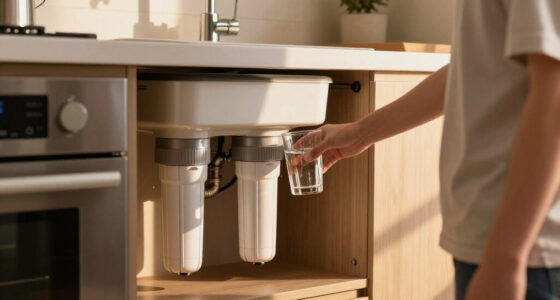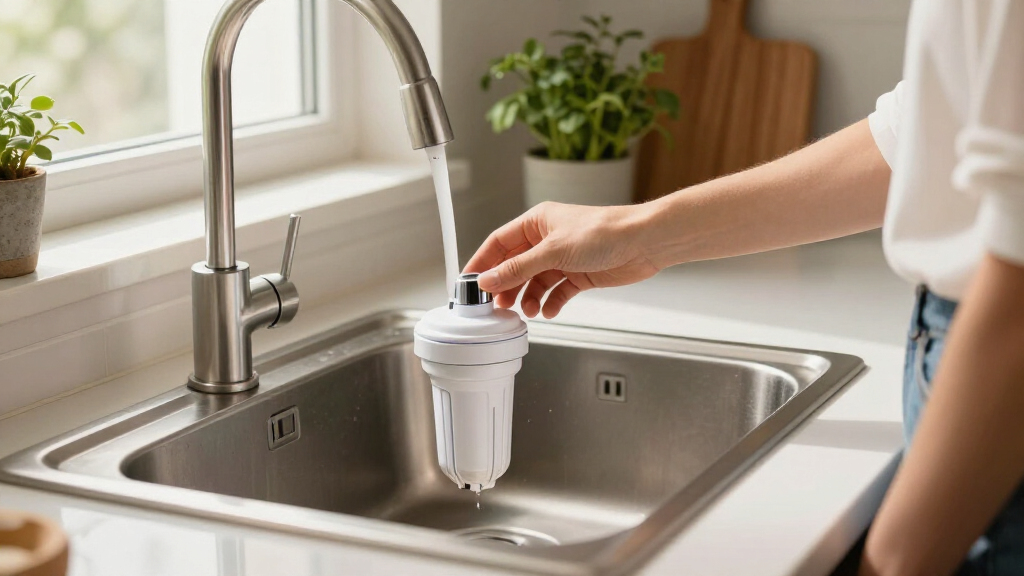

The best under-sink water filter system overall in this lineup is the Frizzlife SK99-NEW, which pairs broad contaminant-reduction claims with a compact, direct-connect design. For buyers prioritizing long service life, the Waterdrop UA-5Y and CuZn UC-200 stand out; for stronger filtration, the Waterdrop G3P600 reverse-osmosis system is the more advanced choice. The main tradeoffs are filtration scope, water waste, filter replacement frequency, and installation complexity. Some systems connect to an existing faucet, while others need a dedicated faucet or more room beneath the sink. Read on for the full comparison and guidance on matching a system to your water and kitchen.

Get home appliances delivered free with Prime
- Fast, free delivery on millions of items
- Prime Video, Amazon Music and more included
- Member-only deals all year
Complete the kit


Key Takeaways
- Frizzlife SK99-NEW is the broad-coverage pick: its stated certifications and focus on lead, chloramine, and PFAS-related compounds distinguish it from simpler chlorine-and-taste filters.
- Long filter life is a clear dividing line: the Waterdrop UA-5Y and CuZn UC-200 reduce replacement frequency, while the GE dual-stage system calls for replacement about every six months.
- Reverse osmosis is a different kind of commitment: the Waterdrop G3P600 and iSpring RCC7AK-BN offer RO filtration, but need more installation planning than direct-connect carbon or ultrafiltration systems.
- Micron ratings alone do not settle the choice: Waterdrop‘s 0.01-micron ultrafiltration models emphasize fine physical filtration, but buyers should check the exact contaminant claims and certifications for each model.
- Faucet and fit can decide the purchase: models such as the Waterdrop 10UB include a dedicated faucet, while direct-connect options may suit kitchens where preserving counter space matters.
| Waterdrop UA-5Y 5-Year Under-Sink Water Filter System |  | Best for Long Service Intervals | Filter life: 5 years | Filtration method: 0.5 μm activated carbon block | Maximum flow rate: 1.33 gpm | VIEW LATEST PRICE | See Our Full Breakdown |
| ICEPURE Under Sink Water Filter System, 3 Years or 22,000 Gallons |  | Best for High Flow and Simple Installation | Filter life: Up to 22,000 gallons; replacement recommended every 3 years | Certification: NSF/ANSI 42 and 372 | Maximum flow rate: 2.5 gpm at 60 psi | VIEW LATEST PRICE | See Our Full Breakdown |
| Waterdrop TSA 8 Layer Under Sink Water Filter System |  | Best for Multi-Stage Filtration | Filtration stages: 8 stages across 3 filters | Filter life: 6 months; 8–12 months; and 12–18 months by cartridge | Maximum flow rate: 1.5 gpm | VIEW LATEST PRICE | See Our Full Breakdown |
| CuZn UC-200 Under-Sink Water Filter, 5-Year Filter Life |  | Best for No-Drill Installation | Model: UC-200 | Filtration stages: 3 | Filter life: 5 years | VIEW LATEST PRICE | See Our Full Breakdown |
| Frizzlife SK99-NEW Under Sink Water Filter System |  | Best for Certified Lead Reduction | Filtration stages: 8 layers | Filtration accuracy: 0.5 micron | Certification: IAPMO certification against NSF/ANSI 42 and 53; NSF/ANSI 372 listed | VIEW LATEST PRICE | See Our Full Breakdown |
| GE Dual Stage Under Sink Water Filtration System with Faucet (GXK255TBN) |  | Best for Simple, Dedicated-Faucet Filtration | Filtration: Dual-stage | Stated reduction targets: Lead, chlorine taste and odor, select VOCs, select pharmaceuticals, and other impurities | Maximum flow rate: 0.6 gpm | VIEW LATEST PRICE | See Our Full Breakdown |
| Waterdrop G3P600 Tankless Reverse Osmosis Water Filter System with Smart LED Faucet |  | Best Premium Tankless Reverse Osmosis | Filtration stages: 8 | Daily capacity: 600 gallons | Pure-to-waste ratio: 2:1 | VIEW LATEST PRICE | See Our Full Breakdown |
| Waterdrop 10UAW-UF 0.01 μm Ultra Filtration Under Sink Water Filter System |  | Best Compact Ultrafiltration | Filtration method: Ultrafiltration with activated carbon | Stated testing: Third-party testing against NSF/ANSI 42 and 53 | Maximum flow rate: 1.33 gpm | VIEW LATEST PRICE | See Our Full Breakdown |
| Waterdrop 10UB Under Sink Water Filter System with Dedicated Faucet |  | Best for Fast-Flow Dedicated-Faucet Filtration | Filtration method: Multistage activated carbon | Stated reduction targets: PFAS, chlorine, heavy metals, and other contaminants | Maximum flow rate: 0.75 gpm | VIEW LATEST PRICE | See Our Full Breakdown |
| iSpring RCC7AK-BN NSF Certified 75 GPD Alkaline 6-Stage Reverse Osmosis System |  | Best RO Pick for Remineralized Water | Filtration method: Six-stage reverse osmosis with alkaline remineralization | Certification: NSF/ANSI 58 | Maximum flow rate: 284 liters per day | VIEW LATEST PRICE | See Our Full Breakdown |
| Waterdrop 15UA Under-Sink Water Filter System, 19,000-Gallon Capacity |  | Best for Long Replacement Intervals | Capacity: 19,000 gallons | Filter life: Up to 24 months | Replacement filter: WD-RF15 | VIEW LATEST PRICE | See Our Full Breakdown |
| Waterdrop 10UA Under Sink Water Filter System, NSF/ANSI 42 Certified 1 Year | 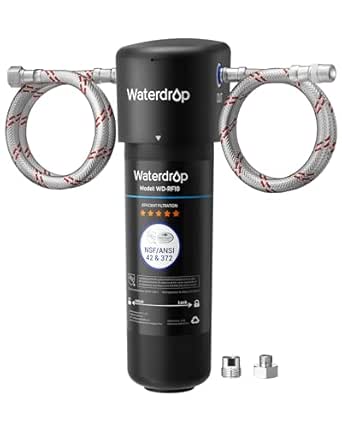 | Best for Compact, Straightforward Installation | Capacity: 11,000 gallons | Filter life: Up to 12 months | Replacement filter: WD-RF10 | VIEW LATEST PRICE | See Our Full Breakdown |
| Waterdrop TSU 0.01 Micron Ultra Filtration Under Sink Water Filter System | 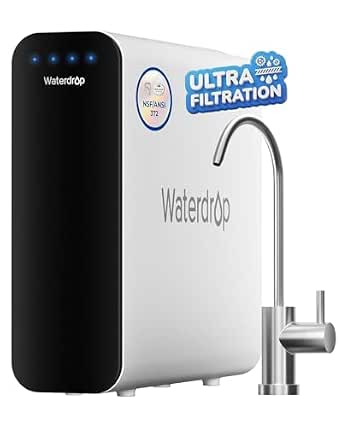 | Best for Dedicated-Faucet Ultrafiltration | Filtration method: Three-stage ultrafiltration, activated carbon, and carbon block | Filtration accuracy: 0.01 micron | Flow rate: 1.05 gpm | VIEW LATEST PRICE | See Our Full Breakdown |
| Waterdrop WD-TSA-UF 0.01 μm Under-Sink Water Filter System |  | Best for Fast DIY Filter Changes | Filtration accuracy: 0.01 μm | Filtration stages: Product information states both 8-stage and 9-stage; system uses three filters | Maximum flow rate: 1.5 gpm | VIEW LATEST PRICE | See Our Full Breakdown |
| under-sink water filter system | Dimensions | Maximum flow rate | Filter life | Filtration method |
|---|---|---|---|---|
| Waterdrop UA-5Y 5-Year Under-S | 3.9 × 3.6 × 16.7 in | 1.33 gpm | 5 years | 0.5 μm activated carbon block |
| ICEPURE Under Sink Water Filte | 6.81 × 5.39 × 15.55 in | 2.5 gpm at 60 psi | Up to 22,000 gallons; replacement recommended every 3 years | — |
| Waterdrop TSA 8 Layer Under Si | 12.9 × 4.3 × 12.4 in | 1.5 gpm | 6 months; 8–12 months; and 12–18 months by cartridge | — |
| CuZn UC-200 Under-Sink Water F | 5.5 × 14 × 5.5 in | — | 5 years | — |
| Frizzlife SK99-NEW Under Sink | 14.5 × 4.7 × 14.1 in | 2.5 gpm | — | — |
| GE Dual Stage Under Sink Water | 12 x 7 x 4.5 inches | 0.6 gpm | — | — |
| Waterdrop G3P600 Tankless Reve | 18.12 x 5.67 x 17.72 inches | 0.42 gpm | — | — |
| Waterdrop 10UAW-UF 0.01 μm Ult | 3.9 x 3.6 x 12.3 inches | 1.33 gpm | — | Ultrafiltration with activated carbon |
| Waterdrop 10UB Under Sink Wate | — | 0.75 gpm | 1 year | Multistage activated carbon |
| iSpring RCC7AK-BN NSF Certifie | 15.5 x 16 x 18 inches | 284 liters per day | — | Six-stage reverse osmosis with alkaline remineralization |
| Waterdrop 15UA Under-Sink Wate | 3.9 × 3.6 × 16.7 in | 0.75 gpm at 60 psi | Up to 24 months | Activated carbon |
| Waterdrop 10UA Under Sink Wate | 3.9 × 3.6 × 12.3 in | — | Up to 12 months | Activated carbon |
| Waterdrop TSU 0.01 Micron Ultr | 14.81 × 4.68 × 13.97 in | — | — | Three-stage ultrafiltration, activated carbon, and carbon block |
| Waterdrop WD-TSA-UF 0.01 μm Un | — | 1.5 gpm | 10PP: up to 6 months; 10GC: 8–12 months; 10UF: up to 12 months | — |
More Details on Our Top Picks
Waterdrop UA-5Y 5-Year Under-Sink Water Filter System
I’d shortlist the Waterdrop UA-5Y for municipal-water households that want fewer scheduled filter changes. Its stated five-year filter life is longer than the ICEPURE’s three-year recommendation and the Waterdrop TSA’s staged cartridges, which have separate replacement intervals. The 0.5 μm carbon block is listed to reduce chlorine, PFOA/PFOS, and particles while retaining minerals, so it suits people who want filtered-tasting water without a TDS-reducing system. It connects to the kitchen faucet and runs without electricity, but the 16.7-inch height calls for a cabinet-clearance check. The five-year warranty is prorated, and this model is not recommended for well water; buyers who need a broader staged setup or well-water compatibility should look elsewhere.
Pros:- Stated five-year filter life reduces scheduled replacement frequency.
- 0.5 μm activated carbon block is listed to reduce chlorine, PFOA/PFOS, and particles.
- Retains essential minerals rather than reducing TDS.
- Mechanical operation needs no electricity.
Cons:- Not recommended for well water.
- The 16.7-inch height may restrict placement in short sink cabinets.
- The five-year warranty is prorated.
Best for: Households on municipal tap water that want mineral retention and fewer planned filter replacements.
Not ideal for: Well-water users or buyers with limited cabinet height who cannot accommodate a 16.7-inch unit.
- Filter life:5 years
- Filtration method:0.5 μm activated carbon block
- Maximum flow rate:1.33 gpm
- Maximum supported TDS:700 ppm
- Operating temperature:35–100 °F
- Dimensions:3.9 × 3.6 × 16.7 in
- Power source:Mechanical; no electricity required
- Intended water source:Municipal tap water
Our verdict“Choose the UA-5Y if you use municipal water and value long intervals between filter changes more than a compact cabinet fit.”
ICEPURE Under Sink Water Filter System, 3 Years or 22,000 Gallons
The ICEPURE WFS5300A puts installation simplicity and a strong stated flow rate ahead of multi-stage filtration. Its direct-connect design is described as plug-and-play, and the listed 2.5 gpm flow rate is higher than the Waterdrop UA-5Y’s 1.33 gpm, a useful difference when filling pots or serving a busy kitchen. It is rated for up to 22,000 gallons, with replacement recommended by three years, and NSF/ANSI 42 and 372 certifications are listed. The tradeoff is a narrower stated filtration focus: chlorine, taste, and odor reduction are central claims, while the Waterdrop TSA lists additional reductions such as fluoride and PFAS. Check the connection before buying: it is for cold-water lines with 1/2-inch or 3/8-inch female NPT threads, not every faucet setup.
Pros:- Listed 2.5 gpm flow rate supports fast filling.
- Up to 22,000-gallon capacity with replacement recommended every three years.
- NSF/ANSI 42 and 372 certifications are listed.
- Direct-connect installation avoids adding a separate countertop faucet.
Cons:- Connection compatibility is limited to specified cold-water line threads.
- Its stated reduction claims are narrower than the Waterdrop TSA’s listed contaminant range.
- The product information recommends municipal water and does not establish well-water suitability.
Best for: Busy municipal-water kitchens seeking a direct-connect filter with a high listed flow rate and simple cartridge changes.
Not ideal for: Buyers whose faucet connection does not match 1/2-inch or 3/8-inch female NPT, or who want broader listed contaminant reductions.
- Filter life:Up to 22,000 gallons; replacement recommended every 3 years
- Certification:NSF/ANSI 42 and 372
- Maximum flow rate:2.5 gpm at 60 psi
- Installation:Under sink; direct connect
- Compatible connections:1/2-inch or 3/8-inch female NPT
- Water line:Cold water only
- Dimensions:6.81 × 5.39 × 15.55 in
- Purification method:Activated carbon
Our verdict“Pick ICEPURE if fast flow and a straightforward direct connection matter more than having the broadest listed contaminant coverage.”
Waterdrop TSA 8 Layer Under Sink Water Filter System
Among these direct-connect options, the Waterdrop TSA makes the strongest case for buyers who want several listed reduction targets in one system. Its three cartridges provide eight-stage filtration, with product information listing reductions for PFAS, PFOA/PFOS, fluoride, chlorine, sediment, and other contaminants. That is a broader stated scope than the ICEPURE’s emphasis on chlorine, taste, and odor, though the TSA’s staged design also means keeping track of different cartridge intervals: six months, eight to twelve months, and twelve to eighteen months. The maximum listed flow is 1.5 gpm, below ICEPURE’s 2.5 gpm, so the tradeoff is a slower stream for more filtration stages. It retains minerals and does not reduce TDS; it is for municipal cold water, with a pre-filter required for well water.
Pros:- Three cartridges deliver eight-stage filtration with several listed reduction targets.
- Listed reductions include PFAS, PFOA/PFOS, fluoride, and chlorine.
- Push-to-connect installation and twist-lock cartridge replacement are designed for DIY use.
- Retains beneficial minerals and does not reduce TDS.
Cons:- The 1.5 gpm maximum flow is lower than ICEPURE’s listed 2.5 gpm.
- Three cartridges have different replacement intervals to track.
- Not suitable for hot water, and well water requires pre-filtration.
Best for: Municipal-water households that prioritize multiple listed contaminant reductions and are comfortable replacing three cartridges on different schedules.
Not ideal for: Buyers who want the fastest listed flow, a single long-life cartridge, or a system intended for untreated well water.
- Filtration stages:8 stages across 3 filters
- Filter life:6 months; 8–12 months; and 12–18 months by cartridge
- Maximum flow rate:1.5 gpm
- Capacity:8,000 gallons
- Certification:NSF/ANSI 42 and 372; CT filter listed with IAPMO certification
- Operating temperature:35–100 °F
- Maximum supported TDS:700 ppm
- Dimensions:12.9 × 4.3 × 12.4 in
- Water source:Municipal cold water; well water requires pre-filtration
Our verdict“Choose the TSA if broader staged filtration is your priority and you accept a more involved replacement schedule and lower maximum flow.”
CuZn UC-200 Under-Sink Water Filter, 5-Year Filter Life
The CuZn UC-200 suits renters and homeowners who want an inline under-sink filter without drilling for a dedicated faucet. Its three media types—micro-sediment membranes, KDF-55, and coconut-shell carbon—are listed to reduce PFAS, PFOA/PFOS, lead, and chlorine while retaining minerals. Like the Waterdrop UA-5Y, it has a five-year stated filter life and does not reduce TDS; the key distinction is its three-stage media and no-drill faucet connection. That connection still means working at the sink plumbing, so “no drilling” does not mean installation-free. Its footprint is also wider than a slim inline cartridge, at 14 inches across. Buyers seeking reverse-osmosis-style dissolved-solids reduction should skip it, as the product explicitly does not reduce TDS.
Pros:- Stated five-year filter life limits scheduled replacements.
- Three filtration media are listed for several contaminant reduction targets.
- No drilling or separate faucet is required.
- Retains beneficial minerals.
Cons:- Does not reduce total dissolved solids.
- Still requires a connection to sink plumbing.
- Its 14-inch width may be difficult to place in a crowded cabinet.
Best for: People who want a long-life, no-drill inline filter for a kitchen or bathroom sink and want to retain minerals.
Not ideal for: Buyers seeking TDS reduction, a dedicated faucet, or a narrow unit for a cramped cabinet.
- Model:UC-200
- Filtration stages:3
- Filter life:5 years
- Filtration media:Micro-sediment membranes, KDF-55, coconut-shell carbon
- Listed reductions:PFAS, PFOA/PFOS, lead, chlorine
- Certification:NSF/ANSI 42; NSF 42 certified components/materials
- Installation:Inline faucet connection; no drilling required
- Dimensions:5.5 × 14 × 5.5 in
- TDS reduction:No
Our verdict“Choose the UC-200 if no-drill installation and a five-year service interval matter more than TDS reduction or a small footprint.”
Frizzlife SK99-NEW Under Sink Water Filter System
I’d put the Frizzlife SK99-NEW on the shortlist for buyers who place particular weight on certification and listed lead reduction. The product is described as IAPMO-certified against NSF/ANSI 42 and 53 for material safety, structural integrity, flow, and filtration effectiveness, with NSF/ANSI 372 also listed. Its 0.5-micron, eight-layer cartridges target lead, chlorine, particulates, and other listed contaminants while retaining minerals. Compared with the Waterdrop TSA, the SK99 lists a higher maximum flow of 2.5 gpm and a more compact stated footprint, but it does not reduce TDS either. Replacement involves changing the inner filter cores rather than discarding the housing, which limits housing waste but still requires scheduled cartridge purchases. The stated capacity is based on manufacturer internal testing, so treat that figure differently from independently certified performance claims.
Pros:- IAPMO certification against NSF/ANSI 42 and 53 is listed, alongside NSF/ANSI 372.
- 0.5-micron, eight-layer cartridges are listed for lead, chlorine, and particulate reduction.
- Maximum listed flow of 2.5 gpm exceeds the Waterdrop TSA’s 1.5 gpm.
- Replacing inner filter cores avoids discarding the full plastic housing.
Cons:- Does not reduce TDS.
- The stated capacity is based on manufacturer internal testing.
- The system still requires recurring filter-core replacements.
Best for: Municipal-water households prioritizing listed lead reduction, certification detail, and a high-flow filter with replaceable inner cores.
Not ideal for: Buyers who need TDS reduction, want independently verified capacity figures, or cannot fit a roughly 14.5-inch-long unit.
- Filtration stages:8 layers
- Filtration accuracy:0.5 micron
- Certification:IAPMO certification against NSF/ANSI 42 and 53; NSF/ANSI 372 listed
- Maximum flow rate:2.5 gpm
- Operating pressure:20–80 psi
- Operating temperature:39–100 °F
- Dimensions:14.5 × 4.7 × 14.1 in
- TDS reduction:No
- Replacement format:Replaceable inner filter cores
Our verdict“Choose the SK99-NEW if certification detail and listed lead reduction matter more than TDS removal or an independently verified capacity claim.”
GE Dual Stage Under Sink Water Filtration System with Faucet (GXK255TBN)
I’d choose the GE GXK255TBN for a straightforward under-sink setup that includes its own faucet and avoids the added plumbing and drain needs of reverse osmosis. Its two-stage filtration is listed to reduce lead, chlorine taste and odor, select VOCs, and select pharmaceuticals, giving it a broader stated target range than a basic taste-and-odor filter. The twist-and-lock cartridges and change indicator make routine upkeep easier to track than systems without a reminder. Compared with the Waterdrop 10UB, GE provides a filter-change indicator, while the 10UB offers a higher stated flow rate and a one-year filter cycle. The tradeoff is the GE’s 150-gallon capacity and six-month replacement schedule, which may mean more frequent upkeep for a busy household. I’d also verify the listed contaminant claims against your water needs before buying.
Pros:- Includes a dedicated filtration faucet with a filter-change indicator.
- Two-stage system is listed to reduce lead, chlorine taste and odor, select VOCs, and select pharmaceuticals.
- Twist-and-lock filter design supports tool-free cartridge replacement.
- Push-to-connect fittings are intended to simplify installation.
Cons:- The stated 150-gallon capacity is modest compared with long-life direct-connect systems.
- Filter replacement is scheduled every six months.
- Maximum flow rate is 0.6 gpm, below the Waterdrop 10UB’s stated 0.75 gpm.
Best for: Households seeking a dedicated drinking-water faucet, lead and chlorine reduction, and a visible reminder for six-month filter changes.
Not ideal for: High-volume households or buyers seeking long cartridge life; the stated capacity is 150 gallons and the filter cycle is six months.
- Filtration:Dual-stage
- Stated reduction targets:Lead, chlorine taste and odor, select VOCs, select pharmaceuticals, and other impurities
- Maximum flow rate:0.6 gpm
- Filter capacity:150 gallons
- Filter replacement cycle:Every 6 months
- Dimensions:12 x 7 x 4.5 inches
- Temperature range:33°F to 100°F
- Installation:Under sink; push-to-connect fittings
Our verdict“Choose the GE if you want a dedicated faucet and a filter-change reminder, but skip it if long cartridge life matters more.”
Waterdrop G3P600 Tankless Reverse Osmosis Water Filter System with Smart LED Faucet
The Waterdrop G3P600 is the most feature-rich choice here for buyers who want reverse osmosis without a storage tank taking up cabinet space. Its eight-stage filtration is listed to reduce TDS, heavy metals, PFAS, and chlorine, while the smart faucet displays TDS and filter life at a glance. A stated capacity of 600 gallons per day suits households that draw drinking and cooking water often, and the listed pure-to-waste ratio is 2:1. Compared with the tank-based iSpring RCC7AK-BN, this Waterdrop saves space and provides a live faucet display, while the iSpring adds a remineralization stage and does not require electricity. The G3P600’s tradeoffs are its corded power requirement, a 31-pound installation load, and a more involved setup than a mechanical carbon filter. Its 0.42 gpm maximum flow also trails the Waterdrop 10UB’s stated 0.75 gpm.
Pros:- Eight-stage RO system is listed to reduce TDS, PFAS, heavy metals, and chlorine.
- Tankless layout saves cabinet space compared with storage-tank RO systems.
- Smart LED faucet displays TDS and filter life.
- Stated 600-gallon daily capacity and 2:1 pure-to-waste ratio.
Cons:- Requires a corded electrical connection under the sink.
- At 31 pounds, the unit can be cumbersome to position during installation.
- Installation is more involved than direct-connect carbon systems such as the Waterdrop 10UB.
Best for: Households wanting tankless reverse osmosis, broad stated contaminant reduction, and on-faucet TDS and filter-life information.
Not ideal for: Renters or DIY beginners without an under-sink outlet, and buyers who want a simpler, non-electric carbon filter.
- Filtration stages:8
- Daily capacity:600 gallons
- Pure-to-waste ratio:2:1
- Maximum flow rate:0.42 gpm
- Certifications:NSF/ANSI 58, NSF/ANSI 372, NSF/ANSI 42, FCC, EU, UKCA
- Faucet:Smart LED display with TDS and filter-life information
- Dimensions:18.12 x 5.67 x 17.72 inches
- Power:Corded electric
- Maximum supported TDS:1500 ppm
Our verdict“Pick the G3P600 for space-saving RO and live faucet information if you can accommodate power and a more involved installation.”
Waterdrop 10UAW-UF 0.01 μm Ultra Filtration Under Sink Water Filter System
For buyers who want an under-sink filter that connects directly to an existing faucet, the Waterdrop 10UAW-UF offers a compact alternative to systems with a separate faucet or RO tank. Its 0.01-micron ultrafiltration membrane and carbon media are described as reducing chlorine, taste and odor, heavy metals, and sediment; the product data also cites third-party testing against NSF/ANSI 42 and 53. At 3.9 x 3.6 x 12.3 inches, it takes up little cabinet space, and the stated 11,000-gallon capacity supports a long replacement interval under the maker’s usage conditions. Compared with the Waterdrop 10UB, this model highlights a much finer membrane and a stated higher capacity, while the 10UB includes a dedicated stainless-steel faucet. The 10UAW-UF does not include a faucet, and buyers should check thread compatibility before ordering. It is not reverse osmosis, so it is not the choice for TDS reduction.
Pros:- Compact housing fits in tight under-sink cabinets.
- 0.01-micron ultrafiltration membrane with carbon media.
- Stated capacity of 11,000 gallons and a recommended annual replacement cycle.
- Push-to-connect fittings and twist-and-lock cartridge design support simple upkeep.
Cons:- No faucet is included, and connection compatibility depends on faucet thread type.
- Ultrafiltration is not reverse osmosis and does not provide the same TDS reduction.
- Limited to cold-water installation.
Best for: Homeowners with a compatible existing faucet who want a compact, long-cycle ultrafiltration system for municipal cold water.
Not ideal for: Buyers who need a dedicated faucet, TDS reduction, or a system designed for hot water or well-water use.
- Filtration method:Ultrafiltration with activated carbon
- Stated testing:Third-party testing against NSF/ANSI 42 and 53
- Maximum flow rate:1.33 gpm
- Capacity:11,000 gallons
- Recommended filter cycle:12 months
- Dimensions:3.9 x 3.6 x 12.3 inches
- Temperature range:35°F to 100°F
- Maximum supported TDS:700 ppm
Our verdict“Choose this compact ultrafiltration system if your faucet is compatible and you want long filter life without a separate faucet or RO setup.”
Waterdrop 10UB Under Sink Water Filter System with Dedicated Faucet
The Waterdrop 10UB is a practical pick when you want a dedicated drinking-water faucet but prefer a mechanical carbon filter over reverse osmosis. Its activated-carbon filtration is described as reducing PFAS, chlorine, heavy metals, and other contaminants while preserving essential minerals. The stated 0.75 gpm flow rate is faster than the GE GXK255TBN’s 0.6 gpm and the Waterdrop G3P600’s 0.42 gpm, which can make filling a pot or bottle less of a wait. It also comes with a brushed stainless-steel faucet and supports tool-free filter changes. Compared with the 10UAW-UF, the 10UB includes a faucet, but its stated flow is lower than that model’s 1.33 gpm and it lacks the 0.01-micron membrane claim. This is for cold municipal water, not well or hot water, and carbon filtration does not offer RO-style TDS reduction.
Pros:- Dedicated brushed stainless-steel faucet is included.
- Stated maximum flow rate of 0.75 gpm.
- Activated-carbon filtration is described as reducing PFAS, chlorine, and heavy metals while retaining minerals.
- Push-to-connect installation and tool-free filter changes.
Cons:- Designed for cold municipal water and not specified for well-water use.
- Carbon filtration does not provide reverse-osmosis TDS reduction.
- The stated flow rate is lower than the Waterdrop 10UAW-UF’s 1.33 gpm.
Best for: Households on municipal cold water that want a dedicated faucet, preserved minerals, and faster dispensing without an RO system.
Not ideal for: Well-water users, buyers seeking TDS reduction, or anyone prioritizing ultrafiltration’s stated 0.01-micron membrane and higher flow.
- Filtration method:Multistage activated carbon
- Stated reduction targets:PFAS, chlorine, heavy metals, and other contaminants
- Maximum flow rate:0.75 gpm
- Filter life:1 year
- Certifications:IAPMO certified to NSF/ANSI 42 and 372
- Installation:Under sink; push-to-connect fittings
- Temperature range:35°F and above; cold municipal water specified
- Maximum supported TDS:700 ppm
Our verdict“Choose the 10UB if you want a dedicated faucet and brisk carbon-filtered water, but not if you need RO or well-water compatibility.”
iSpring RCC7AK-BN NSF Certified 75 GPD Alkaline 6-Stage Reverse Osmosis System
The iSpring RCC7AK-BN suits buyers who want reverse-osmosis filtration followed by a mineral stage, rather than the direct carbon treatment used by the Waterdrop 10UB. Its six-stage system is listed to reduce TDS and a broad range of contaminants, and the alkaline stage adds minerals back to the treated water. The system is NSF/ANSI 58 certified, and the top-mounted faucet fastener is designed to make countertop faucet installation easier from above. A transparent first-stage housing also lets you inspect visible buildup. Compared with the tankless Waterdrop G3P600, the iSpring does not need an electrical connection and adds remineralization, but its 75 GPD rating is far below the Waterdrop’s stated 600-gallon daily capacity. The tradeoff is a larger, multi-component under-sink installation with a six-month filter cycle. Choose it for its RO-plus-mineral approach, not for a compact cabinet footprint.
Pros:- NSF/ANSI 58-certified RO system with a stated six-stage process.
- Alkaline mineral stage adds minerals after RO filtration.
- Top-mounted faucet fastener is designed to simplify faucet installation from above the sink.
- Transparent first-stage housing makes visible sediment buildup easier to inspect.
Cons:- The 75 GPD rating is much lower than the Waterdrop G3P600’s stated 600 gallons per day.
- Multi-stage components take up more under-sink space than a compact direct-connect carbon filter.
- Listed filter life cycle is six months, requiring regular maintenance.
Best for: Households seeking NSF/ANSI 58-certified reverse osmosis with a remineralization stage and a top-mounted faucet installation design.
Not ideal for: Buyers with very limited cabinet space or those wanting a tankless system with high stated daily output and live faucet monitoring.
- Filtration method:Six-stage reverse osmosis with alkaline remineralization
- Certification:NSF/ANSI 58
- Maximum flow rate:284 liters per day
- Stated reduction targets:TDS, PFAS, chlorine, asbestos, barium, cadmium, chromium, copper, fluoride, lead, and other contaminants
- Operating pressure:70 psi
- Dimensions:15.5 x 16 x 18 inches
- Power:No power needed
- Temperature range:40°F to 100°F
Our verdict“Pick the iSpring if you want certified RO with remineralization and can accommodate a larger, regularly maintained under-sink system.”
Waterdrop 15UA Under-Sink Water Filter System, 19,000-Gallon Capacity
I’d rank the Waterdrop 15UA for households that want a simple carbon filter and fewer replacement cycles. Its stated 19,000-gallon capacity and filter life of up to 24 months give it a longer service window than the Waterdrop 10UA, which is listed for up to 12 months. It reduces chlorine, lead, PFAS, PFOA/PFOS, and sediment while retaining minerals, but it is not a reverse-osmosis system and does not lower TDS. Push-to-connect fittings support a straightforward connection to standard cold-water lines; the tradeoff is that its 16.7-inch height may be awkward in a crowded cabinet. I’d also check the coconut-shell carbon material if allergies are a concern. It is for municipal cold water, not hot or well water.
Pros:- Up to 19,000 gallons of stated capacity and up to 24 months of filter life
- Reduces chlorine, lead, PFAS, PFOA/PFOS, and sediment while retaining essential minerals
- Push-to-connect installation for standard 3/8-inch or 1/2-inch cold-water lines
- Third-party tested to NSF/ANSI 53 for lead reduction
Cons:- Cold-water use only; not suitable for hot water or well water
- Its 16.7-inch height may not fit comfortably beneath every sink
- Uses coconut-shell activated carbon, which may not suit people with a coconut allergy
Best for: Households on municipal water that want listed lead and PFAS reduction with a longer interval between filter changes.
Not ideal for: People with coconut allergies, well-water users, or anyone with limited vertical cabinet clearance.
- Capacity:19,000 gallons
- Filter life:Up to 24 months
- Replacement filter:WD-RF15
- Filtration method:Activated carbon
- Maximum flow rate:0.75 gpm at 60 psi
- Dimensions:3.9 × 3.6 × 16.7 in
- Temperature range:35°F–100°F
- Certifications and testing:IAPMO certified to NSF/ANSI 42 and 372; third-party tested to NSF/ANSI 53 for lead reduction
Our verdict“Choose the 15UA if you want a high stated capacity and long replacement interval in a municipal cold-water setup, and have room for its taller housing.”
Waterdrop 10UA Under Sink Water Filter System, NSF/ANSI 42 Certified 1 Year
The Waterdrop 10UA is the more compact, shorter-interval alternative to the 15UA: it stands 12.3 inches tall and is listed for up to 11,000 gallons or one year of use. Its twist-and-lock cartridge and push-to-connect fittings are aimed at owners who want a direct cold-water connection without adding a separate faucet. The product information lists reductions for chlorine, lead, PFAS, PFOA/PFOS, and taste or odor, while retaining minerals. The listed full-flow rate is 0.75 gpm at 60 psi; a separate outlet figure is higher, so I’d use the tested full-flow figure when comparing everyday delivery. Unlike the 15UA’s longer service window, this model calls for more frequent cartridge changes. It is also limited to municipal cold water and uses coconut-shell carbon.
Pros:- Compact 12.3-inch height for cabinets with limited vertical space
- Twist-and-lock replacement cartridge and push-to-connect installation
- Listed to reduce chlorine, lead, PFAS, and PFOA/PFOS while retaining minerals
- Connects to standard 3/8-inch and 1/2-inch cold-water lines with the specified fitting
Cons:- Listed filter life is up to 12 months, shorter than the 15UA’s stated interval
- Designed for municipal cold water, not well water or hot water
- Coconut-shell activated carbon may be unsuitable for people with a coconut allergy
Best for: Renters or homeowners with municipal water who want a compact, direct-connect filter and can manage annual cartridge changes.
Not ideal for: Well-water users, people needing hot-water filtration, or buyers prioritizing the longest filter interval over a shorter housing.
- Capacity:11,000 gallons
- Filter life:Up to 12 months
- Replacement filter:WD-RF10
- Filtration method:Activated carbon
- Tested full flow rate:0.75 gpm at 60 psi
- Dimensions:3.9 × 3.6 × 12.3 in
- Temperature range:35°F–100°F
- Certifications:NSF/ANSI 42 and 372 listed in product information
Our verdict“Pick the 10UA if cabinet height and a direct, compact installation matter more to you than the 15UA’s longer filter life.”
Waterdrop TSU 0.01 Micron Ultra Filtration Under Sink Water Filter System
The Waterdrop TSU stands apart from the direct-connect 10UA and 15UA by using a three-stage system with a 0.01-micron ultrafiltration membrane and its own faucet. That setup may appeal to buyers who want a dedicated drinking-water outlet and a finer filtration stage, while still retaining dissolved minerals. Its listed 1.05 gpm flow rate is higher than the 10UA’s tested full-flow figure, and a 24-month filter lifespan reduces the frequency of scheduled changes. The tradeoff is the installation: the included faucet requires countertop drilling, so it is less renter-friendly than a line-connected option. The stated capacity is 2,200 gallons, and its NSF/ANSI 372 certification concerns lead-free material requirements; it should not be read as certification for every reduction claim. It is intended for municipal cold water, not well water.
Pros:- 0.01-micron ultrafiltration paired with activated carbon and carbon block
- Dedicated faucet is included for a separate drinking-water outlet
- Listed 1.05 gpm flow rate and 24-month filter lifespan
- Compact housing is suited to kitchens where under-sink space is limited
Cons:- Faucet installation requires countertop drilling
- Capacity is listed at 2,200 gallons, so the 24-month lifespan may depend on household use and water conditions
- NSF/ANSI 372 certification does not establish certification for all stated contaminant reductions
Best for: Homeowners who want a dedicated faucet, ultrafiltration, and mineral retention in a municipal-water kitchen.
Not ideal for: Renters who cannot drill a countertop, well-water households, or buyers who need a system that reduces TDS.
- Filtration method:Three-stage ultrafiltration, activated carbon, and carbon block
- Filtration accuracy:0.01 micron
- Flow rate:1.05 gpm
- Capacity:2,200 gallons
- Filter lifespan:Up to 24 months
- Dimensions:14.81 × 4.68 × 13.97 in
- Water temperature range:35°F–100°F
- Installation and certification:Under sink with included faucet; countertop drilling required; NSF/ANSI 372
Our verdict“Choose the TSU if you own your home and want a dedicated ultrafiltration faucet; skip it if drilling or TDS reduction is a priority.”
Waterdrop WD-TSA-UF 0.01 μm Under-Sink Water Filter System
The Waterdrop WD-TSA-UF is the lineup’s pick for buyers who value quick cartridge swaps and a higher stated flow rate. Its three filters use a 0.01-micron ultrafiltration membrane, and its 1.5 gpm maximum flow exceeds the TSU’s listed 1.05 gpm. The push-to-connect installation and twist-and-lock replacements are designed for a simple setup, with stated replacement intervals staggered across the filters rather than one shared schedule. That means changes can be spread out, but buyers need to track multiple cartridges: the 10PP is listed for up to six months, while the 10GC and 10UF have longer intervals. Unlike the 15UA’s single long-life carbon-filter approach, this system does not reduce TDS and is designed for municipal cold water. Product information gives conflicting eight- and nine-stage descriptions, so I would focus on its three-filter, ultrafiltration design.
Pros:- 0.01-micron ultrafiltration with three replaceable filters
- Maximum flow rate listed at 1.5 gpm
- Push-to-connect setup and twist-and-lock filter replacement
- Retains beneficial minerals and does not reduce TDS
Cons:- Filter intervals vary by cartridge, requiring buyers to track multiple replacement schedules
- Designed for municipal cold water; well water may require pre-filtration
- May need an adapter for some quick-connect faucets
Best for: Municipal-water households seeking ultrafiltration, fast stated flow, and tool-light cartridge changes they can track on staggered schedules.
Not ideal for: Well-water users without pre-filtration, anyone seeking TDS reduction, or buyers who prefer one simple cartridge replacement schedule.
- Filtration accuracy:0.01 μm
- Filtration stages:Product information states both 8-stage and 9-stage; system uses three filters
- Maximum flow rate:1.5 gpm
- Filter life:10PP: up to 6 months; 10GC: 8–12 months; 10UF: up to 12 months
- Water temperature range:35°F–100°F
- Water source:Municipal cold water
- TDS reduction:Does not reduce TDS; retains beneficial minerals
- Installation:Under sink; push-to-connect fittings; about 3 minutes stated installation time
Our verdict“Choose the WD-TSA-UF for quick DIY changes and a higher stated flow rate, provided you are comfortable managing three staggered filter schedules.”
How We Picked
I compared these systems by the decisions that affect daily use: stated filtration scope and certifications, filter life, installation demands, replacement routine, and under-sink footprint. I gave more weight to clearly stated capabilities than to broad claims, and treated reverse osmosis, ultrafiltration, and conventional carbon filtration as different approaches rather than interchangeable upgrades. A long-life filter can reduce maintenance, but it does not automatically offer the widest contaminant reduction.
The ranking favors systems that balance useful filtration claims with manageable ownership demands. The Frizzlife SK99-NEW leads for its range of stated reduction targets and certifications; long-life models follow for buyers who value fewer cartridge changes. Reverse-osmosis options rank well for buyers seeking that filtration method, with installation and system complexity factored into their placement. Models with less information about a distinct advantage sit lower, even when they may suit a particular kitchen or water concern.
Factors to Consider When Choosing Under-sink Water Filter Systems
Before choosing among under-sink water filter systems, start with the water concern you want to address and the way your kitchen is set up. The right decision is not simply the system with the smallest micron figure or the longest advertised life. Match the filter’s documented capabilities to your water report, then check the physical and upkeep demands.
Match the Filter to a Specific Water Concern
First, identify what you want to reduce: taste and odor, chlorine, lead, or another contaminant. A filter that improves taste is not automatically certified to reduce every health-related contaminant, and broad marketing language is not a substitute for model-specific documentation. Check the certification standard and the exact reduction claims for the system you are considering. If your concern involves a contaminant with a health guideline, compare the product documentation with your local water report or seek advice from a qualified water professional. A certified, narrower solution may fit better than a more complex system whose documented claims do not match your concern.
Choose Between Carbon, Ultrafiltration, and Reverse Osmosis
These filtration approaches serve different priorities, so do not treat them as a simple ladder from basic to best. Carbon-focused systems often target chlorine, taste, and odor, while ultrafiltration systems use a fine membrane and may retain minerals. Reverse osmosis uses a more intensive process that can reduce a wider range of dissolved substances, but system design and water use differ. Check whether the unit requires a drain connection, a storage tank, or a powered faucet before assuming it will fit your routine. Pay for a more involved method only when its documented capabilities solve a real need in your household.
Calculate Maintenance by Time and Household Use
Advertised filter life may be expressed in years, gallons, or both, and actual replacement timing can depend on water quality and how much your household uses. A long-life cartridge can be convenient, but verify whether all stages share that interval or if some require more frequent changes. Shorter-life cartridges may be easier to find or replace, yet recurring maintenance can become a nuisance if access under the sink is tight. Check replacement-part availability and the manufacturer’s change instructions before buying. Comparing the expected replacement schedule is more useful than relying on a single headline capacity figure.
Measure the Cabinet and Check Plumbing Connections
Measure the available height, width, and depth around the sink drain, garbage disposal, and stored cleaning supplies. Tankless systems can free cabinet space compared with tank-based RO setups, but their housings and plumbing still need room for service. Confirm that the inlet connection matches your plumbing and check whether installation involves drilling for a dedicated faucet. A system that connects to an existing faucet can avoid a counter modification, while a separate faucet may make filtered water easier to identify. If you rent or want a reversible installation, prioritize the connection method before comparing extra filtration stages.
Account for Water Waste and Everyday Flow
Reverse-osmosis systems can send some water to a drain, so check the manufacturer’s stated wastewater ratio and consider how that fits your water use. Flow rate also affects convenience: a system that filters slowly may be fine for drinking water but frustrating when filling a large pot. Tank and tankless designs can deliver water differently, so compare capacity and output rather than assuming all systems feel alike at the faucet. If several people fill bottles throughout the day, everyday throughput may matter more than a long list of filtration stages. Consider the tradeoff between filtration method, water use, and the amount of filtered water you need at once.
Read Certification Details, Not Just Labels
Certification applies to specific claims and test conditions, not every possible contaminant or every feature of a product. Look up the exact model and standard, then confirm which reductions are covered by the certification listing. A statement that a system is tested to a standard may not mean it is certified for every reduction a buyer cares about. Also distinguish product certifications from claims about materials or construction. This extra check can prevent paying for a feature that sounds relevant but is not independently verified for the target contaminant.
Frequently Asked Questions
Should I choose reverse osmosis or an ultrafiltration system?
Choose based on the contaminants you need to address, not the filtration label alone. Reverse osmosis is designed to reduce many dissolved substances, while ultrafiltration focuses on physical filtration through a membrane and generally retains dissolved minerals. RO systems can involve more plumbing, a drain connection, and water sent to waste; ultrafiltration may offer a simpler setup. Compare the certified reduction claims for the exact model against your water report. If you do not need the broader RO approach, a simpler system may be easier to live with.
Can an under-sink filter remove lead from my drinking water?
Some systems in this roundup state lead-reduction claims, but those claims are model-specific and should be checked against the product’s certification documentation. Confirm that the exact system is certified for lead reduction rather than relying on a general claim about heavy metals or filtration layers. If your home may have lead service lines or older plumbing, a filter does not replace identifying and addressing the source. Follow the certified installation and replacement instructions, since a worn cartridge may not perform as claimed. For urgent concerns, use your water utility’s guidance or a qualified professional.
Do I need a dedicated faucet for an under-sink water filter?
No; some systems connect to an existing faucet, while others are designed to use a separate filtered-water faucet. A dedicated faucet makes it clear which water is filtered and can keep the main faucet’s flow separate, but it may require a spare sink hole or drilling. Direct-connect designs can simplify the visible setup, though compatibility depends on your faucet and plumbing. Check the installation diagram and included fittings before purchase, especially if you rent or have a stone countertop. Faucet choice is a practical fit decision, not a measure of filtration quality.
How should I compare advertised filter life across different systems?
Compare both the stated time limit and gallon capacity, then use whichever limit arrives first as your planning point. A household with high water use may reach a gallon limit well before a multi-year estimate, while local water conditions can affect cartridge life. Check whether each stage has its own replacement schedule and whether replacement indicators are included. Also confirm that the correct replacement filters remain available for the model. A longer advertised life is useful only if the system’s filtration claims fit your needs and its replacement routine is practical.
What should I check before installing a filter in a small cabinet?
Measure the cabinet around the drain, disposal, water lines, and stored items, leaving room to reach the cartridges for replacement. A tankless unit may take less space than a system with a storage tank, but its body still needs mounting clearance and accessible connections. Review whether the setup needs a drain saddle, power outlet, or faucet hole, since those requirements can limit placement. Consider how you will remove a cartridge without shifting plumbing or emptying the cabinet. If the fit is uncertain, use the manufacturer’s installation dimensions rather than estimating from product photos.
Conclusion
For most buyers who want broad stated reduction targets without stepping up to reverse osmosis, I recommend the Frizzlife SK99-NEW as the best overall. The best value for low-maintenance ownership is the Waterdrop UA-5Y or CuZn UC-200, with the choice depending on fit and the exact filtration claims you need. For a premium RO setup, compare the tankless Waterdrop G3P600 with the remineralizing iSpring RCC7AK-BN and choose based on cabinet space and preferred system design. Beginners who want a straightforward setup can start with the GE dual-stage system, provided its replacement schedule suits them. For specific needs, choose a 0.01-micron Waterdrop ultrafiltration model when its documented claims match your water, or an RO model when you need that method’s broader dissolved-substance reduction. Verify certifications, dimensions, and replacement schedules before deciding.
Cold & flu season Picks
humidifiers
As an affiliate, we earn on qualifying purchases.