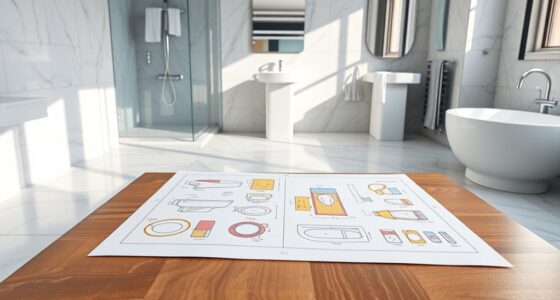
When planning your bathroom, use standard sizes: a single vanity should be at least 24 inches wide, while the depth usually ranges from 18-21 inches. make certain there’s a minimum of 15 inches from the toilet center to the wall and 24 inches of clearance in front. For ideal comfort and function, choose fixtures that suit your space—smaller for tight bathrooms and larger or statement pieces for bigger rooms. Keep scrolling to find a detailed fixtures checklist and tips to make your bathroom both practical and stylish.
Key Takeaways
- Use standard dimensions: at least 24-inch wide vanities and 18-21 inch deep for single sinks.
- Maintain minimum clearance: 15 inches from toilet center to walls, and 24 inches in front of fixtures.
- Match fixture size and style to bathroom size: small spaces favor compact, wall-mounted fixtures; larger spaces accommodate statement pieces.
- Prioritize durable, easy-to-clean fixtures with corrosion resistance for longevity and maintenance.
- Incorporate proper space planning and storage solutions to optimize usability and comfort in any bathroom size.
Common Bathroom Dimensions and Space Planning Tips
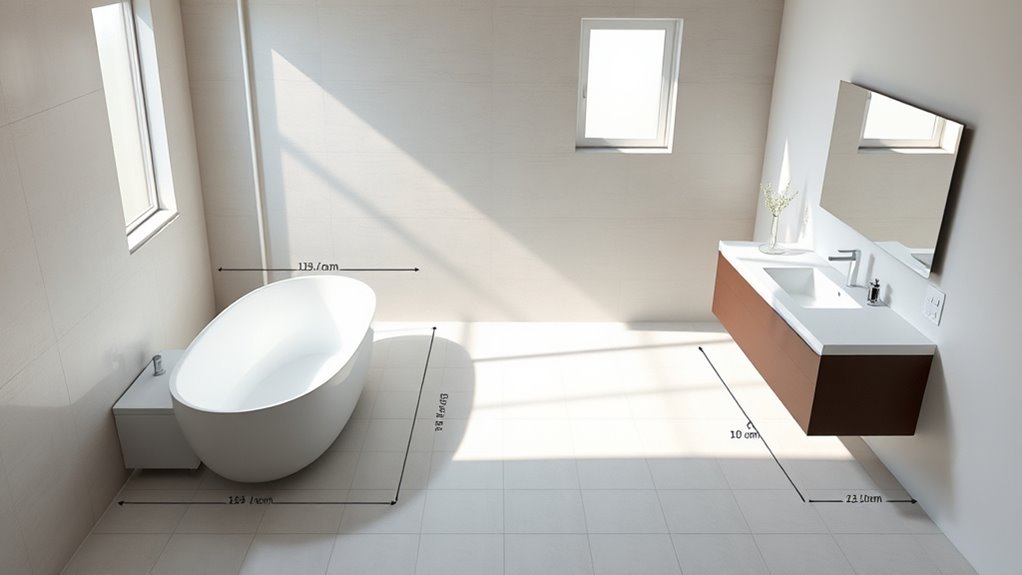
Understanding standard bathroom dimensions can help you plan a functional and comfortable space. When choosing vanity dimensions, aim for at least 24 inches wide for single-sink vanities to allow comfortable use. Confirm the vanity depth doesn’t crowd the room; a typical depth is 18-21 inches. Toilet clearances are equally important—maintain a minimum of 15 inches from the center of the toilet to any side wall or fixture, and allow at least 24 inches of clearance in front for comfortable movement. These measurements help prevent cramped areas and ensure accessibility. Keep in mind that wider vanities and proper clearances contribute to a more organized and user-friendly bathroom, making daily routines easier and more comfortable while maximizing your space’s potential. Additionally, considering portable camping toilets can be useful for outdoor or emergency bathroom options when space is limited.
Choosing the Right Fixtures for Different Bathroom Sizes
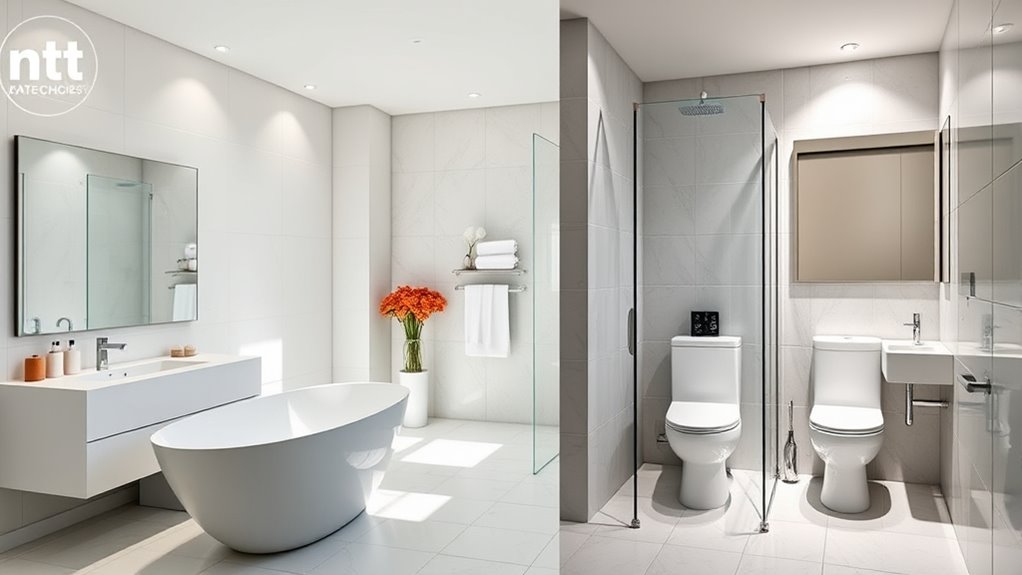
Selecting the right fixtures depends on your bathroom’s size and layout. For small bathrooms, opt for compact fixtures like wall-mounted sinks and corner toilets to maximize space. Larger bathrooms can accommodate statement pieces with more substantial fixture styles. Consider your color schemes; light colors make small spaces feel bigger, while darker tones add sophistication to larger rooms. Additionally, understanding fixture sizing helps ensure comfort and proportionality within your space. Here’s a quick guide:
| Bathroom Size | Fixture Styles | Color Schemes |
|---|---|---|
| Small | Compact, wall-mounted | Light, neutral |
| Medium | Standard or integrated | Soft pastel |
| Large | Freestanding, decorative | Bold, contrasting |
| Spacious | Designer, custom fixtures | Dramatic, rich |
Match your fixtures to your space to achieve both functionality and style.
Essential Fixtures Checklist for a Functional Bathroom

A well-functioning bathroom requires a carefully chosen set of essential fixtures that prioritize both usability and efficiency. Start with a durable toilet, sink, and shower or bathtub, ensuring they fit your space and needs. Incorporate practical bathroom decor ideas, such as smart storage solutions, to keep the area organized. When selecting fixtures, consider fixture maintenance tips like choosing easy-to-clean surfaces and corrosion-resistant materials. Properly maintained fixtures extend their lifespan and keep your bathroom functioning smoothly. Don’t forget essentials like a mirror, towel bars, and lighting that enhance both decor and practicality. Additionally, selecting efficient flushing systems can significantly reduce water usage and utility bills, contributing to a more eco-friendly bathroom. By focusing on these core fixtures and maintenance strategies, you create a bathroom that’s comfortable, efficient, and easy to keep in top shape.
Frequently Asked Questions
How Do I Calculate Optimal Bathroom Fixture Placement?
To calculate ideal bathroom fixture placement, start with fixture spacing guidelines to guarantee comfort and functionality. Position the toilet, sink, and shower with enough space for door clearance, avoiding congestion. Measure the room accurately, considering plumbing access and movement flow. Use these measurements to create a layout that maximizes space and usability, making sure each fixture has adequate clearance and adheres to building codes for safety and convenience.
What Are Ada-Compliant Bathroom Fixture Dimensions?
ADA-compliant bathroom fixture dimensions prioritize universal design, ensuring accessibility for all users. For example, toilets should be 17-19 inches high from the floor, with clear space around them. Sinks need to be mounted no higher than 34 inches, with knee clearance of at least 27 inches. These measurements facilitate fixture maintenance and usability, allowing easy access and comfort for everyone. Always check local codes for specific requirements.
How Can I Maximize Small Bathroom Space Efficiently?
Think of your small bathroom as a puzzle waiting to be solved. To maximize space, choose compact fixtures and clever storage solutions like wall-mounted shelves or over-the-toilet cabinets. Improve airflow with efficient ventilation options to keep it fresh. Use mirrors to create an illusion of spaciousness, and keep clutter minimal. These strategies help you make the most of every inch, transforming your tiny bathroom into a functional, airy retreat.
What Are the Best Fixtures for Energy Efficiency?
You should choose eco-friendly options like low-flow toilets and water-saving showerheads to boost energy efficiency. These fixtures use advanced water-saving technologies, reducing water consumption while maintaining performance. Look for products with high EPA WaterSense ratings, which guarantee you’re selecting fixtures that save water and energy. By installing these, you’ll lower your utility bills and support environmental conservation, making your bathroom both eco-conscious and efficient.
How Do Plumbing Codes Affect Fixture Sizing Choices?
Plumbing code requirements directly influence your fixture sizing choices by setting limits based on fixture load calculations. You need to guarantee your plumbing system complies with local codes, which specify minimum and maximum fixture units to prevent overloading pipes. By adhering to these requirements, you can select appropriately sized fixtures that maintain proper flow, avoid backups, and ensure safety and efficiency in your plumbing system.
Conclusion
Remember, a well-designed bathroom balances form and function. By understanding common dimensions, selecting the right fixtures, and using our checklist, you can create a space that’s both comfortable and efficient. Don’t forget, a stitch in time saves nine—planning ahead now guarantees fewer surprises later. Trust your instincts, follow these tips, and turn your bathroom into a sanctuary you’ll love. After all, a well-planned space is worth its weight in gold.