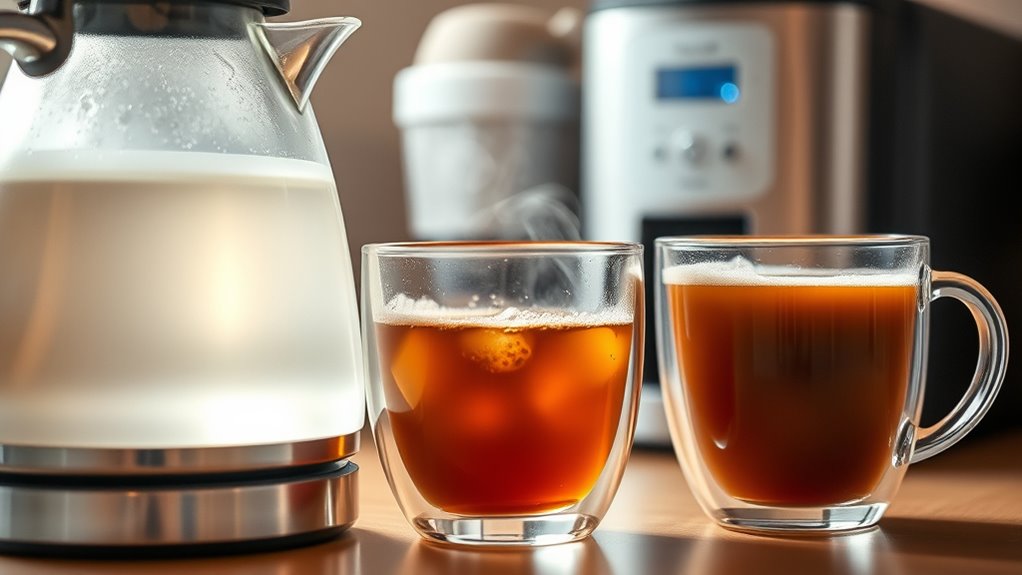

When softening water for coffee and tea, you want to find a balance between flavor clarity and protecting your equipment. Soft water helps preserve delicate flavors and removes harsh mineral notes, making your beverages taste brighter. However, overly soft water can strip essential minerals, dulling complexity. Conversely, too little softening risks scale buildup and damaging appliances. Achieving the right method guarantees great taste and appliance longevity—explore more to discover the perfect balance for your brew.

Get home appliances delivered free — and shop member deals
- Fast, free delivery on millions of items
- Access to Prime Big Deal Days deals on October 6–7
- Prime Video, Amazon Music and more included
Key Takeaways
- Softening water enhances beverage flavor by reducing harsh mineral tastes from hard water minerals like calcium and magnesium.
- Over-softening can strip minerals vital for complex flavors, so balance is key for optimal taste and depth.
- Proper water treatment prevents scale buildup in equipment, extending appliance lifespan and maintaining consistent brewing quality.
- Finding the right mineral balance ensures both flavor clarity and protection against costly scale-related damage.
- Fine-tuning softening methods based on mineral content helps optimize taste while safeguarding brewing equipment.
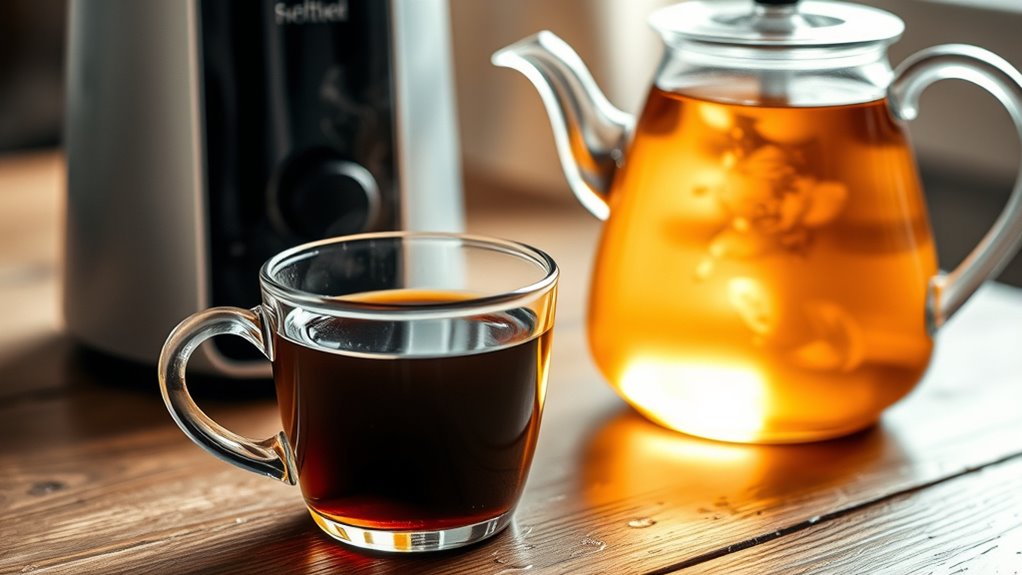
If you want your coffee and tea to taste their best, softening your water is a critical step. Hard water contains minerals like calcium and magnesium that can interfere with the delicate flavors of your favorite beverages. By softening the water, you help maintain a proper mineral balance, which is necessary for extracting the full spectrum of flavors during brewing. When water is too hard, these minerals can cause a harsh, bitter taste and overshadow the subtle notes in your coffee or tea. Softening ensures that the minerals don’t overpower the brewing flavor, allowing the true characteristics of your beans or leaves to shine through.
Softening water preserves delicate flavors by balancing minerals that influence taste and brewing quality.
The mineral content in water greatly influences the brewing process. Excess minerals can lead to scale buildup inside your coffee maker or teapot, which not only reduces the lifespan of your appliances but also impacts the quality of your drinks. When minerals are balanced properly through water softening, your equipment stays cleaner longer, and you prevent costly repairs. This also means your coffee or tea is brewed more consistently, with each cup tasting as good as the last. Soft water facilitates a cleaner extraction, highlighting the nuanced flavors and aromas that make each brew special.
While softening water benefits your appliances, it’s equally essential for taste. Hard water can dull the brightness and clarity of your beverages, making them taste flat or overly mineralized. Softening helps to remove or neutralize these unwanted minerals, creating a purer water profile that enhances the natural flavors. This results in a more vibrant, well-rounded cup that captures the true essence of the beans or leaves. If you’re particular about the taste, softening your water ensures that every sip delivers the intended flavor profile without distraction from mineral imbalance.
However, balancing appliance protection with flavor enhancement requires some consideration. Fully softening water might reduce minerals to the point where some of the desired flavor complexity is lost, especially in coffee, where mineral content contributes to mouthfeel and depth. Adjusting your water softening process or using specific filtration methods allows you to keep enough minerals for flavor development while preventing scale buildup. It’s about finding that sweet spot where your appliances stay protected, and your drinks taste their best. By doing so, you create a harmonious environment where both your equipment and your palate benefit, ensuring each cup is brewed with ideal mineral balance and maximum flavor clarity. Understanding water mineral content is crucial to achieving the perfect balance for taste and appliance longevity.
As an affiliate, we earn on qualifying purchases.
Frequently Asked Questions
Does Softened Water Alter the Aroma of Coffee and Tea?
Yes, softened water can alter the aroma of coffee and tea. It may enhance aroma by reducing mineral interference, allowing the true scents to shine through. However, it can also impact flavor preservation if the water is overly softened, stripping away minerals that contribute to complex taste profiles. Ultimately, the right balance helps you enjoy a richer aroma while maintaining the nuanced flavors of your brew.
Can Water Softening Cause Any Health Concerns?
An ounce of prevention is worth a pound of cure. Water softening generally doesn’t pose significant health risks, but it can lead to mineral depletion, especially of calcium and magnesium. These minerals are crucial for your health, so long-term consumption of softened water might impact your intake. If you’re concerned, consider using mineral-rich water for drinking and cooking, and consult a healthcare professional for personalized advice.
Is There a Difference Between Various Water Softening Methods?
Yes, different water softening methods vary. Ion exchange is common and replaces calcium and magnesium with sodium, softening the water. Reverse osmosis, on the other hand, filters out minerals and impurities, providing very pure water. You choose based on your needs—ion exchange for appliance protection and taste, reverse osmosis for purity. Both methods impact water quality differently, so understanding your priorities helps you select the best softening approach.
How Often Should I Replace Water Softening Filters?
Think of your water softening filter as a trusty sidekick in your kitchen adventure. You should replace it based on the filter lifespan, usually every 3 to 6 months, depending on usage and water quality. Keep an eye on replacement frequency; if you notice reduced effectiveness or changes in water taste, it’s time for a new one. Regular swaps guarantee your appliances stay protected and your drinks taste perfect.
Does Softened Water Affect the Brewing Temperature?
Softened water doesn’t substantially affect your brewing temperature, but it can enhance temperature stability, leading to more consistent results. When you use softened water, your coffee or tea brews more efficiently because minerals that cause fluctuations are reduced. This means your brewing process becomes smoother, and maintaining the ideal temperature is easier, ensuring better flavor extraction and overall quality in every cup.
As an affiliate, we earn on qualifying purchases.
Conclusion
So, next time you soften your water to protect your appliances, remember that you might also be dulling your coffee and tea’s true flavor. Ironically, in trying to preserve your machines, you could be sacrificing the very taste you crave. Sometimes, a little mineral might just be what makes your brew special. So, enjoy your perfectly protected appliances, but don’t be surprised if your favorite drink feels a bit less lively—after all, balance is everything.
As an affiliate, we earn on qualifying purchases.
appliance scale prevention water treatment
As an affiliate, we earn on qualifying purchases.
As an affiliate, we earn on qualifying purchases.
NFL season / tailgating Picks
team gear
As an affiliate, we earn on qualifying purchases.