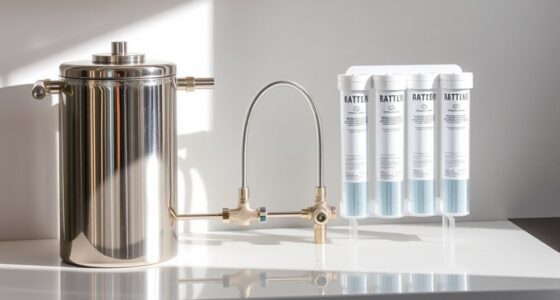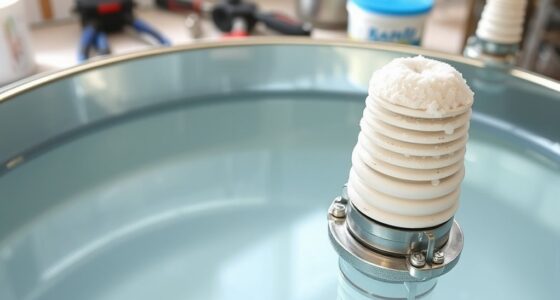
To become confident in softener regeneration, understand that it involves flushing minerals like calcium and magnesium from your resin beads with a salt solution, ensuring efficient operation. You’ll need to follow safety and environmental codes for handling salts and discharge, and regularly maintain components like the brine tank and control valve. Monitoring each step keeps your system running smoothly. Keep up with evolving standards, and you’ll master softener regeneration in no time—more details ahead will guide you further.
Key Takeaways
- Understand the step-by-step regeneration process to ensure proper resin cleaning and recharge.
- Follow local regulations and standards for installation, maintenance, and chemical handling.
- Monitor water quality regularly with chlorine tests and inspect system components for wear.
- Keep detailed records of regeneration cycles, salt levels, and compliance checks for accountability.
- Stay informed on updated codes through industry resources, certifications, and professional associations.
Understanding the Basics of Water Softener Regeneration

Understanding the basics of water softener regeneration is essential if you want your system to work efficiently. Regular softener maintenance ensures the resin beads stay effective at removing minerals, which directly impacts water quality. During regeneration, the softener flushes out accumulated minerals like calcium and magnesium, replacing them with sodium or potassium ions. This process restores the resin’s ability to soften water effectively. Knowing when and how regeneration occurs helps you prevent issues like hard water spots or reduced flow rate. Most systems automatically initiate regeneration based on usage or a set schedule, but manual control may be necessary in some cases. Additionally, understanding the regeneration cycle can help you optimize your system’s performance and lifespan. By keeping up with softener maintenance and understanding this cycle, you ensure your water stays soft, clean, and safe for daily use.
Key Regulations and Standards for Softener Operations
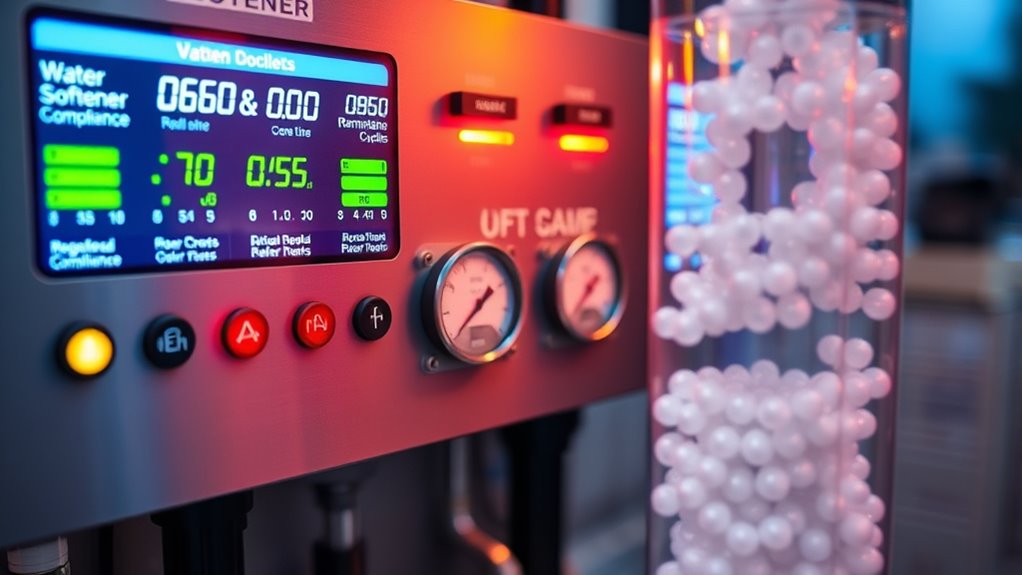
Regulations and standards govern how water softeners operate to guarantee safety, environmental protection, and consistent water quality. Municipal standards set the baseline for softener installation, maintenance, and discharge practices, ensuring they do not harm public health or the environment. Chemical safety regulations specify proper handling and disposal of salts and regeneration chemicals, reducing risks of contamination. Compliance with these standards helps prevent overuse of salts, minimizes wastewater issues, and ensures your system functions efficiently. Local codes often require permits and regular inspections, so staying informed about these regulations is essential. Adhering to key standards not only keeps you compliant but also promotes safe, reliable softening that protects both your water supply and the environment. Additionally, understanding environmental considerations ensures your system operates sustainably and minimizes ecological impact.
The Regeneration Process: Step-by-Step Breakdown

The regeneration process is a series of precise steps that restore a water softener’s ability to remove minerals like calcium and magnesium. You start with the brine cycle, where salty water flows through the resin, displacing mineral buildup. During resin cleaning, the resin beads are thoroughly rinsed to remove impurities. The key steps include:
- Initiating the brine cycle to recharge the resin with sodium ions
- Flushing the resin to remove mineral deposits and impurities
- Rinsing to clear residual brine and dirt
- Ensuring proper resin cleaning for ideal performance
- Monitoring the process with indicators or timers helps ensure each step is completed correctly, maximizing system efficiency.
This process resets the resin’s capacity, ensuring your softener continues to operate efficiently. Understanding each step helps you maintain your system’s effectiveness and longevity, keeping your water soft and mineral-free.
Compliance Checklist for Safe and Effective Regeneration

Are you confident that your water softener’s regeneration process is both safe and effective? To guarantee this, follow a compliance checklist that covers essential maintenance steps. Start with regular chlorine testing to confirm your water’s quality and prevent any harmful buildup in the system. Proper brine tank maintenance is vital—check for salt bridging, clean the tank periodically, and ensure the salt level is adequate. Inspect the control valve and resin bed for signs of wear or clogging. Keep detailed records of regeneration cycles and test results. Utilizing digital platforms can help you monitor and schedule maintenance more efficiently. Adhering to these steps helps maintain peak performance, prevents damage, and guarantees your system operates safely. Staying consistent with this checklist will give you confidence that your softener is functioning correctly and complying with standards.
Tips for Staying Up-To-Date With Code Changes
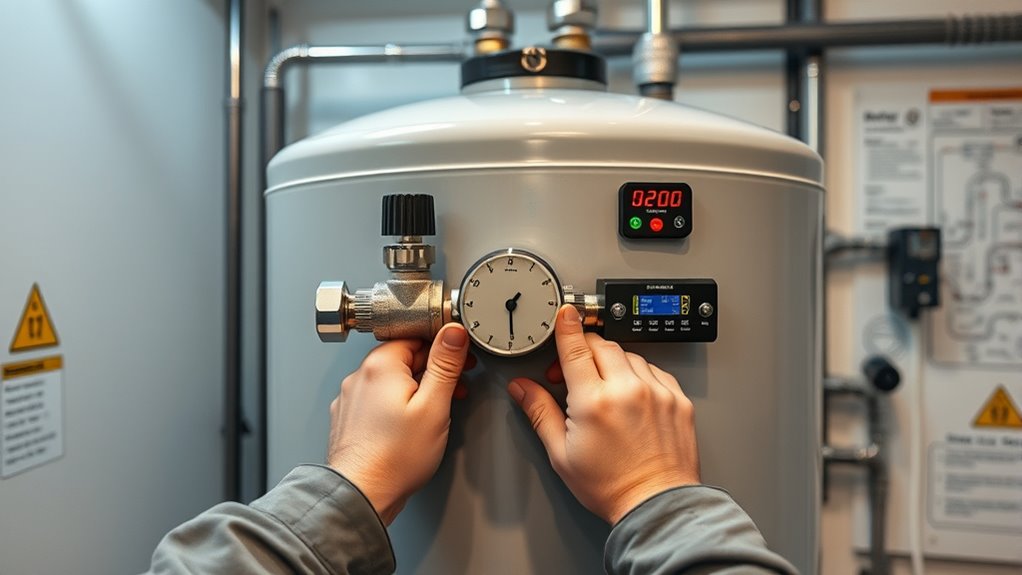
Keeping your water softener compliant requires more than just routine maintenance; staying informed about code changes is key. To do this effectively, utilize reputable training resources that highlight recent updates. Seek out industry certifications, which often include the latest code requirements, to ensure your knowledge stays current. Regularly check official plumbing and water treatment authority websites for updates. Joining industry associations provides access to newsletters and seminars focused on code changes. Networking with professionals keeps you informed through peer insights. Additionally, subscribing to industry publications ensures you receive timely updates. Embracing continuing education is essential to adapt to evolving standards and regulations. These strategies help you stay proactive, avoid compliance issues, and maintain your confidence in handling softener regeneration effectively.
Frequently Asked Questions
How Often Should Water Softeners Be Regenerated for Optimal Efficiency?
You should regenerate your water softener based on your water hardness and usage, typically every 7 to 14 days. If your water has high hardness levels, more frequent regeneration guarantees peak efficiency. Monitor your softener’s salt levels and hardness test results regularly to determine the ideal regeneration frequency. Doing so keeps your system running smoothly, prevents mineral buildup, and maintains the quality of your softened water.
What Are Common Signs Indicating a Softener Needs Regeneration?
You might notice your water feels slimy or spots appear on dishes and fixtures—that’s a sign your softener needs regeneration. When water hardness seems to increase despite salt levels, it’s time to act. Low salt levels or a decline in soap efficiency can also signal it’s overdue. Don’t ignore these clues; they indicate your system is struggling to remove minerals, and timely regeneration restores soft water and protects your appliances.
Are There Specific Safety Precautions During the Regeneration Process?
During softener regeneration, you should follow safety protocols like wearing gloves and eye protection to prevent chemical contact. Make sure to keep the area well-ventilated and avoid inhaling fumes. Familiarize yourself with emergency procedures, such as shutting off valves quickly if leaks occur. Always read manufacturer instructions carefully, and never bypass safety features. Staying alert and prepared helps guarantee a safe and efficient regeneration process for everyone involved.
How Do Different Water Qualities Affect Regeneration Codes and Procedures?
Think of water quality variations as your secret weapon, influencing regeneration protocols and compliance. Different water qualities, like hard or soft water, require tailored procedures; ignoring this leads to inefficiency. If you don’t adapt, it’s like trying to run Windows 95 on a modern PC. You must adjust your softener’s regeneration process based on water conditions to guarantee peak performance and meet codes, avoiding costly penalties or system failures.
Can Software or Automation Improve Compliance and Regeneration Accuracy?
Automation benefits can substantially improve compliance and regeneration accuracy. By automating the process, you reduce manual errors, ensuring each regeneration cycle follows specific codes and procedures precisely. It helps you overcome compliance challenges by providing real-time monitoring, consistent operation, and detailed records. With automation, you gain better control and confidence, making your softener system more reliable and compliant, ultimately saving time and reducing costly mistakes.
Conclusion
Mastering softener regeneration isn’t just about following rules—it’s about ensuring safe, efficient operation. Some say the process is straightforward, but the real secret lies in understanding the regulations and staying current with updates. When you keep up-to-date, you not only avoid compliance issues but also optimize your system’s performance. So, consider this: could staying informed be the key to opening truly confident, trouble-free softener management? The choice is yours.