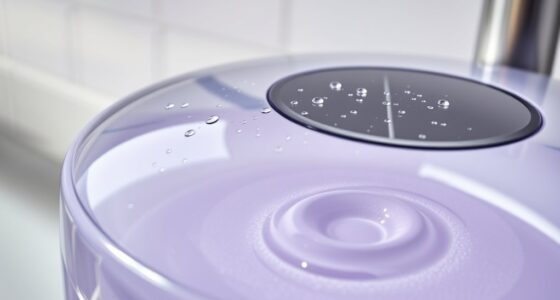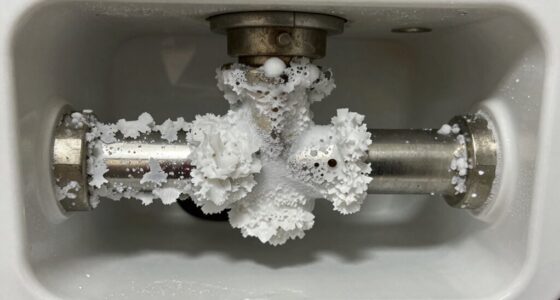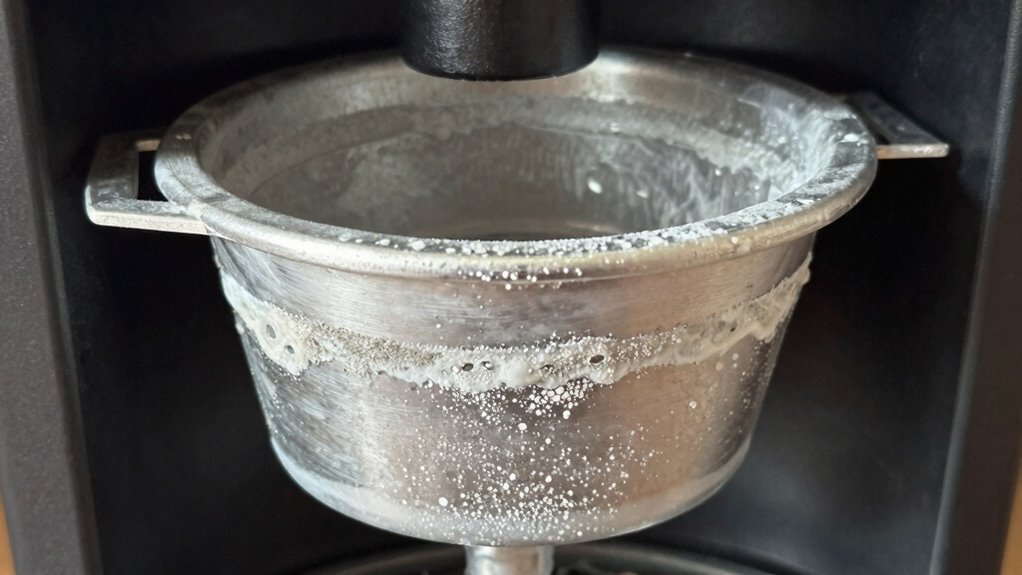
If you notice white or chalky deposits around your coffee maker’s water reservoir, filter basket, or spout, it’s a clear sign mineral buildup from hard water. You might also experience slower water flow, longer brewing times, or visible deposits inside the machine. These issues can affect both coffee quality and machine efficiency. Keep exploring to learn how to tackle these problems and keep your coffee maker running smoothly.

Get home appliances delivered free with Prime
- Fast, free delivery on millions of items
- Prime Video, Amazon Music and more included
- Member-only deals all year
Key Takeaways
- White, chalky residue around water reservoir or spout indicates mineral buildup from hard water.
- Reduced water flow or longer brewing times suggest internal clogging from mineral deposits.
- Visible deposits inside machine components signal significant scale accumulation.
- Altered coffee taste or weaker brews point to temperature and extraction issues caused by mineral deposits.
- Frequent need for descaling and cleaning indicates persistent mineral buildup from hard water.
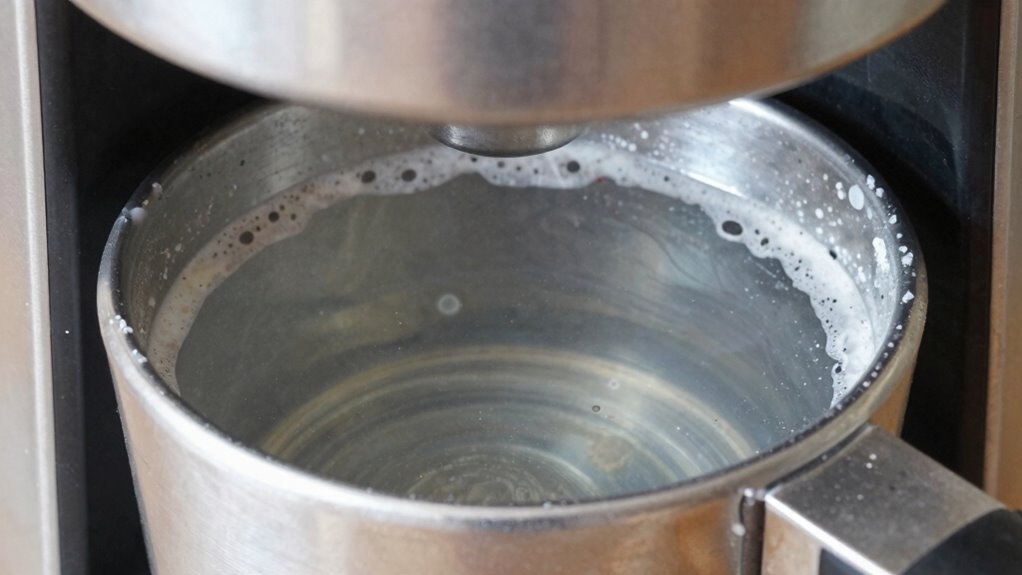
If your coffee maker starts to show signs of buildup or isn’t brewing as efficiently as it used to, it might be revealing clues about your water’s hardness. Mineral buildup in your machine isn’t just a cosmetic issue; it’s a sign that your water contains high levels of minerals like calcium and magnesium. These minerals, when present in excess, can accumulate over time, creating deposits that clog the machine’s internal components. You might notice a decrease in water flow or longer brewing times, which are clear indicators that mineral deposits are interfering with your coffee maker’s operation.
Mineral buildup signals high mineral content, reducing efficiency and causing brewing issues in your coffee maker.
This buildup can also impact the quality of your coffee. When mineral deposits form inside the brewing chamber or on the heating element, they can alter the temperature and extraction process, leading to inconsistent flavor and weaker coffee. If you find that your coffee tastes off or lacks the usual richness, mineral buildup could be a contributing factor. It’s not just about taste, though; the buildup also raises water quality concerns. Hard water, characterized by high mineral content, can cause scale to form inside your appliance, reducing its lifespan and efficiency. Over time, mineral deposits can corrode components or cause leaks, leading to costly repairs or replacement.
You may also notice white or chalky residue around the water reservoir, filter basket, or spout. These deposits are a visual cue that your water’s mineral content is high. If you’re regularly descaling your coffee maker but still see recurring buildup, that’s a clear sign that your water source is hard and may require treatment. Regular testing of your water’s hardness levels can help you determine the extent of mineral content and prevent future issues. Using hard water repeatedly without proper filtration accelerates mineral accumulation, making your machine work harder and less effectively. Additionally, water hardness levels can vary depending on your location and source, influencing how quickly these deposits form. Understanding your water’s mineral content can also help you choose the most suitable water treatment options for your needs.
Addressing these issues involves more than just cleaning. You should consider testing your water quality to determine its hardness level. If it’s high, investing in a water softener or using filtered water can greatly reduce mineral buildup. This not only prolongs the life of your coffee maker but also ensures you get consistently good-tasting coffee. Recognizing mineral buildup signs in your machine helps you identify ongoing water quality concerns early. By taking steps to treat or filter your water, you can prevent future problems and enjoy your coffee without the interference of mineral deposits.
As an affiliate, we earn on qualifying purchases.
Frequently Asked Questions
How Often Should I Descale My Coffee Maker for Hard Water?
You should descale your coffee maker every 1 to 3 months, depending on your water hardness. For hard water, more frequent descaling is necessary to prevent mineral buildup. Regular coffee machine maintenance, including descaling, helps keep your machine running smoothly and extends its lifespan. Check your manufacturer’s recommendations, and if you notice slower brewing or off-tastes, it’s time to remove mineral buildup. Staying consistent with descaling frequency ensures great-tasting coffee every time.
Can Hard Water Damage Other Kitchen Appliances?
Yes, hard water can damage other kitchen appliances. Mineral buildup from hard water accumulates in appliances like dishwashers, washing machines, and kettles, leading to decreased efficiency and potential malfunctions. Over time, this buildup can shorten their lifespan. To protect your appliances and guarantee their longevity, regularly descale and use water softeners if necessary. Proper maintenance helps prevent costly repairs and keeps your appliances running smoothly.
Are There Specific Filters Recommended for Hard Water?
Yes, there are specific filters recommended for hard water. Look for filters designed for mineral buildup prevention, as they help reduce calcium and magnesium deposits. Make sure filter compatibility with your appliance to avoid damage and maintain performance. These filters often contain activated carbon or specialty media that target hard water minerals, extending the lifespan of your coffee maker and other kitchen appliances while improving the taste of your beverages.
Does Water Hardness Affect Coffee Taste Significantly?
Water hardness markedly impacts your coffee taste, with studies showing that mineral influence can alter flavor by up to 20%. Hard water often dulls flavor and can cause bitter or metallic notes, hindering flavor enhancement. You might notice a flat or off-taste, as minerals interfere with extraction. Using softer water or filtered options allows the true coffee flavors to shine, ensuring a richer, more balanced cup every time.
How Can I Test My Water Hardness at Home?
You can test your water hardness at home using a simple test kit available at most stores. These kits often involve adding a reagent to a water sample and comparing the color change to a chart. If you notice calcium buildup in your coffee maker, it indicates hard water, which can be managed with water softening methods. Regular testing helps guarantee better coffee taste and prolongs your appliance’s life.
water hardness test kit for appliances
As an affiliate, we earn on qualifying purchases.
As an affiliate, we earn on qualifying purchases.
Conclusion
So, next time your coffee maker acts up, pay close attention to those subtle clues. The signs of hardness trouble might be hiding in plain sight, waiting to reveal themselves just when you least expect it. Are you prepared to uncover the hidden details before it’s too late? Stay vigilant—your perfect brew depends on catching the signs early. The truth about your water’s hardness could change everything, if only you look closely enough.
coffee machine mineral deposit cleaner
As an affiliate, we earn on qualifying purchases.
As an affiliate, we earn on qualifying purchases.
hard water filter for coffee maker
As an affiliate, we earn on qualifying purchases.
As an affiliate, we earn on qualifying purchases.
Fall yard work Picks
leaf blowers
As an affiliate, we earn on qualifying purchases.