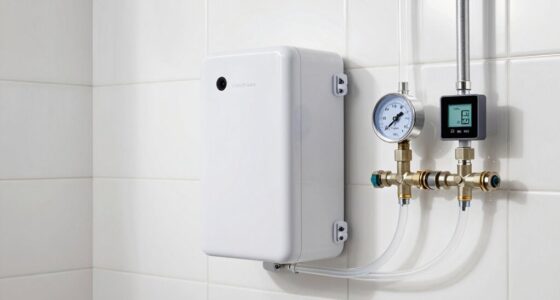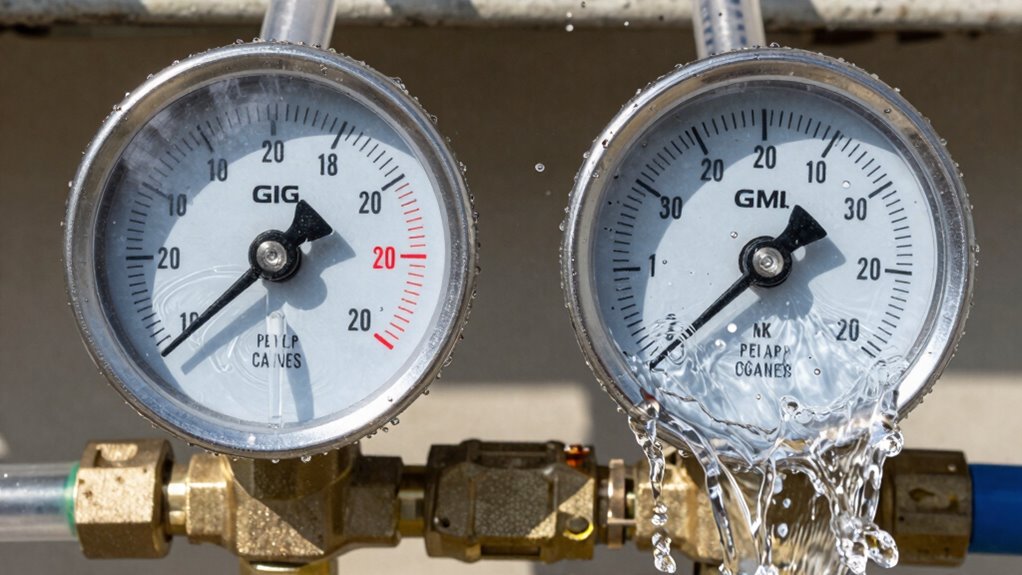

Choosing between 12 GPM and 20 GPM fixtures impacts your household water use and costs. A 12 GPM fixture uses less water per minute, helping you save on water bills and reduce your environmental footprint. It also lowers hot water demand, saving energy. If your family needs strong spray or has high water use, 20 GPM might feel better, but lower GPM fixtures still provide good pressure. Keep going to discover how to pick what’s best for your home.

Get home appliances delivered free with Prime
- Fast, free delivery on millions of items
- Prime Video, Amazon Music and more included
- Member-only deals all year
Key Takeaways
- 12 GPM fixtures use half the water flow per minute compared to 20 GPM, conserving water and reducing utility bills.
- Higher GPM (20) provides stronger water pressure, beneficial for large families with frequent shower or cleaning needs.
- Lower GPM (12) decreases hot water use, lowering energy costs and easing demand on water heating systems.
- Family habits influence fixture choice: larger households may prefer higher GPM for performance, while eco-conscious families opt for lower GPM.
- Understanding GPM helps families balance comfort, efficiency, and environmental impact in daily water usage.
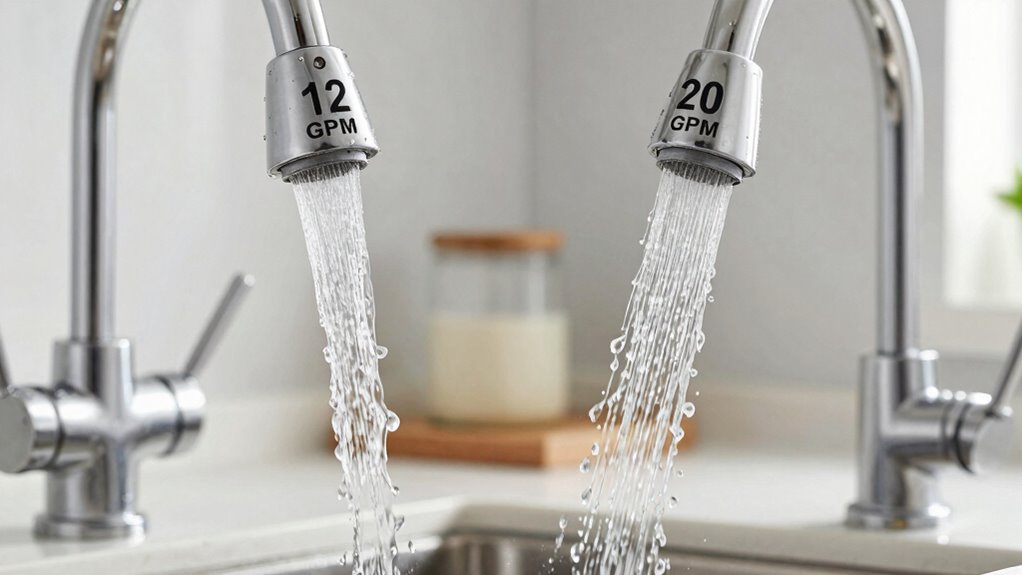
When choosing a water flow rate for your family’s needs, understanding the difference between 12 GPM and 20 GPM is vital. GPM, or gallons per minute, measures how much water flows through a fixture or appliance in one minute. This number directly impacts your water efficiency and energy consumption. A higher GPM means more water is used during each use, which can lead to increased utility bills and greater environmental impact. Conversely, a lower GPM helps you conserve water, reducing both your water bills and your ecological footprint.
If you’re considering fixtures like showerheads or faucets, knowing what GPM means helps you make smarter choices. A 12 GPM fixture typically uses less water per minute than a 20 GPM fixture. This doesn’t necessarily mean it’s less effective; many modern 12 GPM fixtures are designed to provide strong water pressure while conserving water. Opting for lower GPM fixtures is a simple way to improve water efficiency without sacrificing performance. Over time, the savings on your water bill can be significant, especially if your household uses multiple fixtures daily.
Energy consumption is another vital factor influenced by GPM. When you use more water, your water heater works harder to supply hot water, which consumes more energy. A 20 GPM fixture will demand more hot water flow, increasing your energy bills, especially if your water heater isn’t designed for high flow rates. On the other hand, a 12 GPM fixture reduces this load, helping to lower energy costs. If you’re looking to make your home more energy-efficient, choosing fixtures with a lower GPM is a smart move. Understanding water flow rates is essential for making informed choices about fixtures and appliances in your home. Additionally, considering water conservation practices can further enhance your efficiency efforts. Being aware of the water flow rate also helps you select products that align with your household’s water use habits.
It’s also worth considering how your household’s water use habits align with these flow rates. If you have a large family with frequent showers, a 20 GPM showerhead might be tempting for its strong spray, but it will also use more water and energy. Conversely, a 12 GPM showerhead can deliver a satisfying experience while saving resources. For other fixtures, like kitchen faucets, selecting a lower GPM model helps minimize waste and reduces strain on your water and energy systems. Additionally, many modern fixtures feature flow restrictors that help maintain performance while conserving water.
Ultimately, understanding what GPM means in practical terms helps you balance water efficiency with your household’s comfort and needs. Choosing fixtures with a lower flow rate doesn’t mean you sacrifice performance; it means you’re making a conscious decision to be more sustainable and save money over time. By paying attention to these flow rates, you can manage your water and energy consumption more effectively, making your home greener and more economical.
As an affiliate, we earn on qualifying purchases.
Frequently Asked Questions
How Does GPM Affect Daily Water Pressure in My Home?
GPM directly impacts your home’s water pressure by determining how much water flows through your pipes. Higher GPM means more water flow, which can lead to stronger pressure, especially during peak usage. Conversely, lower GPM might result in weaker pressure. Proper pressure regulation guarantees consistent water flow, preventing fluctuations when multiple fixtures are used simultaneously. So, understanding GPM helps you balance water flow and maintain steady, comfortable water pressure in your daily routines.
Can I Upgrade My Water System From 12 GPM to 20 GPM?
Sure, you can upgrade from 12 GPM to 20 GPM, but brace yourself! Bigger pipes and better water filtration are your new best friends. You’ll need pipe sizing that can handle the boost—imagine upgrading from a garden hose to a fire hose—plus, make certain your water filtration system can keep up with the increased flow. Otherwise, you’ll just be upgrading your water drama, not your pressure!
Does Higher GPM Increase Water Bills Significantly?
Yes, higher GPM can slightly increase your water bills, but the impact depends on your water usage habits. If you practice water conservation and focus on plumbing efficiency, you can manage costs effectively. Upgrading to a 20 GPM system might boost your water flow, but by being mindful of unnecessary water use, you’ll keep bills manageable while enjoying improved water pressure and efficiency in your home.
Which GPM Is Better for Households With High Water Usage?
If you have high water usage, a higher GPM can be beneficial, but it’s essential to balance plumbing efficiency with water conservation. A 20 GPM fixture might provide faster flow, improving convenience, but it can also lead to increased water bills if not managed properly. Choose fixtures that match your household needs, and look for low-flow options to conserve water while maintaining effective plumbing performance.
How Do I Determine the Right GPM for My Family?
Did you know that the average household uses about 300 gallons of water daily? To determine the right GPM for your family, consider your water flow needs during peak usage times, like showers and dishwashing. Opt for a system with GPM ratings that balance water flow and system efficiency, ensuring your family’s needs are met without wasting water or overloading your system. Your choice impacts both comfort and conservation.
As an affiliate, we earn on qualifying purchases.
Conclusion
Think of the water flow as a river—12 GPM is like a gentle stream, quietly providing enough for daily needs, while 20 GPM is a lively current, ready to handle more tasks at once. Understanding these differences helps you choose the right flow for your family’s needs, ensuring your household runs smoothly without a flood or drought. Remember, selecting the right GPM is like steering your boat—stay in control and enjoy the journey.
As an affiliate, we earn on qualifying purchases.
As an affiliate, we earn on qualifying purchases.
Halloween Picks
halloween
As an affiliate, we earn on qualifying purchases.