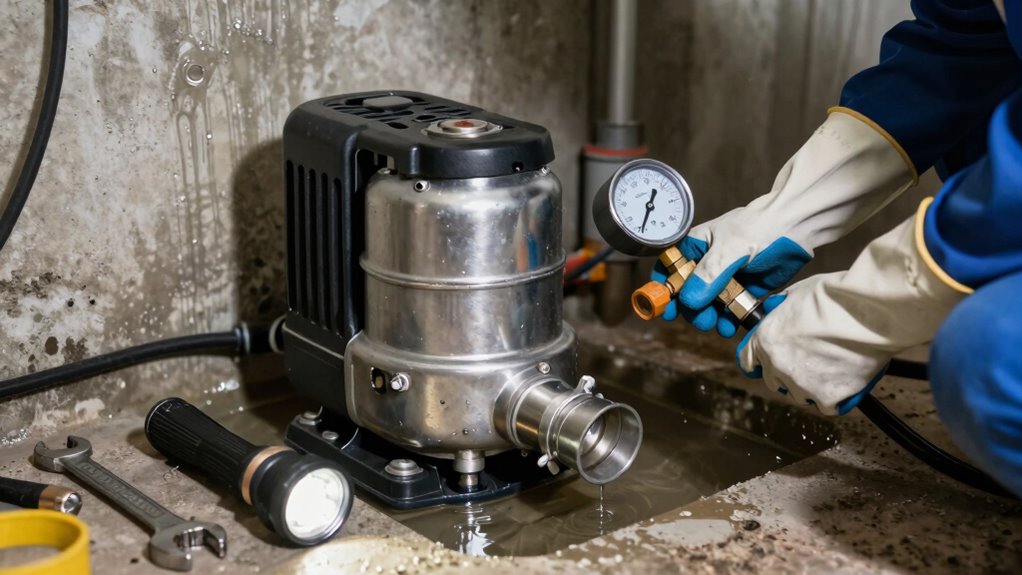
To maintain your sump pump like a pro, regularly test it by pouring water into the pit to ensure it activates properly. Clean out debris, dirt, and obstructions from the sump pit and inlet screens to keep water flowing freely. Check the backup battery by testing its charge and replacing it if it’s weak. Keep discharge lines clear and inspect the float mechanism for damage. If you want expert tips on keeping your system in top shape, keep going.
Key Takeaways
- Regularly test the sump pump by adding water to ensure it activates and drains properly.
- Clean the sump pit of debris, mud, and leaves to prevent blockages and ensure smooth water flow.
- Inspect and verify the backup battery’s charge, replacing weak or dead batteries promptly for reliable protection.
- Check the float switch and discharge line for obstructions or damage to maintain proper pump operation.
- Schedule routine maintenance every few months, including cleaning, testing, and backup checks, to prolong system lifespan.
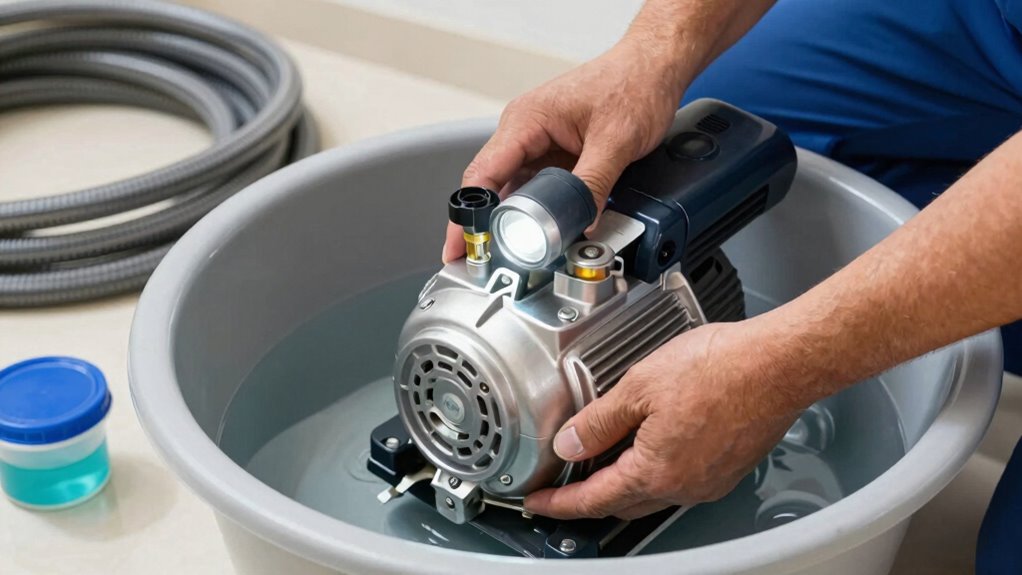
Have you checked your sump pump lately? If not, it’s time to give it some attention. A well-maintained sump pump can prevent costly water damage during heavy rains or flooding. One of the most important steps is guaranteeing your system is reliable, especially if you rely on a battery backup. Battery backups are essential because they keep your sump pump running when the power goes out, which often happens during storms. Regularly test the backup to confirm it’s holding a charge and functioning correctly. If you notice the battery isn’t holding a charge or is nearing the end of its lifespan, replace it promptly. This simple step can save you from waking up to a flooded basement.
Check your sump pump and battery backup regularly to prevent basement flooding during storms.
Next, it’s vital to clear out debris from your sump pit. Over time, dirt, leaves, and other debris can accumulate, clogging the intake or impeding the pump’s operation. Before cleaning, unplug the sump pump to avoid any electrical hazards. Remove the cover of the sump pit and carefully scoop out any debris. Use a wet/dry vacuum if needed to suck out lingering dirt or mud. Keeping the sump pit clean guarantees unobstructed water flow and reduces strain on the pump, extending its lifespan. Also, check the pump’s inlet screen or intake for blockages and clean them if necessary. This simple debris removal process helps prevent pump failures and keeps your system running smoothly.
After cleaning, it’s wise to test your sump pump to see if it activates properly. Pour water into the sump pit until the float switch triggers the pump. Watch it run to confirm it’s pumping water out as intended. If it doesn’t turn on, inspect the float mechanism for obstructions or damage. Sometimes, debris or dirt can interfere with the float’s movement, so make sure it moves freely. If you notice any mechanical issues, repair or replace the faulty parts immediately. Also, check the discharge line to ensure it’s clear and water can flow out freely. A blocked or frozen discharge pipe can cause the pump to fail or cycle repeatedly, which can damage the system. Regular maintenance routines like these are crucial for ensuring your sump pump’s reliability and longevity.
Finally, consider investing in a backup system if you haven’t already. Battery backups, in combination with regular debris removal and testing, form a thorough maintenance routine. These backups give you peace of mind knowing your sump pump will operate during power outages. Schedule routine checks every few months to keep your sump pump in top shape. With proper testing, cleaning, and backup, you’ll protect your home from water damage and avoid messy, costly repairs. Regular maintenance may seem like a hassle, but it’s a small effort that pays off by keeping your basement dry and your mind at ease.
Frequently Asked Questions
How Often Should I Replace My Sump Pump?
You should replace your sump pump every 7 to 10 years, depending on usage and condition. Regularly check installation tips to guarantee proper setup and assess whether your pump capacity meets your home’s needs. If it’s making strange noises, running constantly, or struggling to keep up during heavy rains, it’s time for a replacement. Upgrading your pump ensures reliable protection and peak performance, especially as equipment ages.
Can I Install a Sump Pump Myself?
You can definitely tackle a DIY installation if you’re handy and follow instructions carefully. Sometimes, you find yourself installing a new sump pump after noticing your favorite Sump pump brands aren’t quite doing the trick. Just make sure you read the manual, gather the right tools, and know the basics of plumbing and electrical work. With patience, you could save money and get peace of mind knowing exactly how your new sump pump works.
What Are Signs My Sump Pump Is Failing?
You’ll notice your sump pump is failing if the alarm triggers frequently or during heavy rain, indicating it isn’t keeping up. Watch for unusual noises or if the pump doesn’t turn on during a power outage, showing potential electrical issues. Also, if the basin stays flooded or there’s a foul smell, it’s time to inspect or replace your pump. Regular testing helps prevent unexpected failures.
How Does a Backup Sump Pump Work?
Imagine your basement flooding on a stormy night—that’s when your backup sump pump kicks in. It works with a battery backup, powering the pump if your main one fails or loses power. The float switch detects rising water levels, triggering the backup pump to activate and protect your home. This reliable system gives you peace of mind, knowing your basement stays dry, even during the worst weather.
Is Professional Maintenance Necessary Annually?
Yes, professional maintenance is necessary annually to prevent basement flooding and guarantee your sump pump works efficiently. Regular inspections help catch issues before storm drain backups or pump failures cause water damage. A trained technician can clean components, test the system, and recommend backups if needed. This proactive approach reduces the risk of costly repairs and keeps your basement dry during heavy storms.
Conclusion
Regularly testing, cleaning, and backing up your sump pump might seem like a hassle, but it’s worth it to protect your home from flooding. Once you get into the routine, it becomes quick and easy—saving you money and stress later on. Don’t let the fear of maintenance stop you; your efforts keep your basement dry and safe. With a little effort now, you’ll enjoy peace of mind no matter what weather comes your way.