
To descale your tankless water heater within your filtration system, start by turning off the power and water supply, then drain any remaining water. Prepare a descaling solution using vinegar or a commercial descaler, and circulate it through the cold water line for about 45 minutes to an hour. Afterward, thoroughly flush the system with clean water and restore everything to normal. For more detailed steps and tips, continue exploring how to keep your heater running smoothly.
Key Takeaways
- Turn off power and close water valves before starting the descaling process.
- Drain remaining water and circulate a descaling solution through the cold water line.
- Allow the solution to dissolve mineral deposits for 45 minutes to 1 hour.
- Flush the system thoroughly with clean water to remove residual solution and deposits.
- Regularly schedule maintenance and consider installing water softeners to prevent mineral buildup.
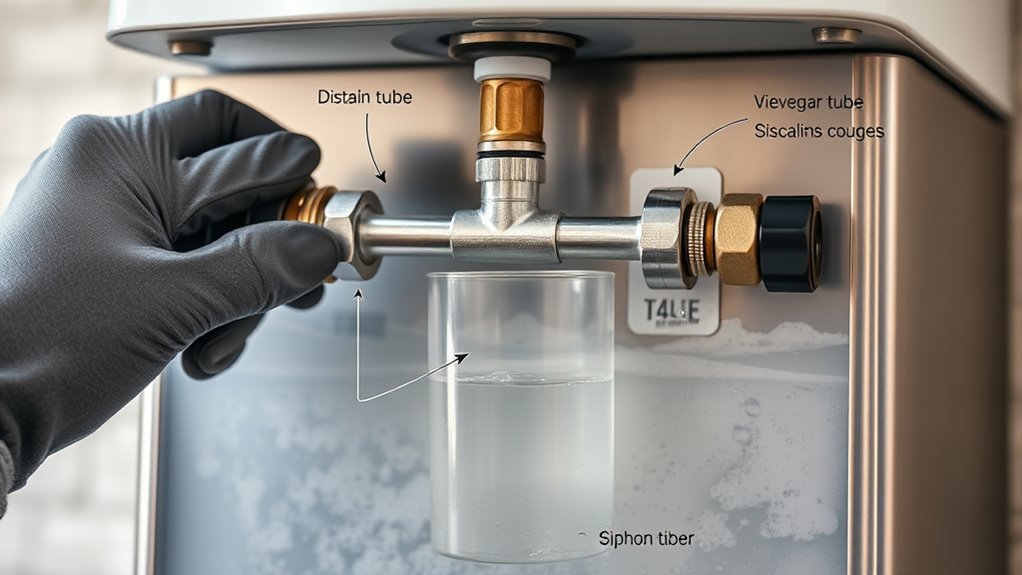
Tankless water heaters provide endless hot water and are energy-efficient, but they can develop mineral buildup over time that reduces their efficiency. When mineral deposits accumulate, they not only hinder heat transfer but can also lead to corrosion if left unchecked. To keep your unit running smoothly, understanding how to descale it properly is vital. Regular descaling helps prevent corrosion and extends the lifespan of your heater, but it also requires a good maintenance schedule to stay ahead of potential issues.
Regular descaling prevents mineral buildup and corrosion, ensuring your tankless water heater runs efficiently and lasts longer.
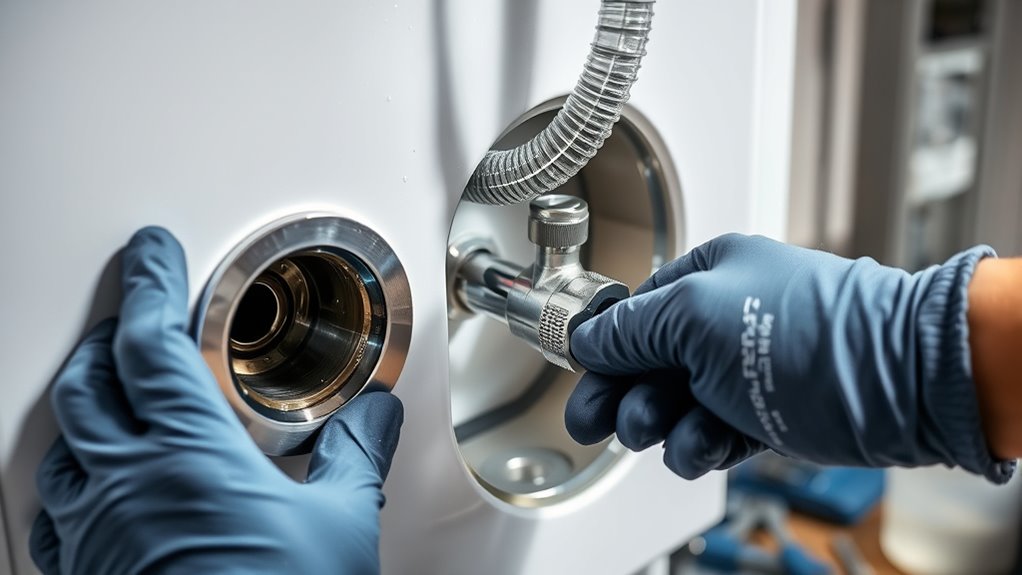
The first step in descaling your tankless water heater is to turn off the power supply and close the water valves. Once you’ve isolated the system, drain any remaining water from the unit. This initial step is essential for safe and effective cleaning. You’ll then need to prepare a descaling solution—typically a mixture of white vinegar or a commercial descaler and water. Using a pump or a hose, circulate this solution through the unit’s cold water line, ensuring it reaches all internal components. This process dissolves mineral buildup, restoring the heater’s efficiency.
Regular maintenance also helps mitigate the impact of mineral buildup on your system’s performance.
While descaling, pay special attention to corrosion prevention. Minerals like calcium and magnesium can create a hostile environment inside your heater, leading to corrosion if not regularly removed. Installing a water softener or filter can drastically reduce mineral content, but descaling remains necessary for thorough cleaning. Incorporate maintenance scheduling into your routine—set reminders every 6 to 12 months depending on your water hardness levels. Regular maintenance prevents mineral buildup from becoming severe enough to cause corrosion or damage the heat exchanger.
After circulating the descaling solution for about 45 minutes to an hour, flush the system thoroughly with clean water to remove any residual deposits. Reconnect the water supply, turn the power back on, and run hot water through your system for several minutes to clear out any remaining solution. Once completed, check for leaks or unusual noises, which could indicate incomplete cleaning or other issues requiring attention.
Consistent maintenance scheduling is your best defense against mineral buildup and corrosion. When you adhere to a regular descaling routine, you minimize the risk of mineral deposits causing damage, and you ensure your tankless water heater operates at peak efficiency. Remember, neglecting descaling can lead to costly repairs or early replacement, so making it a habit is a smart investment. By proactively descaling and preventing corrosion, you keep your water heater running smoothly for years to come, saving money and maintaining reliable hot water supply.
Frequently Asked Questions
How Often Should I Descale My Tankless Water Heater?
You should descale your tankless water heater every 12 to 18 months, depending on your water quality. Follow your maintenance schedule and watch for performance indicators like reduced flow rate or inconsistent hot water. Regular descaling keeps your heater running efficiently, prevents mineral buildup, and extends its lifespan. If you notice increased energy bills or temperature fluctuations, it’s time to descale sooner. Staying proactive ensures peak performance and comfort.
Can I Descale My Heater Without Shutting off the Water Supply?
You shouldn’t descale your heater without shutting off the water supply, as doing so can cause water flow issues and potential damage. Use descaling tools to carefully remove mineral buildup once the water supply is turned off. This ensures safe and effective cleaning, preventing leaks or malfunctions. Always follow manufacturer instructions, and remember that maintaining proper water flow is key to keeping your heater running smoothly.
What Safety Precautions Are Necessary During Descaling?
You should wear protective gear like gloves and goggles to prevent contact with harsh descaling chemicals. Make certain proper ventilation measures are in place to avoid inhaling fumes, especially in enclosed spaces. Turn off the power and water supply before starting, and follow manufacturer instructions carefully. These precautions help keep you safe from chemical exposure and accidents during the descaling process. Always prioritize safety to prevent injuries and damage.
Are Chemical Descalers Safe for My Plumbing System?
Chemical descalers can be safe for your plumbing system if you choose products with proper chemical safety and make sure they’re compatible with your plumbing materials. Always read labels carefully, follow manufacturer instructions, and avoid overly aggressive formulas. Using a descaler designed for your tankless heater helps prevent damage. When in doubt, consult a professional to verify plumbing compatibility, guaranteeing a safe and effective descaling process.
How Do I Know if Descaling Was Successful?
Think of descaling as clearing a foggy window—once you see through clearly, it’s successful. You’ll notice water flow improves, with less resistance and increased pressure, like a smooth river rushing freely. Check for the absence of scale residue around fittings and inside the system. If flow is steady and the buildup is gone, you’ve succeeded. Clear water flow signals your tankless heater is ready to perform at its best.
Conclusion
Think of descaling your tankless water heater as tending to a garden—removing the stubborn mineral buildup allows your system to flourish. Just like nurturing healthy plants ensures a vibrant landscape, regular maintenance keeps your heater flowing smoothly. When you clear out the deposits, you’re clearing a path for warm water to flow freely, symbolizing a fresh start and renewed energy. Embrace this simple act, and watch your home’s comfort bloom with efficiency and reliability.