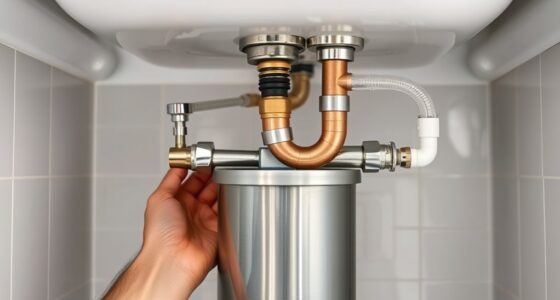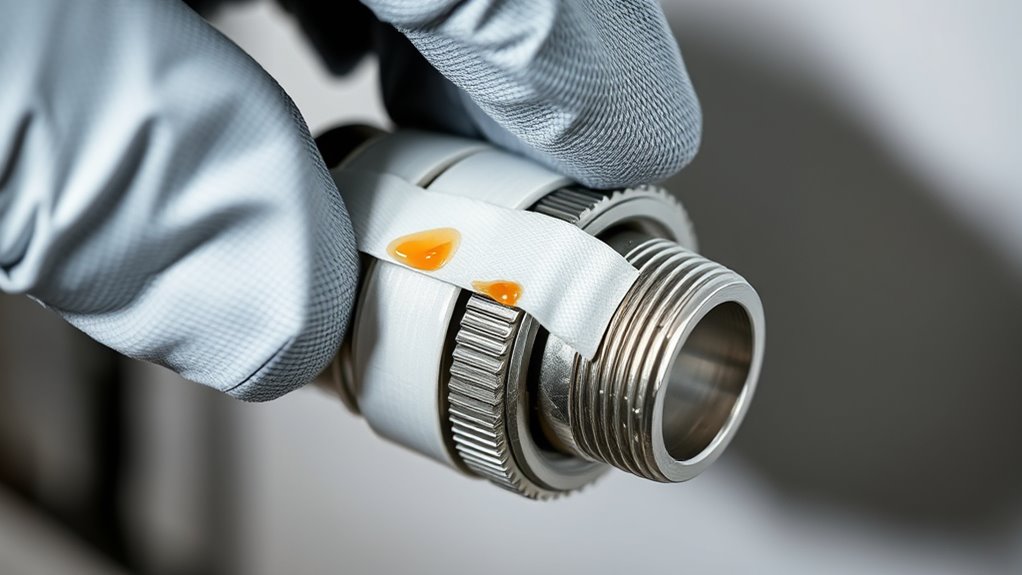

To secure pipe connections, start by cleaning the threads, then wrap Teflon tape clockwise around the male thread about two to three times, ensuring full coverage. For additional strength, apply a thread sealant if needed, especially for high-pressure or demanding environments. Proper application helps prevent leaks and corrosion, extending the pipe’s lifespan. Using these techniques correctly will keep your plumbing reliable—continue to explore detailed tips to perfect your sealing process.

Get home appliances delivered free — and shop member deals
- Fast, free delivery on millions of items
- Access to Prime Big Deal Days deals on October 6–7
- Prime Video, Amazon Music and more included
Key Takeaways
- Wrap Teflon tape clockwise around clean, dry male threads, covering all threaded areas evenly for a secure seal.
- Apply thread sealant to male threads before connecting fittings for enhanced leak protection and durability.
- Ensure neither over-winding nor under-winding Teflon tape to facilitate proper tightening without damage.
- Use the appropriate sealing material based on pipe pressure, environment, and material compatibility.
- Regularly inspect connections for leaks and reapply tape or sealant as needed to maintain a leak-free system.
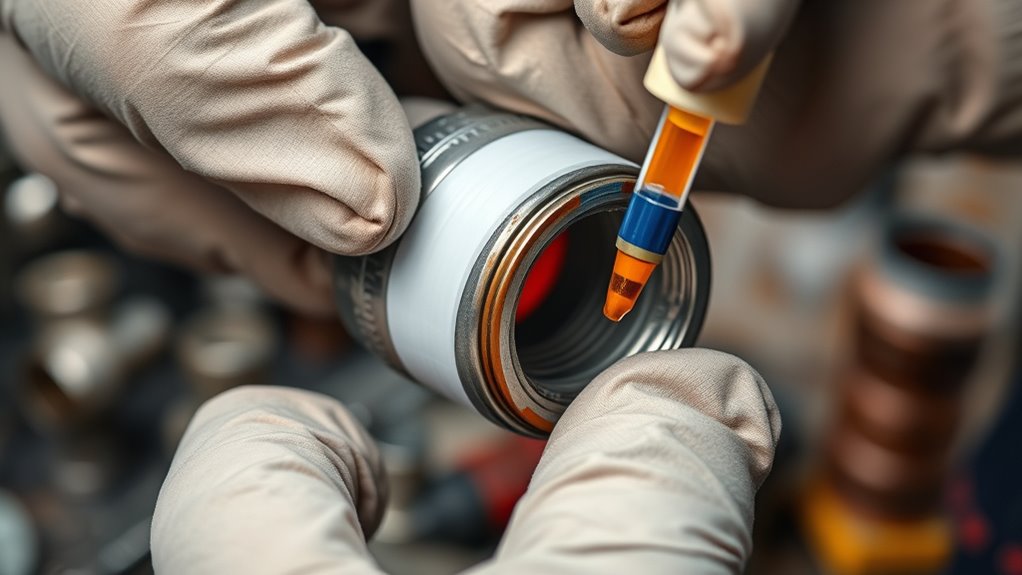
When it comes to creating secure pipe connections, choosing the right sealing method is vital. Proper sealing not only prevents leaks but also protects your pipes from issues like pipe corrosion, which can compromise the integrity of your entire plumbing system. Using the right materials, like Teflon tape and thread sealant, can make a significant difference in how well your connections hold over time. These materials help create a tight, durable seal that resists moisture and corrosion, ensuring your pipes stay leak-free and functional for years.
Proper sealing with Teflon tape and thread sealant ensures leak-free, corrosion-resistant pipe connections for lasting plumbing performance.
Teflon tape, also known as PTFE tape, is a popular choice because it’s easy to apply and versatile. When wrapping the tape around pipe threads, you want to make sure you do it in a clockwise direction. This way, when you screw the fittings together, the tape stays in place and provides a reliable seal. Proper application is key—too little tape may lead to leaks, while overdoing it can cause difficulty tightening the connection. When applied correctly, Teflon tape prevents water from seeping through the threads, reducing the risk of leak detection issues down the line.
Thread sealant, on the other hand, comes in liquid or paste form and often provides a stronger, more chemical-resistant seal. It’s especially useful for pipes carrying high-pressure fluids or those exposed to harsher environments. Applying thread sealant requires a clean, dry surface; you simply coat the male threads evenly before screwing the fittings together. This creates a seal that’s less prone to loosening over time, even with temperature fluctuations or vibration. Using thread sealant can also help prevent pipe corrosion caused by water leaks or moisture infiltration, which are common culprits in degrading pipe materials and leading to costly repairs.
Both Teflon tape and thread sealant contribute to early leak detection by maintaining a tight connection, which is vital for identifying issues before they escalate into major problems. Regular inspection of pipe connections allows you to spot potential leak points early, saving you time and money. Additionally, understanding the importance of appropriate sealing methods can help you choose the best option for specific applications and environments. By choosing the right sealing method and applying it properly, you’re not only ensuring a secure connection but also extending the lifespan of your pipes. Proper sealing reduces the risk of corrosion, which can weaken pipe walls and cause leaks over time. Essentially, investing in quality sealing techniques now can save you from unexpected plumbing failures later. With diligent application and routine checks, you can keep your plumbing system running smoothly and confidently address leak detection early, avoiding costly repairs and water damage.
Frequently Asked Questions
Can Teflon Tape Be Reused on Different Pipe Threads?
You should avoid reusing Teflon tape on different pipe threads because it can compromise the seal and lead to cross-thread sealing issues. Reusing Teflon tape may cause leaks or damage the threads, especially if it’s been compressed or contaminated. For a secure connection, always use fresh tape each time you make a new pipe connection, ensuring a proper seal and preventing cross-thread sealing problems.
What Is the Lifespan of Thread Sealant in Pipe Connections?
The lifespan of thread sealant in pipe connections varies depending on the type and conditions, but generally, it lasts several years. Sealant durability can be affected by temperature changes, water pressure, and pipe maintenance. You should regularly inspect your connections and reapply sealant when signs of leaks or deterioration appear. Proper application guarantees a longer-lasting seal, reducing the need for frequent maintenance and preventing potential water damage.
Are There Environmental Concerns With Using Teflon Tape?
You might wonder about environmental impact and disposal concerns when using Teflon tape. Teflon, or PTFE, is generally inert and doesn’t leach harmful chemicals, but it’s not biodegradable, raising disposal concerns. To minimize environmental impact, avoid unnecessary use, recycle if possible, and dispose of used tape properly. While Teflon tape is safe for most applications, being mindful of its long-term disposal helps reduce environmental footprint.
How Do Temperature Variations Affect Teflon Tape Performance?
Temperature variations can considerably impact Teflon tape performance. When temperatures rise or fall, thermal expansion causes the pipe and tape to expand or contract, potentially weakening tape adhesion. For example, at extreme temperatures, Teflon’s flexibility helps maintain a seal, but frequent fluctuations can compromise its effectiveness. You should check for leaks after temperature changes, ensuring the tape remains properly applied and adheres well despite thermal expansion.
Is There a Preferred Method for Removing Old Teflon Tape?
For tape removal, you should gently peel or unwind the old Teflon tape by hand, avoiding force that could damage the threads. Use a small brush or wire to clear any residue, ensuring the threads are clean for future use. Proper tape removal helps maintain thread integrity, allowing for secure thread reuse and preventing leaks. Always check the threads thoroughly before reapplying new tape or sealant.
Conclusion
By using Teflon tape and thread sealant, you’re building a fortress around your pipe connections, preventing leaks and future headaches. Think of it as giving your plumbing a snug, waterproof armor that keeps everything secure and running smoothly. With these simple tools, you’re the architect of a leak-free system, ensuring your pipes stay tight and reliable. Just like a well-sealed seal on a treasure chest, your connections will stay safe and sound for years to come.
NFL season / tailgating Picks
team gear
As an affiliate, we earn on qualifying purchases.