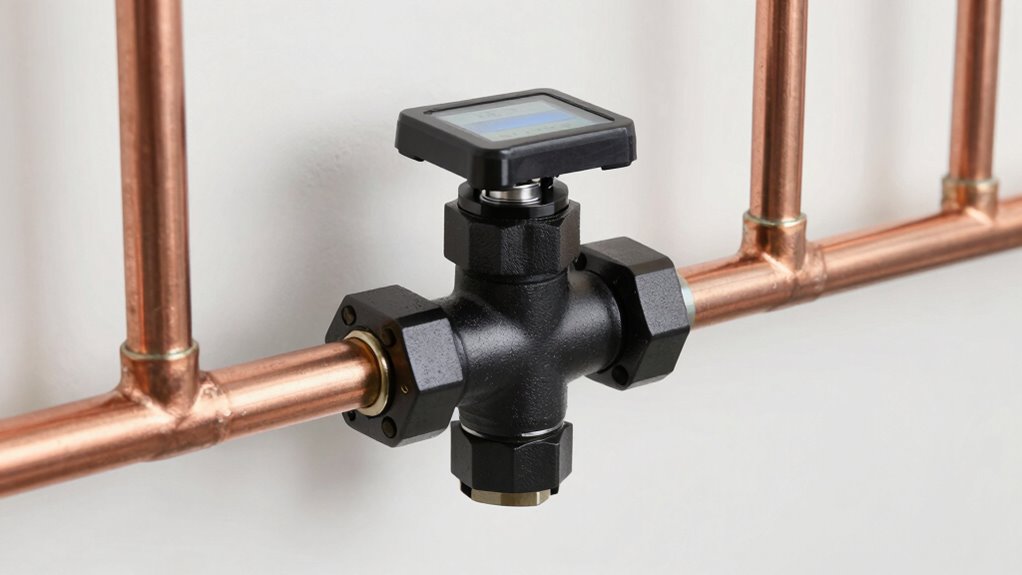
To install a smart shutoff valve on your main line correctly, turn off your water supply first. Measure and verify your water pressure, confirming it falls within the valve’s rated range. Connect the valve securely using compatible fittings suited for your pipe material, such as copper or PEX. Test for leaks and proper operation before restoring full water flow. If you follow these steps carefully, you’ll ensure reliable performance—keep going to learn the detailed installation process.

Get home appliances delivered free — and shop member deals
- Fast, free delivery on millions of items
- Access to Prime Big Deal Days deals on October 6–7
- Prime Video, Amazon Music and more included
Key Takeaways
- Turn off the main water supply and drain the line before installation to prevent leaks and water damage.
- Select a suitable location near the main line, ideally close to the water meter or where the line branches.
- Ensure proper pipe size and material compatibility with the smart shutoff valve for a secure fit.
- Install the valve according to manufacturer instructions, maintaining correct orientation and secure fittings.
- Perform thorough post-installation testing for leaks and valve responsiveness before restoring full water pressure.
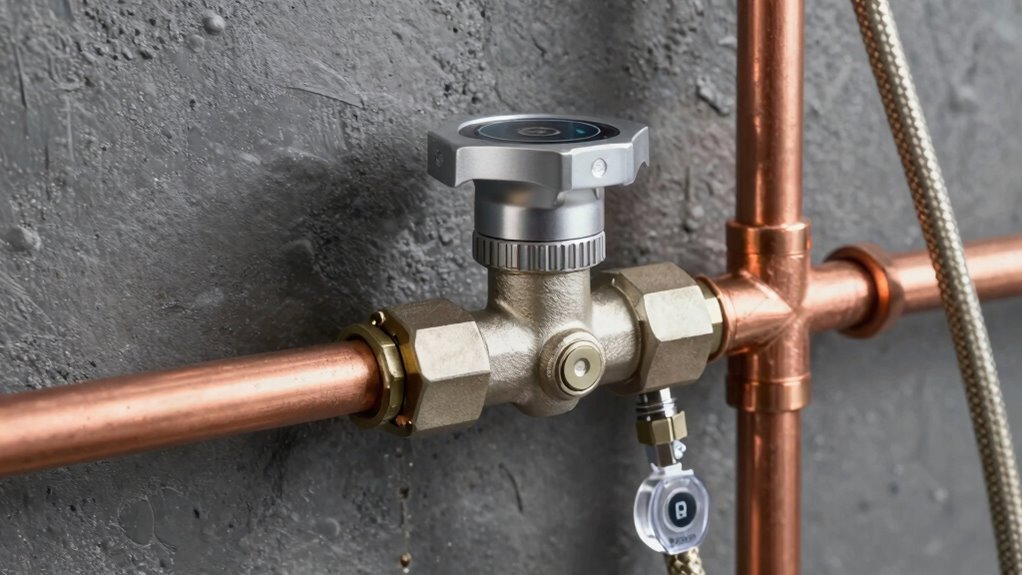
Installing a smart shutoff valve is a straightforward way to enhance your home’s safety and water management. When you set it up on your main water line, you gain the ability to monitor, control, and respond to leaks or pressure issues remotely. But before you get started, it’s vital to consider two critical factors: water pressure and valve compatibility. These elements ensure the installation goes smoothly and that your smart valve functions reliably over time.
First, you’ll want to assess your home’s water pressure. Most residential systems operate comfortably within a range of 40 to 80 psi, but checking your specific pressure helps you choose the right valve. If your water pressure is too high, it can strain the valve and reduce its lifespan or cause false triggers. Conversely, if it’s too low, the valve might not operate correctly, leading to potential leaks or failure to shut off when needed. You can measure your water pressure easily with a pressure gauge attached to an outdoor spigot or a laundry faucet. Once you know your pressure, select a smart shutoff valve rated for that range. Some valves come with adjustable pressure settings, giving you additional control to prevent over-pressurization and ensure smooth operation.
Next, valve compatibility is vital. Not every smart shutoff valve fits all plumbing setups. You need to determine your pipe size and type—whether it’s copper, PVC, PEX, or another material—and match that with a valve designed for those specifications. Check the manufacturer’s compatibility list or consult with a professional to confirm the valve’s connectors and fittings match your existing plumbing. Improper compatibility can lead to leaks, difficulty installing, or the need for additional adapters, which can complicate the process and potentially compromise the system’s integrity. Additionally, understanding plumbing materials can help you select the most suitable valve type for durability and compatibility.
Once you’ve confirmed your water pressure and valve compatibility, installation becomes more straightforward. Turn off your main water supply and drain the line to reduce pressure. Cut into the main line at a suitable location, usually near where your water meter or main shutoff is located. Attach the valve using the proper fittings and ensure all connections are tight and secure. Follow the manufacturer’s instructions carefully, especially regarding orientation and wiring. After installation, turn the water back on gradually, checking for leaks and verifying that the smart valve responds correctly when tested either manually or through its app.
As an affiliate, we earn on qualifying purchases.
Frequently Asked Questions
What Tools Are Needed for Smart Shutoff Valve Installation?
To install a smart shutoff valve, you’ll need basic installation tools like a wrench, pipe cutter, pliers, and Teflon tape. Make sure you also have a voltage tester if you’re working with electrical components. These tools help guarantee proper placement on the main line. For troubleshooting tips, double-check connections and ensure the valve is compatible with your system. Proper tools make installation smoother and prevent common issues.
How Long Does the Installation Process Typically Take?
They say “patience is a virtue,” and it’s true for smart shutoff valve installation. Typically, the process duration takes about 1 to 3 hours, depending on your home’s plumbing setup. The installation timeline involves preparing the main line, fitting the valve, and testing it. If you have the right tools and follow the steps carefully, you can expect a smooth, efficient process with minimal disruption to your day.
Can I Install the Valve Without Professional Help?
You can attempt a DIY installation of the smart shutoff valve, but it’s best to seek expert consultation first. While some handy homeowners handle the task, improper placement or connections can cause leaks or malfunction. If you’re confident in your plumbing skills, follow the manufacturer’s instructions carefully. Otherwise, hiring a professional guarantees the installation is done correctly and safely, saving you time and potential future issues.
What Are Common Troubleshooting Issues After Installation?
After installing your smart shutoff valve, you might encounter troubleshooting issues like leak detection false alarms or power supply problems. Confirm the connections are tight and check for leaks around the valve. Verify your power supply is functioning correctly—replace batteries if needed. If the system still reports leaks or power issues, consult the manufacturer’s instructions or contact support. Regular maintenance helps prevent future problems and keeps your system running smoothly.
Is There a Maintenance Schedule for the Smart Shutoff Valve?
Yes, you should follow a maintenance checklist to guarantee your smart shutoff valve stays in good condition. Regularly test the valve’s functionality, check for any leaks, and replace batteries if applicable. This routine helps extend the valve lifespan and prevents unexpected failures. Typically, inspecting the valve every 6 to 12 months keeps it operating smoothly. Staying proactive with maintenance ensures your system remains reliable and efficient.
water pressure gauge for home plumbing
As an affiliate, we earn on qualifying purchases.
As an affiliate, we earn on qualifying purchases.
Conclusion
Now that you’ve installed your smart shutoff valve correctly, you’re like a captain steering a ship safely through calm waters. Proper main line placement ensures peace of mind, knowing your home is protected from potential water damage. Keep an eye on your system, and you’ll enjoy reliable, smart control just like a skilled captain managing with confidence. With this setup, you’re ready to face any plumbing emergencies head-on, knowing you’ve done it right.
As an affiliate, we earn on qualifying purchases.
automatic water leak detector and shutoff
As an affiliate, we earn on qualifying purchases.
As an affiliate, we earn on qualifying purchases.
Fall yard work Picks
leaf blowers
As an affiliate, we earn on qualifying purchases.