One common mistake is improper discharge pipe placement; if it’s not sloped away from your house and terminated at a safe distance, water can flow back and cause flooding. Many overlook regular maintenance, leading to clogs or faulty float switches that stop your pump from working when needed. Installing the sump pump without considering electrical safety and proper waterproofing can also cause problems. Keep these issues in mind—you’ll find out how to avoid them with wise tips ahead.

Get home appliances delivered free — and shop member deals
- Fast, free delivery on millions of items
- Access to Prime Big Deal Days deals on October 6–7
- Prime Video, Amazon Music and more included
Key Takeaways
- Improper discharge pipe slope or placement causes water to re-enter the basement, leading to flooding.
- Incorrect termination point of the discharge pipe allows water to flow back toward the foundation.
- Failing to regularly maintain and test the sump pump increases the risk of malfunctions during storms.
- Neglecting electrical safety and proper installation can cause system failure and electrical hazards.
- Poor overall system setup and maintenance undermine the sump pump’s effectiveness, risking basement flooding.
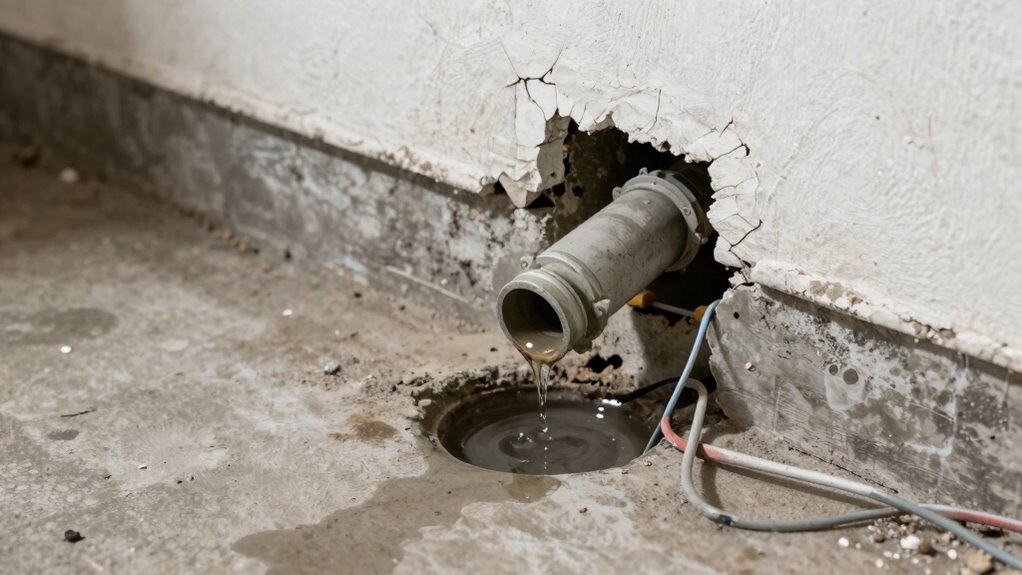
Many homeowners also overlook the importance of proper discharge piping. If the pipe isn’t correctly installed or directed away from your home’s foundation, water can flow back into the sump pit or pool around your basement. This can cause the pump to cycle constantly, wear out prematurely, or fail to keep the area dry. Make sure the discharge pipe slopes away from your house and terminates at a safe distance to prevent water from re-entering your basement. Failing to do so can create a cycle of waterproofing issues, regardless of how well your sump pump is working. Additionally, understanding drone safety guidelines and proper installation techniques can help prevent electrical mishaps and ensure your sump system functions effectively during all weather conditions. Lastly, some overlook regular maintenance and testing. A sump pump that isn’t checked periodically can fail without warning, especially if debris clog the intake or the float switch malfunctions. Regularly inspecting and cleaning the pump, ensuring the float moves freely, and testing it by pouring water into the pit can prevent surprises during storms. Proper maintenance extends the life of your system and guarantees it’s ready when heavy rains hit, reducing the risk of basement floods caused by preventable sump pump failures.
As an affiliate, we earn on qualifying purchases.
Frequently Asked Questions
How Often Should I Test My Sump Pump?
You should test your sump pump at least once a month to make certain it’s working properly. Incorporate a maintenance schedule that includes checking the float switch and removing debris. Regular testing helps prevent basement flooding by confirming flood prevention measures are effective. Don’t forget to test it more often after heavy rains or storms to stay ahead of potential issues and protect your home from water damage.
Can I Install a Sump Pump Myself?
Yes, you can attempt a DIY installation of a sump pump, but it’s vital to follow proper procedures and safety guidelines. Make certain you do thorough research and use the right tools. Afterward, schedule a professional inspection to confirm everything’s installed correctly and functioning properly. This step helps prevent common errors, reduces flooding risks, and guarantees your sump pump operates efficiently, giving you peace of mind during heavy rains.
What Is the Average Lifespan of a Sump Pump?
The average lifespan of a sump pump is about 10 years. To maximize its lifespan, you should follow proper maintenance tips, like cleaning the installation procedures regularly and checking for debris. Inspect the pump annually, test its operation, and replace it if it shows signs of wear. Proper maintenance helps prevent unexpected failures and basement floods, ensuring your sump pump continues to protect your home effectively.
Are Battery Backups Necessary for Sump Pumps?
You might think your sump pump is invincible, but a power failure can quickly prove otherwise. A battery backup isn’t just a luxury; it’s essential to prevent flooding when the power goes out. Without it, your basement risks flooding during storms or outages. So yes, investing in a battery backup guarantees your sump pump keeps working, protecting your home when it matters most. Don’t be caught unprepared; backup power saves your basement.
How Do I Determine the Right Size Sump Pump?
To determine the right size sump pump, you need to take into account your home’s sump pump capacity based on your area’s rainfall and soil type. Measure your basement’s water inflow during heavy storms, then choose a pump that can handle that volume. Installation considerations include the pump’s horsepower, basin size, and drain pipe compatibility. A properly sized sump pump ensures reliable flood protection without overworking the system.
As an affiliate, we earn on qualifying purchases.
Conclusion
Avoid these common sump pump mistakes, and you’ll keep your basement dry as a bone. Think of your sump pump as the guardian of your home—when installed correctly, it can stand tall against flooding. Don’t let small errors turn into big disasters; double-check every step. With proper installation, you’ll have peace of mind, knowing your basement is protected like a fortress against water’s relentless attack. Stay vigilant, and your home will thank you.
basement waterproofing sump pump
As an affiliate, we earn on qualifying purchases.
As an affiliate, we earn on qualifying purchases.
As an affiliate, we earn on qualifying purchases.
Fall yard work Picks
leaf blowers
As an affiliate, we earn on qualifying purchases.