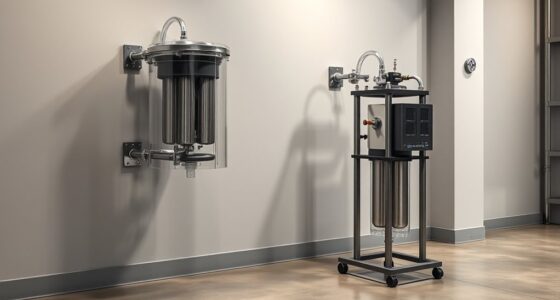
When planning a whole-house RO system, you need a dedicated, accessible space for maintenance and filter changes, ensuring it’s large enough for additional pretreatment devices like sediment filters or water softeners. You’ll also need a reliable drain connection to handle wastewater safely, with enough capacity to prevent backups. Proper placement near water and drain lines is essential. Continuing with these considerations will guide you through a smooth installation process.

Get home appliances delivered free — and shop member deals
- Fast, free delivery on millions of items
- Access to Prime Big Deal Days deals on October 6–7
- Prime Video, Amazon Music and more included
Key Takeaways
- Allocate a dedicated, accessible space for system maintenance, filter changes, and easy access to water and drain connections.
- Ensure reliable drain access with sufficient capacity to handle wastewater volume and prevent backups or leaks.
- Assess existing plumbing infrastructure and plan modifications needed for water inlet, drain, and electrical connections.
- Consider space for pretreatment equipment like sediment filters and water softeners to improve system efficiency and lifespan.
- Verify local permits and inspections requirements to avoid delays in installation planning and compliance.

Planning a whole-house reverse osmosis (RO) system requires careful consideration from the start. One of the first things you need to evaluate is the cost considerations involved. A system that can supply your entire home isn’t inexpensive; it includes high-quality filters, membranes, storage tanks, and possibly additional pumps. Besides the initial purchase price, you should also account for installation costs, which can vary widely based on your home’s plumbing and electrical setup. Budgeting for professional installation is essential, as attempting a DIY approach might save money upfront but could lead to errors that cause costly repairs later. Also, consider ongoing expenses like filter replacements and maintenance, which add up over time. These costs can influence your decision on the size and complexity of the system you choose.
Another essential factor to think about is the installation timeline. Whole-house RO systems are more complex than point-of-use units, often requiring several days to install properly. The timeline depends on your home’s existing plumbing infrastructure and whether modifications are necessary to accommodate the system. For example, you might need to install a dedicated drain line or upgrade your water pressure system, which can extend the installation period. Planning ahead guarantees you won’t be caught off guard by delays, especially if your water needs are urgent. Scheduling the installation during a period of minimal household disruption can make the process smoother, but it does require coordination with your installer. Keep in mind that the timeline includes not just the physical installation but also any required permits or inspections, which can take extra time depending on local regulations.
Beyond cost and timeline, you should also assess your available space and the location of your existing water and drain lines. Whole-house systems need a dedicated area that’s accessible for maintenance and future filter changes. If your home doesn’t have a suitable closet or utility room, you might need to retrofit or repurpose space, adding to both cost and time. Additionally, proper drain access is vital since the system discharges wastewater during operation. You’ll need a reliable drain connection that can handle the volume without causing backups or leaks. Pre-treatment devices like sediment filters or water softeners might also be necessary to protect the RO membranes and prolong their lifespan. Proper planning of space, drain access, and pretreatment ensures your system operates efficiently and reliably, minimizing downtime and repair costs down the line.
Frequently Asked Questions
What Is the Average Cost of a Whole-House RO System?
You can expect the average cost of a whole-house RO system to range between $3,000 and $8,000, depending on size and features. A thorough cost comparison shows that investing in a quality system boosts longevity, saving you money over time. While initial expenses seem high, a durable system guarantees reliable water purification, reduces maintenance, and offers long-term value, making it a smart choice for your home.
How Long Does a Typical Installation Take?
The installation timeline for a whole-house RO system varies based on system complexity, but typically, it takes about 4 to 8 hours. If your system is straightforward, you might finish closer to four hours, while more complex setups with additional pretreatment or space considerations could extend the process. You’ll want to allocate enough time and make certain your plumbing and space are ready to streamline the installation.
Can I Install a Whole-House RO System Myself?
You can attempt a DIY installation, but whole-house RO systems are complex and require precise setup. Without proper experience, you might face issues with space, drain connections, or pretreatment needs. To guarantee safety and peak performance, consider professional assistance. A trained installer will handle the technical aspects correctly, saving you time and preventing costly mistakes. If you’re not confident, investing in expert help is a smart decision.
What Maintenance Is Required for the System?
You need to regularly sanitize your whole-house RO system to prevent bacteria buildup, which involves disinfecting the filters and membranes. Additionally, you should replace filters every 6 to 12 months, depending on your water quality and usage. Keep an eye on system performance indicators, and follow manufacturer guidelines for maintenance. Proper upkeep guarantees your system runs efficiently and provides clean, safe water throughout your home.
How Much Water Does a Whole-House RO System Waste?
A whole-house RO system typically wastes about 3 to 4 gallons of water for every gallon of purified water produced. To improve water conservation and system efficiency, consider installing a permeate pump or a recirculation system. These upgrades help reduce waste, making your system more eco-friendly. Regular maintenance and proper system setup also ensure peak performance, minimizing water waste while providing clean water throughout your home.
Conclusion
Planning your whole-house RO system is essential for peak performance. Make certain you consider space, drainage, and pretreatment needs early on. Did you know that a properly installed system can reduce water waste by up to 50%? Taking the time to plan now guarantees clean, safe water for your entire home while avoiding costly mistakes later. Stay proactive, and you’ll enjoy reliable, high-quality water for years to come.
NFL season / tailgating Picks
team gear
As an affiliate, we earn on qualifying purchases.