
TL;DR
Listen free for 30 days with Audible
Thousands of audiobooks and originals — cancel anytime.
Start your free trialAs an affiliate, we earn on qualifying purchases.
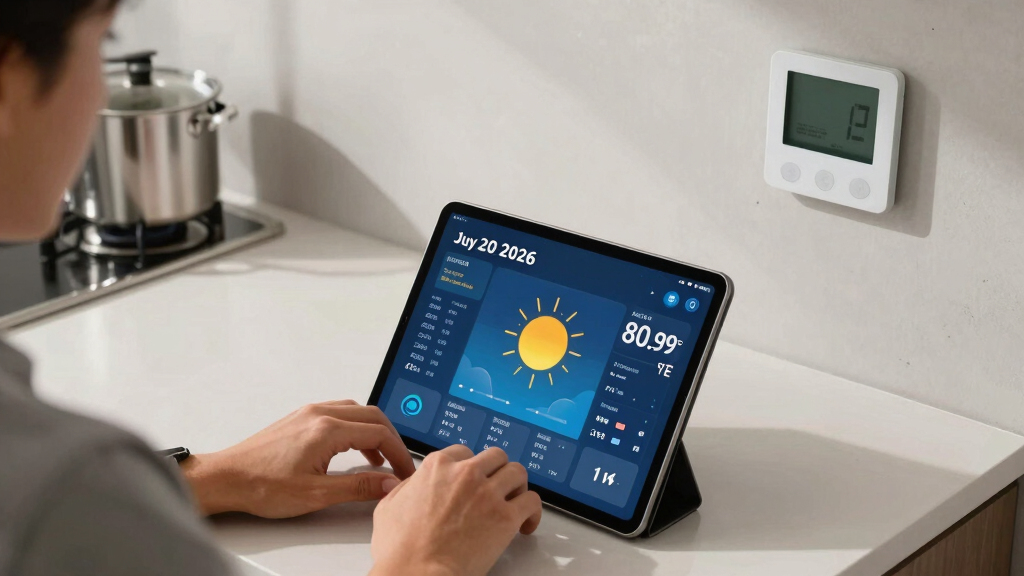
A trading market suggests a question about whether Austin’s temperature will be above 80.99°F at 1am EDT on July 20, 2026. The market has seen recent activity, but no definitive forecast exists yet.
Recent trading activity indicates a question about whether the temperature in Austin, Texas, will be above 80.99°F at 1am EDT on July 20, 2026. The market is driven by investor speculation and not by official weather forecasts, making it a unique indicator of future conditions based on collective expectations.
The question about Austin’s temperature on July 20, 2026, is currently being explored through a predictive market platform, which has experienced active trading—17 recent trades—focused on whether the temperature will surpass 80.99°F at 1am EDT. This activity reflects investor interest but does not constitute an official weather forecast or scientific prediction.
Weather forecasts for a date so far in advance are inherently uncertain, especially nearly four years ahead, and are typically based on climate models that cannot provide precise hourly temperatures this far in advance. The market’s activity is more indicative of collective sentiment than scientific certainty.
Why It Matters
This market activity highlights how financial instruments are increasingly used to gauge public and investor sentiment about future conditions, including weather. While not a scientific forecast, the active trading around this specific temperature threshold demonstrates a growing interest in predictive markets as tools for assessing future climate-related events.
For residents and policymakers, understanding the limitations and potential of such markets is important, especially as climate variability and extreme weather events become more prominent. However, it remains critical to rely on official meteorological sources for accurate, science-based weather forecasts.
As an affiliate, we earn on qualifying purchases.
Background on Predictive Markets and Long-Term Weather Forecasting
Predictive markets, also known as prediction markets, are platforms where participants buy and sell contracts based on the outcome of future events. These markets have been used for elections, economic indicators, and increasingly, weather-related predictions. The activity surrounding the question of Austin’s temperature on July 20, 2026, reflects this trend.
Weather forecasting, especially for specific hours several years in advance, is limited by the current state of climate modeling. Long-term forecasts typically provide seasonal or monthly outlooks rather than precise hourly temperatures. Therefore, the market’s activity should be viewed as a reflection of collective expectations rather than a scientific prediction.
As an affiliate, we earn on qualifying purchases.
Limitations of Long-Term Weather Predictions and Market Indicators
It is not yet clear how accurate or reliable the predictive market activity will be in forecasting specific hourly temperatures in 2026. The activity reflects collective sentiment rather than scientific certainty, and weather patterns over such a long horizon are inherently unpredictable with current technology.
Additionally, external factors such as climate change and local weather variability could significantly influence actual conditions, making precise predictions highly uncertain at this stage.
As an affiliate, we earn on qualifying purchases.
Monitoring Market Activity and Awaiting Scientific Forecasts
In the coming months, market activity related to this question may fluctuate as the date approaches and more information becomes available. However, for reliable weather information, residents and stakeholders should rely on official meteorological agencies and climate models closer to the date.
Scientists will continue refining climate models, but precise hourly forecasts for July 20, 2026, are unlikely until much nearer the date. The market’s activity remains an interesting indicator of collective expectations but should not be considered a definitive prediction.
As an affiliate, we earn on qualifying purchases.
Key Questions
Can the market accurately predict Austin’s temperature on July 20, 2026?
No, predictive markets reflect collective sentiment and are not scientific forecasts. Long-term weather predictions at this level of precision are unreliable.
Why is there market activity around this temperature question?
Participants may be speculating on climate trends or testing the predictive market platform’s capabilities. It also reflects growing interest in using financial instruments to gauge future conditions.
How far in advance can weather forecasts reliably predict specific hourly temperatures?
Current technology allows reliable forecasts up to about 7-10 days in advance. Predictions for specific hours several years ahead are not scientifically feasible.
Should residents plan based on this market activity?
No, residents should rely on official weather forecasts from meteorological agencies for planning and safety decisions.
Source: kalshi
NFL season / tailgating Picks
team gear
As an affiliate, we earn on qualifying purchases.