Many people overlook that water quality, not just debris, causes filters to clog early. Tiny particles, minerals, and contaminants in your water often build up inside filters faster when water is hard or contaminated. Over time, this invisible buildup forces filters to work harder and wear out sooner. If you want to prevent premature clogging, it’s essential to address underlying water issues and maintain your system properly. Keep going to uncover more tips to extend your filter’s life.

Get home appliances delivered free with Prime
- Fast, free delivery on millions of items
- Prime Video, Amazon Music and more included
- Member-only deals all year
Key Takeaways
- Ignoring water quality changes can cause unseen mineral deposits that lead to early filter clogging.
- Failing to regularly test water prevents detection of increasing sediment or contaminant levels.
- Overlooking the importance of pre-filter maintenance allows larger debris to reach primary filters prematurely.
- Neglecting underlying water source issues results in persistent contaminants accelerating filter wear.
- Not adopting a holistic maintenance approach reduces filter lifespan despite routine cleaning.
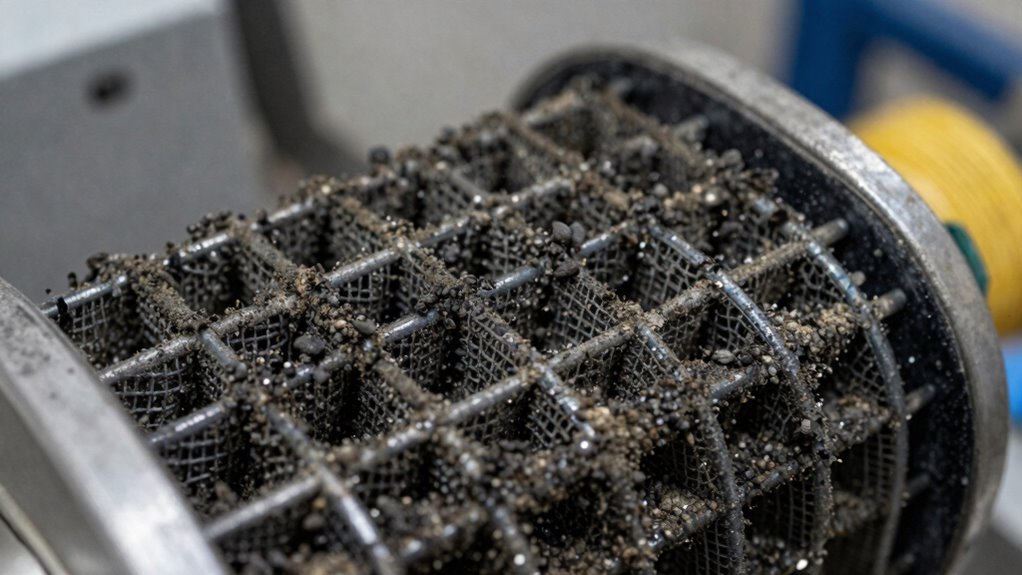
Have you ever noticed your filters clogging sooner than expected? It’s frustrating to replace or clean filters frequently, especially when you’ve been diligent about maintaining them. Most people assume that filter clogging is simply a result of dirty water or overuse, but there’s often an overlooked reason behind it: poor water quality that’s not immediately obvious. When water quality declines, it can accelerate sediment buildup and debris accumulation, causing filters to clog faster than they should. This means that even with regular filter maintenance, your filters might still become overwhelmed prematurely.
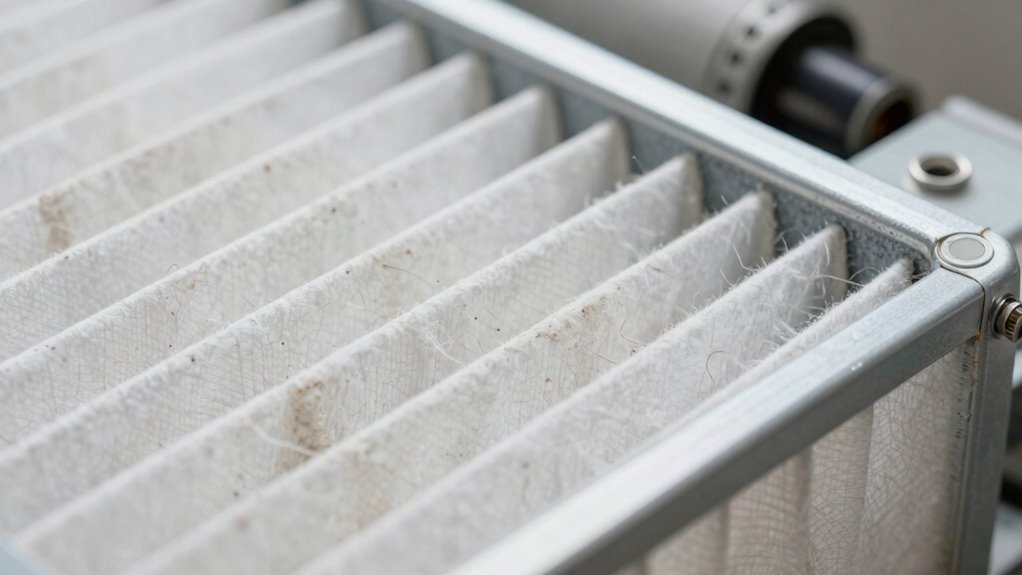
Your water source can contain tiny particles, minerals, and contaminants that aren’t always visible. If your water has high levels of sediment, iron, or other minerals, it can settle into the filter media more quickly. Over time, these deposits form a layer that blocks water flow and reduces efficiency. Sometimes, the issue isn’t just the amount of debris but the composition of the water itself. Hard water, for example, contains minerals that can scale up and clog filters faster, making it seem like your filter is failing prematurely. When water quality isn’t properly addressed, your filters work harder and wear out sooner, despite regular maintenance efforts. Addressing water quality is crucial to preventing these issues. Additionally, understanding the specific water contaminants present can help tailor more effective filtration solutions.
Many folks overlook the importance of testing water quality regularly. If you don’t check the water coming into your system, you might not realize that a change in source water or an increase in sediment levels is causing your filters to clog early. A simple water test can reveal if mineral content, pH imbalance, or other contaminants are contributing to the problem. Once you identify water quality issues, you can take targeted steps, like installing pre-filters or water softeners, to reduce the load on your main filters. This proactive approach can extend filter lifespan and improve overall system performance.
Furthermore, neglecting to update or replace pre-filters can compound the problem. Pre-filters act as a first line of defense, capturing larger particles before they reach the main filter. When these pre-filters are overdue for replacement, they become clogged, leading to more debris reaching the primary filter and causing it to clog early. Regular inspection and timely replacement of all filter components are essential, especially if water quality issues are present. Maintaining these components ensures that your filtration system operates efficiently and sustainably over time. Proper maintenance of these components, combined with addressing underlying water issues, can significantly improve system longevity.
In essence, the most overlooked reason for early filter clogging is not just the amount of debris but the underlying water quality. A holistic approach that includes regular filter maintenance, water testing, and addressing water source issues can prevent premature clogging and extend the life of your filtration system.
water filter with mineral buildup prevention
As an affiliate, we earn on qualifying purchases.
As an affiliate, we earn on qualifying purchases.
Frequently Asked Questions
Can Filter Clogging Occur Even With Regular Maintenance?
Yes, filter clogging can still occur despite your regular maintenance routines. Over time, debris and small particles can accumulate faster than expected, shortening the filter lifespan. Factors like environmental conditions or using the wrong filter type can also contribute. Even with consistent upkeep, it’s crucial to monitor the filter’s condition regularly and replace it when necessary to prevent clogging and guarantee peak system performance.
Do Certain Water Qualities Increase Filter Clogging Risk?
Water hardness and dissolved solids definitely boost the risk of filter clogging. When your water’s hard, minerals like calcium and magnesium build up over time, causing deposits that block filters. Dissolved solids, including silt, sand, and organic matter, also contribute to clogging by accumulating on filter surfaces. To prevent this, consider water softening or regular filter maintenance, ensuring your filtration system stays clear and efficient.
How Often Should I Replace Filters to Prevent Early Clogging?
You should replace your filters according to the recommended Replacement schedule, typically every 3 to 6 months, depending on your filter material and water usage. Regularly check for signs of clogging, such as reduced flow or discoloration. Using high-quality filter material can extend lifespan, but sticking to the schedule guarantees your filter works efficiently and prevents early clogging caused by accumulated debris or contaminants.
Are There Specific Filter Types Less Prone to Clogging?
Yes, certain filter types resist clogging better. Look for filters with high clog resistance made from durable materials like pleated synthetic fibers or metal mesh, which allow airflow while trapping particles efficiently. These filters maintain their performance longer and are less prone to clogging quickly. Choosing filters designed with superior filter material can markedly enhance lifespan and reduce maintenance, keeping your system running smoothly.
Does Household Water Usage Affect Filter Lifespan?
Think of your household water as a river flowing through your home; its temperament influences your filter’s lifespan. Hard water, loaded with minerals, acts like tiny stones that grind down filters faster, while high sediment levels are like debris clogging the filter’s pathway. If you use water intensively, especially with hard water or lots of sediments, your filter wears out quicker, making regular maintenance essential to keep it flowing smoothly.
water testing kits for contaminants
As an affiliate, we earn on qualifying purchases.
As an affiliate, we earn on qualifying purchases.
Conclusion
Imagine trying to keep a garden healthy, only to forget watering the soil first. Without proper prep, the filter’s like that neglected soil—clogs happen sooner. I once saw a car’s filter clog after just a few months because the owner skipped regular checks, much like ignoring an essential step. Don’t let overlooked factors be the reason your filter fails early. Stay proactive, check regularly, and keep that filter running smoothly for the long haul.
pre-filter replacement for water systems
As an affiliate, we earn on qualifying purchases.
As an affiliate, we earn on qualifying purchases.
As an affiliate, we earn on qualifying purchases.
Fall yard work Picks
leaf blowers
As an affiliate, we earn on qualifying purchases.