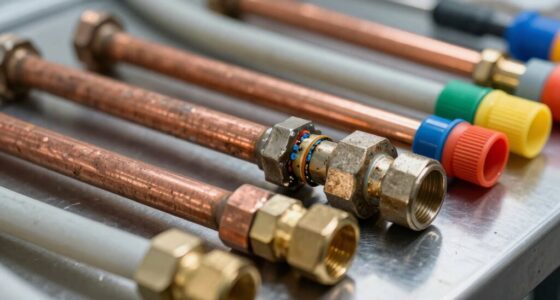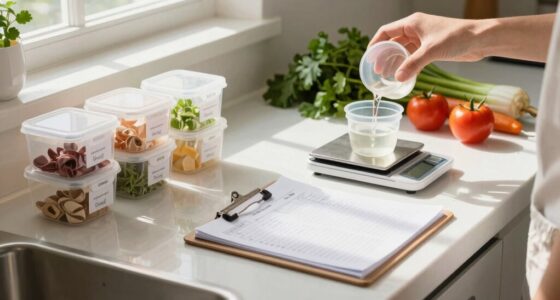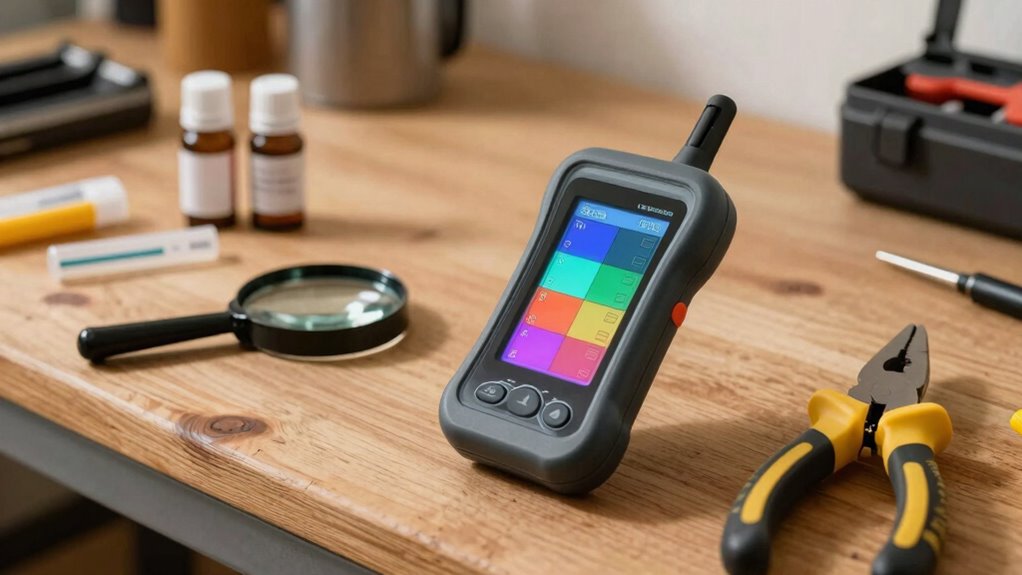
Water testing meters should be in your toolkit because they help guarantee your water is safe and reliable. They let you spot potential issues early, such as bacteria or heavy metals, preventing health problems. These user-friendly devices are affordable and provide quick results, saving you time and money on external tests. By monitoring regularly, you can take immediate action like installing filters or disinfecting. Keep exploring to discover how these tools can keep your family safe and healthy.

Get home appliances delivered free — and shop member deals
- Fast, free delivery on millions of items
- Access to Prime Big Deal Days deals on October 6–7
- Prime Video, Amazon Music and more included
Key Takeaways
- They enable quick, affordable detection of water contaminants, promoting proactive household water safety.
- Regular use prevents health risks from harmful substances like bacteria, lead, or chemicals.
- User-friendly meters empower homeowners to monitor water quality without relying on costly external testing.
- Early detection of issues allows timely interventions, reducing potential damage and health hazards.
- Incorporating meters into home toolkits fosters responsible water management and environmental awareness.
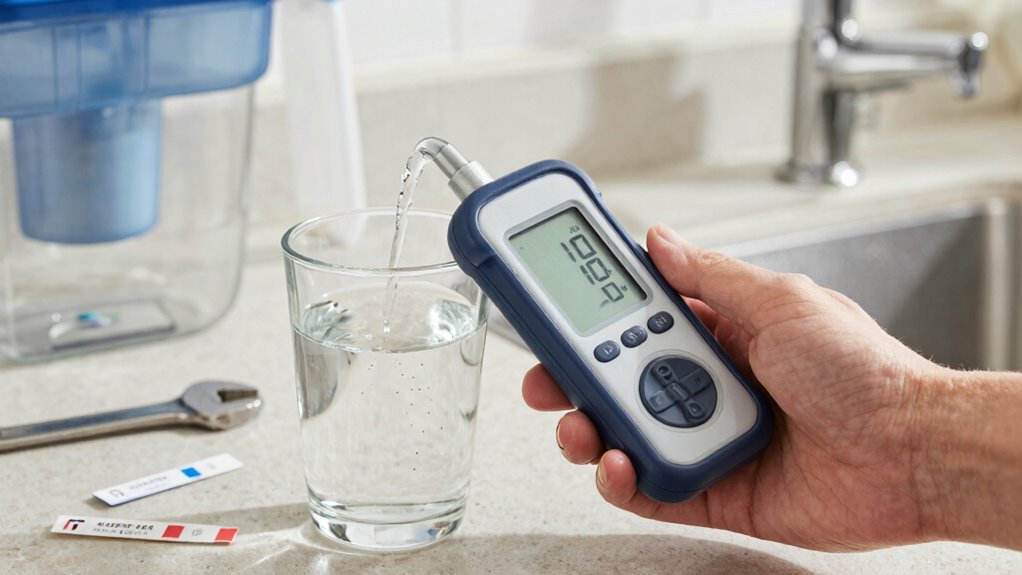
Having a water testing meter in your homeowner toolkit can be a game-changer for guaranteeing your water quality is safe and reliable. Many homeowners overlook the importance of regularly checking their water supply, but with a simple testing device, you can quickly identify potential issues before they become serious safety concerns. Water quality isn’t just about taste; it’s about protecting your health and the well-being of your family. Contaminants like bacteria, nitrates, or heavy metals can lurk in your water without obvious signs, making routine testing essential for peace of mind.
A water testing meter helps ensure your water is safe, healthy, and free from hidden contaminants.
When you have a water testing meter on hand, you gain immediate insight into your water’s safety. Instead of relying solely on municipal reports or waiting for a problem to manifest, you can perform quick tests right at home. This proactive approach helps you catch problems early, whether it’s an unexpected spike in contaminants or a decline in water clarity. Early detection allows you to take appropriate actions, such as installing filters, disinfecting your system, or contacting professionals to investigate further. Without this tool, you might remain unaware of hidden risks lurking in your water supply.
Safety concerns are a major reason to include water testing meters in your toolkit. If you use well water, the risk of contamination increases, especially if your well is shallow or near potential pollutants. Even city water can sometimes experience issues like lead leaching from old pipes or chemical runoff. Regular testing ensures that you’re not unknowingly exposing yourself to harmful substances. It’s a simple step that can prevent serious health problems, including gastrointestinal illnesses, neurological issues, or other long-term health effects linked to contaminated water. By investing in a water testing meter, you’re actively taking ownership of your home’s safety and making informed decisions to protect your loved ones.
Furthermore, these meters are user-friendly and affordable, making them accessible to most homeowners. Modern devices provide quick, accurate readings without the need for specialized training. You can perform routine checks during home maintenance or after significant weather events that might affect your water source. This convenience empowers you to be more self-reliant and less dependent on external testing services, which can be costly and time-consuming. Additionally, understanding the types of contaminants present in your water can help you better determine the appropriate treatment solutions. Regular testing can also alert you to potential system malfunctions, allowing for timely repairs before issues escalate. Recognizing the importance of biodiversity in your environment can also help in understanding how external factors influence water quality. Incorporating these testing practices can serve as a preventive health measure, safeguarding your household from unseen hazards. Regular testing can also help you understand how external environmental factors impact your water supply, enabling you to adapt your treatment methods accordingly. Overall, incorporating a water testing meter into your homeowner toolkit is a smart, responsible step toward ensuring your water remains clean, safe, and free from hidden hazards. It’s a small investment with significant peace of mind, especially when it comes to safeguarding your health and safety concerns.
water testing meter for home use
As an affiliate, we earn on qualifying purchases.
As an affiliate, we earn on qualifying purchases.
Frequently Asked Questions
How Often Should I Test My Home Water Supply?
You should test your home water supply at least once a year to guarantee good water quality. However, testing frequency depends on your water source—well water might require more regular checks, like every six months. Regular testing helps you catch contaminants early and maintain safe, clean water. If you notice changes in taste, smell, or clarity, test immediately to address potential issues promptly.
Are Water Testing Meters Suitable for All Water Sources?
Water testing meters are suitable for most water sources, but their accuracy can vary with water source diversity. You need to take into account meter calibration regularly to ensure reliable results. Different sources like well water, tap water, or rainwater may contain unique contaminants, so choose a meter designed for those specific conditions. Proper calibration and understanding your water source help you get precise readings and maintain safe, clean water at home.
What Is the Typical Lifespan of a Water Testing Meter?
A water testing meter typically lasts 2 to 5 years, depending on usage and maintenance. To extend its lifespan, you should follow maintenance tips like regular cleaning and proper storage. Calibration procedures are vital; calibrate your meter periodically as recommended by the manufacturer to guarantee accuracy. Proper upkeep helps your meter perform reliably over time, making it a valuable tool for monitoring water quality in your home.
Can Water Testing Meters Detect Bacteria or Viruses?
A stitch in time saves nine, so you’ll want to know that water testing meters primarily focus on detecting contaminants like chemicals and pH levels; they don’t directly identify bacteria or viruses. For bacteria detection or virus identification, specialized testing kits or lab analysis are necessary. While water meters provide quick insights, they aren’t a substitute for thorough testing when it comes to microbial safety.
Do I Need Professional Training to Use a Water Testing Meter?
You don’t need professional training to use a water testing meter, but understanding calibration procedures helps guarantee accurate results. Many meters are designed for simple operation, with clear instructions that make them user-friendly. When considering cost comparison, home testing meters are generally affordable and save you money compared to professional lab tests. With a little practice, you can confidently monitor your water quality regularly without the need for specialized skills.
As an affiliate, we earn on qualifying purchases.
Conclusion
By keeping a water testing meter in your toolkit, you’re equipping yourself with a silent sentinel, ready to catch hidden issues before they become costly. Imagine the reassurance of knowing your water’s purity, like a clear stream flowing through your home, untouched and safe. With this small device, you become the guardian of your household’s health, turning everyday moments into opportunities for proactive care. It’s a simple addition that offers peace of mind, flowing as smoothly as water itself.
water contaminant testing device
As an affiliate, we earn on qualifying purchases.
As an affiliate, we earn on qualifying purchases.
As an affiliate, we earn on qualifying purchases.
NFL season / tailgating Picks
team gear
As an affiliate, we earn on qualifying purchases.