

When dealing with arsenic, it’s essential to start with speciation because the chemical form determines its toxicity and environmental impact. Knowing whether arsenic is inorganic or organic helps you assess actual risks accurately, instead of reacting to total arsenic levels alone. This targeted approach prevents unnecessary panic and guides effective decisions. By understanding the specific forms involved, you can better manage contamination and support safe solutions. Keep exploring to learn how this nuanced approach can make a difference.
Open a free Amazon Business account
Business pricing, bulk buying and tax-exempt orders.
As an affiliate, we earn on qualifying purchases.
Key Takeaways
- Arsenic speciation reveals the actual toxicity risk, preventing unnecessary alarm based on total arsenic levels alone.
- Identifying arsenic forms guides targeted and effective environmental remediation strategies.
- Speciation data ensures regulatory compliance and accurate risk assessments, avoiding overly conservative or inadequate measures.
- Understanding arsenic chemistry supports clear communication, reducing community anxiety and misinformation.
- Differentiating arsenic forms enhances decision-making by focusing on relevant health and environmental impacts.
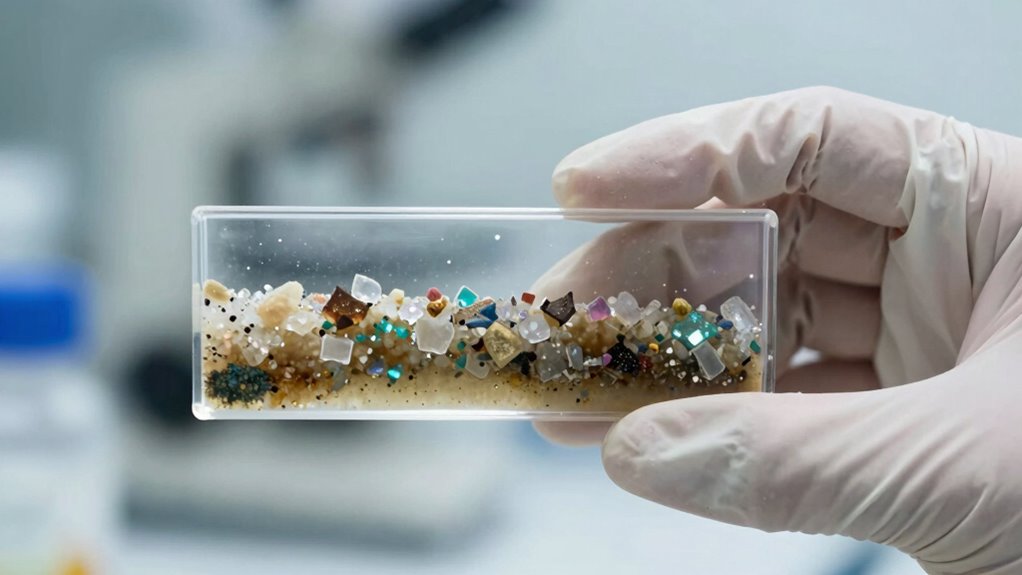
Understanding the different forms of arsenic is essential for making informed decisions about exposure and remediation. Arsenic exists mainly in two forms: inorganic and organic. The inorganic form, often found in contaminated water and soils, is generally more toxic and poses a significant environmental impact. Organic arsenic compounds, typically present in seafood, tend to be less harmful. Recognizing these distinctions helps you avoid unnecessary panic and guides you toward appropriate actions based on scientific evidence rather than fear.
When you focus on arsenic speciation, you gain clarity about the actual risk. This approach prevents misinterpretation of data that could overstate danger. For example, detecting arsenic in a water sample doesn’t automatically mean it’s a health threat—knowing whether it’s inorganic or organic can change your response. By understanding the specific form, you can better assess the environmental impact and determine whether remediation is necessary. This targeted knowledge supports balanced decision-making, avoiding costly or misguided interventions driven by incomplete information.
Regulatory challenges often stem from the complexity of arsenic chemistry. Agencies set standards based on total arsenic levels, but these don’t account for speciation, which can lead to overly conservative or insufficient regulations. As someone involved in managing environmental risks, you need to understand these legal frameworks and their limitations. Proper speciation analysis can help you navigate regulatory challenges more effectively, ensuring compliance without overreacting to benign findings. It also empowers you to advocate for policies that recognize the importance of arsenic forms, promoting more nuanced and scientifically grounded standards. Recognizing the chemical forms of arsenic can improve risk assessments and remediation strategies, leading to more effective environmental management.
Starting with speciation doesn’t mean ignoring the bigger picture; it means taking a precise, evidence-based approach. When you know whether arsenic is inorganic or organic, you can prioritize actions that truly matter, such as advanced treatment processes for inorganic arsenic in drinking water. This focus helps prevent resource wastage and reduces community anxiety. It also facilitates communication with regulators, stakeholders, and the public by providing clear, accurate information about actual risks. Additionally, understanding the toxicity differences between arsenic forms ensures that efforts are appropriately targeted and scientifically justified. Recognizing that arsenic chemistry influences toxicity can help guide more effective treatment and remediation strategies. This nuanced understanding can help avoid regulatory challenges that arise from misinterpreting total arsenic levels and promotes better public trust. Furthermore, awareness of the environmental behavior of different arsenic compounds can help in designing more sustainable and effective remediation techniques.
In essence, your decision-making improves when you begin with arsenic speciation rather than reacting to the presence of arsenic alone. It shifts the conversation from panic to understanding, allowing you to implement practical, effective solutions. Recognizing the different forms and their respective environmental impacts ensures you’re making choices rooted in science, not fear, and helps navigate the regulatory landscape with confidence. This approach ultimately leads to better protection for public health and the environment, grounded in knowledge rather than misconceptions.
As an affiliate, we earn on qualifying purchases.
Frequently Asked Questions
How Does Arsenic Speciation Affect Human Health Risks?
Arsenic speciation directly impacts your health risks because different forms have varying toxicity levels. You’re more vulnerable through exposure pathways like drinking contaminated water or eating affected foods. Inorganic arsenic is more toxic, increasing your risk of health issues, while organic forms are less harmful. Knowing the specific arsenic species helps you assess danger accurately, so you can take appropriate steps to reduce exposure and protect your health effectively.
What Are Common Methods to Determine Arsenic Species in Samples?
You typically use analytical techniques like HPLC, ICP-MS, or X-ray absorption spectroscopy to determine arsenic species. Sample preparation is vital and involves processes like extraction, filtration, and digestion to preserve speciation. Studies show that proper speciation analysis can detect arsenic compounds at parts-per-trillion levels, emphasizing its significance. These methods enable accurate health risk assessments by identifying organic versus inorganic arsenic in your samples.
Can Arsenic Speciation Change Over Time or With Environmental Conditions?
Yes, arsenic speciation can change over time or with environmental conditions due to environmental transformations like oxidation, reduction, or methylation. These processes pose analytical challenges because they can alter arsenic’s chemical form, affecting toxicity and mobility. You need to carefully monitor conditions such as pH, redox potential, and microbial activity to accurately assess arsenic speciation, ensuring your results reflect the true environmental state rather than transient changes.
How Does Arsenic Speciation Influence Remediation Strategies?
Arsenic speciation greatly influences your remediation strategies because different forms respond differently to treatment methods. Speciation variability creates remediation challenges, as some arsenic species are more mobile or toxic than others. Understanding the specific arsenic forms present allows you to select targeted approaches, like oxidation or stabilization, to effectively reduce toxicity and mobility. Ignoring speciation could lead to ineffective or costly remediation efforts, risking environmental health.
Are There Regulatory Standards Based on Arsenic Species, Not Total Arsenic?
Are regulatory standards based on arsenic species, not total arsenic? Currently, you’ll find regulatory gaps and policy challenges because most standards focus on total arsenic levels, overlooking how different species affect health risks. This oversight can lead to inadequate protection. Shouldn’t regulations evolve to take into account arsenic speciation? By addressing these gaps, you can better tailor remediation efforts and improve public health safety.
As an affiliate, we earn on qualifying purchases.
Conclusion
So, next time you face an arsenic dilemma, don’t jump to panic or quick fixes. Instead, dig deeper—understand its form, its behavior, its very essence. Because rushing into decisions without knowing what you’re dealing with is like fighting a fire blindfolded. When you start with speciation, you’re arming yourself with the ultimate superpower—the knowledge to make decisions that protect lives and restore hope. Don’t settle for less; reveal the truth, and take control now!
As an affiliate, we earn on qualifying purchases.
As an affiliate, we earn on qualifying purchases.
Flea & tick season Picks
flea and tick prevention
As an affiliate, we earn on qualifying purchases.