To stop guessing, learn how your water softener works by monitoring signs like poor soap lather and low salt levels, and track your water usage to plan regeneration properly. Factors like hardness and household size affect how often you’ll need to regenerate. Use these insights to establish a reliable schedule, maintain proper salt levels, and perform regular checks. Keep going, and you’ll discover how to keep your system running efficiently and effectively.
Key Takeaways
- Understand how water softeners remove minerals through ion exchange and recognize signs indicating when regeneration is needed.
- Consider factors like water hardness, usage, and seasonal changes to accurately schedule regeneration cycles.
- Properly calculate salt levels and monitor water consumption to optimize softener efficiency and reduce costs.
- Maintain regular system checks, adjust regeneration timing based on water use, and perform routine cleaning for peak performance.
- Choose durable materials and high-quality components, and follow best practices for installation and maintenance to extend system lifespan.

Morton Clean and Protect Water Softener Salt Pellets, 40 LB (Pack of 2)
- Package Includes: Two 40 lb bags of salt pellets
- Extended Use: Total of 80 lbs of salt pellets
- Buildup Prevention: Patented system to prevent buildup
As an affiliate, we earn on qualifying purchases.
As an affiliate, we earn on qualifying purchases.
Understanding How Water Softeners Work

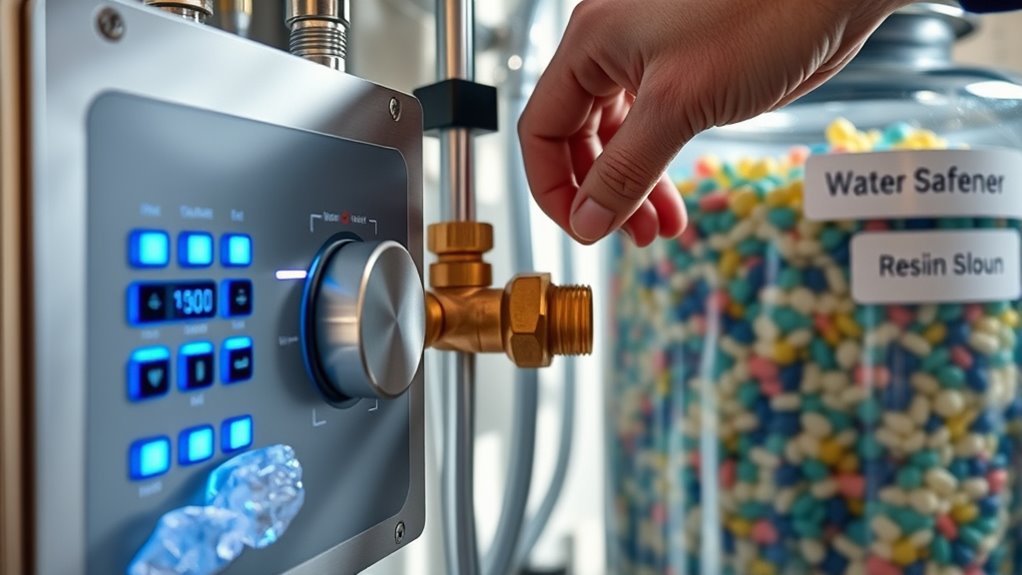
Water softeners work by removing calcium and magnesium ions that cause hardness in your water. They achieve this through a process called ion exchange, where resin beads play a central role. These resin beads are tiny, negatively charged spheres that attract the positively charged calcium and magnesium ions. When hard water passes through the resin tank, the ions swap places: the resin beads release sodium ions and absorb the hardness-causing minerals. Over time, the beads become saturated with calcium and magnesium, reducing their efficiency. That’s when regeneration is needed to recharge the resin beads with sodium ions, restoring their ability to soften water. This cycle ensures your water remains soft, protecting your appliances and plumbing while maintaining comfortable, mineral-balanced water. Proper regeneration is essential to keep the system functioning effectively and extend its lifespan.

On The Go Water Softener Salt Regeneration Kit, 10" x 2.5" Housing with Carbon Filter, Garden Hose and Installation Accessories
- Complete Water Softener Kit: Includes housing, filter, adapters, and accessories
- Salt Regeneration System: Regenerates water softener without salt contact
- Easy Installation: Includes garden hose, refill cap, and distribution tube
As an affiliate, we earn on qualifying purchases.
As an affiliate, we earn on qualifying purchases.
Signs That Indicate It’s Time to Regenerate
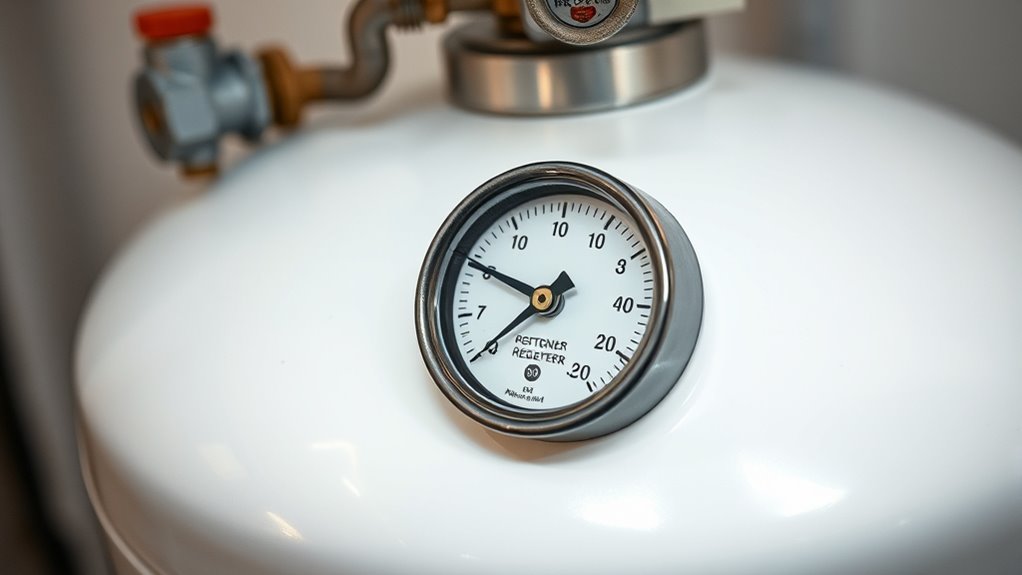
Knowing when to regenerate your water softener is essential to maintaining its efficiency. You might notice the following signs:
- Your soap isn’t lathering well, indicating mineral buildup inside the system.
- You see a decrease in water pressure, caused by mineral deposits clogging the resin beads.
- The salt levels in your brine tank are consistently low, even after refilling, signaling the resin’s reduced ability to regenerate effectively.
- Additionally, modern water softeners equipped with regeneration indicators can alert you when service is needed, ensuring optimal performance.
If these signs appear, it’s time to regenerate. Ignoring them can lead to inefficient operation and harder water. Keep an eye on salt levels, and monitor for signs of mineral buildup to ensure your softener continues working smoothly.
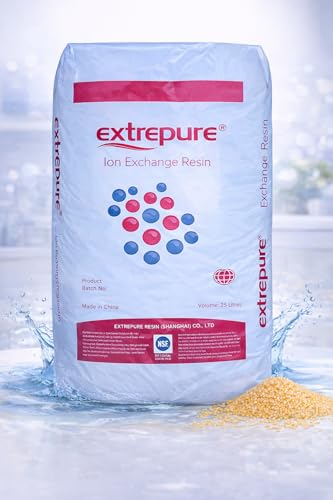
Water Softener Resin 1 Cu Ft – 32K Grain High-Capacity 7% Cross-linked
- High-Performance Resin: 7% cross-linked, durable, efficient
- High Capacity Softening: Removes minerals, reduces regeneration
- Long-Lasting & Easy to Install: Compatible with standard systems, hassle-free
As an affiliate, we earn on qualifying purchases.
As an affiliate, we earn on qualifying purchases.
Factors Influencing Regeneration Frequency
Your softener’s regeneration frequency depends on several key factors. Higher water hardness levels and increased water usage mean you’ll need to regenerate more often, while salt efficiency rates can also impact how frequently you perform this maintenance. Understanding these elements helps you optimize your softening system for consistent performance. Additionally, monitoring the green and eco-friendly materials used in softener components can contribute to more sustainable operation and maintenance.
Water Hardness Levels
Have you ever wondered how the level of water hardness affects your softener’s regeneration schedule? Higher water hardness means more mineral deposits, which requires your softener to work harder. This increases the frequency of regeneration because:
- Larger amounts of calcium and magnesium ions need to be exchanged during ion exchange.
- Mineral deposits build up faster on resin beads, reducing efficiency.
- Your softener’s resin must regenerate more often to maintain water quality.
As water hardness rises, so does the demand on your softener. This means more frequent regeneration cycles to remove accumulated minerals and keep the ion exchange process running smoothly. Understanding your water’s hardness level helps you plan regeneration better and avoid unnecessary downtime.
Water Usage Patterns
Ever wondered how your daily water consumption impacts your softener’s regeneration schedule? If you use hard water regularly, mineral buildup in your softener increases. The more water you use, the more minerals your system needs to remove, meaning it will regenerate more often. Conversely, if your water usage is low, your softener won’t need to regenerate as frequently. Your patterns—like daily showers, laundry, or dishwashing—directly influence how quickly minerals accumulate. High water use accelerates mineral buildup, requiring more frequent regeneration to keep water soft and prevent scale. Tracking your water habits helps you plan regeneration cycles more accurately, avoiding unnecessary resets or delays. Understanding your water usage patterns guarantees your softener functions efficiently and extends its lifespan. Additionally, digital literacy programs encourage playful communication, which can help seniors stay engaged and maintain cognitive skills related to managing household appliances like water softeners.
Salt Efficiency Rates
Salt efficiency rates play a significant role in determining how often your softener needs to regenerate. When your system maximizes salt saving, you reduce waste and lower costs. To improve efficiency optimization, consider these factors:
- Water Hardness: Harder water requires more salt for effective regeneration, increasing salt consumption.
- Regeneration Settings: Adjust the cycle based on your water usage to avoid unnecessary regenerations.
- Salt Type: Using high-efficiency salt can enhance salt saving and overall system performance.
- Understanding regeneration cycles can help optimize your softener’s performance and salt efficiency.

Morton MWSC Universal Water Softener Cleanser – Removes Iron, Sediment & Rust Buildup – Cleans Resin Bed & Valve System – Compatible with Most Water Softener Brands
- Deep Cleaning Effectively Removes Deposits: Removes iron, sediment, rust, and dirt
- Maintains Water Softener Efficiency: Reduces buildup to ensure optimal performance
- Compatible with Most Brands: Suitable for Morton, Whirlpool, Culligan, and more
As an affiliate, we earn on qualifying purchases.
As an affiliate, we earn on qualifying purchases.
Calculating the Right Regeneration Schedule
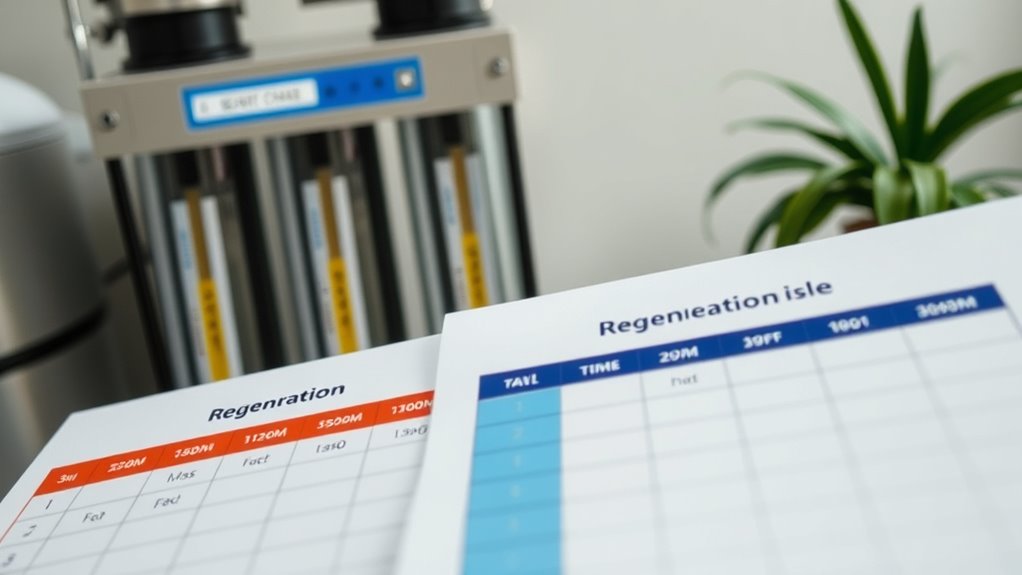
To calculate the right regeneration schedule, you need to take into account your water usage patterns and salt consumption rates. Monitoring how much water your household uses daily helps determine when the resin needs regeneration. Keeping track of your salt intake ensures your softener stays efficient without unnecessary regeneration cycles. Additionally, understanding your breast cancer symptoms can help in early detection if you notice any unusual changes in your body.
Water Usage Patterns
How often your water softener needs regeneration depends largely on your daily water usage patterns. Your household size and lifestyle habits directly influence this. For example, imagine:
- A family of four taking multiple showers, doing laundry, and washing dishes daily.
- A single person working from home, using water more sporadically.
- A couple with minimal water usage, mainly for cooking and occasional cleaning.
These scenarios show how your habits impact regeneration needs. Larger households or those with high water consumption patterns will require more frequent regeneration. Conversely, smaller households or those with conservative usage can extend the time between cycles. By understanding your household’s unique water usage, you can better plan your regeneration schedule for efficiency and savings. Additionally, water usage patterns can be affected by seasonal changes, which may necessitate adjusting your regeneration frequency accordingly.
Salt Consumption Rates
Understanding your salt consumption rate is essential for setting an effective regeneration schedule. Knowing how much salt your softener uses helps you optimize salt savings and reduce unnecessary regeneration cycles. If your softener consumes too much salt, you might be regenerating more often than needed, increasing regeneration costs. Conversely, too little salt can compromise water quality and system efficiency. To determine your rate, track the amount of salt added over a specific period and compare it to your water usage. This data allows you to adjust your regeneration cycle accurately, balancing salt savings with performance. By fine-tuning your schedule based on actual salt consumption, you ensure your softener operates efficiently and cost-effectively. Proper calculation prevents waste and keeps regeneration costs in check. Additionally, monitoring material choices like wood or metal in your wall organization can enhance durability and style.
Best Practices for Planning Your Water Softener Cycles
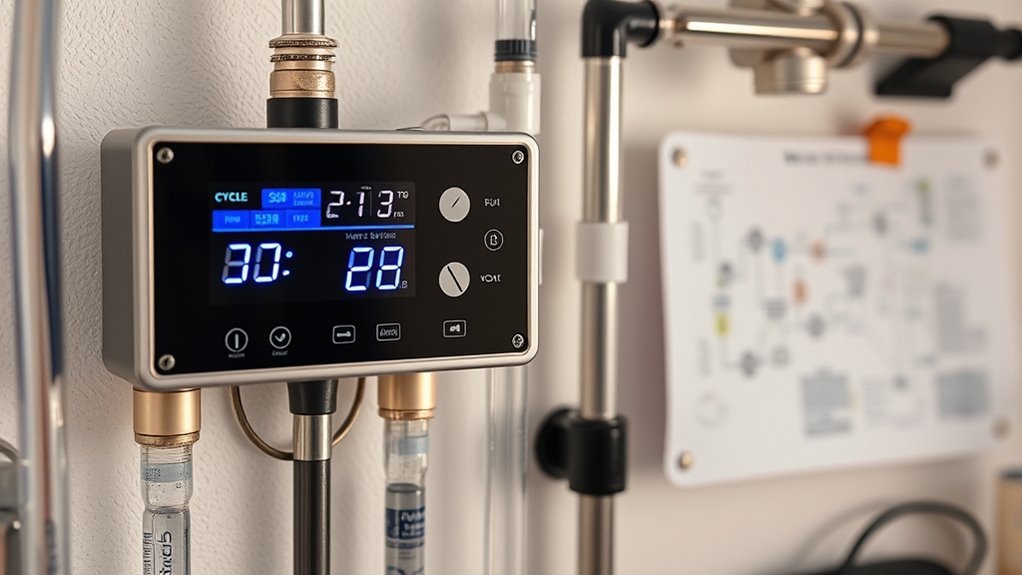
Effective planning of your water softener cycles guarantees ideal performance and longevity of the system. To do this, consider these best practices:
- Schedule regular DIY maintenance checks to ensure components are clean and functioning properly.
- Monitor your water usage patterns to adjust cycle timing, preventing unnecessary regeneration.
- Think about softener upgrades that improve efficiency, like installing a meter-based system for precise regeneration control.
Tips for Maintaining Efficiency and Longevity
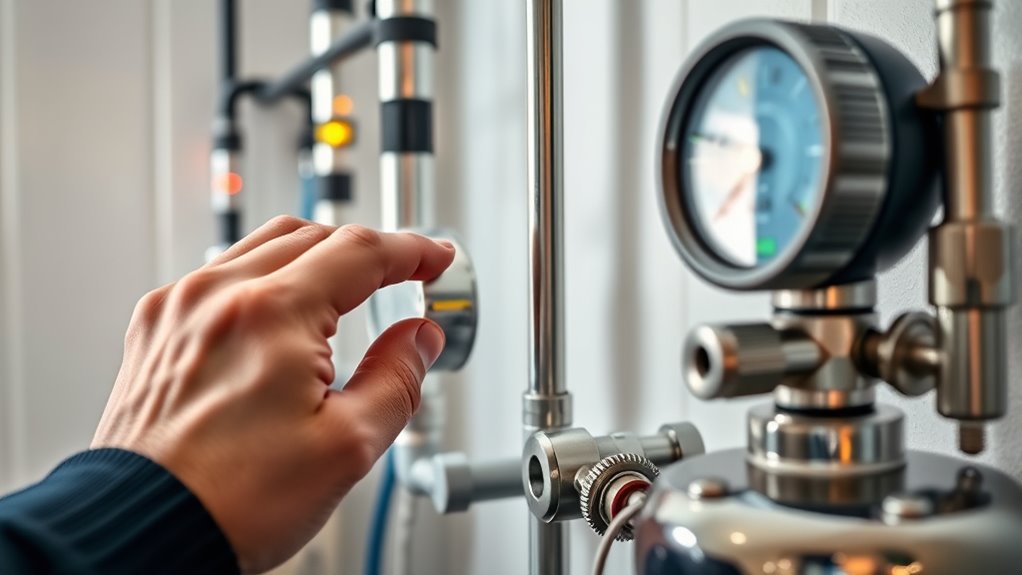
Maintaining your water softener’s efficiency and lifespan requires proactive care and attention. Proper water softener installation ensures the system operates at its best from the start, reducing the risk of early wear. Regularly inspect and clean your softener to prevent mineral buildup and salt bridging. When considering softener brand comparisons, choose reputable models known for durability and ease of maintenance. Using the right salt and monitoring salt levels keeps the system running smoothly. Avoid neglecting regeneration schedules; timely regeneration preserves efficiency and extends your softener’s life. Moreover, selecting high-quality, vetted water softener units can significantly impact performance and longevity. Additionally, avoid overloading the system, which can cause strain. By staying attentive to these tips, you’ll ensure your water softener performs effectively for years, saving you money and hassle over time.
Frequently Asked Questions
How Often Should I Manually Initiate Regeneration?
You should manually initiate regeneration based on your water softener’s regeneration frequency, typically every 7 to 14 days, but it depends on your water usage and water hardness. Regular water softener maintenance helps guarantee ideal performance, so check your system and monitor salt levels. If your water softener isn’t regenerating automatically or you notice issues, manually start the process to keep your system running efficiently and extend its lifespan.
Can Regeneration Be Automated for Convenience?
Yes, regeneration can be automated using advanced systems, offering you significant convenience benefits. Automated systems monitor your water usage and salt levels, triggering regeneration precisely when needed. This eliminates guesswork and guarantees your water softener operates efficiently without manual intervention. With automation, you enjoy consistent soft water, save time, and reduce maintenance efforts, making your water treatment system more reliable and hassle-free.
What Are the Environmental Impacts of Regeneration?
You might not realize it, but softener regeneration impacts the environment more than you’d think. It increases the environmental footprint through water and salt use, leading to waste management challenges. Over time, this process can contribute to water pollution and higher salt runoff, stressing ecosystems. Being aware of these effects helps you make smarter choices, like optimizing regeneration schedules, to minimize environmental harm and protect our planet’s delicate balance.
How Do Water Hardness Levels Vary Seasonally?
Water hardness levels fluctuate seasonally due to changes in water composition. During warmer months, increased rainfall can dilute minerals, reducing hardness. Conversely, in winter or dry seasons, evaporation and reduced flow can concentrate minerals, raising hardness levels. You’ll notice these seasonal fluctuations affect your water softener’s regeneration schedule, so monitoring water composition regularly helps you optimize regeneration timing and maintain effective softening, ensuring consistent water quality year-round.
What Errors Should I Watch for During Regeneration?
During regeneration, watch for errors like incorrect regeneration timing, which can affect water quality. If you regenerate too early or too late, mineral buildup or softening issues may occur. Also, make certain the system isn’t bypassed or clogged, as this hampers proper regeneration. Keep an eye on salt levels and monitor for leaks or malfunctions. Proper timing and attention to these details help maintain ideal water quality and system performance.
Conclusion
Now that you understand how your water softener works and when it needs regeneration, you can avoid guesswork and unnecessary salt use. Think of it like tuning a guitar—you don’t want to over-tighten or let it go slack. With a solid plan in place, you’ll enjoy soft water effortlessly, saving money and extending your system’s life. Mastering this balance turns softening into a simple, satisfying rhythm—no surprises, just smooth sailing.