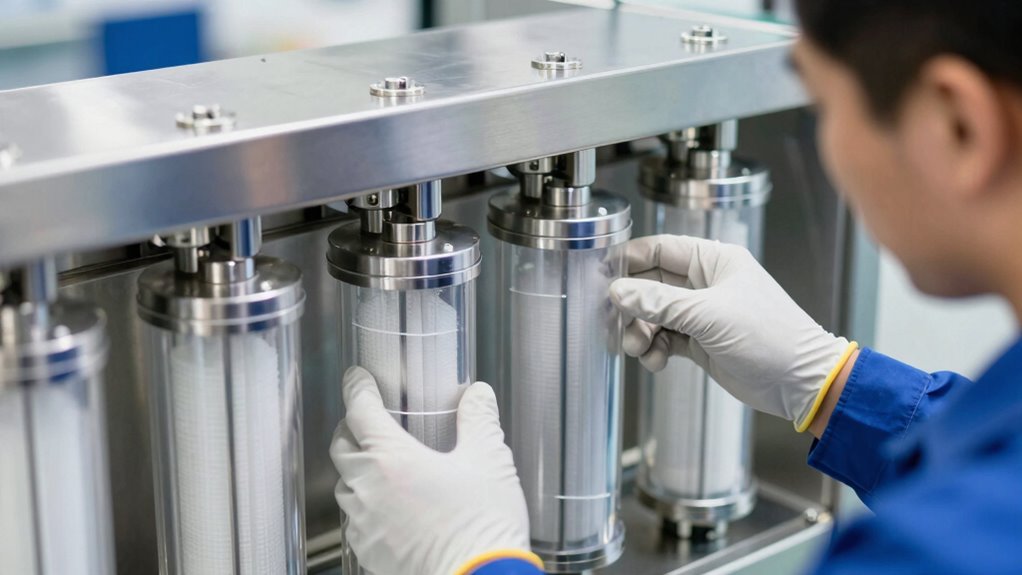

To sanitize filter housings safely, always follow the manufacturer’s instructions and choose cleaning agents compatible with your housing’s material, such as polypropylene, stainless steel, or PVC. Avoid harsh solvents that can cause cracks or discoloration. Use gentle brushes and rinse thoroughly after cleaning to remove any residue. Regular maintenance with proper solutions helps prevent damage and ensures your water remains safe. Keep exploring to discover detailed steps for effective, damage-free sanitization.
Key Takeaways
- Use cleaning agents compatible with your filter housing material to prevent damage or deterioration.
- Pre-rinse the housing thoroughly to remove loose debris before applying disinfectants.
- Follow manufacturer guidelines for contact time and dilution to ensure effective sanitization without harm.
- Employ soft brushes and non-abrasive tools to scrub surfaces gently, avoiding scratches or cracks.
- Rinse completely after sanitizing to eliminate chemical residues, maintaining system safety and integrity.
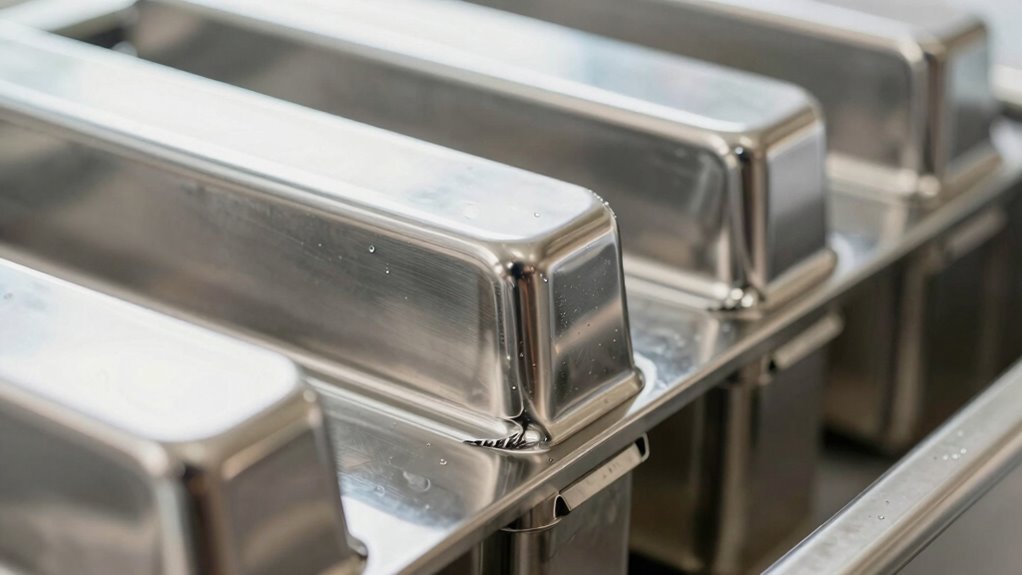
Have you ever wondered how to keep your filter housings clean and free of contaminants? Maintaining cleanliness isn’t just about appearances; it’s essential for ensuring water quality and prolonging the lifespan of your filtration system. The key lies in understanding how to sanitize filter housings properly, without risking damage or introducing new contaminants. A critical aspect to consider is the material’s chemical resistance, which determines what cleaning agents you can use safely. Different filter housings are made from materials like polypropylene, stainless steel, or PVC, each with its unique resistance profile. Knowing this helps you select the right cleaning solutions that won’t degrade the material or compromise its integrity.
Establishing effective cleaning protocols is vital for consistent results. These protocols should outline step-by-step procedures, including the selection of appropriate cleaning agents, contact times, and rinsing methods. For example, if your filter housing is made of polypropylene, you’ll want to avoid harsh solvents or aggressive chemicals that could cause stress cracking or discoloration. Instead, opt for mild, non-abrasive cleaning solutions that are compatible with the material’s chemical resistance. Regularly scheduled cleanings using these protocols help prevent buildup of biofilms, dirt, and other contaminants, ensuring your system stays hygienic and operates efficiently.
When cleaning, always pre-rinse the housing with water to remove loose debris, and then apply the chosen cleaning solution according to the manufacturer’s instructions. Use soft brushes or cloths to scrub surfaces gently—abrasive tools can cause scratches or weaken the material. After cleaning, thorough rinsing is essential to remove any residual chemicals that might interfere with water quality or cause damage over time. It’s also important to inspect the housing for signs of wear or damage, such as cracks or discoloration, which could compromise its effectiveness. Properly documenting your cleaning procedures and schedules helps maintain consistency and guarantees compliance with safety standards.
In addition, always follow manufacturer guidelines and industry best practices for sanitizing filter housings. These instructions often specify compatible cleaning agents and contact times to maximize efficacy without risking harm. Using the correct cleaning protocols tailored to your filter housing’s material and chemical resistance not only preserves the equipment but also guarantees the safety and purity of the water you’re filtering. Properly selecting cleaning agents based on material compatibility and chemical resistance is critical for effective sanitation. By staying diligent and informed, you eliminate guesswork, prevent costly repairs, and maintain a system that functions effectively, giving you peace of mind knowing your filtration setup is both effective and safe.

Water Cooler Cleaning Kit,Water Dispenser Cleaning,Water Dispenser Cleaner for Bottom or Top Loading Water Cooler Cleaner and More Models,Virtually Every Style Is Covered Ice Makers (5.07Fl Oz)
- Purifies Water and Ice: Keeps water tasting fresh and ice machine clean
- Universal Compatibility: Suitable for all water cooler styles
- Easy to Use: Pour, wait, rinse—no scrubbing needed
As an affiliate, we earn on qualifying purchases.
As an affiliate, we earn on qualifying purchases.
Frequently Asked Questions
How Often Should Filter Housings Be Sanitized?
You should sanitize your filter housings every 3 to 6 months, depending on your water quality and usage. Incorporate this into your regular maintenance schedule to prevent buildup and guarantee peak performance. Regular cleaning frequency helps avoid potential contamination and damage to the housing. Always follow manufacturer guidelines for specific sanitizing procedures, and inspect the housings during each maintenance cycle to catch any signs of wear or damage early.
Can Aggressive Chemicals Damage Filter Housing Materials?
Yes, aggressive chemicals can damage filter housing materials if they aren’t chemically resistant or compatible. You need to verify the material’s chemical resistance and compatibility before using any harsh cleaners. Using incompatible chemicals can cause cracking, corrosion, or degradation, compromising the housing’s integrity. Always follow manufacturer guidelines and select cleaning agents suited for the specific material to prevent damage and ensure safe, effective sanitization.
Is It Necessary to Replace the Housing After Sanitizing?
You don’t need to replace the housing after sanitizing if you choose a cleaning method compatible with your housing material. Carefully verify chemical compatibility beforehand—some aggressive chemicals can weaken or damage certain materials, leading to potential failure. If the housing shows signs of deterioration or damage, replacement is wise. Otherwise, proper sanitizing and adherence to manufacturer guidelines ensure your filter housing remains safe and functional without unnecessary replacement.
What Safety Precautions Are Essential During Sanitization?
During sanitization, you should wear appropriate personal protective equipment like gloves and goggles to prevent chemical exposure. Confirm proper ventilation to avoid inhaling fumes, and follow manufacturer instructions for safe chemical use. Keep the area well-ventilated, and avoid spills or splashes. Always double-check that the sanitizing agents are compatible with your filter housing materials to prevent damage. These precautions help keep you safe and ensure effective sanitization.
Are There Eco-Friendly Sanitizing Options Available?
Eco-friendly sanitizing options do exist, offering a sustainable choice for your cleaning needs. You can opt for biodegradable sanitizers and natural cleaning solutions that effectively sanitize without harming the environment. While traditional chemicals often prioritize strength over sustainability, these eco-friendly alternatives balance safety and efficacy. By choosing natural cleaning solutions, you protect both your equipment and the planet, making your sanitization routine environmentally responsible and effective.
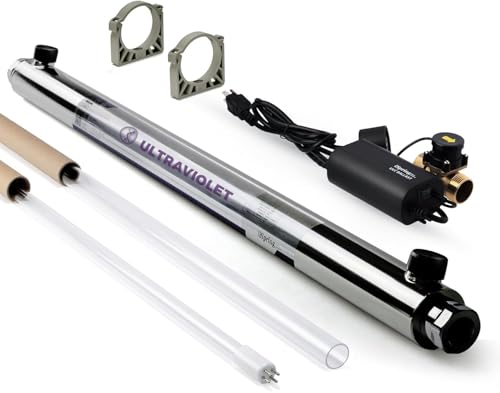
iSpring UVF55FS Whole House UV Water Filter, 1" MNPT Inlet/Outlet, 12 GPM
- Whole House Water Treatment: Treats all household water comprehensively
- Upgraded Flow Sensor: Smart switch with 3 modes for control
- Long-Lasting UV Lamp: Up to 9,000 hours lifespan
As an affiliate, we earn on qualifying purchases.
As an affiliate, we earn on qualifying purchases.
Conclusion
By following these sanitizing tips, you guarantee your filter housings stay clean and functional without guesswork or damage. Remember, a stitch in time saves nine—regular maintenance prevents bigger problems down the road. Treat your equipment with care, and it’ll serve you well for years to come. Keep your sanitizing routine simple and consistent; think of it as watering a plant—small efforts now lead to healthy, long-lasting results.

Amwater NSF/ANSI 42 Certification Big+ Stainless Steel Filter Housing for 20”Length,4.5"OD Filter Cartridge, Drain Valve Style C (Square Head)
- 【Applicable size of cartridge】Accepts filter cartridges 9-3/4" to10"…
- 【Dual Port】Filter housing suitable for 20" double opening…
- 【Compatible Amwater Products】Filter cartridges ASIN B0D1KGKZF1, Wrench ASIN…
As an affiliate, we earn on qualifying purchases.
As an affiliate, we earn on qualifying purchases.
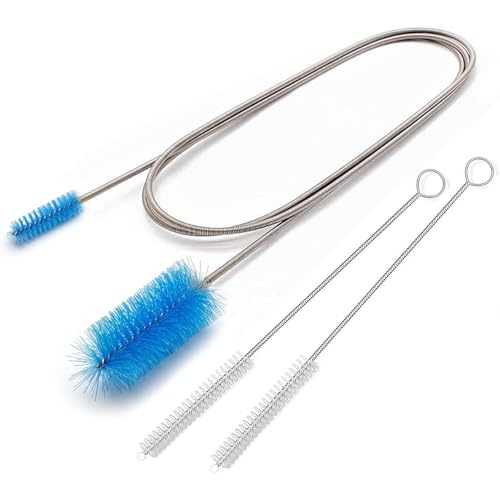
67" Flexible Drain Brush Set, Double Ended Long Hose Pipe Cleaner with 2 Pcs 8.2" Straw Cleaning Brushes, Nylon Tube Cleaner Tool for Refrigerator Defrost, Aquarium Filter, Sink Drain
- Length: 67-inch flexible drain brush
- Design: Double-ended for versatility
- Brush Heads: Two sizes for different tubes
As an affiliate, we earn on qualifying purchases.
As an affiliate, we earn on qualifying purchases.