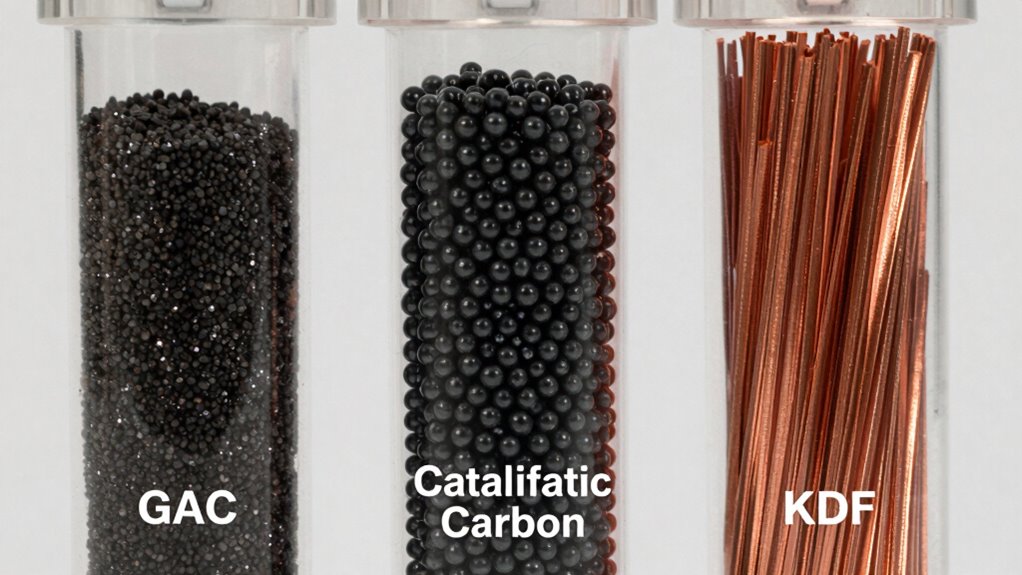
When choosing water filter media, consider what you want to remove. GAC (Granular Activated Carbon) improves taste by removing chlorine, VOCs, and odors but needs frequent replacement. Catalytic carbon targets chloramine and lasts longer, making it good if your water contains that chemical. KDF is best for removing heavy metals and controlling bacteria, offering durability. Understanding these differences helps you pick the right media for your needs—more details await if you explore further.
Key Takeaways
- GAC is best for improving taste by removing chlorine, VOCs, and odors but needs frequent replacement.
- Catalytic carbon effectively removes chloramine and lasts longer than GAC, offering better chemical removal.
- KDF media targets heavy metals, controls bacteria, and has a longer lifespan, making it ideal for metal and biological concerns.
- Combining KDF with activated carbon provides comprehensive purification, addressing taste, chemicals, and metals.
- Choose GAC for taste, catalytic carbon for chemical removal, and KDF for metals and biological safety based on specific water needs.
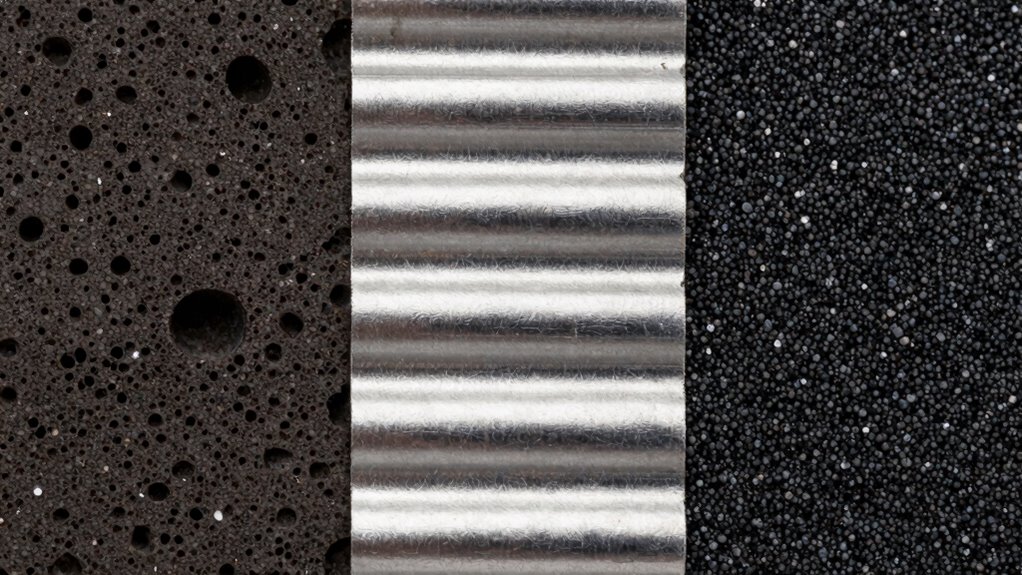
Selecting the right media type is essential for effectively reaching your target audience and achieving your communication goals. When it comes to water filtration, choosing between GAC (Granular Activated Carbon), catalytic carbon, and KDF (Kinetic Degradation Fluxion) can seem overwhelming, but understanding their differences helps you make an informed decision. Each media type impacts water taste, filter lifespan, and overall water quality differently, so consider your specific needs carefully.
Choosing the right water filter media depends on taste, lifespan, and water quality needs.
GAC is the most common media used in many water filters. It excels at improving water taste by removing chlorine, volatile organic compounds (VOCs), and odors. If your primary concern is enhancing the flavor of your water, GAC is a reliable choice. However, it has a limited filter lifespan because it becomes saturated more quickly when it absorbs contaminants. Once the GAC reaches its capacity, it needs to be replaced to continue providing fresh-tasting water. Regular replacement guarantees ideal performance but may increase maintenance costs over time. If you want a straightforward solution that improves water taste and is easy to replace, GAC works well, especially in municipal water supplies with high chlorine levels.
Catalytic carbon is a specialized form of activated carbon designed to target chloramine, a disinfectant increasingly used by water utilities. Unlike regular GAC, catalytic carbon can effectively remove chloramine, which can affect water taste and cause a chemical aftertaste. This media type tends to have a longer lifespan than standard GAC because it’s more resistant to saturation. If your water source contains chloramine or you notice a lingering chemical taste, catalytic carbon can offer a more durable and effective solution. Although it may be slightly more expensive initially, its extended filter lifespan can reduce replacement frequency, saving you money in the long run. It’s especially suitable if you prefer consistent water taste and want to minimize maintenance.
KDF media uses a different approach altogether. It’s made of a copper-zinc alloy that effectively removes heavy metals like lead, mercury, and iron, and it also controls bacteria and algae growth in the filter. KDF is less focused on improving water taste directly but enhances overall water quality and reduces impurities that can cause bad tastes or odors. Its lifespan is generally longer because it’s not exhausted as quickly by organic contaminants. If your main concern is water safety from metals and biological growth, KDF offers a durable, low-maintenance option. Combining KDF with activated carbon is common in multi-stage filters to maximize benefits, giving you clean, great-tasting water over a longer period.

Aquaboon 5 Micron 10 x 2.5 Granular Activated Carbon Water Filter Cartridge GAC Water Filter Replacement Compatible with AP117, GAC-10, GAC1, 6 Pack
- Filtration Material: Pure Coconut Shell Carbon
- Removes Contaminants: Chlorine, VOCs, Odors
- Compatibility: Universal 10-inch Fit
As an affiliate, we earn on qualifying purchases.
As an affiliate, we earn on qualifying purchases.
Frequently Asked Questions
How Long Does Each Media Type Typically Last?
Your media longevity depends on usage and water quality. GAC typically lasts 6 to 12 months, catalytic carbon about the same, while KDF can last 1 to 2 years. Follow your system’s replacement schedule for peak performance. Regularly check for signs of clogging or reduced effectiveness, and replace media as recommended to guarantee clean, safe water. Proper maintenance keeps your filtration system working efficiently longer.
Are There Specific Contaminants Each Media Type Targets Best?
You’ll find that each media type has its own contaminant specificity, making media targeting different pollutants more effective. GAC excels at removing chlorine, organic compounds, and odors, while catalytic carbon targets chloramines and certain VOCs more efficiently. KDF is best for heavy metals and bacteria. Understanding these distinctions helps you choose the right media for your water treatment needs, ensuring ideal contaminant removal.
Can These Media Types Be Used Together in One System?
Did you know combining different media types can improve water filtration efficiency by up to 30%? Yes, you can use GAC, catalytic carbon, and KDF together, but media compatibility and system integration are key. Verify the media are compatible to avoid clogging or reduced effectiveness. Properly designed systems allow these media to work synergistically, targeting a broader range of contaminants and providing cleaner, better-tasting water.
What Is the Maintenance Process for Each Media Type?
You need to regularly perform media replacement and cleaning procedures to maintain each media type. GAC and catalytic carbon usually require periodic backwashing and replacement when their effectiveness drops. KDF media needs cleaning to remove buildup and extend its lifespan, often involving rinsing with water. Check manufacturer guidelines for specific intervals, but generally, you should inspect and replace media every 6-12 months for ideal performance.
Are There Environmental Impacts Associated With Disposal?
Imagine a community replacing their KDF media; improper disposal could lead to environmental concerns due to heavy metals. Disposal methods matter because they can impact local ecosystems. Environmentally, GAC and catalytic carbon often require special handling to prevent contaminant leaching, while KDF contains metals that may need recycling or safe disposal. Proper disposal methods minimize environmental impacts, ensuring you protect water quality and avoid regulatory issues.

Home Master CFKDF85GCC-20BB Replacement Filter, Fits Big Blue, 20" x 4.5" Heavy duty Up-Flow Catalytic Carbon & KDF 85, Filters Chloramines, Chlorine, Chemicals, Heavy Metals, Sediment, more
- Compatibility: Fits Home Master whole house systems
- Media Content: Contains 3 lbs. of KDF85 media
- Filtration Type: Removes chloramines with catalytic carbon
As an affiliate, we earn on qualifying purchases.
As an affiliate, we earn on qualifying purchases.
Conclusion
Choosing the right media is like selecting the perfect key to release your water’s purity. GAC, catalytic carbon, and KDF each play their unique role—like guardians guarding your health. When you pick wisely, you’re handing over the reins to a trusted keeper, ensuring only the purest water flows to you. Remember, your choice isn’t just a filter—it’s a symbol of your commitment to health, turning your tap into a gateway of safety and clarity.

KDF 85 Filter Media KDF 85 Filtration Media for Sulfur, Iron, Heavy Metals (5lbs)
- Material: High purity copper-zinc granules
- Function: Reduces contaminants via redox reactions
- Targets: Mercury, nickel, chromium, iron, hydrogen sulfide
As an affiliate, we earn on qualifying purchases.
As an affiliate, we earn on qualifying purchases.

iSpring F4-CUA4 Water Filter Pack for 4-Stage Ultra Filtration System CU-A4, Sediment, UF, KDF, and Activated Carbon Filter, 4 Filters, White
- Sediment Filter: Removes rust, sand, dirt (5 microns)
- Ultra Filtration: Hollow fiber membrane, 0.01 micron pore size
- KDF & GAC Filter: Controls chloramine, hydrogen sulfide, metals
As an affiliate, we earn on qualifying purchases.
As an affiliate, we earn on qualifying purchases.