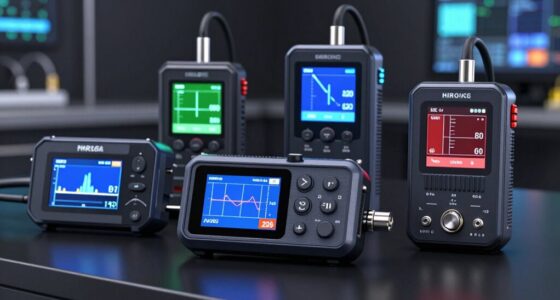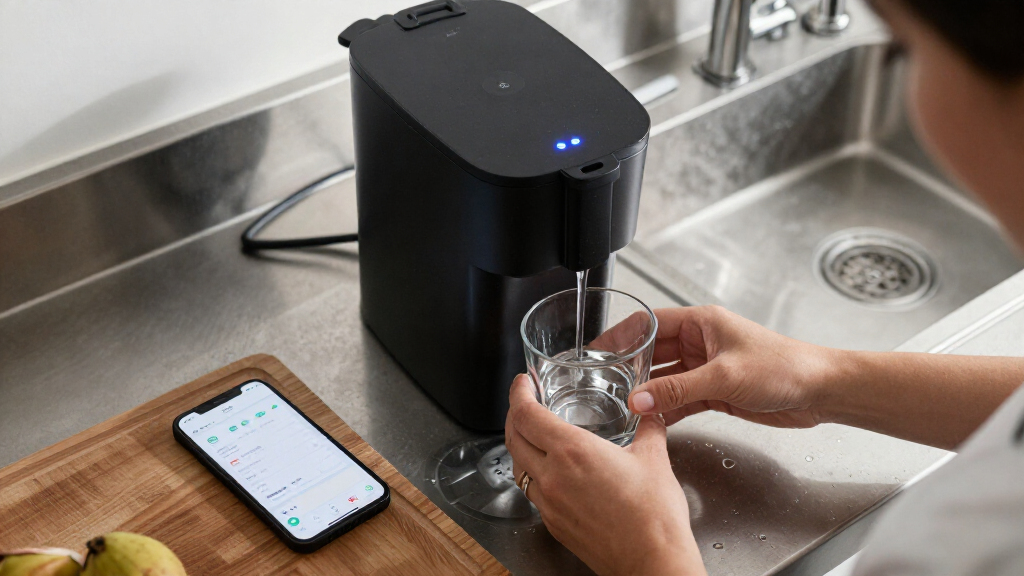
Smart water filtration systems range from under-sink reverse osmosis units with digital faucets to whole-house filters with leak alerts, so the right choice depends on where you want cleaner water and how much upkeep you’ll accept. I rank the Waterdrop X16 best overall for its high-capacity tankless RO design and alkaline remineralization; the GE GXWH70M stands out for whole-house coverage and leak detection, while the AquaTru Glass Carafe offers a countertop RO route without under-sink installation. The main tradeoffs are filtration scope, installation demands, water output, and filter replacement complexity. Some systems reduce a broader range of contaminants through RO, while ultrafiltration options preserve minerals and avoid RO wastewater but do not provide the same treatment. Read on for the full comparison, buying advice, and picks by household need.

Get home appliances delivered free with Prime
- Fast, free delivery on millions of items
- Prime Video, Amazon Music and more included
- Member-only deals all year
Complete the kit



Key Takeaways
- Tankless RO leads this lineup for capacity and convenience: The Waterdrop X16, X12, and G3P800 combine high daily output with compact under-sink layouts, but buyers should compare their faucet and mineralization features rather than treating capacity as the only difference.
- Whole-house systems solve a different problem from drinking-water filters: The GE GXWH70M and iSpring WF150K treat water at the home’s entry point; they are the relevant picks for broad household coverage, not direct substitutes for an RO drinking-water system.
- Ultrafiltration is a mineral-preserving alternative, not a lower-cost RO equivalent: The Waterdrop TSU models use fine filtration without RO, so source-water quality and the specific contaminants you need to reduce should guide the choice.
- Installation flexibility separates countertop and under-sink options: AquaTru and Purewell avoid the same permanent plumbing commitment as under-sink units, while tankless systems generally require a suitable water connection and drain access.
- Smart features matter most when they change upkeep or safety: Filter-life indicators, smart faucets, control valves, and leak detection can make maintenance easier, but they do not replace checking certifications, contaminant claims, and replacement-filter availability.
| Waterdrop X16 Tankless Reverse Osmosis System with Alkaline Mineralization and Bronze Faucet, 1600 GPD |  | Best Overall for High-Flow Smart Monitoring | System type: Tankless under-sink reverse osmosis | Peak capacity: 1600 GPD | Filtration: 11 stages; 0.0001 μm RO membrane | VIEW LATEST PRICE | See Our Full Breakdown |
| Waterdrop G5P500A Tankless Reverse Osmosis Water Filtration System with Alkaline Mineralization |  | Best Value-Feature Balance | System type: Tankless under-sink reverse osmosis | Filtration: 8 stages; 0.0001 μm RO membrane | Capacity: 500 GPD | VIEW LATEST PRICE | See Our Full Breakdown |
| Waterdrop X12 Alkaline Mineral Reverse Osmosis System, 1200 GPD, with Silver Smart Faucet |  | Best for Measured Dispensing | System type: Tankless under-sink reverse osmosis | Filtration: 11 stages; 0.0001 μm RO membrane | Stated capacity: 1200 GPD | VIEW LATEST PRICE | See Our Full Breakdown |
| Waterdrop TSU 3-Stage 0.01 Micron Ultra Filtration Under-Sink Water Filter System | 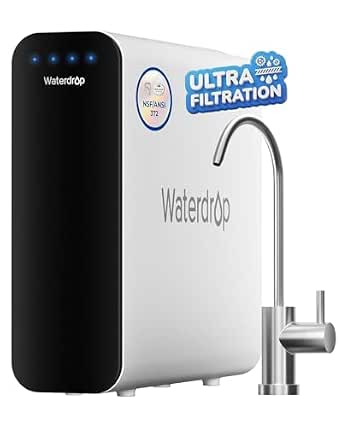 | Best for Keeping Minerals and Avoiding Power | System type: Tankless under-sink ultrafiltration | Filtration: 3 stages: 0.01-micron ultrafiltration, activated carbon, and carbon block | Maximum flow rate: 1.05 GPM | VIEW LATEST PRICE | See Our Full Breakdown |
| Purewell 3-Stage Gravity Water Filter System, 2.25 Gallons |  | Best Portable, No-Power Option | System type: Non-electric countertop gravity filter | Filtration: 3 stages; 0.01-micron hollow-fiber UF membrane, silver-ion membrane, and activated carbon | Capacity: 2.25 gallons | VIEW LATEST PRICE | See Our Full Breakdown |
| Waterdrop G3P800 Tankless Reverse Osmosis Water Filter System, 800 GPD |  | Best for High-Volume Smart RO | Filtration: 10-stage reverse osmosis | Capacity: 800 gallons per day | Pure-to-drain ratio: 3:1 | VIEW LATEST PRICE | See Our Full Breakdown |
| iSpring RCC7AK-BN NSF-Certified 6-Stage Reverse Osmosis System with Alkaline Remineralization |  | Best for No-Power RO and Remineralization | Filtration stages: 6 | Purification method: Reverse osmosis with alkaline, activated carbon, and carbon block stages | Certification: NSF/ANSI 58 | VIEW LATEST PRICE | See Our Full Breakdown |
| Ninja HydraSense Intelligent Water Filtration System, WF1001WH1 |  | Best for Simple Countertop Monitoring | Installation type: Countertop | Purification method: Specialized ultrafine carbon paper filter | Filter life: Up to 120 gallons or 6 months | VIEW LATEST PRICE | See Our Full Breakdown |
| AquaTru Glass Carafe Alkaline Countertop Reverse Osmosis Water Purifier |  | Best Countertop RO with Glass Carafe | Filtration stages: 4 | Purification method: Reverse osmosis | Contaminants reduced: Up to 84, including lead, microplastics, PFOA, and PFOS | VIEW LATEST PRICE | See Our Full Breakdown |
| Waterdrop G5P700A Alkaline Mineral Reverse Osmosis Water Filter, 700 GPD |  | Best Tankless RO with Added Minerals | Filtration: 8-stage reverse osmosis | RO membrane: 0.0001 μm | Capacity: 700 GPD | VIEW LATEST PRICE | See Our Full Breakdown |
| Waterdrop TSU-WB 0.01 μm Ultra-Filtration Under-Sink Water Filter System |  | Best for Mineral Retention | Filtration accuracy: 0.01 μm | Purification method: Ultrafiltration | Installation: Under sink | VIEW LATEST PRICE | See Our Full Breakdown |
| Waterdrop T3-C Tankless Reverse Osmosis Water Filtration System, 450 GPD |  | Best for Guided RO Maintenance | Filtration stages: 8 | Purification method: Reverse osmosis | RO membrane: 0.0001 μm | VIEW LATEST PRICE | See Our Full Breakdown |
| GE GXWH70M Smart Whole House Water Filtration System with Leak Detection |  | Best for Leak Monitoring at the Main Line | Filtration: Reduces sediment, rust, and other impurities | Smart features: Water-use monitoring, leak and flow alerts, remote shutoff, filter reminders | Filter compatibility: FTHPM, FTHTM, FTHLM | VIEW LATEST PRICE | See Our Full Breakdown |
| iSpring WF150K Whole-House Water Filtration System with Smart Control Valve |  | Best for Automated Whole-House Treatment | Filtration method: Granular activated carbon | Maximum flow rate: 15 gpm | Designed service life: Up to 10 years, depending on household size and use | VIEW LATEST PRICE | See Our Full Breakdown |
| Waterdrop G3P600 Tankless Reverse Osmosis Water Filter System with Silver Faucet |  | Best for On-Faucet TDS Feedback | Filtration: 8-stage reverse osmosis | Certifications: NSF/ANSI 42, 58, and 372; FCC | Capacity: 600 gallons per day | VIEW LATEST PRICE | See Our Full Breakdown |
| smart water filtration system | Filtration | Certifications | Dimensions |
|---|---|---|---|
| Waterdrop X16 Tankless Reverse | 11 stages; 0.0001 μm RO membrane | NSF/ANSI 42, 58, and 372 | 18.2 × 6.25 × 16.72 in |
| Waterdrop G5P500A Tankless Rev | 8 stages; 0.0001 μm RO membrane | NSF/ANSI 58 and 372 | — |
| Waterdrop X12 Alkaline Mineral | 11 stages; 0.0001 μm RO membrane | IAPMO R&T tested and certified to NSF/ANSI 42, 58, and 372 | 18.2 × 6.25 × 16.72 in |
| Waterdrop TSU 3-Stage 0.01 Mic | 3 stages: 0.01-micron ultrafiltration, activated carbon, and carbon block | — | — |
| Purewell 3-Stage Gravity Water | 3 stages; 0.01-micron hollow-fiber UF membrane, silver-ion membrane, and activated carbon | NSF/ANSI 42 and 372 | — |
| Waterdrop G3P800 Tankless Reve | 10-stage reverse osmosis | NSF/ANSI 42, 53, 58, and 372 | 18.12 × 5.67 × 17.72 in |
| iSpring RCC7AK-BN NSF-Certifie | — | — | — |
| Ninja HydraSense Intelligent W | — | IAPMO R&T certified to NSF/ANSI 42, 53, and 401 | 14.37 × 5.07 × 13.78 in |
| AquaTru Glass Carafe Alkaline | — | — | 14 × 7.5 × 13 in |
| Waterdrop G5P700A Alkaline Min | 8-stage reverse osmosis | NSF/ANSI 58 and 372 | 16.69 × 5.69 × 13.9 in |
| Waterdrop TSU-WB 0.01 μm Ultra | — | — | — |
| Waterdrop T3-C Tankless Revers | — | — | 13.39 × 6.22 × 17.95 in |
| GE GXWH70M Smart Whole House W | Reduces sediment, rust, and other impurities | — | — |
| iSpring WF150K Whole-House Wat | — | Lab-tested to meet NSF/ANSI 42 and 53 standards | 11 × 11 × 63.5 in |
| Waterdrop G3P600 Tankless Reve | 8-stage reverse osmosis | NSF/ANSI 42, 58, and 372; FCC | — |
More Details on Our Top Picks
Waterdrop X16 Tankless Reverse Osmosis System with Alkaline Mineralization and Bronze Faucet, 1600 GPD
I’d rank the Waterdrop X16 first for households that want fast under-sink RO filtration and useful information right at the faucet. Its stated 1600 GPD capacity is the highest among these five, while the faucet reports TDS and filter life and supports measured dispensing. That makes it a more information-rich choice than the G5P500A, whose included faucet is mechanical. The X16 also combines 11-stage filtration, alkaline mineralization, and a 3:1 pure-to-drain ratio. The tradeoff is a more involved setup: it needs under-sink plumbing and power, and its smart faucet may require a dedicated countertop opening. Mineralization can also raise the displayed TDS, so that reading should not be mistaken for a simple measure of contaminant removal.
Pros:- Highest stated peak capacity among these five systems at 1600 GPD.
- Smart faucet displays real-time TDS and filter-life information and supports water-volume control.
- 3:1 pure-to-drain ratio limits wastewater compared with systems with lower stated ratios.
- Alkaline mineralization offers a taste-focused option after RO filtration.
Cons:- Under-sink installation and a countertop faucet opening may not suit renters or existing kitchens.
- Requires an electrical connection.
- Mineralization may raise TDS readings, which can complicate interpretation of the faucet display.
Best for: Households wanting high stated RO capacity, mineralized water, and faucet-level TDS and filter-life information.
Not ideal for: Renters or people avoiding countertop drilling, under-sink installation, and a powered system.
- System type:Tankless under-sink reverse osmosis
- Peak capacity:1600 GPD
- Filtration:11 stages; 0.0001 μm RO membrane
- Pure-to-drain ratio:3:1
- Certifications:NSF/ANSI 42, 58, and 372
- Faucet and monitoring:Smart bronze faucet with water-volume control, real-time TDS, and filter-life monitoring
- Dimensions:18.2 × 6.25 × 16.72 in
- Mineralization:Alkaline mineralization filter
Our verdict“Choose the X16 if high stated flow and smart faucet monitoring matter more than simple installation.”
Waterdrop G5P500A Tankless Reverse Osmosis Water Filtration System with Alkaline Mineralization
The Waterdrop G5P500A makes the most sense for buyers who want tankless RO and mineralization without prioritizing a smart display. Its 500 GPD capacity and 1.31-liter-per-minute maximum flow suit routine drinking and cooking needs, while the 2:1 pure-to-drain ratio gives it a practical efficiency claim. Compared with the faster X16, this model has fewer filtration stages and a mechanical faucet rather than real-time TDS and filter-life monitoring; in return, its stated capacity is ample for many kitchens and its design remains compact under the sink. It reduces several named contaminants through an 8-stage process, but installation calls for both a power outlet and a countertop faucet hole. Buyers should also check that their feed-water TDS stays within its 500 ppm limit.
Pros:- Tankless design saves space compared with a storage-tank RO setup.
- Eight-stage RO filtration includes a 0.0001 μm membrane.
- 2:1 pure-to-drain ratio helps limit wastewater.
- Alkaline mineralization adds calcium and magnesium after filtration.
Cons:- Mechanical faucet lacks the live TDS and filter-life display found on the X16 and X12.
- Countertop drilling and a corded power source are required.
- Maximum supported feed-water TDS is 500 ppm.
Best for: Small households seeking tankless RO with alkaline mineralization and a straightforward mechanical faucet.
Not ideal for: Buyers who want smart faucet readings, a high-capacity system, or an installation that avoids drilling and electrical power.
- System type:Tankless under-sink reverse osmosis
- Filtration:8 stages; 0.0001 μm RO membrane
- Capacity:500 GPD
- Maximum flow rate:1.31 liters per minute
- Pure-to-drain ratio:2:1
- Certifications:NSF/ANSI 58 and 372
- Maximum supported TDS:500 ppm
- Dimensions and weight:16.69 × 5.69 × 13.9 in; 21.4 lb
Our verdict“Pick the G5P500A for a compact, mineralizing tankless RO setup if smart faucet data is not a priority.”
Waterdrop X12 Alkaline Mineral Reverse Osmosis System, 1200 GPD, with Silver Smart Faucet
The Waterdrop X12 is the pick for buyers who want smart faucet guidance without stepping up to the X16’s higher stated capacity. Its faucet shows TDS and filter life and supports measured dispensing, which can help when filling a bottle or cooking pot. The 11-stage system adds alkaline minerals and has a stated 3:1 pure-to-drain ratio. Compared with the G5P500A, the X12 offers a higher stated capacity and more interactive faucet, but it also takes up more under-sink space and calls for electrical power. Its 24-month filter-life claim applies to the filters designed for that interval, not necessarily every filter in the system. Since mineralization can change TDS, the faucet reading is best treated as a reference rather than a stand-alone purity verdict.
Pros:- Smart faucet provides TDS and filter-life information and measured dispensing.
- 11-stage filtration includes a 0.0001 μm RO membrane.
- 3:1 pure-to-drain ratio reduces water waste relative to lower-ratio systems.
- Alkaline mineralization provides a taste-oriented alternative to standard RO output.
Cons:- Requires under-sink installation and a corded electrical connection.
- Its listed dimensions are larger than the G5P500A’s, so cabinet fit needs checking.
- Mineralization may raise TDS readings, and filter-life intervals vary by filter.
Best for: Frequent bottle-fillers and home cooks who want measured dispensing plus filter and TDS information at the faucet.
Not ideal for: People with limited cabinet space, no nearby power source, or a preference for non-mineralized RO water.
- System type:Tankless under-sink reverse osmosis
- Filtration:11 stages; 0.0001 μm RO membrane
- Stated capacity:1200 GPD
- Maximum flow rate:0.4 GPM
- Pure-to-drain ratio:3:1
- Filter life:Designed filters last up to 24 months
- Certifications:IAPMO R&T tested and certified to NSF/ANSI 42, 58, and 372
- Dimensions:18.2 × 6.25 × 16.72 in
Our verdict“Choose the X12 if measured dispensing and smart faucet information matter more than minimizing cabinet footprint.”
Waterdrop TSU 3-Stage 0.01 Micron Ultra Filtration Under-Sink Water Filter System
The Waterdrop TSU suits buyers who want filtration without the mineral stripping associated with RO. Its three-stage ultrafiltration and carbon process is designed to reduce chlorine, PFAS, odors, and other substances while retaining essential minerals. Unlike the RO-based G5P500A, it does not reduce TDS; that distinction matters if lowering dissolved solids is the main goal. The TSU also needs no electricity or drain line and uses a mechanical filter-life reminder, making it simpler to run than the smart-faucet systems above. Its 1.05 GPM maximum flow supports everyday tap use, though its filters have different replacement intervals. Countertop drilling is still needed for the separate faucet, and the product is not suited to well water or hot water.
Pros:- Ultrafiltration and carbon stages retain minerals rather than reducing TDS.
- No electrical connection or wastewater drain line is required.
- Mechanical filter-life reminder offers a simple maintenance cue.
- Compact tankless design has a 1.05 GPM maximum flow rate.
Cons:- Does not reduce TDS, unlike the X12 and G5P500A RO systems.
- Not suitable for well water or hot water.
- Included faucet installation requires countertop drilling, and filter replacement intervals differ by stage.
Best for: Homeowners on treated municipal water who want chlorine and odor reduction while retaining minerals and avoiding electrical power.
Not ideal for: People seeking TDS reduction, treating well water, or unwilling to drill a countertop for the included faucet.
- System type:Tankless under-sink ultrafiltration
- Filtration:3 stages: 0.01-micron ultrafiltration, activated carbon, and carbon block
- Maximum flow rate:1.05 GPM
- Filter capacity:2,200 gallons
- Filter life:UF: 24 months; CT: 12 months; PP: 6 months
- Maximum supported TDS:700 ppm; system does not reduce TDS
- Power and installation:Mechanical; under-sink installation with countertop drilling for included faucet
- Dimensions and weight:14.81 × 4.68 × 13.97 in; 14 lb
Our verdict“Choose the TSU if you want mineral-retaining filtration for municipal water and do not need RO-level TDS reduction.”
Purewell 3-Stage Gravity Water Filter System, 2.25 Gallons
The Purewell 3-Stage Gravity Filter is the lineup’s choice for buyers who need filtration away from a powered sink setup. Its countertop stainless-steel housing runs without electricity, and the 2.25-gallon capacity can serve a household, cabin, or outdoor gathering without plumbing. The 0.01-micron hollow-fiber membrane and carbon stage are designed to reduce sediment, chlorine, and some other unwanted substances, but this is not an RO system: it does not lower TDS. Compared with the under-sink Waterdrop TSU, Purewell is easier to place where plumbing is unavailable, while the TSU offers a direct faucet connection and a filter-life reminder. Gravity filtration is slower, and topping up a full lower chamber can cause leaking, so careful filling and regular filter replacement matter.
Pros:- Operates without electricity or plumbing, making it usable in more locations than the under-sink options.
- 2.25-gallon capacity provides stored filtered water for shared use.
- 304 stainless steel housing includes a stand and spigot.
- Two replaceable filters are included, with a stated capacity of up to 3,000 gallons per filter.
Cons:- Does not reduce TDS, unlike the X12 and G5P500A RO systems.
- Gravity-fed dispensing is slower than a direct-flow under-sink system.
- Filling the upper chamber while the lower chamber is full can cause leaks, and filters are recommended for replacement every six months.
Best for: Campers, cabin owners, and households needing a non-electric countertop filter with several gallons of stored water.
Not ideal for: Buyers seeking TDS reduction, rapid continuous faucet flow, or a compact system that stays out of sight.
- System type:Non-electric countertop gravity filter
- Filtration:3 stages; 0.01-micron hollow-fiber UF membrane, silver-ion membrane, and activated carbon
- Capacity:2.25 gallons
- Flow rate:Up to 4 gallons per hour
- Certifications:NSF/ANSI 42 and 372
- Housing:304 stainless steel
- Filter lifespan:Up to 3,000 gallons per filter; replace every 6 months for optimum performance
- Dimensions and weight:8.9 × 8.9 × 20 in; 8.5 lb
Our verdict“Pick Purewell for off-grid or portable use when stored filtered water matters more than TDS reduction or fast dispensing.”
Waterdrop G3P800 Tankless Reverse Osmosis Water Filter System, 800 GPD
The G3P800 is the strongest fit here for households that want high-output reverse osmosis and a useful readout at the tap. Its smart faucet displays TDS and water-quality information, giving you more day-to-day feedback than the iSpring RCC7AK-BN’s conventional faucet. The tankless design also frees up room under the sink, while the stated 800-gallon-per-day capacity suits heavier use better than the 75-gallon-per-day iSpring. Its 3:1 pure-to-drain ratio is a favorable balance for an RO system, but the unit still needs an electrical connection and an under-sink installation. It is certified to several NSF/ANSI standards, though buyers should check that the stated 500 ppm maximum supported TDS matches their source water. Choose it for connected monitoring and throughput, not for a countertop setup or a no-power installation.
Pros:- Smart faucet shows TDS and water-quality information at the point of use.
- 800 GPD capacity is higher than the iSpring RCC7AK-BN’s 75 GPD output.
- Tankless design preserves under-sink space.
- Certified to NSF/ANSI 42, 53, 58, and 372.
Cons:- Requires electricity as well as under-sink installation.
- Maximum supported TDS is 500 ppm.
- The 1-year warranty is limited compared with buyers seeking longer coverage.
Best for: Households wanting a high-capacity under-sink RO system with faucet-based TDS information and room-saving tankless construction.
Not ideal for: Renters or buyers who cannot add an under-sink electrical connection, and households whose source water exceeds the 500 ppm supported TDS limit.
- Filtration:10-stage reverse osmosis
- Capacity:800 gallons per day
- Pure-to-drain ratio:3:1
- Certifications:NSF/ANSI 42, 53, 58, and 372
- Maximum supported TDS:500 ppm
- Dimensions:18.12 × 5.67 × 17.72 in
- Power:Corded electric
- Warranty:1 year
Our verdict“Choose the G3P800 if high RO output and a smart faucet matter more than avoiding electrical and under-sink installation.”
iSpring RCC7AK-BN NSF-Certified 6-Stage Reverse Osmosis System with Alkaline Remineralization
The iSpring RCC7AK-BN suits buyers who want under-sink reverse osmosis without adding an electrical connection. Its alkaline remineralization stage adds minerals and balances pH after RO, a different approach from the Waterdrop G3P800, whose smart faucet focuses on water information rather than mineral addition. The iSpring also lists reduction of PFAS, lead, chlorine, and TDS, with NSF/ANSI 58 certification. Its 75-gallon-per-day output is far below the G3P800’s 800 GPD, so it is less compelling for high-volume use. A storage tank supplies water, but takes up cabinet space; the top-mounted faucet design and transparent first-stage housing can make installation and filter monitoring more approachable. Pick it for mineralized RO without power, and skip it if you want a tankless footprint or high throughput.
Pros:- Operates without electricity, unlike the Waterdrop G3P800 and G5P700A.
- Alkaline stage adds minerals and balances pH after RO filtration.
- NSF/ANSI 58 certified and lists reduction of PFAS, lead, chlorine, and TDS.
- Top-mounted faucet design and transparent first-stage housing support installation and filter checks.
Cons:- 75 GPD output is much lower than the tankless Waterdrop G3P800’s 800 GPD.
- Storage tank occupies under-sink cabinet space.
- Filters require periodic replacement, with a stated six-month cycle.
Best for: Homeowners who want a non-electric under-sink RO system with alkaline remineralization and are comfortable keeping a storage tank.
Not ideal for: High-use households seeking fast, high-capacity tankless output, or buyers with limited cabinet room for a storage tank.
- Filtration stages:6
- Purification method:Reverse osmosis with alkaline, activated carbon, and carbon block stages
- Certification:NSF/ANSI 58
- Maximum output:75 gallons per day
- Maximum supported TDS:750 ppm
- Operating pressure:70 psi
- Installation:Under sink with storage tank
- Power:No power needed
Our verdict“Choose the iSpring if you want remineralized RO without electricity and can spare cabinet space for its tank.”
Ninja HydraSense Intelligent Water Filtration System, WF1001WH1
The Ninja HydraSense is the easiest fit for buyers who want filtration feedback without plumbing or an RO system. Its one-touch dispensing and real-time filter tracking give it a more actively managed feel than the AquaTru Glass Carafe, which uses countertop reverse osmosis but requires a power outlet and collects water in a carafe. HydraSense instead uses a specialized ultrafine carbon paper filter, reduces listed contaminants while preserving natural minerals, and holds 96 ounces in its reservoir. That capacity can mean frequent refills for a busy household, and the filter’s 120-gallon or six-month limit creates a recurring replacement task. It also does not offer the RO approach used by AquaTru or the under-sink Waterdrop G3P800. I’d choose it for convenient, monitored countertop dispensing, not for a high-volume RO setup.
Pros:- Requires no plumbing or installation, unlike the under-sink Waterdrop G3P800.
- Real-time filter tracking helps flag replacement needs.
- One-touch dispensing offers a simpler routine than filling a carafe manually.
- IAPMO R&T certified to NSF/ANSI 42, 53, and 401.
Cons:- The 96 oz reservoir may need frequent refilling in higher-use households.
- Filter replacement is due at up to 120 gallons or six months.
- Uses ultrafine carbon paper filtration rather than reverse osmosis.
Best for: Apartment dwellers and small households who want countertop dispensing, filter-life tracking, and no plumbing work.
Not ideal for: Large households that need substantial daily capacity, or buyers specifically seeking reverse-osmosis filtration.
- Installation type:Countertop
- Purification method:Specialized ultrafine carbon paper filter
- Filter life:Up to 120 gallons or 6 months
- Reservoir capacity:96 oz
- Certifications:IAPMO R&T certified to NSF/ANSI 42, 53, and 401
- Dimensions:14.37 × 5.07 × 13.78 in
- Weight:6.6 lb
- Color:Dove White
Our verdict“Pick HydraSense for easy, tracked countertop filtration when no-install convenience matters more than RO or large capacity.”
AquaTru Glass Carafe Alkaline Countertop Reverse Osmosis Water Purifier
The AquaTru Glass Carafe brings reverse osmosis to the countertop without plumbing, which makes it a useful middle ground between the no-install Ninja HydraSense and under-sink systems such as the Waterdrop G3P800. Its four-stage RO filtration is listed to reduce up to 84 contaminants, including lead, microplastics, and PFOA/PFOS, while its mineral-boost filter adds alkaline minerals. Water dispenses into a removable borosilicate glass carafe, so you can serve or store it separately rather than rely on a built-in reservoir. The tradeoff is that it needs a standard outlet and has a 0.5 gpm maximum flow rate, making it less suited to continuous high-volume dispensing than the 800 GPD G3P800. Filter replacement intervals also vary by cartridge. Choose it when countertop RO and a glass serving vessel matter more than tankless under-sink capacity.
Pros:- Countertop RO reduces up to 84 listed contaminants without plumbing or drilling.
- Removable borosilicate glass carafe supports serving and storage.
- Alkaline mineral boost distinguishes it from the Ninja HydraSense’s carbon-paper filtration.
- Separate filter-life limits are specified for the different cartridges.
Cons:- Requires a standard electrical outlet.
- Maximum flow rate is 0.5 gpm, below the high-capacity Waterdrop G3P800’s stated output.
- Filter replacement intervals vary, including six-month and one-year schedules.
Best for: Countertop users who want reverse osmosis, alkaline mineral addition, and a removable glass carafe without plumbing.
Not ideal for: Buyers without spare counter space or an electrical outlet, and households needing high-volume, fast RO output.
- Filtration stages:4
- Purification method:Reverse osmosis
- Contaminants reduced:Up to 84, including lead, microplastics, PFOA, and PFOS
- Maximum flow rate:0.5 gpm
- Maximum supported TDS:600 ppm
- Carafe material:Borosilicate glass
- Dimensions:14 × 7.5 × 13 in
- Power:Corded electric
Our verdict“Choose AquaTru if you want countertop reverse osmosis and a glass carafe, and can accept outlet use and slower output than an under-sink tankless system.”
Waterdrop G5P700A Alkaline Mineral Reverse Osmosis Water Filter, 700 GPD
The Waterdrop G5P700A is the better match than the G3P800 for buyers who want a tankless under-sink RO system that also returns minerals to the water. Its eight-stage filtration uses a 0.0001 μm RO membrane and adds calcium, magnesium, sodium, and potassium; the G3P800 instead prioritizes higher stated capacity, broader listed certifications, and a faucet readout for TDS and water-quality information. At 700 GPD, the G5P700A remains a high-output option, though its 2:1 purified-water-to-drain ratio is less favorable than the G3P800’s 3:1. The smart faucet and compact tankless format suit a streamlined kitchen, but faucet installation requires countertop drilling and the system needs electricity. Its NSF/ANSI 58 and 372 certifications are narrower than the G3P800’s listed set. Pick it for mineral addition, not the strongest waste ratio or broadest certification list here.
Pros:- Adds calcium, magnesium, sodium, and potassium after RO filtration.
- 700 GPD capacity supports substantial household use.
- Tankless design saves cabinet space compared with the iSpring RCC7AK-BN’s storage-tank setup.
- Smart faucet is included, and the system is certified to NSF/ANSI 58 and 372.
Cons:- Its 2:1 purified-water-to-drain ratio is less favorable than the G3P800’s 3:1.
- Faucet installation requires drilling countertop holes.
- Requires an electrical connection and has a 500 ppm maximum supported TDS.
Best for: Homeowners who want high-capacity tankless RO with added minerals and are prepared to drill for the faucet and provide power.
Not ideal for: Buyers prioritizing the best stated pure-to-drain ratio, the broadest listed certifications, or an installation that avoids countertop drilling.
- Filtration:8-stage reverse osmosis
- RO membrane:0.0001 μm
- Capacity:700 GPD
- Pure-to-drain ratio:2:1
- Added minerals:Calcium, magnesium, sodium, and potassium
- Certifications:NSF/ANSI 58 and 372
- Maximum supported TDS:500 ppm
- Dimensions:16.69 × 5.69 × 13.9 in
- Power:Corded electric
Our verdict“Choose the G5P700A for tankless RO with added minerals, but favor the G3P800 if water efficiency and broader listed certifications matter more.”
Waterdrop TSU-WB 0.01 μm Ultra-Filtration Under-Sink Water Filter System
I’d choose the TSU-WB for municipal-water households that want under-sink filtration without reverse osmosis. Its 0.01 μm ultrafiltration membrane reduces listed contaminants including chlorine, taste, odor, fluoride, and heavy metals, while retaining essential minerals and leaving TDS unchanged. Unlike the Waterdrop T3-C, it needs no electrical connection and produces no wastewater, which simplifies operation. The tradeoff is that it cannot reduce dissolved solids, so buyers specifically seeking lower-TDS water should choose an RO model instead. The included dedicated faucet and filter-life indicators add convenience, while twist-and-pull replacements avoid a more involved cartridge change. I’d skip it for well water, hot water, or kitchens where drilling a separate faucet hole is not acceptable.
Pros:- 0.01 μm ultrafiltration reduces several listed contaminants while retaining minerals
- No power connection or wastewater production
- Smart filter-life indicators provide replacement reminders
- Dedicated faucet and twist-and-pull filter changes are included
Cons:- Does not reduce TDS
- Not suitable for well water or hot water
- Installation requires a 1-inch countertop hole
Best for: Households on cold municipal tap water that want to reduce listed contaminants while retaining minerals and avoiding RO wastewater.
Not ideal for: Well-water users, people seeking TDS reduction, or renters and homeowners who cannot drill a countertop hole for the dedicated faucet.
- Filtration accuracy:0.01 μm
- Purification method:Ultrafiltration
- Installation:Under sink
- Water suitability:Cold municipal tap water
- Maximum flow rate:1.05 gpm
- Capacity:2,200 gallons
- Filter life:24 months; PP filter: 6 months; CT filter: 12 months
- TDS reduction:Does not reduce TDS
Our verdict“Choose the TSU-WB if you have cold municipal water and want mineral-retaining filtration without the power and wastewater needs of the Waterdrop T3-C.”
Waterdrop T3-C Tankless Reverse Osmosis Water Filtration System, 450 GPD
The Waterdrop T3-C is a practical fit for buyers who want reverse osmosis with maintenance prompts built into the system. Its 8-stage filtration and 0.0001 μm RO membrane target heavy metals, chlorine, PFOA, and PFOS; smart filter alerts and automatic flushing reduce the need to track upkeep manually. Compared with the mineral-retaining Waterdrop TSU-WB, this model uses electricity and sends some water to drain, but it offers RO purification rather than leaving TDS unchanged. The stated 2:1 pure-to-drain ratio is a useful balance for an RO system, and tankless construction leaves room under the sink. At 450 GPD, it has less rated output than the Waterdrop G3P600, and installation still calls for a faucet hole and nearby outlet.
Pros:- Eight-stage RO filtration targets listed contaminants including PFOA and PFOS
- Smart filter alerts and automatic flushing support routine maintenance
- Tankless design can be installed under the sink or wall-mounted
- 2:1 pure-to-drain ratio and stated filter lifespans up to 24 months for the RO filter
Cons:- Requires a plug-in electrical connection
- Faucet installation requires drilling a countertop hole
- Lower rated daily output than the Waterdrop G3P600
Best for: Households wanting under-sink RO with automatic flushing and filter alerts, especially buyers who prefer not to monitor replacement schedules themselves.
Not ideal for: People without an under-sink electrical outlet, anyone unable to drill a faucet hole, or buyers who want a non-electric filter with no drain water.
- Filtration stages:8
- Purification method:Reverse osmosis
- RO membrane:0.0001 μm
- Pure-to-drain ratio:2:1
- Filter lifespans:CF: 6 months; CB: 12 months; RO: 24 months
- Installation:Under sink; wall-mounted option
- Electrical requirement:Plug-in required
- Dimensions:13.39 × 6.22 × 17.95 in
Our verdict“Pick the T3-C if you want an alert-equipped, tankless RO system with automatic flushing and can accommodate its power and faucet-installation needs.”
GE GXWH70M Smart Whole House Water Filtration System with Leak Detection
The GE GXWH70M earns its place by adding whole-house leak and flow monitoring to sediment filtration. Its app-connected functions can track water use, send alerts, and shut off water remotely, a different kind of smart feature from the filter-life reminders on the Waterdrop T3-C. The system reduces sediment, rust, and other impurities, but it is not a substitute for an under-sink RO unit when the goal is reducing dissolved contaminants or TDS. I’d choose it for homeowners who want protection and basic filtration at the main water entry, provided Wi-Fi reaches the installation point. A key drawback is that the cartridge is sold separately, so the system is not ready to filter until a compatible cartridge is added. The listed three-month replacement interval also means more frequent upkeep than the long-life cartridges in some under-sink options.
Pros:- Tracks water use and sends leak and water-flow alerts
- Supports remote water shutoff
- Push-to-connect fittings and rotating pivot head simplify installation and cartridge access
- Compatible cartridges offer multiple filtration levels
Cons:- Filter cartridge is sold separately
- Smart functions require Wi-Fi at the system location
- Specified filter replacement interval is every three months
Best for: Homeowners seeking main-line sediment filtration plus app alerts and remote shutoff to help monitor leaks or unusual water flow.
Not ideal for: People who need RO-level contaminant or TDS reduction, homes without Wi-Fi at the installation location, or buyers expecting a filter cartridge in the box.
- Filtration:Reduces sediment, rust, and other impurities
- Smart features:Water-use monitoring, leak and flow alerts, remote shutoff, filter reminders
- Filter compatibility:FTHPM, FTHTM, FTHLM
- Filter replacement interval:Every 3 months
- Filter included:No
- Pipe compatibility:3/4-inch quick-connect fittings; 1-inch pipe requires additional fittings
- Installation features:Push-to-connect fittings and rotating pivot head
- Wi-Fi requirement:Wi-Fi signal required at filter location
Our verdict“Choose the GE GXWH70M for whole-home sediment filtration and leak-response features, not as a replacement for the Waterdrop T3-C’s RO purification.”
iSpring WF150K Whole-House Water Filtration System with Smart Control Valve
For buyers who want filtration at every tap, the iSpring WF150K takes a different route from the app-connected GE GXWH70M: it uses granular activated carbon across the main supply and a programmable valve to automate backflushing and regeneration. The listed treatment targets chlorine, lead, heavy metals, pesticides, herbicides, and VOCs, making it a broader whole-house approach than the GE system’s sediment-focused description. Its 15 gpm maximum flow rate is designed to serve household fixtures, while the stated service life of up to 10 years can mean less frequent media replacement. That lifespan depends on household size and use, however, and the 69-pound, 63.5-inch unit needs considerable space. It also requires a corded power connection, so this is a planned main-line installation rather than a compact add-on.
Pros:- Treats water throughout the home from the main entry point
- Programmable valve automates backflushing and regeneration
- Granular activated carbon targets a range of listed contaminants
- Designed for up to 10 years of service, depending on household use
Cons:- Large, heavy unit requires substantial installation space
- Designed lifespan varies with household size and water use
- Requires a corded electrical connection
Best for: Homeowners with room near the main water entry who want activated-carbon filtration for the whole home and automated media maintenance.
Not ideal for: Apartment residents, homes with limited space near the main line, or buyers who want a compact, plug-free under-sink setup.
- Filtration method:Granular activated carbon
- Maximum flow rate:15 gpm
- Designed service life:Up to 10 years, depending on household size and use
- Dimensions:11 × 11 × 63.5 in
- Weight:69 lb
- Capacity:10 gallons
- Power source:Corded electric
- Certifications:Lab-tested to meet NSF/ANSI 42 and 53 standards
Our verdict“Choose the WF150K if you have space and power at the main line and want automated whole-house carbon treatment rather than the GE GXWH70M’s leak-monitoring focus.”
Waterdrop G3P600 Tankless Reverse Osmosis Water Filter System with Silver Faucet
The Waterdrop G3P600 is the strongest match here for buyers who want RO filtration with visible water and filter status at the tap. Its smart faucet displays TDS and filter life, turning upkeep and output checking into a quick glance rather than a separate routine. Compared with the T3-C, it offers a higher stated capacity of 600 GPD and lists NSF/ANSI 42, 58, and 372 certifications, including TDS reduction. Both are tankless RO options with a 2:1 pure-to-drain ratio, but the G3P600’s faucet display is its clearest decision-making advantage. The tradeoffs are a required under-sink electrical connection, a 31-pound system, and cabinet dimensions that need checking before installation. Its 0.42 gpm maximum flow rate also gives buyers a more useful immediate-flow measure than the GPD headline alone.
Pros:- Smart faucet displays TDS and filter life
- NSF/ANSI 42, 58, and 372 certifications are listed
- 600 GPD capacity and 2:1 pure-to-drain ratio
- Tool-free filter replacement is stated to take about three seconds
Cons:- Requires under-sink electricity
- Cabinet space must be checked for its 18.12-inch height and 31-pound weight
- Maximum flow rate is 0.42 gpm
Best for: Households that want under-sink RO with TDS readings and filter-life status displayed directly on the faucet.
Not ideal for: Buyers without an under-sink outlet, kitchens with limited cabinet clearance, or anyone seeking a non-electric system that retains TDS.
- Filtration:8-stage reverse osmosis
- Certifications:NSF/ANSI 42, 58, and 372; FCC
- Capacity:600 gallons per day
- Pure-to-drain ratio:2:1
- Maximum flow rate:0.42 gpm
- Operating pressure:87 psi
- Supported maximum TDS:1,500 ppm
- Faucet features:TDS monitor and filter-life tracker
- Dimensions and weight:18.12 × 5.67 × 17.72 in; 31 lb
Our verdict“Choose the G3P600 over the T3-C if faucet-level TDS feedback and its higher stated capacity matter more to you than a lighter installation.”
How We Picked
I ranked these 15 systems by how well their treatment approach, capacity, installation, and smart features fit distinct buyer needs. I compared reverse osmosis, ultrafiltration, gravity-fed, countertop, and whole-house designs as separate solutions rather than assuming one filtration method suits every home. Within each group, I weighed stated output, stages or filtration method, mineralization where offered, faucet or control features, and the likely space and plumbing requirements.
The order favors useful balance over a single headline specification. The Waterdrop X16 takes the overall spot because it pairs high stated output with tankless RO and remineralization, while the GE GXWH70M earns a distinct place for whole-house leak monitoring. Models with narrower use cases rank lower overall but may be better fits for renters, mineral-conscious buyers, or households seeking point-of-entry treatment. I also considered maintenance burden and the practical value of smart indicators, while treating product claims and certifications as items buyers should verify against current manufacturer documentation and their own water report.
Factors to Consider When Choosing Smart Water Filtration Systems
Before choosing a system, I would start with the water problem and installation location, then use smart features and output to narrow the field. A connected display cannot make an unsuitable filtration method right for your water. These decisions help avoid paying for capabilities you will not use or expecting one device to treat every tap.
Match the Filtration Method to Your Water Report
Start with a municipal water quality report or a laboratory test for private-well water, then identify the specific contaminants you want reduced. Reverse osmosis, ultrafiltration, and whole-house treatment do different jobs, so a broad label such as “water purifier” is not enough to compare them. RO can reduce many dissolved substances, but it produces reject water and removes minerals along with unwanted compounds. Ultrafiltration can retain minerals and avoid the RO process, yet it is not a direct replacement when dissolved contaminants are the main concern. A common mistake is choosing by micron rating alone; treatment claims, test conditions, and certification scope matter too. I would match each claim to the contaminant list rather than assume a multi-stage system covers every concern.
Decide Whether You Need Drinking-Water or Whole-House Coverage
An under-sink or countertop purifier focuses on water used for drinking and cooking, while a point-of-entry system treats water as it enters the home. Whole-house coverage can address water used for bathing and appliances, but it does not automatically provide the same fine treatment as a dedicated drinking-water RO unit. Conversely, installing an under-sink filter at one tap will not protect showers or other faucets. Some households may benefit from both kinds of treatment, but that adds equipment, installation, and upkeep. Check whether the product is designed for your plumbing location before comparing its filtration claims with systems built for another purpose. This distinction is especially important when shopping for a “smart” system, since connected controls do not tell you which coverage area you need.
Plan for Installation, Space, and Water Use
Measure the cabinet space, check for an available drain connection, and confirm that your faucet or countertop arrangement will work before ordering an under-sink RO unit. Tankless models save storage space, but still need compatible plumbing and access for filter changes. Countertop and gravity-fed designs can suit renters or kitchens where permanent installation is unwelcome, though they occupy visible counter space and may need manual filling. RO systems also send some water to drain, so compare the manufacturer’s stated water-use information if conservation matters to you. Do not rely on the word “compact” without checking dimensions, clearance for cartridges, and room to remove the filter housing. Installation convenience is a real buying factor, not a detail to leave until delivery.
Compare Daily Output With Household Demand
Gallons-per-day figures help compare systems, but they describe rated production rather than a guarantee of identical flow at every home. Water pressure, temperature, and feed-water conditions can affect real output, so a large capacity rating may matter less than expected for a small household. Consider how often you fill bottles, cook, or serve several people at once, and whether the system has a tank or dispenses on demand. A high-output system can be useful for busy kitchens, while a lower-capacity unit may be a sensible fit when demand is modest. Avoid choosing the largest number by default: higher capacity can come with a larger footprint or more advanced components. Check the stated operating requirements as well as the headline output.
Treat Smart Features as Maintenance Tools, Not Proof of Water Quality
Filter reminders, electronic faucets, control valves, and leak alerts can make a system easier to manage, but each feature serves a different purpose. A leak alarm can help flag plumbing trouble, while a filter-life indicator is useful only if its replacement schedule reflects the cartridge and your usage. Neither feature independently confirms which contaminants are being reduced. Look for a clear replacement-filter schedule, accessible cartridges, and a dependable way to source the correct parts. A frequent mistake is focusing on a screen or app while overlooking long-term filter availability and service access. Smart functionality is most valuable when it reduces missed maintenance or helps catch a specific household risk.
Check Certification Scope and Long-Term Filter Logistics
Read certification details at the level of the specific model and contaminant claim; a certification for one component or standard does not automatically validate every advertised benefit. Verify the exact replacement cartridge and its rated service life, then consider how often your household may need to change it. Service-life estimates can vary with feed-water quality and water use, so treat them as planning guidance rather than a fixed promise. Compare the number of cartridges, whether changes require tools, and whether the system needs periodic sanitizing or other care. A system that looks simple at purchase can become inconvenient if replacement parts are hard to find. Checking these details before buying helps balance upfront simplicity with the ongoing work of keeping filtration effective.
Frequently Asked Questions
Should I choose reverse osmosis or ultrafiltration for my home?
I would choose based on the contaminants identified in your water, not on which method sounds more advanced. RO is the stronger fit when dissolved substances are a central concern, while ultrafiltration can suit buyers who want a mineral-preserving approach and do not need RO treatment. Their claims and capabilities are not interchangeable, even when both systems have multiple stages. Check the exact reduction claims and relevant certifications for the model you are considering. For private wells or uncertain water quality, testing first can prevent choosing a system that misses your main concern.
Can a whole-house filter replace an under-sink drinking-water purifier?
Not necessarily, because the two system types treat water at different points and may target different needs. A whole-house unit treats water entering the home, which can be useful for broad household coverage and certain plumbing concerns. An under-sink RO system is aimed at a drinking-water tap and may address dissolved contaminants beyond the scope of a whole-house filter. Review the specific performance claims for both products rather than assuming the point-of-entry unit handles every drinking-water concern. Some homes may use both, but the right setup depends on test results, treatment goals, and installation budget.
Are tankless reverse osmosis systems a good fit for a small kitchen?
A tankless RO design can free up cabinet space compared with a separate storage tank, which may help in a compact kitchen. It still needs room for the unit, filter access, and plumbing connections, so check dimensions and service clearance before buying. Also confirm that your sink area has the required drain connection and that the system’s operating conditions suit your home. Rated output is not the only measure of fit; consider how much water your household uses and how quickly you need it dispensed. A countertop purifier may be easier to install if under-sink access is limited, though it takes up worktop space.
What should I verify before trusting a smart filter-life indicator?
Check how the indicator estimates filter life and whether the manufacturer provides a replacement interval tied to the specific cartridge. A reminder is a maintenance aid, not a direct test of water quality, and usage or source-water conditions may affect how long a filter performs as intended. Confirm the correct replacement part number, stated service life, and availability before choosing the system. If the indicator is based mainly on elapsed time or volume, follow the manual’s guidance and any applicable water-test results as well. A clear replacement schedule and accessible filters can matter more than an elaborate display.
Do I need a water test before buying a filtration system?
Testing is especially helpful if you use a private well, have a specific water concern, or cannot identify the treatment need from your utility’s report. A test can prevent buying the wrong filtration method and gives you a clearer basis for comparing product claims. Municipal customers can begin with the local water quality report, then seek additional testing if their plumbing or household circumstances raise concerns. Match results to the exact contaminants a product says it reduces, including the relevant certification or test documentation. Without that step, it is easy to pay for features that do not address the issue you actually have.
Conclusion
For most households seeking an under-sink smart RO system, I recommend the Waterdrop X16 as the best overall pick for its high stated capacity and alkaline mineralization. The best value choice is the Waterdrop G3P600 for buyers who want a tankless RO setup without prioritizing the lineup’s highest output; compare its exact faucet and filter configuration with the G3P800 before deciding. For a premium, high-capacity setup, the X16 or X12 is the better match, with the X12 appealing to buyers who prefer its silver smart faucet. Beginners who want to avoid permanent plumbing work should look first at the AquaTru Glass Carafe or Purewell gravity system, depending on whether they want countertop RO or a simpler gravity-fed approach. For whole-house monitoring, choose the GE GXWH70M; for a mineral-preserving under-sink option, compare the Waterdrop TSU models. My final advice is to check your water report, installation space, and replacement-filter plan before choosing between these distinct approaches.