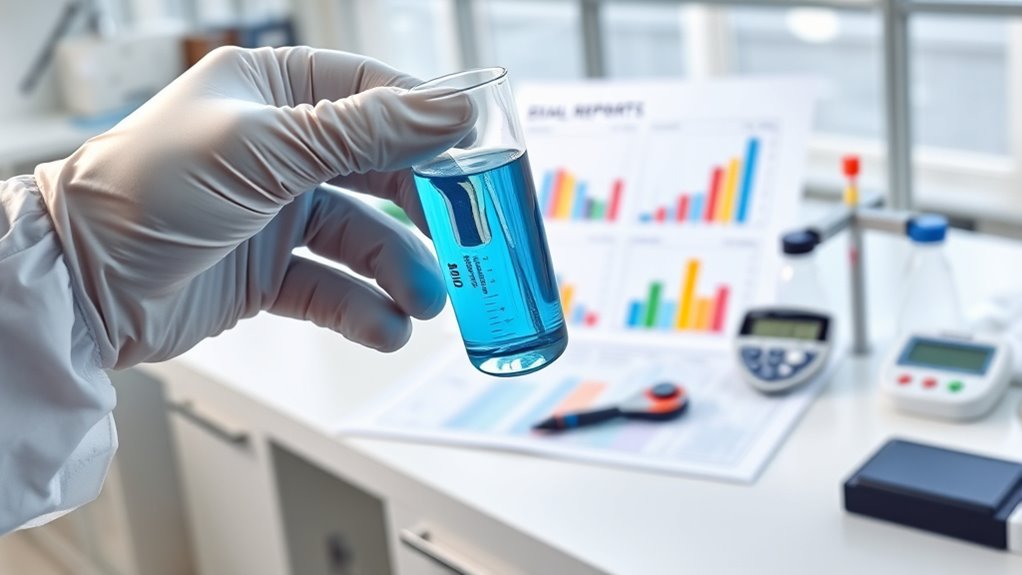
When you interpret water test results, focus on contaminant levels using units like ppm or µg/L and compare them to safety standards set by agencies like EPA or WHO. Check the testing methods used to understand which contaminants were analyzed and how sensitive those measurements are. Look for any substances near or above safety limits, and review lab notes for recommendations. If you’re curious about more details on ensuring safe water, keep exploring further.

Get home appliances delivered free with Prime
- Fast, free delivery on millions of items
- Prime Video, Amazon Music and more included
- Member-only deals all year
Key Takeaways
- Review contaminant levels and compare them to EPA or WHO safety standards to assess water safety.
- Identify which testing methods were used, noting their sensitivity and accuracy for detecting specific contaminants.
- Understand units of measurement (ppm, µg/L) to interpret whether contaminant concentrations are safe or risky.
- Check lab notes or recommendations for further action if contaminant levels are near or above safety thresholds.
- Evaluate the presence of harmful substances like heavy metals or bacteria and consider treatment options if necessary.
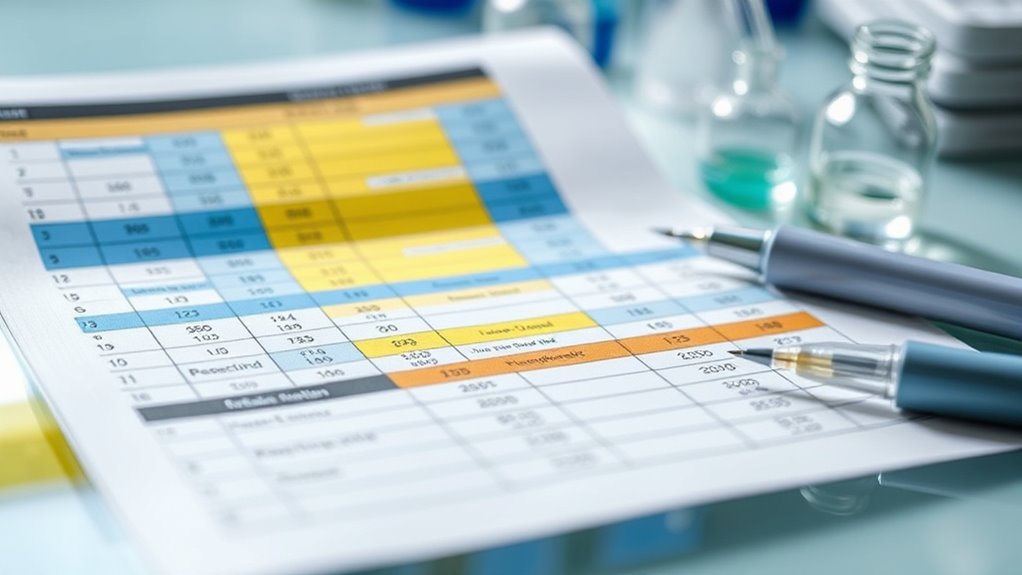
Have you recently had your water tested? If so, you might be looking at your lab report and wondering what it all means. The first thing to focus on is understanding the contaminant levels. These levels tell you how much of a particular substance is present in your water. Labs usually measure these in parts per million (ppm) or micrograms per liter (µg/L). When you see these numbers, it’s important to compare them to the safety standards set by agencies like the EPA or WHO. If your contaminant levels are below these limits, your water is generally considered safe to drink. But if they’re higher, you’ll need to evaluate treatment options or further testing.
Next, you should understand the testing methods used to analyze your water sample. Different testing methods can detect various contaminants with varying degrees of accuracy. Some common testing methods include spectrophotometry, chromatography, and electrochemical analysis. Each method has its strengths and limitations, and knowing which method was used can help you interpret the results more accurately. For instance, if a test used a highly sensitive method, it might detect contaminants at very low concentrations, giving you a clearer picture of potential risks. Conversely, less sensitive methods might miss trace amounts that could still be harmful over time. It’s helpful to ask your lab or review your report to see which testing methods were employed, so you can better understand the reliability of the results.
Additionally, understanding the color accuracy of your water testing can help you interpret visual indicators like discoloration or turbidity, which might suggest contamination or system issues. When reviewing your report, pay close attention to the units of measurement and the specific contaminants listed. Sometimes, reports include a list of various substances like heavy metals, bacteria, pesticides, or chemicals. Each one might have different safety thresholds. If you spot contaminants like lead, arsenic, or nitrates, compare their levels directly to the recommended limits. If any are near or above those limits, it’s a red flag that you should take immediate action, such as installing a filtration system or seeking professional advice. Also, check whether the report indicates if your water has passed or failed certain safety criteria. Some labs include notes or recommendations, which can guide your next steps.
As an affiliate, we earn on qualifying purchases.
Frequently Asked Questions
How Often Should I Retake Water Tests?
You should retake water tests at least once a year to guarantee your water remains safe, especially if you rely on boiling water or water filtration systems. Regular testing helps identify contaminants early, so you can adjust your filtration or take other precautions. If your water source changes or you notice a taste or smell, retest sooner. Consistent testing keeps your water quality in check and protects your health.
What Do I Do if Results Show Contaminants?
Oh, perfect news—your water’s contaminated! First, identify contaminant sources like old pipes or nearby industrial activity. Then, implement mitigation strategies such as installing filters or a treatment system. While it might seem overwhelming, taking these steps guarantees safe water. Remember, ignoring contaminants only worsens health risks, so act swiftly, stay informed, and keep testing regularly to protect yourself and your loved ones.
Can Home Testing Kits Replace Lab Reports?
Home testing kits can give you a quick idea of your water quality, but they can’t fully replace lab reports. Lab tests follow strict water quality standards and offer higher testing accuracy, which are essential for reliable results. If you suspect contamination, it’s best to confirm with a professional lab, ensuring you get precise data to protect your health and meet safety guidelines.
Are All Water Tests Equally Accurate?
Think of water tests like different lenses; not all are equally sharp. Some tests excel in testing accuracy, giving you precise results, while others might miss small details, affecting report reliability. You can’t assume all tests are equally accurate, so always choose reputable labs for critical concerns. Trustworthy testing guarantees you get the true picture of your water quality, helping you make informed decisions for your health and safety.
How Do I Interpret Ph Levels in Reports?
When interpreting pH levels in reports, you’ll see a number indicating acidity or alkalinity. If the pH is below 7, your water’s acidic, and you might need pH adjustment or acid neutralization to balance it. If it’s above 7, consider alkalinity. Use the report’s details to decide whether to implement pH adjustment strategies, ensuring your water remains safe and suitable for its intended use.
water filtration systems for heavy metals
As an affiliate, we earn on qualifying purchases.
As an affiliate, we earn on qualifying purchases.
Conclusion
Interpreting water test results might feel like decoding a secret message, but with practice, it becomes clearer. Think of it as tuning a radio—each number and marker helps you find the station that’s safe and clear. Once I saw my test report indicating low levels of contaminants, it was like finally adjusting the dial and hearing a crisp, clean signal. Trust your results, stay informed, and keep your water safe—it’s your most essential resource.
laboratory water test analysis kit
As an affiliate, we earn on qualifying purchases.
As an affiliate, we earn on qualifying purchases.
bacteria and contaminant water test strips
As an affiliate, we earn on qualifying purchases.
As an affiliate, we earn on qualifying purchases.
Columbus Day / Indigenous Peoples' Day Picks
long weekend sales
As an affiliate, we earn on qualifying purchases.