If you’re experiencing slow flow in your reverse osmosis system, start by inspecting and cleaning the membrane with a specialized cleaner to remove mineral buildup. Check your pre-filters and replace them if they’re clogged, and confirm tubing isn’t kinked or blocked. Adjust pressure levels with valves or booster pumps to improve flow, and verify restrictors and valves are clean and properly set. For more tips to resolve slow flow issues, you’ll find useful strategies if you continue exploring further.

Get home appliances delivered free — and shop member deals
- Fast, free delivery on millions of items
- Access to Prime Big Deal Days deals on October 6–7
- Prime Video, Amazon Music and more included
Key Takeaways
- Regularly clean and rinse the membrane to remove mineral buildup and debris that reduce flow.
- Check and adjust system pressure using gauges, valves, or booster pumps to ensure optimal water push-through.
- Inspect and replace clogged pre-filters and clear any kinks or blockages in tubing.
- Examine and clean flow restrictors and permeate valves for proper operation.
- Perform routine system maintenance and follow manufacturer guidelines to prevent flow decline.
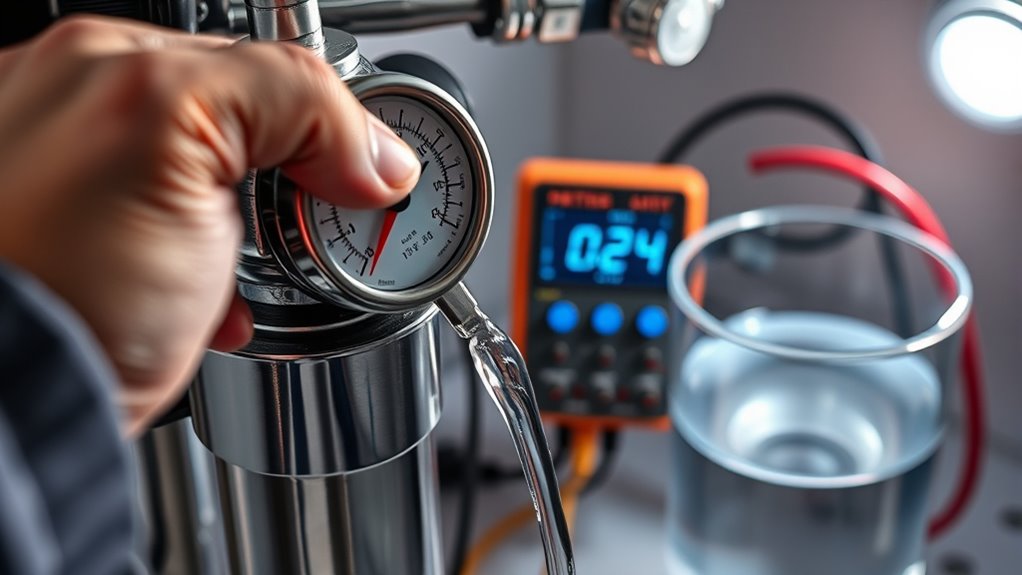
If your reverse osmosis system isn’t producing enough water or the flow has slowed considerably, troubleshooting can help identify the problem quickly. One common cause is a build-up of minerals and debris on the membrane, which can restrict water flow. To fix this, start with membrane cleaning. Over time, mineral deposits and contaminants accumulate on the membrane surface, reducing its efficiency. Regular cleaning with a specialized membrane cleaner can restore flow and improve filtration. Be sure to follow your manufacturer’s instructions, as improper cleaning can damage the membrane. After cleaning, rinse the system thoroughly to remove any residual cleaning solution before testing the flow rate again.
Mineral buildup on the membrane can reduce flow; regular cleaning restores efficiency.
Another potential issue is pressure imbalance within your system. Reverse osmosis units rely on the right pressure levels to push water through the membrane effectively. If the pressure is too low, the flow will decrease substantially. Check your pressure gauges and consider adjusting the pressure if your system allows it. Many units have a pressure adjustment valve or a booster pump to increase pressure. Increasing the pressure improves water flow, but do so gradually to avoid damaging the membrane or other components. Keep in mind that higher pressure can also lead to faster membrane wear, so find a balance that maintains ideal flow without risking damage.
If you’ve already cleaned the membrane and adjusted the pressure but still experience slow flow, inspect other parts of the system. Clogged or dirty pre-filters can cause a bottleneck, reducing overall flow rate. Replacing these filters regularly ensures unobstructed water movement. Also, check for any kinks or blockages in the tubing, which can restrict flow. Sometimes, sediment or debris can settle in the pipes, so flushing the system thoroughly might help. Additionally, filter lifespan can impact flow rate, as filters that are overdue for replacement may not function properly.
It’s also worth examining the flow restrictor or valve settings. If these are set incorrectly or have become clogged, they can limit water flow. Adjust or clean these components as needed. If your system has a permeate pump, ensure it’s functioning properly, as a malfunction can reduce flow.
reverse osmosis membrane cleaner
As an affiliate, we earn on qualifying purchases.
As an affiliate, we earn on qualifying purchases.
Frequently Asked Questions
Can Mineral Buildup Cause Slow Flow in Reverse Osmosis Systems?
Yes, mineral buildup can cause slow flow in your reverse osmosis system. Mineral scaling occurs when water hardness leads to deposits like calcium and magnesium on the membranes and filters. Over time, these deposits restrict water flow, reducing efficiency. To prevent this, consider installing a water softener or regularly descaling your system. Keeping mineral levels in check guarantees your reverse osmosis system operates smoothly and maintains ideal flow rates.
How Does Membrane Age Affect Flow Rate Over Time?
Membrane aging diminishes your system’s flow rate because membrane degradation leads to reduced permeability. Over time, mineral deposits, dirt, and wear weaken the membrane’s ability to filter efficiently, causing flow to slow. As the membrane ages, its capacity to produce clean water decreases, meaning you’ll notice a sluggish flow. Regular maintenance and timely replacement keep the membrane performing perfectly, preventing flow rate decline and ensuring your reverse osmosis system runs smoothly.
Are There Specific Filters That Improve Flow Rate?
You can improve flow rate by using high-quality, sediment, and carbon filters that support filter maintenance and flow optimization. Regularly replacing these filters prevents clogging and buildup, ensuring your system runs efficiently. Look for filters designed specifically for flow enhancement, and follow your manufacturer’s recommendations. Proper filter maintenance keeps water flowing smoothly, reduces pressure drops, and extends your reverse osmosis system’s lifespan.
Does Water Temperature Impact Reverse Osmosis Flow?
Imagine water as a lively river, rushing faster on a warm summer day. When water temperature drops, it’s like the river freezes, slowing down flow. Cooler water increases water pressure, which can strain your filters and shorten their lifespan. Conversely, warmer water enhances flow, easing pressure on your system. Keeping water at ideal temperatures helps maintain steady flow, ensuring your reverse osmosis system runs smoothly and filters stay effective longer.
Can Plumbing Leaks Reduce System Pressure and Flow?
Yes, plumbing leaks can reduce system pressure and flow in your reverse osmosis system. When leaks occur, they cause pressure drops, making it harder for water to pass through the filters efficiently. You might notice a decrease in flow rate or water pressure at the faucet. To fix this, check all connections and repair any leaks promptly, restoring proper system pressure and ensuring ideal water flow.
RO system pre-filter replacement kit
As an affiliate, we earn on qualifying purchases.
As an affiliate, we earn on qualifying purchases.
Conclusion
Just like a skilled sailor adjusting their sails to catch the wind, you can troubleshoot your reverse osmosis system with patience and care. Remember, even the most intricate machines rely on clear pathways and proper maintenance—think of it as tending your own garden. When you stay attentive and proactive, you’ll keep the flow steady and pure, much like a river that always finds its way to the sea. Trust your hands; they’re your best compass.
As an affiliate, we earn on qualifying purchases.
As an affiliate, we earn on qualifying purchases.
Evergreen bestsellers Picks
bestsellers
As an affiliate, we earn on qualifying purchases.