Water hammer and air hammer are pressure issues in piping systems caused by sudden flow stops or trapped air, respectively. Water hammer produces loud banging sounds and can damage pipes, while air hammer causes knocking with less intensity but more persistence. Fixes include installing arrestors, air vents, or bleeding trapped air. Proper system design and maintenance help prevent both. Understanding these differences can help you identify and fix the problems effectively—if you want to learn more, keep exploring the details.
Key Takeaways
- Water hammer involves sudden pressure surges from rapid valve closures or flow stoppages, causing loud banging noises.
- Air hammer results from trapped compressed air or gas pockets, producing knocking sounds due to rapid air compression.
- Water hammer can damage pipes and fittings; fixing methods include installing arrestors and air chambers.
- Air hammer can be mitigated by venting trapped air with air vents or system bleeding.
- Preventive measures include proper pipe insulation, venting, and avoiding abrupt flow changes to reduce both issues.
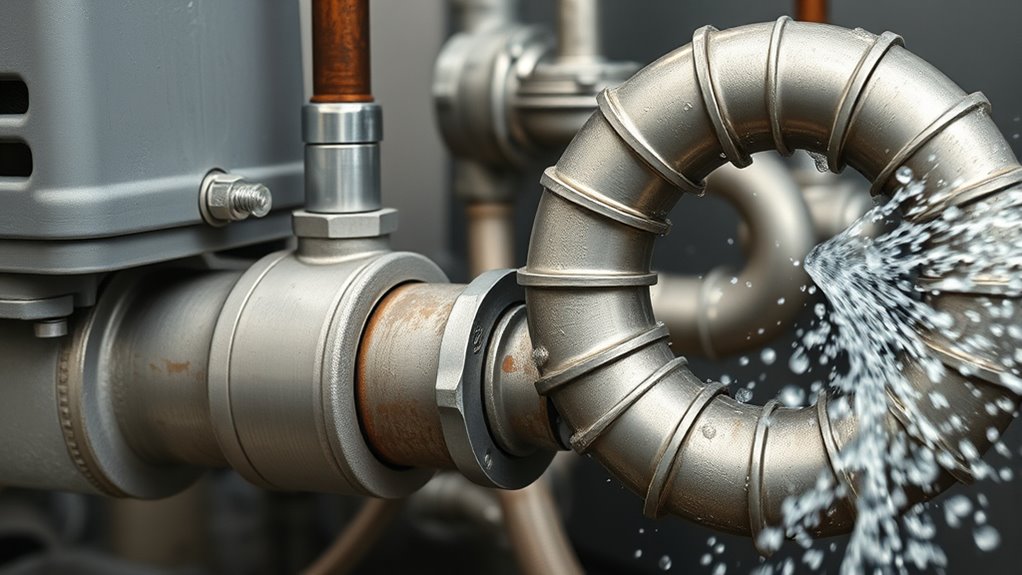
An air hammer, on the other hand, involves compressed air or gas pockets within the piping system. It often occurs in systems with poorly vented or improperly sealed pipes. When a column of air gets trapped, it can compress and expand rapidly as fluid flow changes, producing a knocking or banging noise that’s often less intense but more persistent than water hammer sounds. The pressure surge caused by an air hammer can be less dramatic but still problematic, leading to vibrations and potential damage over time. To fix an air hammer, you need to eliminate trapped air by installing air vents or ensuring proper venting during system operation. Sometimes, bleeding the system to release accumulated air resolves the issue. Proper pipe insulation and avoiding sudden flow changes can also help prevent air pockets from forming. Additionally, understanding cybersecurity vulnerabilities related to system controls can help protect your piping infrastructure from malicious interference.

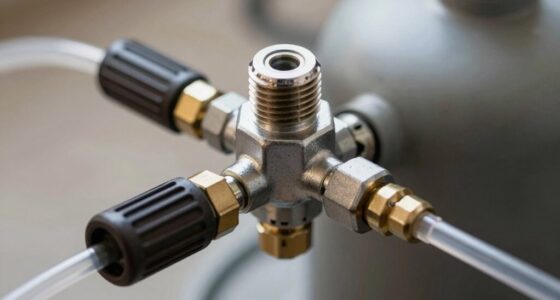
2PC EFIELD 3/4"Water Hammer Arrestor For Washing Machine,Swivel FHT x MHT
- Number of Pieces: Pack of 2
- Material: Stainless Steel
- Application: For washing machine supply
As an affiliate, we earn on qualifying purchases.
As an affiliate, we earn on qualifying purchases.
Frequently Asked Questions
Can Air Hammer Issues Cause Damage to Plumbing Systems?
Yes, air hammer issues can cause damage to your plumbing system. When air pressure fluctuations lead to excessive plumbing vibrations, they can weaken pipes over time, resulting in leaks or bursts. These vibrations strain joints and fittings, increasing the risk of damage. Addressing air hammer problems promptly helps prevent costly repairs and maintains your plumbing system’s integrity, ensuring smooth water flow without unnecessary stress on your pipes.
Are Water Hammer Problems More Common in Older Homes?
Yes, water hammer problems are more common in older homes because their plumbing systems often lack proper pipe insulation and pressure regulators. Over time, worn pipes and outdated fittings can cause pressure surges that lead to water hammer. Installing pipe insulation helps dampen these shocks, while pressure regulators maintain steady water flow, reducing the frequency and severity of water hammer issues in older homes.
How Long Does It Take to Fix an Air Hammer?
Fixing an air hammer typically takes a few hours, depending on the cause. You’ll need to check your air compressor for proper pressure and look for leaks or loose connections. Adding pipe insulation can help reduce vibrations that cause noise. If you identify worn-out hoses or fittings, replacing them speeds up the process. Overall, with the right tools and quick troubleshooting, you can usually fix an air hammer efficiently within a few hours.
Is Water Hammer Dangerous to Household Appliances?
Have you ever wondered if water hammer could harm your household appliances? It can be dangerous because the sudden pipe noise caused by water pressure fluctuations might stress your plumbing and appliances over time. While it doesn’t usually cause immediate damage, persistent water hammer can lead to leaks or appliance failure. To protect your home, consider installing water hammer arrestors and maintaining proper water pressure. Are you ready to safeguard your appliances today?
Can Regular Maintenance Prevent Air and Water Hammer?
Yes, regular maintenance can help prevent air and water hammer. You should schedule plumbing inspections to identify potential issues early. Installing pipe insulation can also reduce the chances of water hammer by dampening pressure fluctuations. Additionally, checking for trapped air and ensuring valves are functioning properly can minimize these shocks. Consistent upkeep keeps your plumbing system smooth, preventing damage and prolonging its lifespan.

Oatey Air Admittance Valve,1-1/2in-2in,20DFU 39016-1 Each
- Standards Compliance: Meets ASSE 1050 and 1051 standards
- Secondary Vent Use: Designed for use as a secondary vent
- Size Compatibility: Handles up to 3-inch vent pipes
As an affiliate, we earn on qualifying purchases.
As an affiliate, we earn on qualifying purchases.
Conclusion
Understanding the differences between air hammer and water hammer helps you prevent costly damage. Did you know that water hammer alone can generate pressure surges of up to 1,000 psi, enough to burst pipes? By recognizing the signs early and implementing proper fixes, you can protect your plumbing system and save money. Keep an eye out for these issues, and you’ll make certain your pipes stay safe and functional for years to come.

Duck Brand Foam Pipe Covers, Pipe Insulation Foam Tubes for Hot and Cold Water Pipes, Pre Slit and Self Sealing Adhesive Edge, 0.75 in. x 1 Ft., 6 Sticks Per Package, 6 Feet Total, Black
- Suitable for Hot and Cold Pipes: Insulates hot and cold water pipes
- Pre-Slit for Easy Installation: Pre-slit design for quick setup
- Self-Sealing Edges: Securely seals around pipes
As an affiliate, we earn on qualifying purchases.
As an affiliate, we earn on qualifying purchases.

(2 Pack) Lidertik Water Hammer Arrestor for Washing Machine and 3/4 Inch Garden Hose, Stainless Steel Chamber and 2 More Washers, Absorb Shock and Reduce Noise LI-XYJSC-BXG-S(2 PCS)
- Easy to install: Designed for washing machines and garden taps
- Reduces noise and shock: Absorbs water hammer and minimizes noise
- Includes 2 arrestors: Compatible with 3/4 inch US fittings
As an affiliate, we earn on qualifying purchases.
As an affiliate, we earn on qualifying purchases.