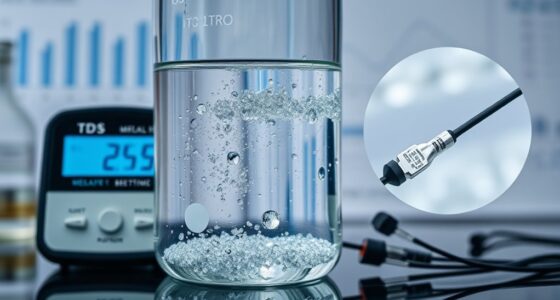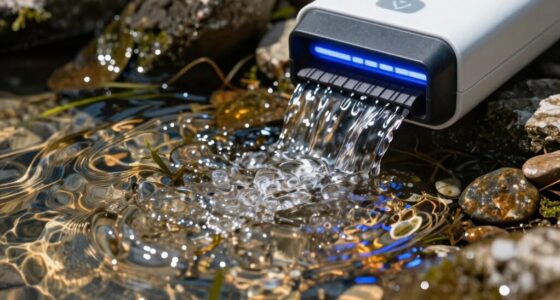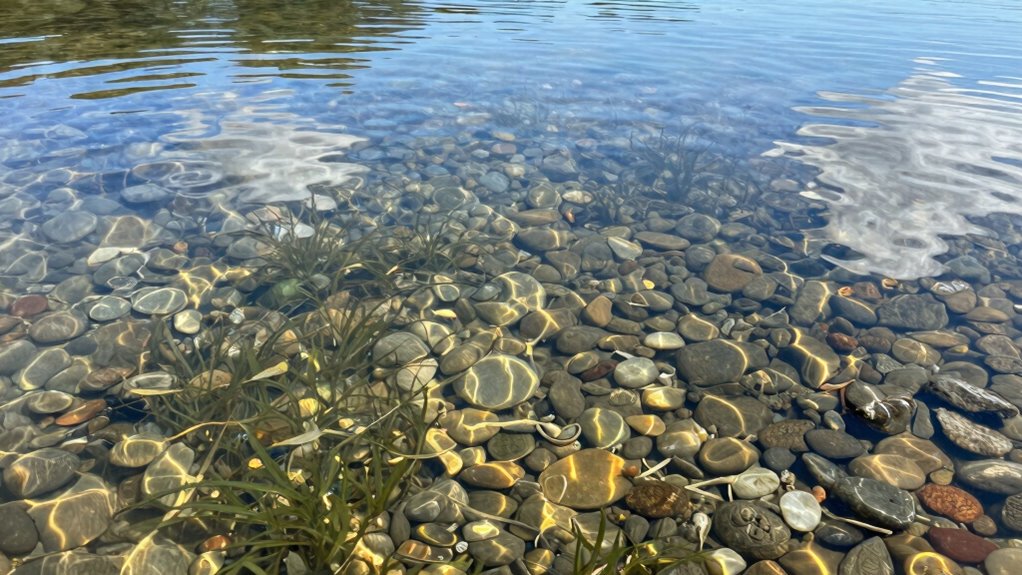
Water clarity gives you an instant look at your water’s condition, highlighting issues like algae, sediments, or pollutants before lab results come in. If your water appears cloudy, discolored, or hazy, it signals possible contamination or environmental impacts, prompting quick action such as cleaning or testing. By keeping a close eye on clarity, you can catch problems early and guarantee your water stays safe. Stick around to discover how ongoing checks can keep your water clean and clear.
Key Takeaways
- Cloudiness or discoloration can indicate algae, sediments, or pollutants before lab confirmation.
- Persistent visual issues may signal ongoing contamination needing immediate attention.
- Changes in water clarity after environmental events can suggest runoff or pollution sources.
- Clear water generally indicates fewer visible contaminants, but not necessarily safe quality.
- Routine visual checks help identify trends and potential problems early, guiding further testing.
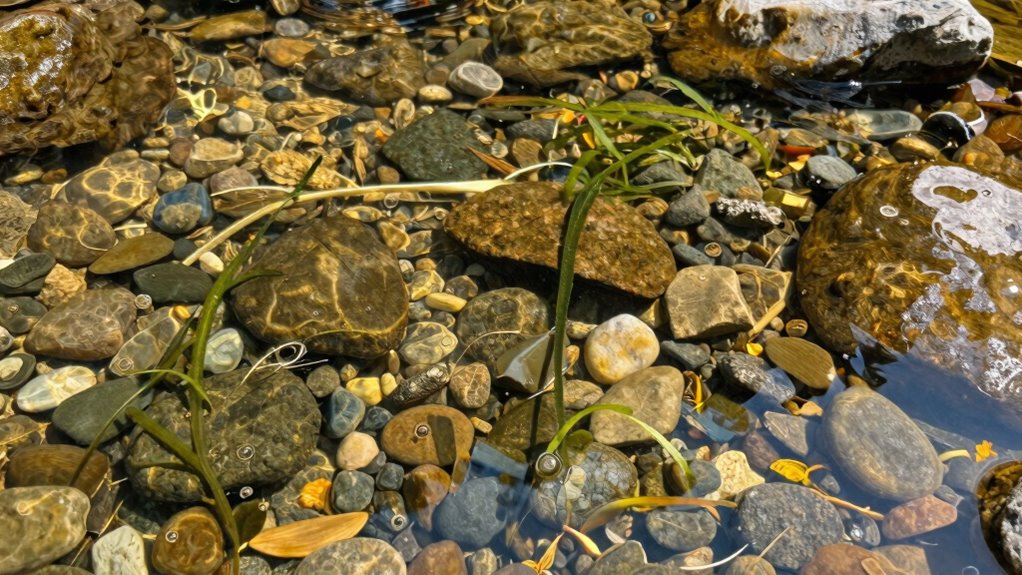
Ever wondered how clear your water truly is? The answer often lies in a simple yet powerful step before you even consider lab tests: a visual evaluation. Water quality isn’t just about taste or smell; it’s about what you can observe. When you examine your water, you’re gaining an immediate, firsthand understanding of its clarity, which can reveal a lot about potential issues lurking beneath the surface. Cloudiness or discoloration signals that something might be off—be it algae, sediments, or pollutants—prompting you to investigate further before investing in expensive lab tests. This quick check is a crucial first line of defense in maintaining safe, clean water for your home or property.
Performing a visual evaluation is straightforward but requires attention to detail. Fill a clear container with water, hold it up to the light, and look carefully. Is the water crystal clear, or does it have a haze? Are there floating particles or sediments? Some cloudiness might be caused by natural minerals or biological matter, but it could also indicate contamination. If the water looks murky or colored, it’s a sign you need to dig deeper. Recognizing visual cues can help you determine whether issues are superficial or if you need to take further steps, such as testing for bacteria, chemicals, or other pollutants. It’s a simple way to gauge water quality quickly without waiting for lab results.
Your visual evaluation also helps you recognize patterns over time. If you notice recurring cloudiness or changes in color after storms or heavy rain, it might point to runoff contamination or other environmental factors affecting your water source. Regularly observing your water’s clarity keeps you informed and proactive about maintaining its safety. While lab tests provide detailed information about contaminants, they are often costly and time-consuming. Your visual checks, on the other hand, provide instant, ongoing insights into possible issues, enabling you to act swiftly—whether that means cleaning your filters, installing treatment systems, or consulting water quality professionals.
In addition, understanding the sources of water contamination can help you interpret what you see more accurately. Your eyes serve as the first line of defense in understanding water quality. While lab tests are essential for thorough analysis, they shouldn’t replace the immediate, accessible information you get from a visual evaluation. Being aware of common contaminants can help you better assess what your water’s appearance might indicate about its safety. Recognizing the signs of contamination early allows you to take preventative measures before problems escalate. By routinely checking water clarity, you can detect problems early, save money, and ensure your water remains safe for everyday use. Sometimes, what you see is just as telling as what a lab analysis might reveal—if you know how to interpret it properly.

Varify 17in1 Complete Drinking Water Test Kit – 100 Strips + 2 Bacteria Tester Kits – Well, Tap, Home, City Water Testing Strip for Lead, Alkaline, Chlorine, Hardness, Iron, Fluoride, Copper & More
17 IMPORTANT PARAMETERS: The Varify Premium Drinking Water Test Kit offers an unrivaled, complete analysis of your drinking…
As an affiliate, we earn on qualifying purchases.
As an affiliate, we earn on qualifying purchases.
Frequently Asked Questions
Can Water Clarity Change Rapidly Over Short Periods?
Yes, water clarity can change rapidly over short periods, causing visual fluctuations that affect your observations. These quick changes can result from factors like stirring, algae blooms, or sudden weather shifts. Such fluctuations can impact measurement accuracy, making it challenging to get consistent readings. To guarantee reliable assessments, you should monitor water clarity frequently and consider environmental influences that might cause abrupt changes.
What Natural Factors Influence Water Clarity the Most?
Coincidences often reveal nature’s secrets—you notice water clarity drops right after algae blooms or heavy sediment suspension. These natural factors influence water clarity the most, as algae blooms produce microscopic particles that cloud the water, and sediment suspension from storms stirs up particles from the bottom. Together, they considerably reduce visibility, signaling changes in the ecosystem that you might observe long before lab tests confirm them.
How Does Water Clarity Relate to Specific Health Conditions?
Water clarity can reveal potential health risks like waterborne pathogens or excess nutrient levels. Murky water often indicates high nutrient levels, which foster algae growth and can harbor harmful microbes. This visibility clue helps you identify contaminated water sources early, prompting tests or treatment before health issues arise. By observing water clarity, you gain a natural warning system that guides you to safer water and helps prevent illness caused by contaminated water.
Is Water Clarity Affected by Seasonal Changes?
Like a season’s changing tide in aquatic ecosystems, water transparency fluctuates with seasonal shifts. Warmer months often bring increased algae growth, reducing clarity, while cooler seasons clear the water. These changes reflect natural cycles, affecting everything from plant life to fish health. You’ll notice this variation firsthand, as water clarity ebbs and flows, revealing the dynamic health of aquatic ecosystems influenced by seasonal temperatures and nutrient levels.
Can Water Clarity Be a Reliable Indicator of Pollution Levels?
Yes, water clarity can be a reliable pollution indication through visual assessment. Murky or murky water often signals high pollutant levels, like algae blooms or sediment runoff. Clear water generally suggests lower pollution, but it’s not foolproof. Always consider other factors and, if possible, supplement visual checks with lab tests for accurate pollution levels. Your observations can serve as quick, initial indicators of water quality concerns.

Z-Color 10pcs 10ml Lab Plastic Frozen Test Tubes Vial Seal Cap Container for Laboratory School Educational
Good sealing cap, samples will not volatilize.
As an affiliate, we earn on qualifying purchases.
As an affiliate, we earn on qualifying purchases.
Conclusion
Just as the eye of the beholder can reveal truths unseen, water clarity offers an immediate glimpse into its health—often before lab tests can confirm it. Trust your instincts and observations, for they echo the wisdom of ancient mariners who read the sea’s surface to understand its depths. Remember, what’s visible on the surface often hints at what lies beneath—an enduring reminder that in nature, clarity is both a reflection and a prophecy.
Varify 17in1 Complete Drinking Water Test Kit – 100 Strips + 2 Bacteria Tester Kits – Well, Tap, Home, City Water Testing Strip for Lead, Alkaline, Chlorine, Hardness, Iron, Fluoride, Copper & More
17 IMPORTANT PARAMETERS: The Varify Premium Drinking Water Test Kit offers an unrivaled, complete analysis of your drinking…
As an affiliate, we earn on qualifying purchases.
As an affiliate, we earn on qualifying purchases.

Seachem Clarity 500ml
Water clarifier for marine and freshwater
As an affiliate, we earn on qualifying purchases.
As an affiliate, we earn on qualifying purchases.