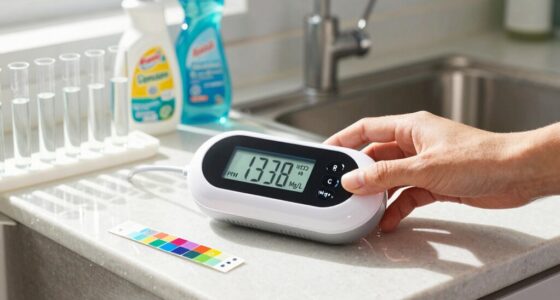

To guarantee your water is safe, you use basic treatment methods like filtration, softening, and disinfection. Filtration removes dirt and particles, improving clarity and taste, while softening prevents scale buildup by removing calcium and magnesium. Disinfection kills germs with chlorination, UV light, or ozone, ensuring microbiological safety. These processes work together to protect your health and the environment. Keep exploring to learn how each step plays a crucial role in water quality.
Key Takeaways
- Filtration removes suspended solids, dirt, and improves water clarity using filters like activated carbon and sand.
- Water softening reduces calcium and magnesium levels to prevent scale buildup and improve water quality.
- Disinfection eliminates harmful pathogens using chlorination, UV light, or ozonation to ensure microbiological safety.
- Combining filtration, softening, and disinfection provides comprehensive water treatment for safe, clean water.
- Modern treatment systems ensure water meets health standards for drinking, industrial, and agricultural uses.
Water treatment methods are indispensable for ensuring clean and safe water for drinking, industry, and agriculture. When you look at the water you use daily, it’s important to recognize how various treatment technologies work together to improve water quality. These methods target different contaminants, making water suitable for its intended purpose while protecting health and the environment. Understanding the basics of filtration, softening, and disinfection can help you appreciate how clean water is achieved and maintained.
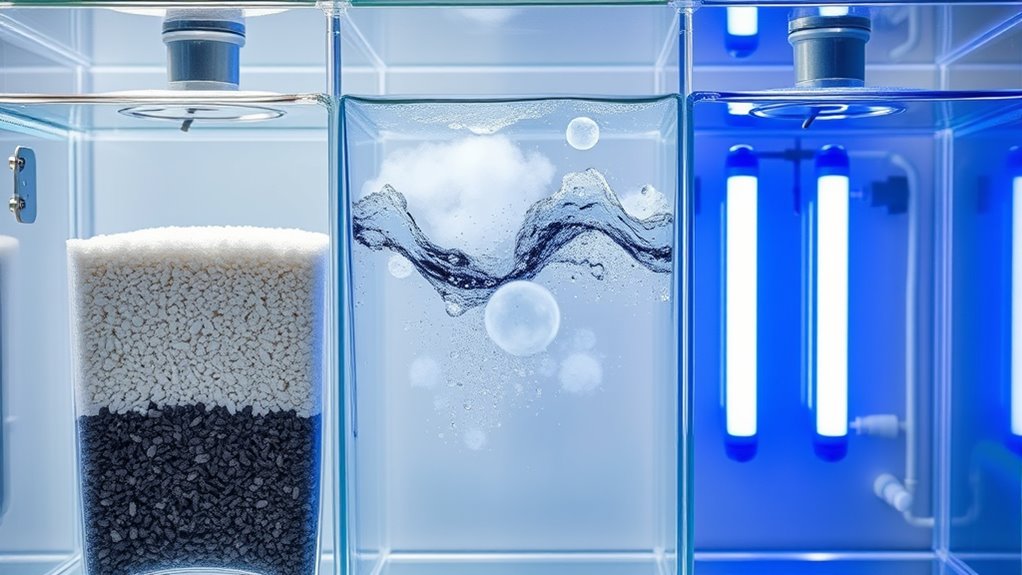
Filtration is one of the most common treatment methods, primarily used to remove suspended solids, dirt, and particles from water. You might have seen or used a water filter in your home, which traps impurities as water passes through a porous medium like activated carbon or sand. This process markedly improves water clarity and taste, but it also reduces certain bacteria and chemicals, depending on the filter type. In larger-scale systems, filtration can involve multimedia filters or membrane technologies such as microfiltration and ultrafiltration, which provide a higher level of purification. These advanced treatment options are essential for ensuring consistent water quality, especially in municipal supplies and industrial processes. Effective filtration is crucial for removing a wide range of contaminants, including pathogens and chemicals, from water sources.
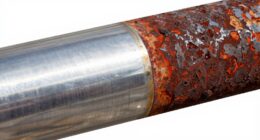
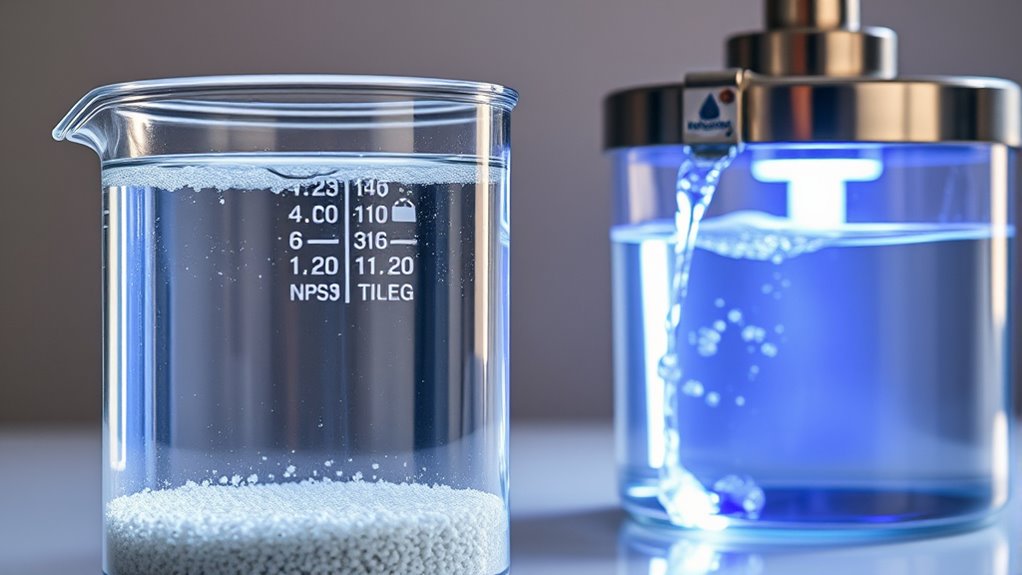
Water softening is another indispensable treatment technology, especially when dealing with hard water that contains high levels of calcium and magnesium. Hard water can cause scale buildup in pipes and appliances, reducing their lifespan and efficiency. Softening typically involves ion exchange, where calcium and magnesium ions are replaced with sodium ions. This process makes water more compatible with household use and industrial applications by preventing mineral deposits. Softening not only enhances water quality but also minimizes maintenance costs and energy consumption, making it an economical choice for many water systems.
Disinfection is the final step to guarantee water safety by eliminating harmful pathogens. You’re likely familiar with chlorination, which adds small amounts of chlorine to kill bacteria, viruses, and other microorganisms. Other disinfection methods include ultraviolet (UV) light and ozonation, which are effective for inactivating a broad spectrum of microbes without adding chemicals. Disinfection is indispensable because it guarantees the microbiological safety of water, preventing waterborne diseases. It’s especially important in public water supplies, where maintaining high standards of water quality is essential for public health.
Together, these treatment methods form a thorough approach to producing safe, clean water. By using effective filtration, softening, and disinfection technologies, you can guarantee the water you use meets health standards and supports various needs. Each step plays a specific role in improving water quality, demonstrating how modern treatment systems are designed to deliver safe water reliably. Whether for drinking, industrial use, or agriculture, these basic water treatment methods are fundamental to safeguarding water resources for everyone.
Frequently Asked Questions
How Often Should Water Filters Be Replaced?
You should replace your water filter based on its filter lifespan, which varies by type and usage. Generally, follow the recommended replacement schedule provided by the manufacturer, often every 2 to 6 months. Regularly check for signs like reduced flow or taste changes, and don’t wait too long to change the filter. Staying on schedule ensures your water stays clean and safe, maintaining peak filtration performance.
What Are the Environmental Impacts of Water Softening?
You should consider that water softening can lead to environmental impacts like chemical runoff from salt-based softeners, which may contaminate nearby soil and water sources. Additionally, it causes mineral depletion by removing beneficial minerals such as calcium and magnesium. These effects can harm aquatic ecosystems and reduce natural mineral levels in soil, potentially affecting plant growth. Being mindful of these impacts helps you choose more sustainable water treatment options.
Can Disinfection Methods Remove All Types of Pathogens?
Disinfection methods can’t eliminate all types of pathogens because some, like bacterial spores and certain viruses, have high pathogen resistance. Additionally, chemical byproducts from disinfectants, such as chlorinated compounds, can pose health risks. You should understand that combining multiple disinfection techniques and proper treatment ensures better pathogen removal, but no method guarantees complete elimination, especially against resistant microorganisms.
Are There Health Risks Associated With Water Treatment Chemicals?
Yes, there are health concerns associated with water treatment chemicals, especially related to chemical exposure. You might worry about potential risks from long-term exposure to disinfectants like chlorine or chloramine, which can cause health issues if not properly managed. While these chemicals effectively eliminate pathogens, it’s important to follow safety guidelines and stay informed about possible health risks to minimize any adverse effects from chemical exposure during water treatment.
What Is the Cost Difference Between Different Water Treatment Methods?
The cost comparison between water treatment methods varies widely, mainly due to installation expenses and ongoing maintenance. Filtration systems generally have lower initial costs but may require frequent filter replacements, increasing long-term expenses. Softening systems tend to be pricier upfront but can save money over time by reducing scale buildup. Disinfection methods like UV or chlorination vary based on technology and size, so you should weigh installation costs against your specific water quality needs.
Conclusion
Imagine water as a clear stream flowing through your hands; with filtration, softening, and disinfection, you shape its journey from impurities to purity. These methods act as the sculptor’s chisel, transforming raw water into a safe, clean resource for your everyday life. By understanding and applying these techniques, you become the guardian of your health, ensuring every drop you use is as pure as a mountain spring. Embrace these methods and let your water’s journey be a story of safety and clarity.