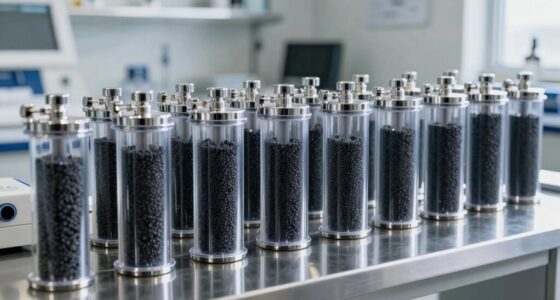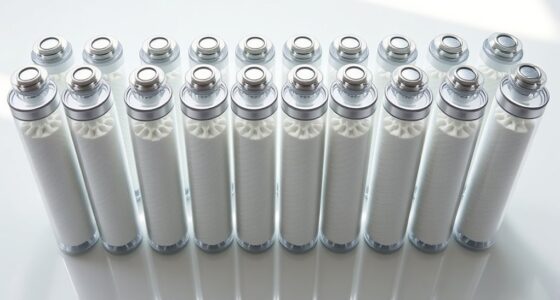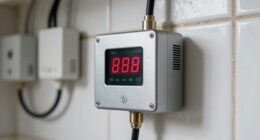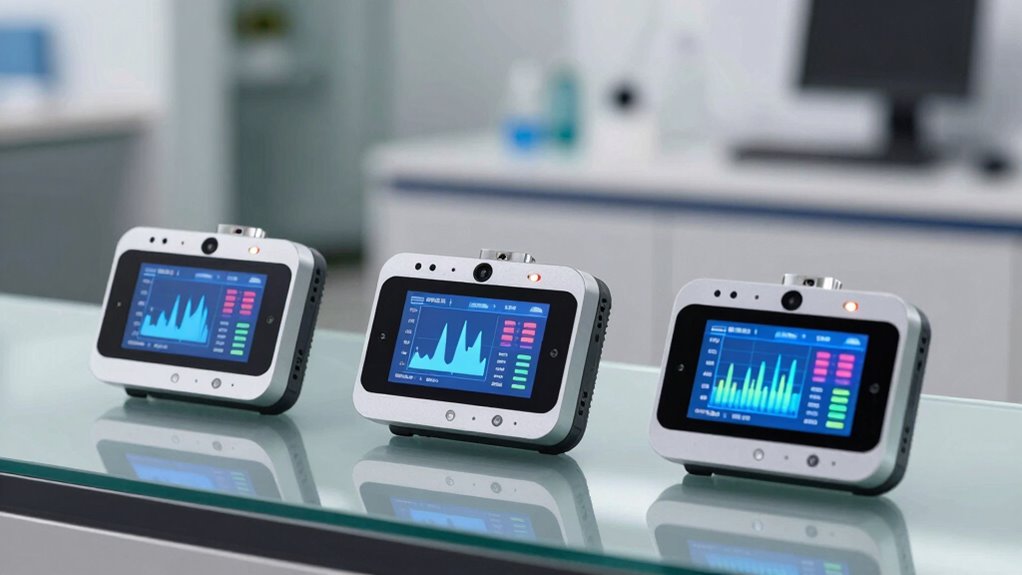
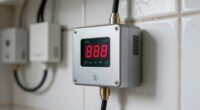
In 2026, I recommend the Smart Water Quality Tester with Wi-Fi for real-time remote monitoring and easy calibration, the FreshWater Smart Water Monitor for precise spa and hot tub management, and the Crystal Water Monitor, which offers extensive testing and personalized chemical suggestions for pools and spas. These sensors combine accuracy, connectivity, and user-friendly features. If you want to find out which one fits your needs best, stick around for more details.
Key Takeaways
- Look for monitors with multi-parameter sensors like 6-in-1 for comprehensive water testing.
- Prioritize devices with automatic calibration, high accuracy, and reliable data validation standards.
- Ensure compatibility with your water systems, supporting wireless connectivity and remote monitoring features.
- Choose durable, user-friendly devices with clear interfaces and low maintenance requirements.
- Consider cost-effectiveness based on features, sensor longevity, app integration, and long-term reliability.
| Smart Water Quality Tester with Wi-Fi and Calibration |  | Top Wi-Fi Accuracy | Water Parameters Measured: pH, EC, TDS, Salinity, SG, Temperature | Connectivity: Wi-Fi (2.4GHz) | Calibration/Calibration Support: 3-point automatic calibration | VIEW LATEST PRICE | See Our Full Breakdown |
| FreshWater Smart Water Monitor for Spas & Hot Tubs |  | Spa & Hot Tub Essential | Water Parameters Measured: pH, Chlorine, Salt | Connectivity: Not specified (integrates with hot tub systems) | Calibration/Calibration Support: Not specified | VIEW LATEST PRICE | See Our Full Breakdown |
| Crystal Water Monitor for Pools & Hot Tubs |  | Pro-Grade Pool Monitoring | Water Parameters Measured: Chemical levels (unspecified, but includes chlorine, bromine, and other chemicals) | Connectivity: App via Android/iOS | Calibration/Calibration Support: No calibration mentioned; automated testing | VIEW LATEST PRICE | See Our Full Breakdown |
More Details on Our Top Picks
Smart Water Quality Tester with Wi-Fi and Calibration
If you’re looking for an easy way to keep your water quality consistent, the Smart Water Quality Tester with Wi-Fi and calibration is an excellent choice. Its 6-in-1 sensor measures pH, EC, TDS, salinity, specific gravity, and temperature, making it versatile for aquariums, ponds, and hydroponics. With wireless connectivity, you can monitor water parameters remotely via a mobile app, reviewing real-time data and 30-day history. Calibration is straightforward with a 3-point automatic process using buffer solutions, ensuring precise measurements. Its compact, wall-mountable design makes continuous monitoring simple and space-efficient, helping me maintain excellent water conditions effortlessly.
- Water Parameters Measured:pH, EC, TDS, Salinity, SG, Temperature
- Connectivity:Wi-Fi (2.4GHz)
- Calibration/Calibration Support:3-point automatic calibration
- Monitoring Frequency:Continuous (via sensor, real-time data)
- Data Access/Notifications:Mobile app, real-time data, 30-day history
- Maintenance:Easy calibration, compact, wall-mountable
- Additional Feature:Supports 30-day data history
- Additional Feature:Compact, wall-mountable design
- Additional Feature:Simplified 3-point calibration
FreshWater Smart Water Monitor for Spas & Hot Tubs
The FreshWater Smart Water Monitor is an ideal choice for hot tub owners who want effortless, continuous water quality management. It seamlessly integrates with Hot Spring Highlife, Limelight spas, and Caldera hot tubs, especially those with salt systems. The sensor constantly tests pH, chlorine, and salt levels, providing on-screen recommendations that simplify maintenance. Its hourly monitoring reduces manual checks, allowing me to relax more. Designed for ease of use, it features an intuitive interface and automated alerts to keep water clean and natural-feeling without extra effort. This reliable system ensures healthier, clearer water with minimal hassle.
- Water Parameters Measured:pH, Chlorine, Salt
- Connectivity:Not specified (integrates with hot tub systems)
- Calibration/Calibration Support:Not specified
- Monitoring Frequency:Hourly testing
- Data Access/Notifications:On-screen recommendations, alerts
- Maintenance:Minimal effort, automated water testing
- Additional Feature:Compatible with specific spa models
- Additional Feature:Provides on-screen water recommendations
- Additional Feature:Designed for salt-based systems
Crystal Water Monitor for Pools & Hot Tubs
For anyone seeking reliable, real-time water testing for their pools and hot tubs, the Crystal Water Monitor stands out as an excellent choice. It tests water 1,000 times weekly, providing highly accurate data and personalized chemical recommendations. The device samples water 144 times daily, eliminating guesswork and manual testing errors. It pairs with an easy-to-use app that sends automated alerts and offers tailored dosing instructions, supporting various chemical brands and saltwater systems. Maintenance is simple and cost-effective, with no need for costly cartridges. Plus, it includes a year of free support and affordable subscription options, ensuring consistent, hassle-free water quality management.
- Water Parameters Measured:Chemical levels (unspecified, but includes chlorine, bromine, and other chemicals)
- Connectivity:App via Android/iOS
- Calibration/Calibration Support:No calibration mentioned; automated testing
- Monitoring Frequency:1,000 times weekly / 144 times daily
- Data Access/Notifications:App alerts, chemical dosing guidance, barcode scanning
- Maintenance:No costly consumables, subscription-based support
- Additional Feature:Tests water 1,000 times weekly
- Additional Feature:Personalized chemical dosing instructions
- Additional Feature:Long-term, maintenance-free operation
Factors to Consider When Choosing a Smart Water Quality Monitor Sensor
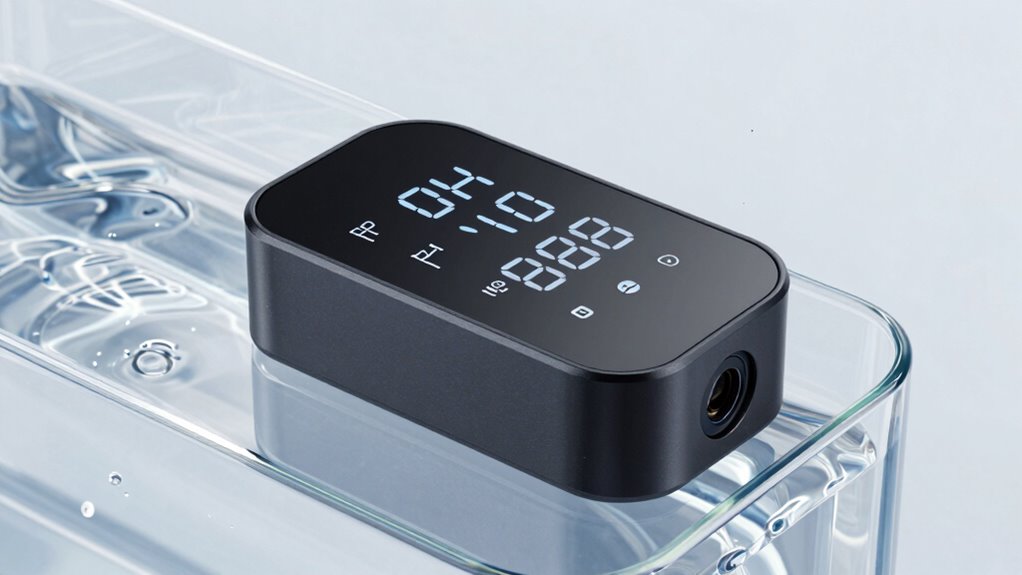
When selecting a smart water quality monitor sensor, I look at measurement accuracy standards to guarantee reliable readings. Compatibility with my existing system and connectivity options also matter, so I can easily integrate and access data. Additionally, I consider how simple calibration is and whether the device offers suitable monitoring frequency and data reporting features.
Measurement Accuracy Standards
Choosing a smart water quality monitor requires careful attention to measurement accuracy standards to guarantee reliable data. I look for sensors with a margin of error within ±0.01 pH units for pH and ±2% for conductivity, ensuring precise readings. High-quality devices often undergo certification by ISO or EPA standards, validating their accuracy and reliability. Regular calibration, especially automatic three-point calibration, is essential to maintain consistent precision over time. I also prioritize models that allow easy maintenance and validation against laboratory reference methods, which helps confirm ongoing accuracy. Response time and resolution matter too; accurate sensors should deliver rapid, detailed readings, enabling timely decisions and water quality adjustments. These standards are crucial for trustworthy, actionable data.
Compatibility With Systems
Selecting a smart water quality monitor sensor that seamlessly integrates with your existing systems is vital for effective water management. I always check that the sensor is compatible with my current water treatment or filtration setup to guarantee smooth operation. It’s also important that the sensor supports my specific environment, whether I’m monitoring a pool, aquarium, or hydroponic system, for accurate readings. I verify that it can connect reliably via Wi-Fi or Bluetooth to my preferred control platform. Compatibility with my mobile device’s operating system—iOS or Android—is essential for easy access and monitoring on the go. Additionally, I consider whether the sensor can integrate with my home automation system, allowing for holistic, centralized control of water quality parameters.
Connectivity Options Available
The connectivity options available on a smart water quality monitor sensor can substantially influence how easily I can access and manage water data. Wi-Fi connectivity lets me seamlessly integrate the sensor with my home network and mobile app for real-time updates, making monitoring straightforward. Bluetooth options are handy for quick data retrieval but require me to stay close to the device, which can be limiting. Cellular connectivity provides the advantage of remote monitoring even in areas without Wi-Fi, though it often comes with extra costs. Some sensors support multiple connectivity methods, giving me flexibility to choose the best setup for my environment. Considering these options helps _guarantee_ I select a sensor that fits my needs for ease of access, location, and budget.
Calibration Ease Features
Ensuring accurate water quality measurements often depends on how easily I can calibrate my monitor sensor. I look for devices with automatic or three-point calibration options, which help maintain precision with minimal effort. Sensors that provide calibration prompts or indicators make routine maintenance straightforward, saving time and reducing errors. Compatibility with calibration buffer solutions is also important for consistent results. I prefer monitors that feature simple calibration procedures, like single-button calibration, to speed up setup and adjustments. Clear calibration instructions and support for periodic recalibration ensure long-term accuracy and reliability. Overall, ease of calibration directly impacts the device’s performance and my confidence in the water quality data I rely on daily.
Monitoring Frequency & Data
Choosing the right monitoring frequency is crucial because it directly affects how quickly I can detect and respond to changes in water quality. A higher frequency, like hourly testing, delivers real-time data, allowing me to act swiftly when parameters shift unexpectedly. Continuous data collection provides an all-encompassing view, reducing the need for manual sampling and giving me peace of mind. The interval between measurements influences data detail; shorter intervals catch rapid fluctuations, while longer ones might miss transient issues. Automated alerts tied to monitoring frequency are essential, as they notify me immediately when water quality deviates from safe ranges. Balancing the need for timely information with data management is key to selecting a monitor that keeps water safe and my response prompt.
Maintenance & Replacement Costs
Evaluating the ongoing costs of calibration, replacement parts, and consumables is essential when selecting a smart water quality monitor, as these factors directly impact long-term affordability. Some sensors need frequent recalibration or replacement of components, which can quickly add up. To reduce expenses, look for monitors with automated calibration or self-maintenance features, minimizing manual effort and costs. It’s also important to evaluate the availability and price of replacement parts—hard-to-source components can lead to unexpected expenses. Don’t forget to consider subscription fees or service plans for ongoing data management, notifications, and support, as these can notably influence total ownership costs. Prioritizing devices with lower maintenance requirements and accessible parts will help keep your long-term investment manageable.
User Interface Simplicity
A user-friendly interface can make a big difference in how effectively you operate a smart water quality monitor. When the controls are intuitive, I can quickly interpret water data without needing extensive training. Clear visuals and straightforward menus help me avoid mistakes, especially when steering through different monitoring features. Touchscreen controls or minimal buttons make operation simple for users of any skill level, reducing frustration. Visual alerts and simple notifications instantly inform me if water parameters go outside acceptable ranges, so I can act promptly. Well-designed interfaces often include step-by-step guides for calibration and maintenance, simplifying upkeep. Overall, a simple, intuitive interface ensures I can manage water quality efficiently, confidently, and with minimal effort, making the monitoring process seamless and reliable.
Price and Value
When evaluating a smart water quality monitor, I look closely at whether the price reflects the features it offers, like multi-parameter testing, wireless connectivity, and automated alerts. I compare the device’s accuracy, calibration ease, and maintenance costs to its initial price to gauge its overall value. I also consider potential savings from reduced manual testing and chemical use over time. Higher-priced models often provide benefits like longer-lasting sensors, better app integration, or more detailed data analysis, which may justify their cost. Additionally, I assess whether subscription or replacement fees are reasonable given the device’s performance and the quality improvements it delivers. Ultimately, I want a monitor that offers the best balance of features, durability, and cost-effectiveness for long-term use.
Frequently Asked Questions
How Long Do Smart Water Quality Sensors Typically Last Before Replacement?
Smart water quality sensors typically last between 1 to 3 years before requiring replacement, depending on usage and environmental conditions. I’ve found that regular calibration and maintenance can extend their lifespan, but factors like water corrosiveness and sensor quality play a big role. I recommend checking the manufacturer’s guidelines and performing routine checks to make certain of accurate readings and maximize your sensor’s longevity.
Are These Sensors Suitable for Measuring Water pH in Industrial Settings?
Yes, these sensors are suitable for measuring water pH in industrial settings. I’ve found that many models are designed to handle harsh conditions, providing accurate, real-time pH readings. They often feature durable construction and advanced calibration options, making them reliable for continuous industrial use. Just verify you select a sensor specifically rated for industrial environments, as this guarantees better longevity and precision in demanding applications.
What Is the Average Cost of Maintenance for Smart Water Monitors?
Think of maintaining smart water monitors like tending a garden; it’s an ongoing process. On average, I spend about $200 to $500 annually on maintenance, covering sensor calibration, cleaning, and occasional replacements. Regular upkeep keeps the monitors accurate and reliable, much like pruning a plant ensures healthy growth. Staying consistent with maintenance prevents costly repairs down the line, so I recommend budgeting accordingly to guarantee your water quality stays excellent.
Can These Sensors Detect Contaminants Like Heavy Metals or Chemicals?
Yes, many smart water quality sensors can detect contaminants like heavy metals and chemicals. I’ve found that advanced models often include specific sensors for these pollutants, providing real-time data. While some sensors are highly accurate and sensitive, others might require calibration or periodic testing to guarantee reliability. Overall, these sensors offer a powerful way to monitor water safety, giving you peace of mind and early detection of potential hazards.
How Do Smart Water Monitors Integrate With Existing Home Automation Systems?
Did you know that over 60% of smart home owners integrate their water monitors with existing systems? I find that smart water monitors easily connect via Wi-Fi or Bluetooth, allowing seamless integration with platforms like Alexa, Google Home, or Apple HomeKit. This setup enables me to receive alerts, control water flow, and monitor water quality remotely, making it simple to keep my home’s water safe and automated.
Conclusion
Choosing the right smart water quality monitor can transform your experience, ensuring safe and clean water effortlessly. Did you know that over 80% of waterborne illnesses come from contaminated water? With the right sensor, you can catch issues early and enjoy peace of mind. Whether for your pool, spa, or home water system, investing in a quality monitor means healthier, clearer water—saving you time, money, and stress. Stay vigilant and keep your water crystal clear!