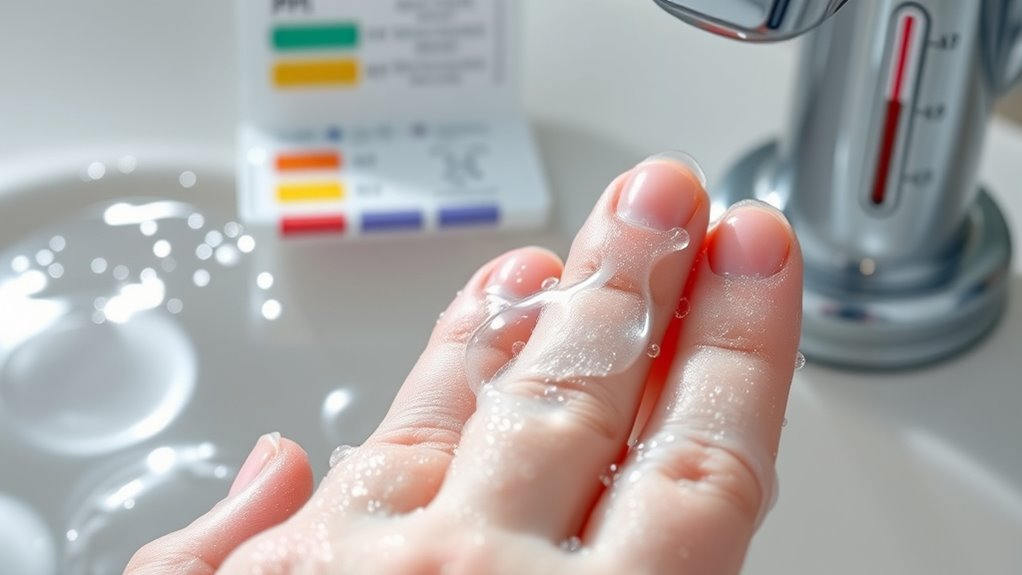

If your softened water feels overly slippery or too soft, it may mean the mineral content or pH levels are off balance. Start by testing your water’s mineral levels and pH with simple kits—high mineral or alkaline levels can cause this sensation. Recalibrate or regenerate your softener if needed, and consider installing pH stabilizers or filters. Addressing these issues restores natural water feel, and you can uncover more tips to fix this problem effectively.
Key Takeaways
- Test water mineralization levels to identify if water is over-softened or mineral-deficient.
- Measure pH to detect imbalance; ideal pH is around 7 for softened water.
- Recalibrate or regenerate your water softener if mineralization or pH is outside optimal range.
- Consider installing pH stabilizers or balancing filters to correct alkalinity or acidity issues.
- Regularly maintain and monitor your softening system to prevent excessive softness and ensure proper water feel.
Have you noticed your softened water isn’t performing as expected? Maybe it feels unusually slippery or leaves a faint film on your skin and dishes. These sensations often indicate issues with water mineralization or pH balance that need addressing. When water feels overly soft or slimy, it’s usually because the mineral content has been altered considerably during the softening process. Softening systems typically replace calcium and magnesium ions with sodium or potassium, which reduces hardness but can sometimes lead to an imbalance in water mineralization. This imbalance can make the water feel unnaturally slick or soapy, giving you that slippery sensation.
To troubleshoot, start by testing the water’s mineral content. You want to determine if the softening process has gone too far, stripping out essential minerals or introducing excessive sodium. If the mineralization is too low, it can cause the water to feel unnaturally soft, impacting both your skin and appliances. Conversely, if the mineral levels are still high, the system might not be functioning properly, and hardness isn’t being reduced effectively. Proper water mineralization is key to achieving the right balance, ensuring water feels clean without excessive slipperiness or residue. Additionally, understanding the impact of water pH on mineralization and softening can help you better diagnose issues.
Start by testing mineral levels to ensure your softener isn’t over- or under-treating your water.
Next, check the pH balance of your softened water. Ideally, water should have a neutral pH around 7. If the pH is too high or too low, it can cause discomfort and affect your plumbing. Water that’s too alkaline (high pH) might feel slimy or cause soap to lather excessively, while acidic water (low pH) can be corrosive, damaging pipes and fixtures over time. Testing kits are inexpensive and easy to use; a quick test can reveal whether pH adjustments are needed. If your water’s pH is off, it could be due to issues with the softening system, such as improper regeneration or mineral buildup within the filters.
Adjustments may involve recalibrating your softener or adding pH stabilizers designed for water treatment. Sometimes, installing a pH balancing filter can help restore the proper balance. Additionally, inspecting your softening system for any malfunctions or clogging can prevent further issues. Regular maintenance, including cleaning and regenerating the system as recommended by the manufacturer, can ensure consistent mineralization and pH levels. Remember, the goal is to achieve water that’s comfortably soft but not overly altered, with a balanced mineral content and pH, so your water feels natural, not slimy or overly processed. Troubleshooting these factors will help restore that perfect balance, making your water feel just right again.
Frequently Asked Questions
Can Softened Water Cause Skin Irritation or Allergies?
Yes, softened water can cause skin irritation or allergy concerns for some people. The increased sodium levels from water softening might lead to dryness, itchiness, or rashes, especially if you have sensitive skin or allergies. If you notice skin irritation after showering, consider testing your water or switching to a different treatment method. You could also use a gentle, fragrance-free moisturizer to help reduce irritation.
How Does Softened Water Affect My Plumbing System?
Like a silent sculptor, softened water shapes your plumbing over time. It can cause plumbing corrosion by wearing down pipes and lead to mineral buildup, which clogs and weakens the system. This corrosion accelerates leaks and damage, forcing you to face costly repairs. To protect your plumbing, monitor water quality, and consider regular maintenance, ensuring your pipes stay strong and your system remains efficient.
Is Softened Water Safe for Drinking and Cooking?
Yes, softened water is safe for drinking and cooking. Water quality remains high because water softeners primarily remove calcium and magnesium, which can cause hardness. However, health considerations include the increased sodium levels, so if you’re on a low-sodium diet, you might want to consult your doctor or consider alternative filtration. Overall, softened water offers good quality for daily use, but stay mindful of sodium content for health reasons.
Why Does Softened Water Sometimes Have a Metallic Taste?
Think of softened water as a calm lake, sometimes disturbed by a metallic breeze. You might notice a metallic taste because mineral buildup from the softening process releases trace metals, or the water’s pH balance shifts, causing a metallic flavor. This often happens when the ion exchange system isn’t working properly, leading to residual metals in your water. Adjusting your system and testing water pH can help restore its natural taste.
How Often Should I Service My Water Softener?
You should service your water softener at least once a year, following a regular maintenance schedule. Depending on your water usage and the hardness level, more frequent service might be needed. Check the manufacturer’s recommendations and monitor your water’s quality. Regular maintenance guarantees the system runs efficiently, prevents mineral buildup, and keeps your softened water tasting fresh and feeling just right.
Conclusion
Remember, soft water should feel gentle yet not overly slick. If it’s too slippery, your system might need a check-up or regeneration. Don’t let the excess softness lull you into complacency—treat your water with care, like a delicate dance. By staying attentive and proactive, you’ll keep your water balanced and invigorating. After all, in the rhythm of daily life, clear, soft water is the melody that keeps everything flowing smoothly.