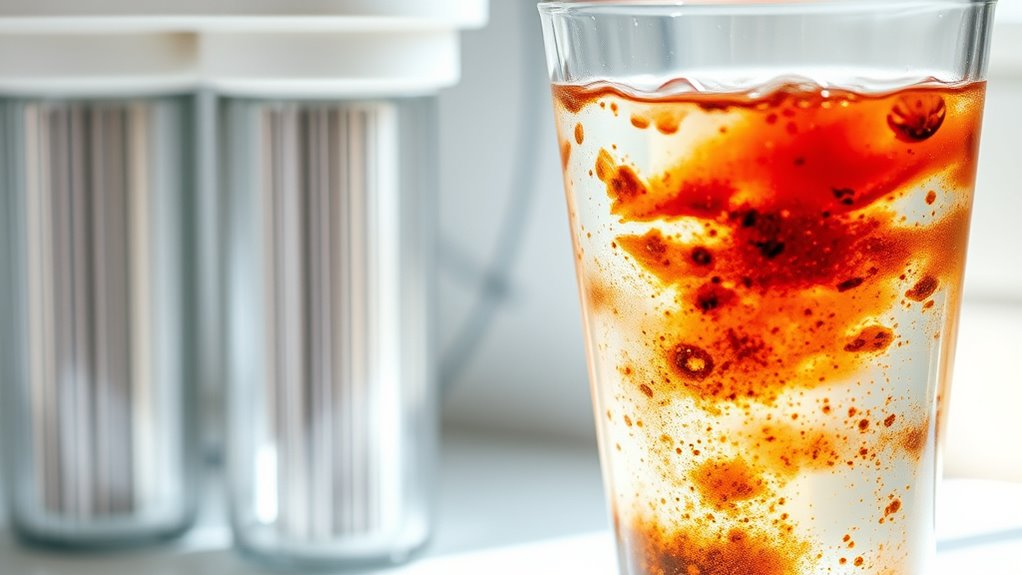

If your water turns discolored after changing the filter, it’s likely caused by trapped air or stirred-up sediments, which usually clear in a few minutes to an hour as the system runs. First, verify the filter is installed correctly and fits tightly to prevent air leaks. Flushing your system by running cold water for several minutes helps remove debris and air pockets. If discoloration persists, check water quality or consider longer-term solutions—all the details you need to keep your water clear are just a step away.
Key Takeaways
- Allow the system to run for a few minutes after filter replacement to clear trapped air and sediments.
- Ensure the filter is properly seated and compatible with your system to prevent leaks and discoloration.
- Flush your cold water line for several minutes to remove any debris or air trapped in the pipes.
- Check if mineral deposits or rust are causing discoloration, especially with hard water, and consider using specialized filters.
- Perform regular maintenance and timely filter replacements to prevent long-term water quality issues and ensure clarity.
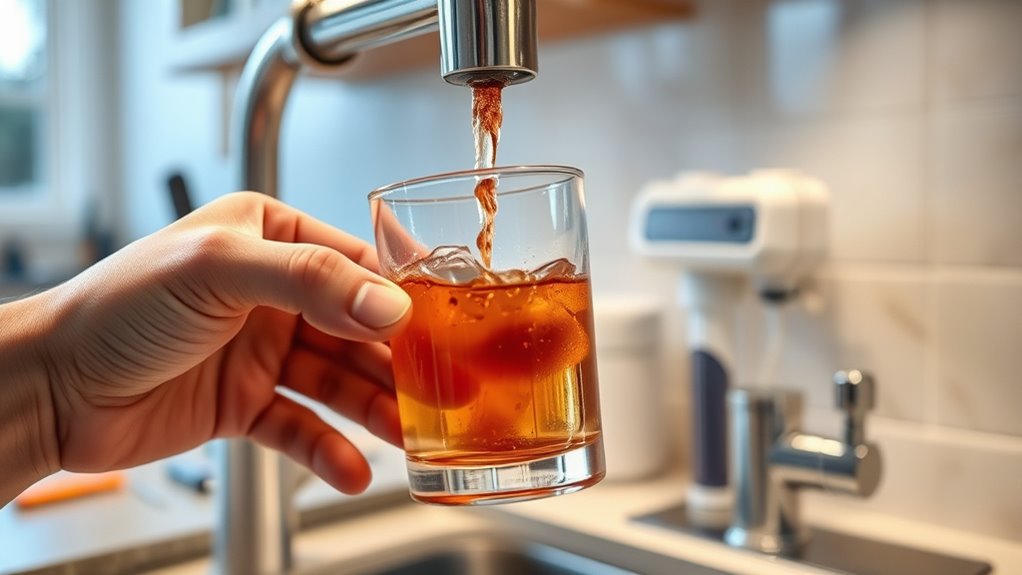
Discolored water can be unsettling, but often it’s a sign of common issues that you can resolve yourself. When you notice water discoloration after changing your filter, it’s natural to feel concerned, but more often than not, it’s a temporary problem linked to filter maintenance or residual debris. The first thing to do is stop and assess the situation calmly. Sometimes, the discoloration results from air bubbles trapped in the pipes or sediments stirred up during the filter replacement. These usually clear up within a few minutes to an hour, so giving your system a little time might be all that’s needed.
Discolored water often clears quickly; check for trapped air or sediments after filter changes.
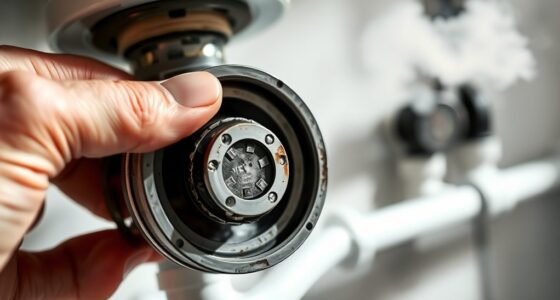
If the water remains discolored longer than an hour, consider the quality of your new filter. A poorly installed or defective filter can cause water to look murky or brownish. Double-check that the filter is seated correctly in its housing, ensuring a tight seal. If it’s loose or improperly fitted, it might allow air or unfiltered water to mix, leading to discoloration. Also, verify that you’ve used the correct filter model for your system, as mismatched filters can cause performance issues, including water discoloration. Proper filter maintenance is vital here—regularly replacing filters according to the manufacturer’s instructions prevents buildup of impurities that could cause water to look dirty.
Sometimes, water discoloration after a filter change stems from residual dirt or sediment in the supply line. Flushing your system can help. Turn on the cold water tap and let it run for several minutes—this helps clear out any particles or air trapped in the pipes. If you notice sediment or dark particles, it suggests that your plumbing or supply line might have accumulated debris over time, which gets stirred up during filter changes. Consider cleaning or inspecting your pipes if this persists, especially if your water source is well water or comes from an older municipal system. Additionally, understanding water quality issues such as mineral deposits can help you address long-term concerns more effectively.
Another common cause of water discoloration is mineral deposits. Hard water, rich in iron or manganese, can cause rust-colored water after a filter change. In this case, the filter might be temporarily releasing some of these minerals if it’s not yet saturated or if it’s not designed to handle high mineral content. Installing a specialized filter for such issues or adding a water softener can help manage this problem long-term. Remember, regular filter maintenance, including timely replacements and system checks, ensures your water stays clear and safe.
Frequently Asked Questions
Can Discolored Water Indicate a Serious Health Risk?
Discolored water can indicate a serious health risk, especially if it’s due to water contamination or a filter malfunction. You should not ignore discoloration, as it may involve bacteria, rust, or other harmful substances. To stay safe, check your filter for damage or improper installation, and consider testing your water for contaminants. If the discoloration persists, contact a professional to assess the water quality and guarantee your system’s safety.
How Long Should I Wait for Water Clarity After Filter Change?
Did you know that nearly 80% of household water issues stem from improper filter flushing? After changing your filter, you should wait about 5 to 10 minutes for water clarity to improve. During this time, run cold water continuously to enhance water quality. If discoloration persists beyond this, consider re-flushing or checking your filter installation, as proper filter flushing is essential for clear, safe water.
Is It Safe to Drink Discolored Water Temporarily?
It’s generally safe to drink discolored water temporarily, but it’s not ideal. The discoloration may come from sediment buildup or residual chlorine taste, which can affect flavor and quality. To minimize risks, let the water run for a few minutes to clear out the particles and chlorine. If discoloration persists or worsens, consider inspecting or replacing your filter, and consult your water supplier for further advice.
Do Different Filter Types Cause Different Discoloration Issues?
Different filter types can cause discoloration issues because of their filter material and how they interact with your water’s mineralization. For example, activated carbon filters may release dark particles initially, while sediment filters might temporarily discolor water due to trapped debris. Water mineralization also influences discoloration, as minerals can react with filter materials. Choosing the right filter and properly maintaining it helps minimize discoloration and guarantees cleaner, clearer water.
When Should I Replace My Water Filter if Discoloration Persists?
A stitch in time saves nine, so if discoloration persists after your filter change, it’s time to replace the filter. Check the filter lifespan recommended by the manufacturer—usually every 6 to 12 months—to maintain peak water quality. Ignoring this can lead to clogged filters and poor water quality. Regularly replacing your filter ensures clear, safe water and prevents ongoing discoloration issues.
Conclusion
Think of your water system as a delicate dance; when one step falters, the entire routine can stumble. If discolored water persists after a filter change, don’t hesitate to investigate further or call in a professional. Addressing these issues promptly keeps your water flowing clear and pure—like a well-rehearsed performance. Remember, patience and attention are your partners in restoring harmony, ensuring your water remains a invigorating, trustworthy part of your daily routine.