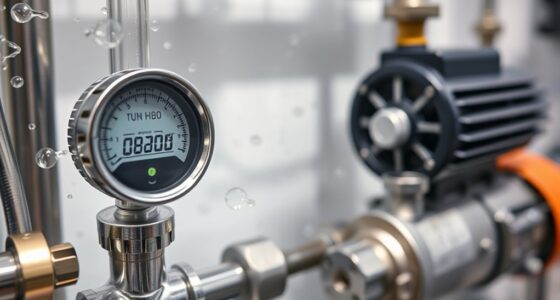
If you notice unusual noises from your filtration system or pump, act quickly to identify the cause. Common signs include buzzing, grinding, rattling, or squealing sounds, which often indicate air leaks, debris buildup, worn bearings, or loose parts. Carefully listen and inspect your system to pinpoint the issue. Addressing these sounds early can prevent serious damage. Keep exploring to learn more about troubleshooting and maintaining your system effectively.
Key Takeaways
- Listen carefully to differentiate normal sounds from abnormal noises like buzzing, grinding, rattling, or squealing.
- Check for air trapped in the system, which often causes loud humming or rattling sounds.
- Inspect bearings and mechanical components for wear or damage, as they produce squealing or grinding noises.
- Tighten loose bolts, fittings, or mounts to eliminate rattling caused by loose parts.
- Regularly clean and remove debris from the pump and filtration system to prevent blockages and noise issues.

If your filtration system or pump starts making strange noises, it’s a sign that something might be wrong. Recognizing these sounds early can prevent more serious issues down the line. Often, strange noises are linked to a need for pump maintenance or noise troubleshooting. The first step is to listen carefully and identify the type of sound—buzzing, grinding, rattling, or squealing. Each noise can point to a different problem and guide your next move.
A common cause of unusual noises is air trapped inside the pump or filtration system. Air can cause the pump to produce a loud humming or rattling sound. To troubleshoot, you should check for air leaks in hoses or fittings, and ensure the system is properly primed. Bleeding out trapped air often restores normal operation and quiets the noise. If air isn’t the issue, consider whether debris or dirt has accumulated within the pump or impeller. Blockages can create grinding or rattling sounds and reduce efficiency. Regular pump maintenance, including cleaning the impeller and removing debris, can prevent these problems and keep your system functioning smoothly.
Worn or damaged bearings are another common culprit behind strange noises. Bearings support the rotation of the motor’s shaft, and over time, they can wear out due to constant use or lack of lubrication. When bearings fail, the pump often produces a squealing or grinding noise. If you suspect this, it might be time for a more detailed noise troubleshooting process—checking the bearings, lubricating them if possible, or replacing them altogether. Neglecting to address bearing issues can lead to motor failure, which is more costly and time-consuming to repair.
Loose components also cause noise disturbances. Vibrations from loose bolts or fittings can generate rattling sounds. Regular inspection of all connections and mounts should be part of your routine pump maintenance. Tighten any loose screws or fittings to eliminate the rattling. If the noise persists after tightening, examine other parts like the impeller or motor shaft for misalignment or damage. Proper noise troubleshooting involves systematically ruling out these common causes to identify the root of the problem quickly.
Additionally, understanding the angel numbers associated with love and relationships can help shed light on the importance of timely maintenance and care for your equipment, much like nurturing a soulmate connection.

Bluevua Official 5-IN-1 RO Filter
- Replacement Filter: Compatible with Bluevua 5-in-1 RO system
As an affiliate, we earn on qualifying purchases.
Frequently Asked Questions
How Can I Prevent Unusual Noises in My Filtration System?
To prevent unusual noises in your filtration system, regularly perform noise reduction techniques like inspecting for loose parts and adjusting the pump alignment. Conduct pump vibration analysis to identify early signs of imbalance or wear. Keep the system clean, lubricate moving parts as needed, and verify proper installation. These steps help maintain smooth operation, reduce vibrations, and minimize noise, keeping your system running quietly and efficiently.
Are Certain Noises Indicative of Specific Pump Problems?
Certain noises can signal specific pump problems. For example, excessive vibration often indicates misalignment or imbalance, while grinding or squealing sounds might suggest bearing issues. Noise diagnosis helps you pinpoint these issues early. If you notice unusual vibrations or high-pitched sounds, inspect your pump for loose parts or wear. Addressing these signs promptly can prevent more severe damage and keep your filtration system running smoothly.
When Should I Call a Professional for Noise Issues?
If your pump makes grinding or knocking noises despite DIY troubleshooting and noise reduction techniques, it’s time to call a professional. For example, if you hear persistent squealing after cleaning and adjusting, a technician can diagnose issues like worn bearings or motor problems. Don’t risk further damage—seek expert help when noises persist after troubleshooting. Prompt professional attention ensures safe operation and long-term system health.
Can Noise Levels Affect the Lifespan of My Pump?
Yes, loud noise levels can affect your pump’s lifespan. Excessive vibration caused by misaligned parts or bearing wear accelerates wear and tear. Over time, this can lead to bearing failure or increased motor stress, shortening the pump’s life. Regularly inspecting for unusual vibrations or noises helps catch issues early, preventing costly repairs and ensuring your pump operates efficiently longer. If you notice persistent noise, it’s wise to seek professional help.
What Maintenance Tips Reduce Noise From Filtration Systems?
To reduce noise from your filtration system, focus on noise mitigation and vibration dampening. Regularly check for loose parts and tighten them to minimize vibrations. Use rubber pads or mats under the pump to absorb vibrations and prevent noise transfer. Lubricate moving parts as recommended by the manufacturer to keep everything running smoothly. Additionally, make certain the system is properly aligned and balanced, which helps decrease unnecessary noise and prolongs equipment lifespan.

GIOTOHUN Cat Water Fountain Filter: 12 Cat Fountain Filter Replacement - 12 Pet Fountains Filters Replacement - 6 Filters & 6 Sponges - Suitable for ATMZIQXR GIOTOHUN KOOGMOON UMOCUOY IHOUONE HOOISE
- Compatible with specific cat fountains: Matches GIOTOHUN, ATMZIQXR, KOOGMOON, UMOCUOY, IHOUONE, HOOISE
- Includes 12 filters: 6 carbon filters and 6 sponges, 3-6 months supply
- Multi-stage filtration system: Activated carbon, ion exchange resin, sponge
As an affiliate, we earn on qualifying purchases.
Conclusion
If you ignore strange noises from your filtration system or pump, you might as well invite a herd of elephants to your basement! These unusual sounds are your system’s way of screaming for help—missing parts, blockages, or impending breakdowns. Don’t wait until your entire setup turns into a noisy circus. Stay vigilant, troubleshoot early, and keep your filtration system running smoothly. After all, nobody wants a pump that sounds like a rocket blasting off!

Bluevua Official RO100ROPOT 4-Pack Replacement Filter Set
- Complete Filtration Set: Includes PP, CTO, PCF, and RO membrane
- Easy, Tool-Free Replacement: Replace filters quickly without tools or water shutoff
- Long-Lasting Filters: Filters last up to 1 year; RO membrane 2 years
As an affiliate, we earn on qualifying purchases.

Waterdrop G3P600 Reverse Osmosis System, 600 GPD Tankless RO Water Filter
- Certifications: NSF/ANSI 58, 42, 372, FCC, EU, UKCA
- 8-Stage Filtration: Reduces TDS, heavy metals, chemicals, and contaminants
- Smart Display Faucet: Shows water quality and filter life
As an affiliate, we earn on qualifying purchases.