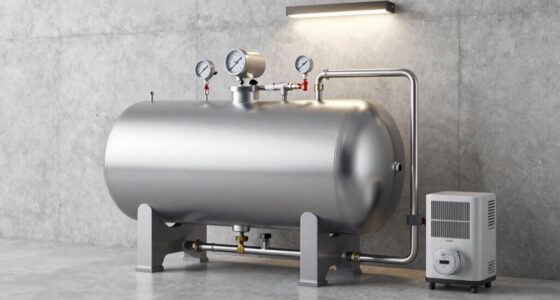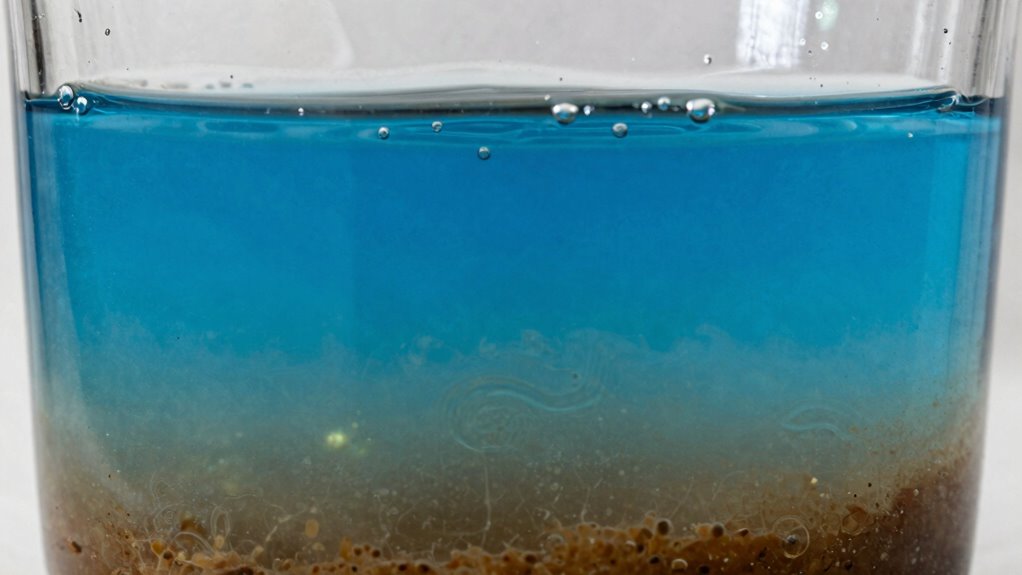

Think of water treatment as a series of layers, each targeting specific impurities. You start with coarse filters that remove large debris, then add smaller filters like activated carbon to tackle odors and chemicals. Chemical balancing guarantees pH stability, while advanced methods like reverse osmosis remove dissolved solids. Monitoring systems keep everything in check and secure. If you keep exploring, you’ll discover how combining these layers creates a safe, high-quality water supply and maintains system longevity.
Open a free Amazon Business account
Business pricing, bulk buying and tax-exempt orders.
As an affiliate, we earn on qualifying purchases.
Key Takeaways
- Approach water treatment as a series of sequential layers, each targeting specific impurities for comprehensive purification.
- Start with coarse filters to remove large debris, followed by finer filters for smaller particles.
- Incorporate chemical balancing to neutralize harmful substances and enhance filtration effectiveness.
- Use layered filtration, including activated carbon and reverse osmosis, for thorough contaminant removal.
- Continuously monitor and adjust system parameters to maintain water quality and system longevity.
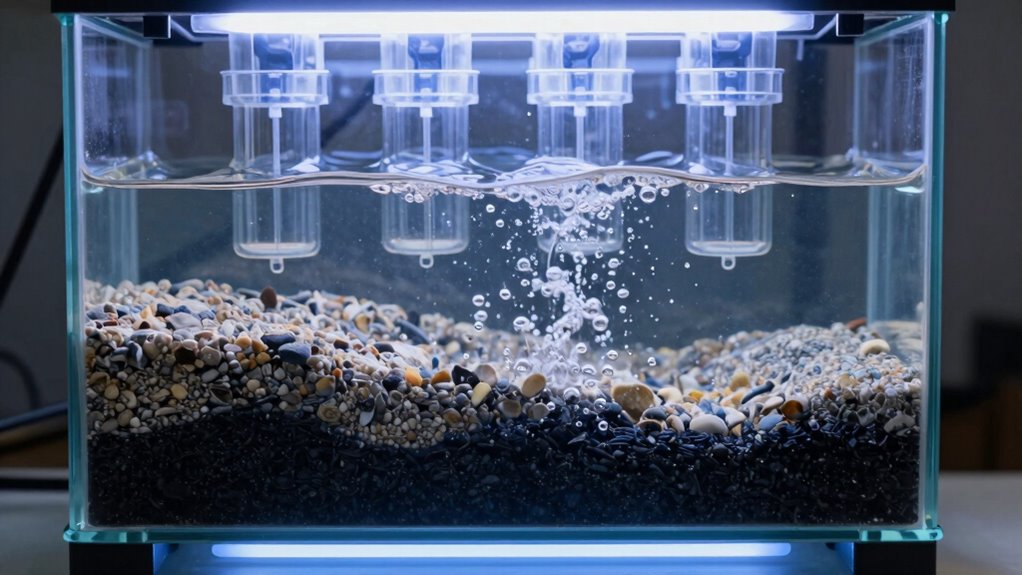
Water treatment isn’t just about filtering out contaminants; it’s about approaching the process in layers, each designed to target specific impurities. When you think about it this way, you realize that a single stage of filtration often isn’t enough to produce clean, safe water. Instead, you set up a sequence of treatments, each with a clear purpose, to improve overall water quality. The first layer might involve a coarse filter that removes large debris, sediments, and particles, guaranteeing that subsequent stages can work more efficiently. This initial step boosts filtration efficiency because smaller, more delicate filters won’t clog as quickly, maintaining a steady flow and reducing maintenance needs.
Once the larger contaminants are cleared, the next layer often focuses on chemical balance. Here, you introduce treatments that adjust pH levels, remove dissolved chemicals, or neutralize harmful substances like chlorine or heavy metals. Achieving the right chemical balance is vital because it impacts the effectiveness of downstream processes, such as disinfection or mineral removal. If the water’s chemical makeup is off, some contaminants might become more difficult to remove, or worse, create new problems like corrosion or scaling within pipes and appliances. Incorporating chemical balance strategies ensures that subsequent layers work more effectively and extend the lifespan of your plumbing systems. Additionally, maintaining proper chemical balance can help prevent scale buildup, which is essential for long-term system health.
As you add layers, you might include activated carbon filters to adsorb organic compounds, odors, and residual chemicals, further refining the water’s taste and safety. Each added step enhances filtration efficiency by targeting specific impurities that earlier layers might miss. For example, while a sediment filter handles physical particles, activated carbon tackles chemical contaminants, and specialized resins or reverse osmosis units remove dissolved solids. This multi-layered approach means you’re not relying on a single solution but rather a tailored system working in harmony. Incorporating layered filtration strategies ensures a comprehensive approach that addresses all potential water quality issues.
You also need to think about the importance of maintaining chemical balance throughout the process. Properly balanced water prevents issues like scale buildup or corrosion, which can damage plumbing and appliances. It guarantees that each layer functions at its best and that the overall system remains sustainable and cost-effective. Additionally, implementing monitoring systems can help detect imbalances early, allowing for timely adjustments and ensuring long-term water quality. Think of each layer as a line of defense, working together to produce water that’s not only free of visible contaminants but also safe, pleasant-tasting, and long-lasting in your home or facility. When you design your water treatment in layers, you’re creating a holistic strategy that balances filtration efficiency with chemical stability, resulting in cleaner, healthier water. Incorporating cloud server security strategies into your water treatment plan can further enhance system resilience and data integrity, especially in automated monitoring setups.
As an affiliate, we earn on qualifying purchases.
Frequently Asked Questions
What Are the Main Contaminants Targeted in Water Treatment Layers?
You target contaminants like sediments, bacteria, and chemicals in water treatment layers. Filtration efficiency plays a key role in removing particles and pathogens, ensuring clean water. Chemical removal focuses on eliminating harmful substances like chlorine, heavy metals, and organic compounds. By layering these processes, you improve water quality effectively, addressing various contaminants at each stage and ensuring safer, better-tasting water for daily use.
How Do Different Water Sources Require Different Treatment Strategies?
Like a savvy time traveler, you recognize source variability influences treatment strategies. Different water sources—such as rivers, groundwater, or seawater—demand treatment customization. You modify your methods accordingly: filtering for turbidity, disinfection for pathogens, and desalination when facing seawater. Tailoring approaches ensures efficient removal of contaminants, safeguarding quality and health. By understanding source variability, you craft precise, layered treatments that adapt seamlessly to each unique water source.
What Are the Environmental Impacts of Layered Water Treatment?
Layered water treatment can reduce environmental impacts if you adopt eco-friendly practices, like utilizing natural filtration methods or renewable energy sources. However, it can also increase energy consumption due to multiple treatment stages. Balancing these factors is vital; by prioritizing energy efficiency and sustainable materials, you minimize negative effects on ecosystems and conserve resources. Thoughtful planning guarantees your layered approach benefits both water quality and the environment.
How Often Should Water Treatment Layers Be Maintained or Replaced?
Did you know that filter degradation can occur as quickly as every three to six months? You should schedule maintenance based on your specific system and water quality, generally checking layers every 3 to 6 months. Regular maintenance guarantees peak performance, prevents clogging, and maintains water quality. Keep a maintenance schedule to track inspections and replacements, and always follow manufacturer recommendations to avoid over- or under-maintenance.
Can Layered Water Treatment Be Scaled for Large Industrial Applications?
Layered water treatment can be scaled for large industrial applications, but you’ll face scalability challenges like system complexity and increased operational costs. To improve economic feasibility, you should design modular systems that allow for gradual expansion and optimize each layer’s efficiency. Careful planning guarantees you can handle larger volumes without sacrificing performance, making layered treatment viable even at industrial scales.
As an affiliate, we earn on qualifying purchases.
Conclusion
By thinking about water treatment in layers, you can better understand and optimize each stage for cleaner water. Remember, nearly 80% of the world’s wastewater is discharged without proper treatment, highlighting how essential layered approaches are for global health. When you approach water treatment this way, you’re not just fixing problems—you’re creating safer, more sustainable solutions. Keep layering your knowledge and strategies, and you’ll make a meaningful impact on water quality everywhere.
As an affiliate, we earn on qualifying purchases.
As an affiliate, we earn on qualifying purchases.
NFL season / tailgating Picks
team gear
As an affiliate, we earn on qualifying purchases.