Many homes benefit from two sediment stages because a single filter can’t remove all kinds of impurities. Larger particles like dirt and sand often slip through the first stage, while the second filter catches smaller debris and prevents clogging. This layered approach keeps your plumbing, appliances, and filters protected, reducing maintenance costs and extending their lifespan. If you continue, you’ll discover how this system improves water quality and saves you money over time.

Get home appliances delivered free — and shop member deals
- Fast, free delivery on millions of items
- Access to Prime Big Deal Days deals on October 6–7
- Prime Video, Amazon Music and more included
Key Takeaways
- Single filters may not effectively remove all large and small particles, leading to clogging and reduced efficiency.
- Two-stage systems better capture a range of sediment sizes, preventing downstream filter damage.
- They improve water quality by more thoroughly removing debris and associated contaminants.
- Using multiple stages reduces wear on appliances and extends filter lifespan, lowering maintenance costs.
- Two sediment stages ensure consistent flow and pressure, especially in high-sediment or variable water quality areas.
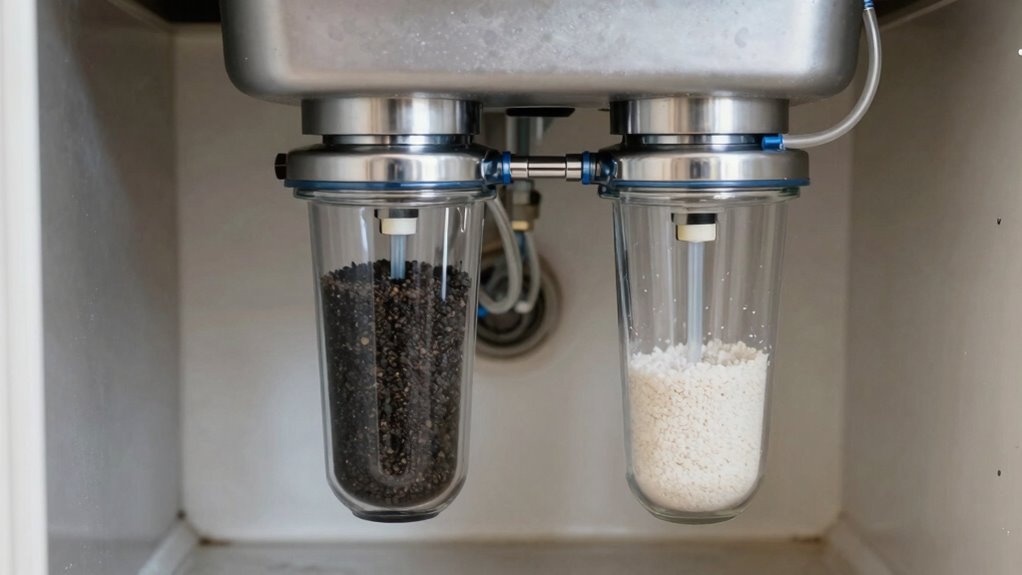
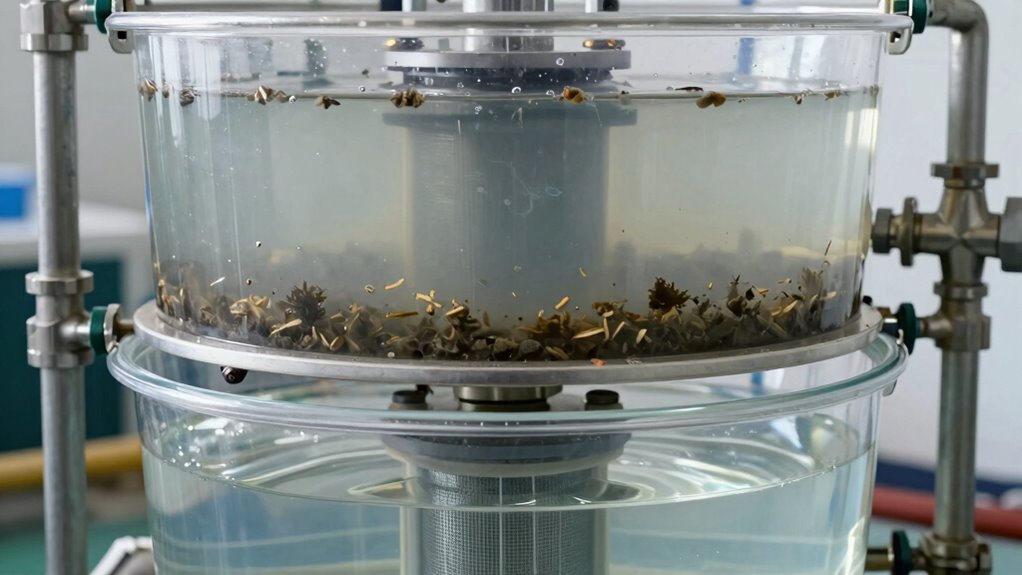
Some homes require two sediment stages because a single filter often can’t remove all the impurities from incoming water. When your water contains a mix of dirt, sand, silt, or other particles, a single sediment filter might not be enough to guarantee ideal water purification. If these larger particles aren’t fully filtered out early on, they can clog up your secondary filters or damage your appliances over time. That’s where a two-stage sediment system comes into play. It works by first capturing the larger particles with a rougher filter, then passing the water through a finer filter to catch smaller debris. This layered approach improves the overall water purification process, helping you achieve cleaner, clearer water while also preserving the lifespan of your entire filtration system. Incorporating multiple sediment stages is especially beneficial when dealing with contaminant removal, where different particle sizes require distinct filtration methods.
Using two sediment stages enhances system efficiency by reducing the load on downstream filters, such as carbon filters or reverse osmosis units. When the initial stage captures most of the larger particles, the secondary filter doesn’t have to work as hard, which means less wear and tear and fewer replacements. This setup minimizes maintenance costs and ensures your entire water purification system runs smoothly over time. Plus, it maintains higher flow rates because the first filter prevents clogging downstream, keeping water pressure consistent. As a result, you get a steady, reliable supply of clean water without interruptions or reduced flow caused by clogged filters. Additionally, filter lifespan can be extended significantly with this layered approach, saving you money in the long run. Furthermore, implementing multiple sediment stages can help address water quality issues, especially in areas with highly variable or contaminated water sources. Properly staged filtration systems are also capable of reducing bacterial contamination, providing safer water for your household.
Another advantage of having two sediment stages is that it addresses specific water quality issues more thoroughly. Some homes, especially those in rural areas or with well water, are more prone to higher levels of sediment and debris. In such cases, a single sediment filter might struggle to keep up, letting smaller particles slip through. By installing a second stage, you can tailor your filtration system to handle the unique contaminants in your water, ensuring a more complete purification process. This leads to fewer impurities reaching your tap, which is especially important if you rely on water for drinking, cooking, or sensitive appliances like coffee makers and humidifiers. Proper filtration also supports the indoor air quality by reducing airborne dust and contaminants originating from water sources.
As an affiliate, we earn on qualifying purchases.
Frequently Asked Questions
How Do I Know if My Home Needs Two Sediment Stages?
You might need two sediment stages if your water filtration system experiences frequent clogging, cloudy water, or sediment buildup despite regular maintenance. Check your water quality; if particles persist or your system’s performance drops, a dual sediment stage can improve filtration. Regular system maintenance is essential, but multiple stages help better remove debris, ensuring cleaner water. Consult a professional to assess your specific needs and optimize your filtration system accordingly.
What Are the Costs Associated With Installing Dual Sediment Stages?
Think of installing dual sediment stages as building a fortress for your water. The cost comparison shows you’ll pay more upfront—covering equipment and labor—but it pays off in cleaner water and less maintenance. The installation process involves extra plumbing and careful setup, which might take a day or two. While pricier than a single stage, the investment shields your home from sediment buildup, ensuring purified water for years to come.
Can Existing Systems Be Upgraded to Include a Second Sediment Stage?
Yes, you can upgrade your existing system to include a second sediment stage. Start by evaluating your current system’s compatibility with advanced filtration components. If your system is compatible, a professional can add an extra sediment filter to improve water quality. This upgrade enhances filtration efficiency, helps extend the lifespan of your appliances, and ensures cleaner water. Just make sure to consult with a specialist to ensure proper installation and system integration.
How Often Should Sediment Be Cleaned From Each Stage?
You should clean sediment from each stage every 6 to 12 months, depending on your water usage and sediment levels. Did you know that proper maintenance can boost filtration efficiency by up to 50%? Regular cleaning prevents buildup that hampers performance, reducing maintenance frequency over time. By staying on top of sediment removal, you guarantee your system works effectively, keeping your water clean and your home protected.
Are There Specific Water Quality Issues That Require Two Sediment Stages?
You might need two sediment stages if your water has specific quality issues, like imbalanced pH or high mineral content. The first stage removes larger particles, protecting your system, while the second targets finer sediments, helping with water pH balancing and mineral removal. This setup guarantees cleaner water, prevents buildup, and improves overall water quality, especially in areas with mineral-heavy or pH-unstable water sources.
multi-stage sediment filter system
As an affiliate, we earn on qualifying purchases.
As an affiliate, we earn on qualifying purchases.
Conclusion
Understanding why some homes require two sediment stages can save you money and prevent future plumbing issues. Did you know that homes with high mineral content in their water are 60% more likely to need dual-stage filtration? By investing in this setup, you’re ensuring cleaner water and protecting your appliances. Don’t overlook this essential step—your health and wallet will thank you for it. Make informed choices for a safer, more efficient home.
sediment water filter for well water
As an affiliate, we earn on qualifying purchases.
As an affiliate, we earn on qualifying purchases.
dual-stage water filtration system
As an affiliate, we earn on qualifying purchases.
As an affiliate, we earn on qualifying purchases.
Fall Picks
fall essentials
As an affiliate, we earn on qualifying purchases.