Recirculation loops help you maintain a steady flow of fluids, which enhances both filtration and disinfection processes. By adjusting flow rates and ensuring pumps work smoothly, you control how long fluids stay in contact with filters and disinfectants. This improves their effectiveness and prevents damage from turbulence or insufficient contact time. Properly managed recirculation loops boost safety, reduce waste, and keep your system running efficiently—keep exploring to learn more about optimizing these essential processes.

Get home appliances delivered free with Prime
- Fast, free delivery on millions of items
- Prime Video, Amazon Music and more included
- Member-only deals all year
Key Takeaways
- Recirculation loops maintain consistent flow, ensuring effective contact time for filtration and disinfection processes.
- Adjusting flow rates optimizes filtration efficiency and disinfectant contact, reducing turbulence and particle dislodgement.
- Proper pump maintenance and monitoring ensure steady flow, enhancing the reliability of filtration and disinfection.
- Increased recirculation improves pathogen removal and contaminant removal by prolonging exposure to filters and disinfectants.
- Flow rate control directly influences system safety, waste reduction, and compliance with health standards.
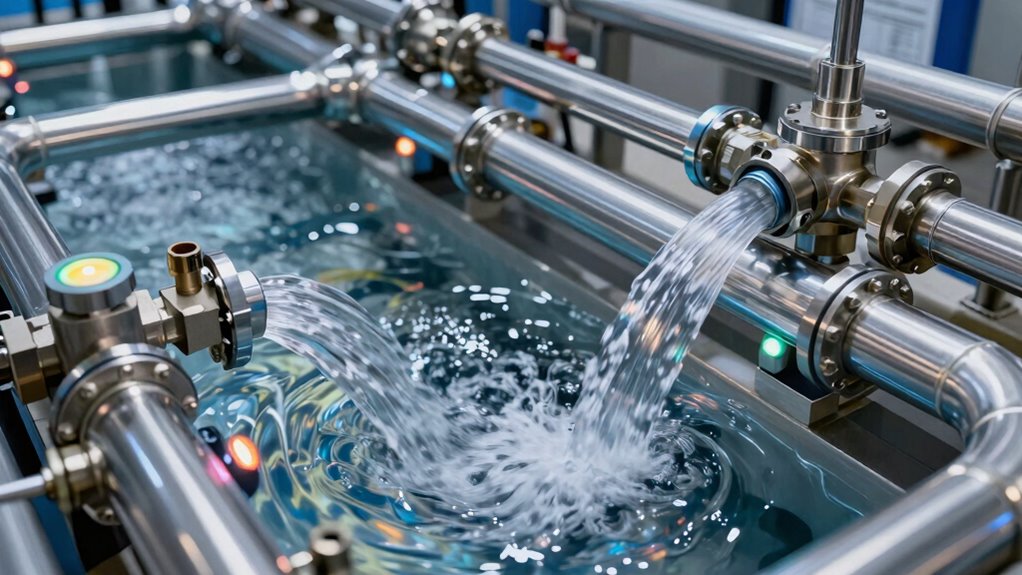
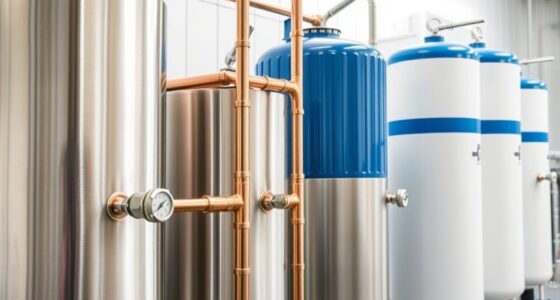
Have you ever wondered how liquids or gases are efficiently circulated within a system? Recirculation loops are essential for maintaining consistent flow, especially when it comes to filtration and disinfection processes. These loops keep fluids moving in a continuous cycle, ensuring that filtration systems function effectively and that disinfectants reach all parts of the system uniformly. When designing or managing a recirculation loop, paying attention to pump maintenance is *crucial*. Regularly inspecting and servicing pumps helps prevent failures that could disrupt flow. A well-maintained pump ensures that the system operates smoothly, reducing downtime and minimizing the risk of contamination. Additionally, adjusting the flow rate appropriately is *vital* for *optimizing* performance. Too high a flow rate can cause turbulence, potentially damaging filters or dislodging particles meant to be captured, while too low a flow might result in inadequate filtration or disinfection. By fine-tuning flow rate adjustments, you *guarantee* that the fluid moves at an *essential* speed, maximizing efficiency without compromising system integrity. Proper pump calibration and flow rate control**** are also key factors in maintaining system balance and effectiveness.
In a recirculation loop, the pump’s role cannot be overstated. It’s the heartbeat of the system, driving the fluid through filters, disinfectant chambers, and pipes. Proper pump maintenance involves not just routine checks but also monitoring for signs of wear, leaks, or unusual vibrations that could indicate a problem. Maintaining proper lubrication, replacing worn-out parts, and calibrating the pump regularly help keep the flow consistent. When you perform these tasks, you help *guarantee* that the recirculation loop operates at peak performance, delivering clean, disinfected water or fluid throughout the system.
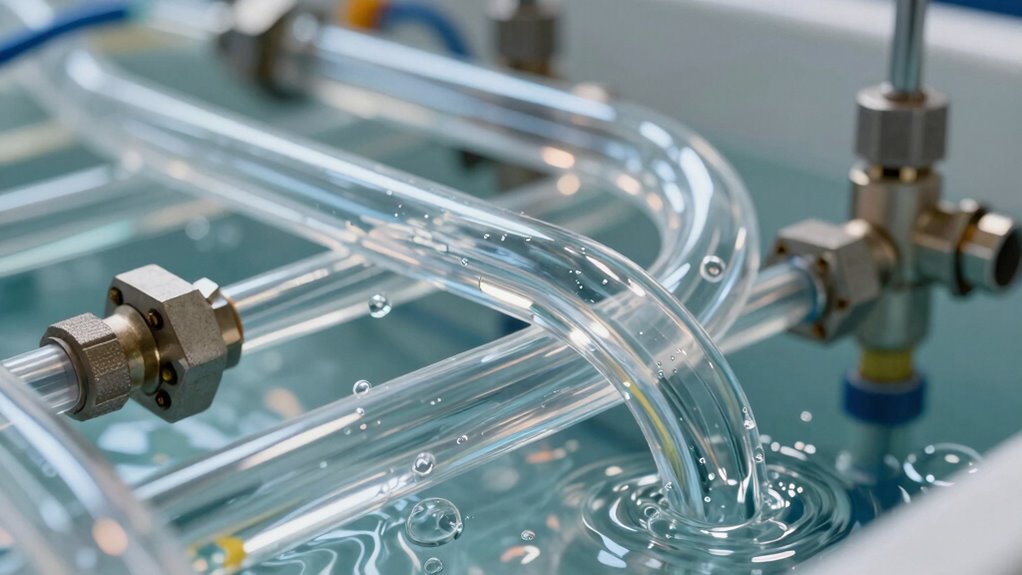
Flow rate adjustments are equally important because they directly influence the effectiveness of filtration and disinfection. Adjusting the flow rate may involve changing valve positions, modifying pump speeds, or installing variable frequency drives. These adjustments allow you to control how quickly the fluid circulates, which in turn impacts contact time with filters or disinfectants. Longer contact times generally improve filtration and disinfection, so setting the flow rate correctly is *essential*. When you *optimize* flow rate adjustments, you *maximize* the system’s overall efficiency, reducing waste and *ensuring* compliance with safety standards.
recirculation pump for water systems
As an affiliate, we earn on qualifying purchases.
As an affiliate, we earn on qualifying purchases.
Frequently Asked Questions
How Do Recirculation Loops Impact Energy Consumption?
Recirculation loops increase energy consumption because they continuously move water through the system, requiring pumps to stay active. However, they can improve overall energy efficiency by reducing the need for frequent heating or cooling, as water stays at a consistent temperature. By optimizing flow rates and pump operation, you can enhance system optimization, balancing the energy used with the benefits of improved filtration and disinfection, ultimately saving energy in the long run.
What Maintenance Is Required for Recirculation Loop Systems?
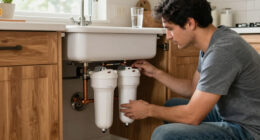
You need to stay on top of recirculation loop system maintenance; it’s the key to smooth operation. Regularly perform system inspections to catch issues early, and don’t forget pump calibration to guarantee ideal flow. Keep filters clean and check for leaks. When you maintain these components diligently, you’ll keep your system running efficiently and prevent costly repairs—proof that a stitch in time saves nine.
Can Recirculation Loops Be Integrated With Smart Control Systems?
Yes, you can integrate recirculation loops with smart control systems. By installing smart sensors, you’ll get real-time data on flow rates, temperature, and water quality. These sensors enable automated regulation, so the system adjusts itself automatically for ideal filtration and disinfection. This integration improves efficiency, reduces manual oversight, and guarantees consistent water quality, making your system smarter and more responsive to changing conditions.
Are Recirculation Loops Suitable for All Types of Water Systems?
You can’t fit a square peg in a round hole, so recirculation loops aren’t suitable for all water systems. You need to take into account system compatibility and flow rate considerations carefully. Some systems benefit from recirculation, improving efficiency and water quality, but others might face issues like pressure drops or inadequate flow. Always evaluate your system’s design and operational needs before implementing a recirculation loop to ensure it’s a good fit.
What Are the Common Challenges in Implementing Recirculation Loops?
You might face challenges with system integration and water chemistry when implementing recirculation loops. Ensuring compatibility with existing equipment requires careful planning, and adjusting water chemistry is essential to prevent corrosion or biofilm buildup. You need to monitor flow rates and chemical levels closely, as improper management can lead to inefficiencies or system damage. Addressing these issues early helps you achieve a smooth, effective recirculation system.
flow rate control valve for filtration
As an affiliate, we earn on qualifying purchases.
As an affiliate, we earn on qualifying purchases.
Conclusion
Recirculation loops markedly improve filtration and disinfection efficiency, saving you time and resources. Did you know that a well-designed recirculation system can reduce water waste by up to 30%? This means cleaner water and lower costs for you. Embracing these loops not only enhances water quality but also supports sustainability. So, consider implementing recirculation loops—you’ll see better results and make a positive impact on your environment.
variable frequency drive for pumps
As an affiliate, we earn on qualifying purchases.
As an affiliate, we earn on qualifying purchases.
pump maintenance kit for industrial systems
As an affiliate, we earn on qualifying purchases.
As an affiliate, we earn on qualifying purchases.
Halloween Picks
halloween
As an affiliate, we earn on qualifying purchases.