Before adding a UV system to your cistern, make sure your water is pre-filtered since UV works best with clear water by destroying microorganism DNA. Regular maintenance, like replacing bulbs every 9,000 to 12,000 hours and cleaning the quartz sleeve, is essential. Also, size the unit correctly for your flow rate, and test your water often to catch issues early. Proper setup and ongoing care keep your system effective—learn more to keep your water safe.

Get home appliances delivered free — and shop member deals
- Fast, free delivery on millions of items
- Access to Prime Big Deal Days deals on October 6–7
- Prime Video, Amazon Music and more included
Key Takeaways
- Ensure proper pre-filtration to remove sediment and improve UV system efficiency.
- Regularly replace UV bulbs and clean the quartz sleeve to maintain disinfection effectiveness.
- Monitor water quality regularly to detect cloudiness, odors, or biofilm buildup.
- Size the UV system appropriately based on your cistern’s flow rate and water demand.
- Combine UV treatment with other filtration methods for comprehensive water safety and quality.
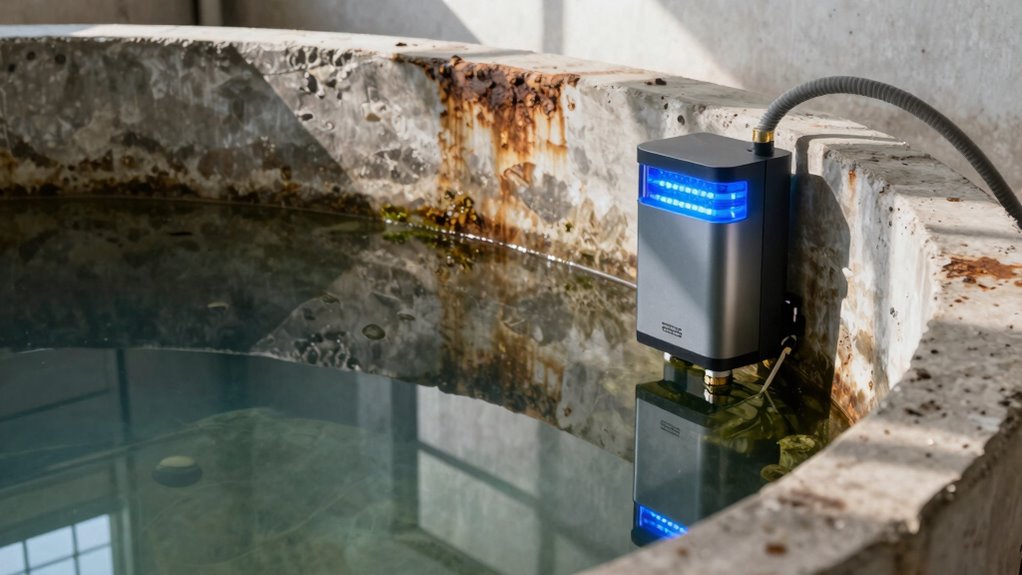
If you’re contemplating adding a UV water treatment system to your cistern, understanding what’s involved before making the investment is vital. UV systems are an effective way to improve water purification, especially if you’re concerned about bacteria, viruses, or other pathogens that can lurk in stored water. But before you install one, you need to know how the system works, what maintenance it requires, and how it fits into your overall water management plan.
Understanding UV water treatment is essential for effective, safe cistern water management.
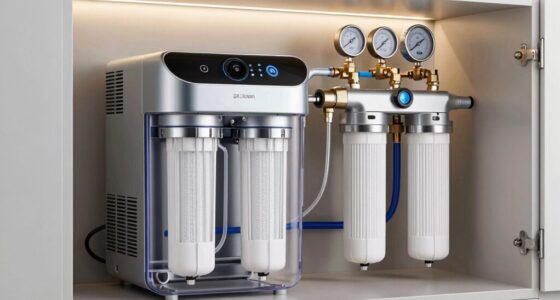
UV water treatment uses ultraviolet light to disinfect water by destroying the DNA of harmful microorganisms. This process doesn’t add chemicals or alter the water’s taste, making it an appealing choice for many cistern owners. However, UV systems don’t remove sediment, minerals, or chemical contaminants. That means you’ll often need a pre-filtration step to guarantee the UV light can effectively reach and neutralize germs. Proper water purification is essential to maximize the UV system’s effectiveness and prolong its lifespan.
Once installed, UV system maintenance becomes a key part of guaranteeing continuous, safe water. The bulbs inside UV units have a limited lifespan—typically around 9,000 to 12,000 hours of use—so regular replacement is necessary. You’ll also want to routinely clean the quartz sleeve that encases the UV bulb to prevent mineral buildup or biofilm, which can block UV radiation. Failure to maintain the system can reduce its disinfecting power, leaving your water vulnerable to contamination. Additionally, understanding the importance of water quality testing can help you identify potential issues early before they compromise your water safety.
Monitoring water quality regularly is equally important. Testing your cistern water periodically helps you determine if your water purification methods are functioning properly. If you notice cloudy water, unusual odors, or discoloration, it may indicate that your UV system isn’t functioning at its best or that additional filtration is needed. Regularly checking for biofilm buildup can prevent system inefficiencies and ensure your UV system continues to operate effectively. Keeping a maintenance log can help you stay on top of bulb replacements, cleaning schedules, and water testing. It’s also helpful to understand the UV system operation in detail to troubleshoot issues quickly and avoid costly repairs. Additionally, understanding the water quality and how it impacts UV effectiveness can help you optimize your setup for better results.
It’s also wise to contemplate the size and flow rate of your UV system in relation to your cistern’s water demand. An undersized unit may not provide sufficient disinfection, while an oversized one could be unnecessary and costly. Consulting with a professional helps you select a system tailored to your specific needs.
As an affiliate, we earn on qualifying purchases.
Frequently Asked Questions
How Often Should I Replace My UV Bulb?
You should replace your UV bulb annually to guarantee peak UV bulb maintenance and water quality impact. Over time, bulbs lose their effectiveness, reducing pathogen elimination. Regular replacement keeps your UV system functioning properly, maintaining safe, clean water. Check your manufacturer’s guidelines, as some bulbs may need replacement sooner if you notice decreased flow or water clarity issues. Proper maintenance protects your water supply and prolongs your UV system’s lifespan.
Will UV Treatment Affect My Water’s Taste or Smell?
UV treatment usually doesn’t cause significant taste alteration or odor impact in your water. However, some people notice a slight change if the UV system isn’t properly maintained or if organic materials are present. Regularly cleaning your system and replacing bulbs as recommended can prevent any potential taste or smell issues. Overall, UV provides safe, chemical-free disinfection without compromising your water’s flavor or scent.
Can UV Systems Remove All Types of Bacteria and Viruses?
Think of UV sterilization as a vigilant lighthouse guiding ships safely through dark, treacherous waters. It effectively eliminates most bacteria and viruses, including common pathogens, by destroying their DNA. However, it might not remove all types of bacterial spores or chemical contaminants. You need to understand that UV therapy is a powerful tool for bacterial elimination, but it’s essential to complement it with other treatment methods for thorough water safety.
Is Professional Installation Necessary for UV Systems?
Yes, professional installation is highly recommended for UV systems. Proper installation procedures guarantee the system functions correctly, providing effective disinfection. While hiring experts might involve additional cost considerations, it ensures safety and efficiency, preventing issues like improper UV exposure or system leaks. Attempting a DIY installation could compromise performance, so investing in professional setup is a smart choice to protect your water quality and avoid future expenses.
What Is the Typical Lifespan of a UV Water Purifier?
A UV water purifier typically lasts around 9 to 12 months, depending on UV wavelength and water clarity. As the UV bulb ages, its effectiveness drops, so you’ll need to replace it regularly. Water clarity also impacts lifespan; murky water can foul the system faster. To guarantee peak performance, monitor the UV intensity and replace the bulb when it dims or after the recommended period.
As an affiliate, we earn on qualifying purchases.
Conclusion
Before you decide to add UV purification to your cistern, remember it’s a step toward brighter, clearer water. Though it may seem like a small change, it can make a big difference in your water’s quality and your peace of mind. With a little planning and the right setup, you’ll be inviting purity into your home without a hitch. Embrace the journey—your water’s new chapter is just a UV away.
UV water purifier replacement bulbs
As an affiliate, we earn on qualifying purchases.
As an affiliate, we earn on qualifying purchases.
As an affiliate, we earn on qualifying purchases.
Fall yard work Picks
leaf blowers
As an affiliate, we earn on qualifying purchases.