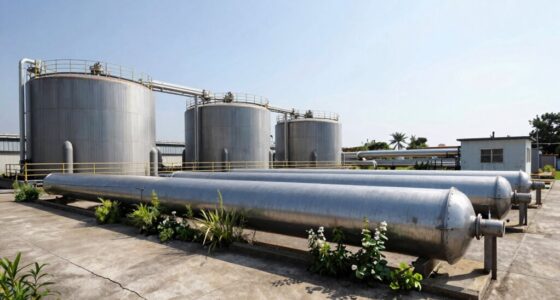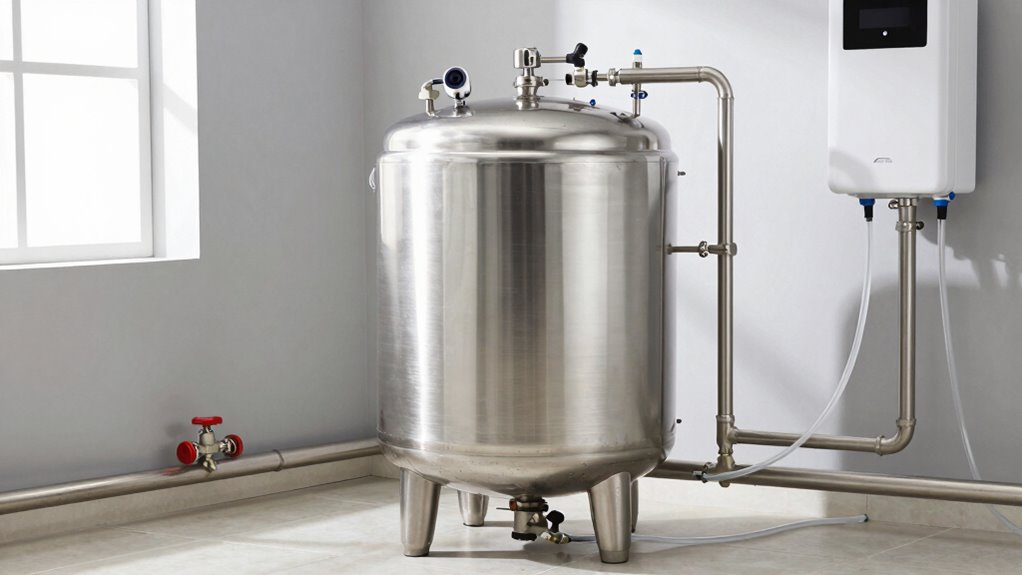

In a whole-house RO system, storage tanks are essential because they provide a steady supply of clean water for your entire home and help prevent pressure fluctuations that can damage the system. Unlike under-sink units, they serve as reservoirs that guarantee consistent flow during high demand. They also protect the membranes from constant operation, extending their lifespan. If you want to understand why these tanks are more critical for whole-house systems, keep exploring the details.

Get home appliances delivered free — and shop member deals
- Fast, free delivery on millions of items
- Access to Prime Big Deal Days deals on October 6–7
- Prime Video, Amazon Music and more included
Key Takeaways
- Whole-house RO systems require larger storage tanks to meet the higher water demand across multiple fixtures.
- Storage tanks in whole-house systems help prevent constant system cycling, reducing wear and prolonging membrane life.
- They ensure a continuous water supply during peak usage, which is less critical in under-sink setups.
- Larger tanks buffer pressure fluctuations, safeguarding the system and maintaining consistent water flow throughout the home.
- Proper tank capacity is essential for efficiency and water quality in whole-house applications, unlike smaller under-sink units.
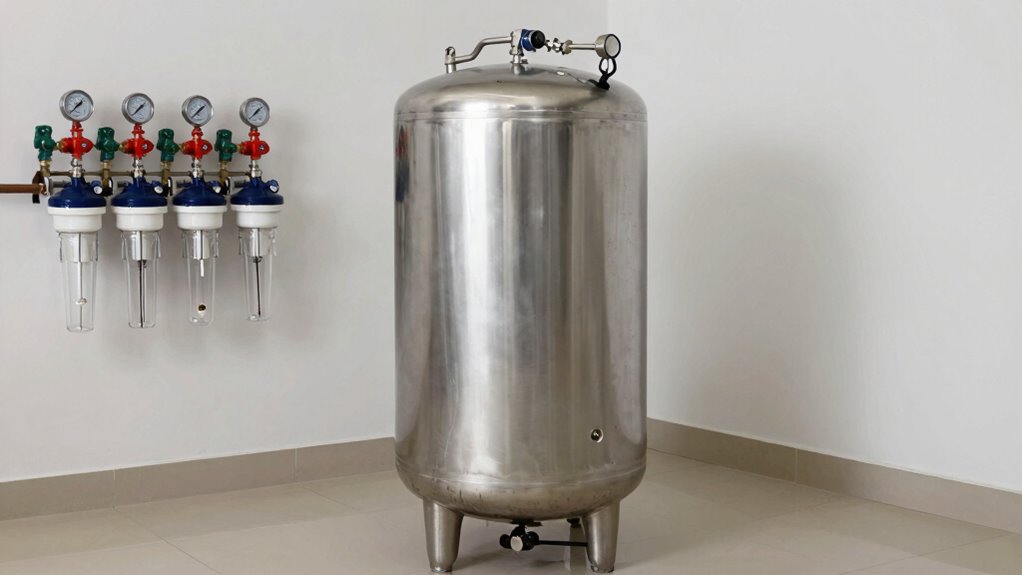
Are storage tanks essential for a whole-house reverse osmosis (RO) system? Absolutely. While under-sink RO units typically don’t require large tanks, a whole-house setup relies heavily on one or more storage tanks to meet your daily water needs. These tanks aren’t just passive containers—they’re central to ensuring you have a consistent supply of clean water. When you’re considering a whole-house system, understanding the importance of tank maintenance and water capacity becomes critical. A well-maintained tank keeps your system running smoothly, while the right water capacity ensures you’re never left waiting for filtered water.
Storage tanks are essential for reliable, consistent clean water in a whole-house RO system.
In a whole-house RO system, the storage tank acts as a reservoir, holding filtered water until you need it. Without this buffer, you’d experience constant pressure on the membrane system, which could lead to faster wear and tear. The tank allows the system to work intermittently, filtering water in cycles rather than continuously, which extends the lifespan of your membranes and reduces maintenance needs. Proper tank maintenance involves regularly checking for any buildup of sediment or bacteria, ensuring the tank’s interior remains clean and free of contaminants. Neglecting maintenance could lead to water quality issues and even damage to the system over time. Additionally, selecting a tank with the appropriate water capacity is crucial for optimal system performance. Investing in a high-quality storage tank can also prevent issues like leaks or tank failure, which can be costly to repair. Recognizing the importance of storage tank maintenance can help prevent costly repairs and ensure reliable operation. Moreover, choosing the correct tank size can impact your overall water efficiency and energy consumption.
Water capacity is another key factor that makes these tanks indispensable. A larger tank provides more stored water, meaning you can enjoy a steady flow even during peak usage times. If your household uses a lot of water, a tank with insufficient capacity could leave you waiting or force you to run the system more frequently, increasing wear and tear. Conversely, a tank that’s too large might be unnecessary and take up more space than needed. Finding the right balance depends on your household size and water consumption habits. Proper sizing ensures you have enough water on hand without overburdening the system or wasting space.
Ultimately, the role of storage tanks in a whole-house RO system is about ensuring reliability and convenience. They make sure you always have access to clean water, regardless of the system’s filtration cycle. Regular tank maintenance preserves water quality and prolongs system life, while choosing the right water capacity guarantees your household’s needs are met efficiently. Without these tanks, a whole-house RO system wouldn’t be nearly as effective or practical. They’re more than just containers—they’re integral to delivering consistent, high-quality water throughout your home. Understanding the system components and their functions can further improve your water filtration setup.
whole house reverse osmosis storage tank
As an affiliate, we earn on qualifying purchases.
As an affiliate, we earn on qualifying purchases.
Frequently Asked Questions
How Do Storage Tanks Affect Water Pressure in Whole-House RO Systems?
Your storage tank directly influences water pressure in your whole-house RO system. A larger tank provides more stored water, maintaining consistent pressure even during high demand, while a smaller tank may cause fluctuations. When the tank fills, pressure builds, ensuring smooth water flow. So, choosing the right tank size is key to keeping your water pressure steady and reliable throughout your home.
What Maintenance Is Required for Large Storage Tanks?
You need to regularly clean your storage tank to prevent bacteria buildup and sediment accumulation. Check the tank’s capacity considerations to guarantee it’s suitable for your water demand, especially in a whole-house RO system. Drain and sanitize the tank periodically, and inspect for leaks or corrosion. Proper maintenance keeps your system efficient, extends tank lifespan, and ensures safe, high-quality water for your entire home.
Can Storage Tanks Prevent Water Flow Interruptions?
Yes, storage tanks can prevent water flow interruptions by providing a steady supply of filtered water. Proper tank placement guarantees efficient flow, while noise mitigation measures reduce any operational sounds that might disturb your space. When you position the tank correctly and implement noise controls, you minimize disruptions, ensuring continuous water flow and a quieter, more reliable system for your whole-house reverse osmosis setup.
How Long Do Storage Tanks Typically Last?
A typical storage tank lasts about 5 to 15 years, depending on tank materials and usage. For example, a plastic tank might last closer to 10 years, while a stainless steel one could endure longer. Capacity variations also impact lifespan; larger tanks often have more material and may last longer with proper maintenance. Regular inspections and timely replacement guarantee your system stays efficient and prevents water quality issues.
Are There Different Types of Storage Tanks for Whole-House RO?
Yes, there are different types of storage tanks for whole-house RO systems. You can choose tanks made from materials like steel, polyethylene, or fiberglass, depending on durability and corrosion resistance. Tank capacity varies, typically ranging from 14 to 100 gallons, allowing you to select one that meets your household’s water demand. Larger tanks store more water, ideal for high usage, while smaller tanks fit limited spaces and lower consumption needs.
As an affiliate, we earn on qualifying purchases.
Conclusion
Think of your storage tank like a trusty reservoir, holding clean water ready when you need it most. In whole-house RO systems, this tank ensures a steady, reliable flow, preventing you from feeling like you’re waiting for a drought to end. Without it, your water supply is like a river without banks—fluid but unpredictable. So, investing in a good storage tank means you’re building a sturdy dam, keeping your home’s water flowing smoothly and confidently.
large water storage tank for RO system
As an affiliate, we earn on qualifying purchases.
As an affiliate, we earn on qualifying purchases.
As an affiliate, we earn on qualifying purchases.
Fall yard work Picks
leaf blowers
As an affiliate, we earn on qualifying purchases.