The ‘golden’ combo layout of carbon filter, water softener, and UV sterilizer provides a thorough water treatment upgrade. The carbon filter removes chlorine, VOCs, and chemical tastes, making your water taste better. The softener tackles hard minerals like calcium and magnesium, preventing scale while improving cleaning. The UV sterilizer kills bacteria, viruses, and pathogens, ensuring biological safety. Together, these systems create layered protection for your water quality and health, with more details waiting if you explore further.
Key Takeaways
- The combo starts with a carbon filter to remove chemicals and improve taste.
- A water softener follows to eliminate minerals like calcium and magnesium, preventing scale.
- UV sterilization is added at the end to neutralize bacteria, viruses, and microorganisms.
- This layered setup provides comprehensive removal of chemical, mineral, and biological contaminants.
- The system ensures cleaner, safer, and better-tasting water with minimal maintenance.
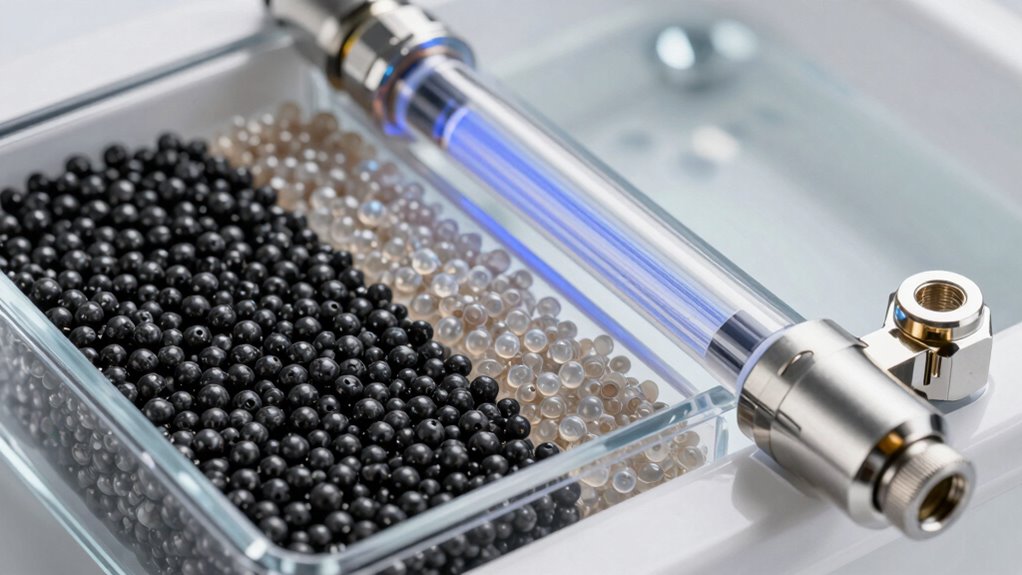
If you’re looking to enhance your water quality, combining carbon filtration, water softeners, and UV sterilization offers an effective solution. Each component plays a crucial role in improving your water, but together, they create an all-encompassing system that tackles multiple issues at once. One of the first benefits you’ll notice is an improvement in water taste. Carbon filters are excellent at removing chlorine, chloramines, and volatile organic compounds (VOCs), which are often responsible for that unpleasant, chemical-like taste in tap water. By eliminating these contaminants, your water becomes clearer, fresher, and more appealing to drink straight from the tap.
Combining carbon filters, water softeners, and UV sterilization greatly improves water taste, safety, and quality.
Mineral removal is another key advantage of this trio. Hard water contains excess minerals like calcium and magnesium, which can cause scale buildup in appliances and make soap less effective. Water softeners work by exchanging these minerals with sodium or potassium ions, effectively softening your water. This process not only protects your plumbing and appliances but also improves the overall quality of your water, especially for washing and bathing. When combined with carbon filtration, the softened water also benefits from the removal of other impurities, ensuring that what reaches your tap is not just soft but also cleaner and safer.
UV sterilization completes this system by targeting bacteria, viruses, and other microorganisms that can be present in your water supply. While carbon filters and softeners do a good job at removing chemical contaminants and minerals, they don’t eliminate biological threats. UV light disrupts the DNA of harmful pathogens, rendering them inactive and preventing waterborne illnesses. This step is particularly important if your water source is from a well or an untreated municipal supply.
Additionally, the integration of UV sterilization enhances the system’s overall effectiveness by providing a biological safety barrier that other filtration methods cannot achieve alone. Putting these three technologies together creates a layered defense, addressing common water concerns thoroughly. The carbon filter improves the water’s flavor and removes organic chemicals, giving you better-tasting water. The softener ensures your water is gentle on your skin, hair, and appliances, while also reducing limescale buildup caused by minerals. UV sterilization adds a critical biological safety layer, eliminating pathogens that might slip through the other filters. This combination doesn’t just improve your water; it elevates your entire home’s water experience, providing cleaner, safer, and better-tasting water with minimal maintenance. When you understand how each component works synergistically, it’s clear why this “golden” combo is considered one of the most effective water treatment layouts available today.
Frequently Asked Questions
How Often Should the Carbon Filter Be Replaced?
You should replace your carbon filter every 6 to 12 months, depending on your water usage and quality. The filter lifespan varies based on the amount of contaminants it removes, so it’s crucial to monitor for signs of reduced flow or taste changes. Regular replacement guarantees peak filtration and prevents buildup. To maintain system efficiency, follow the manufacturer’s recommended replacement frequency and check the filter regularly.
Can This System Remove Heavy Metals Effectively?
Yes, this system effectively removes heavy metals, thanks to its high filtration efficiency. The activated carbon filter targets contaminants like lead, mercury, and other heavy metals, reducing their levels considerably. Regular maintenance guarantees peak performance, so replacing the carbon filter on schedule is vital. With this setup, you can trust that your water is safer and free from harmful heavy metals, providing peace of mind for your household.
Is UV Filtration Safe for All Water Types?
UV filtration is generally safe for most water types, but you should verify UV safety and water compatibility first. UV systems effectively disinfect water by killing bacteria and viruses without adding chemicals, making them safe for drinking. However, if your water contains high levels of organic matter or sediments, it might reduce UV efficiency. Always confirm your water quality aligns with UV system specifications to guarantee safe, effective filtration.
What Maintenance Is Required for the Softener?
You need to regularly check your water softener to keep it working efficiently. Typically, this involves monitoring the salt levels and refilling the salt to guarantee proper resin regeneration. You should also periodically inspect the resin tank for any buildup or issues. Performing annual maintenance, like cleaning the resin bed and checking for leaks, helps maintain ideal water softening and prolongs the lifespan of your system.
Does the System Affect Water Taste and Odor?
Did you know that over 85% of water complaints relate to taste and odor? Your system effectively improves water flavor and odor control by removing chlorine, organic compounds, and other impurities. It guarantees your water tastes fresh and clean, free from unwanted odors. The combination of carbon, softener, and UV treatment works synergistically to enhance your water quality, giving you peace of mind and better-tasting water every time you turn on the tap.
Conclusion
Now that you understand the powerful trio of carbon, softener, and UV, you’re armed to transform your water like never before. This combo isn’t just effective—it’s a game-changer, turning your tap into a fountain of pure, crisp refreshment. Don’t settle for mediocre water when you can access a level of purity that feels almost miraculous. Embrace this ‘golden’ layout and watch as your water quality skyrockets into a league of its own—truly, it’s the ultimate upgrade.