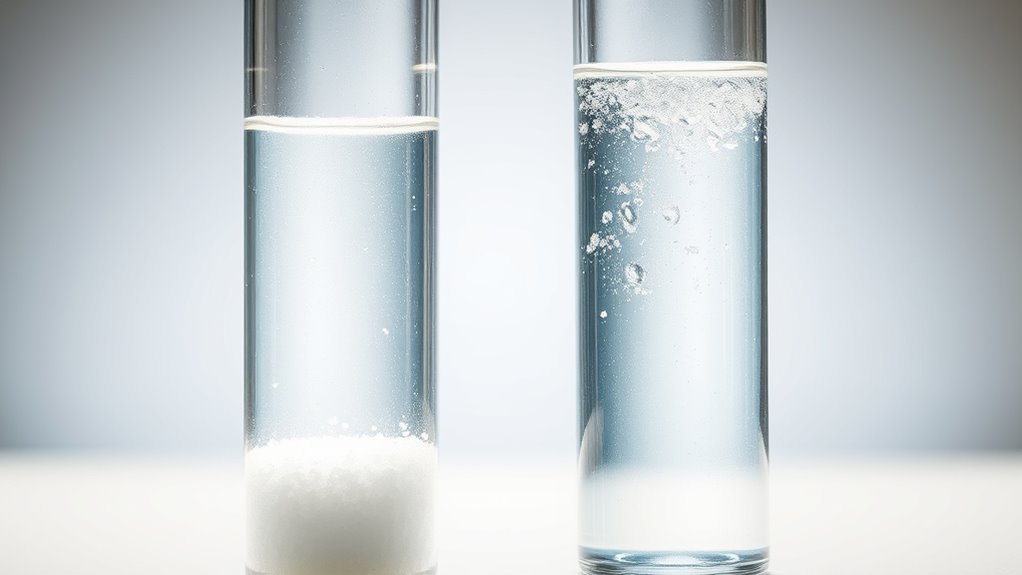

If you want quick softening results in just 15 minutes, salt-based systems are your best choice. They quickly exchange calcium and magnesium ions with sodium, effectively reducing mineral buildup and delivering soft water fast. Salt-free systems achieve similar effects through physical processes but may take longer or be less aggressive. To make the most eco-friendly and sustainable decision, explore how each system works and their long-term benefits — stay tuned for more insights.
Key Takeaways
- Salt-based systems provide rapid mineral removal through regeneration, often delivering results within 15 minutes.
- Salt-free systems achieve softening through physical processes that may take longer but are eco-friendly.
- Installation of salt-free units is quicker and less invasive, often completed in under 15 minutes.
- Salt-based systems require more setup time, including plumbing modifications and salt refilling, exceeding 15 minutes.
- Both systems can offer quick softening, but salt-based units are typically faster immediately after regeneration.
How Salt-Based Systems Deliver Rapid Softening Results

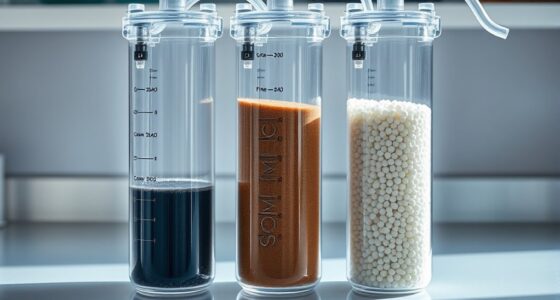
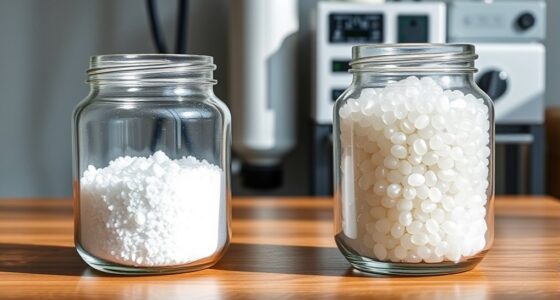
Salt-based water softeners quickly reduce hard water minerals by exchanging calcium and magnesium ions with sodium. This process involves regular regeneration cycles, where the resin beads are recharged with salty brine, restoring their ability to remove minerals. During mineral removal, the resin captures calcium and magnesium, preventing scale buildup and improving water softness. The regeneration cycle guarantees the system remains effective, providing rapid softening results without delay. You’ll notice the benefits immediately, as the system efficiently clears out mineral deposits from your water. Thanks to this cycle, the softener maintains peak performance, delivering consistently soft water. This quick and effective process makes salt-based systems a reliable choice for those seeking fast, long-lasting softening. Additionally, the regeneration process ensures ongoing efficiency and extends the lifespan of your softening system.
The Eco-Friendly Edge of Salt-Free Water Softening
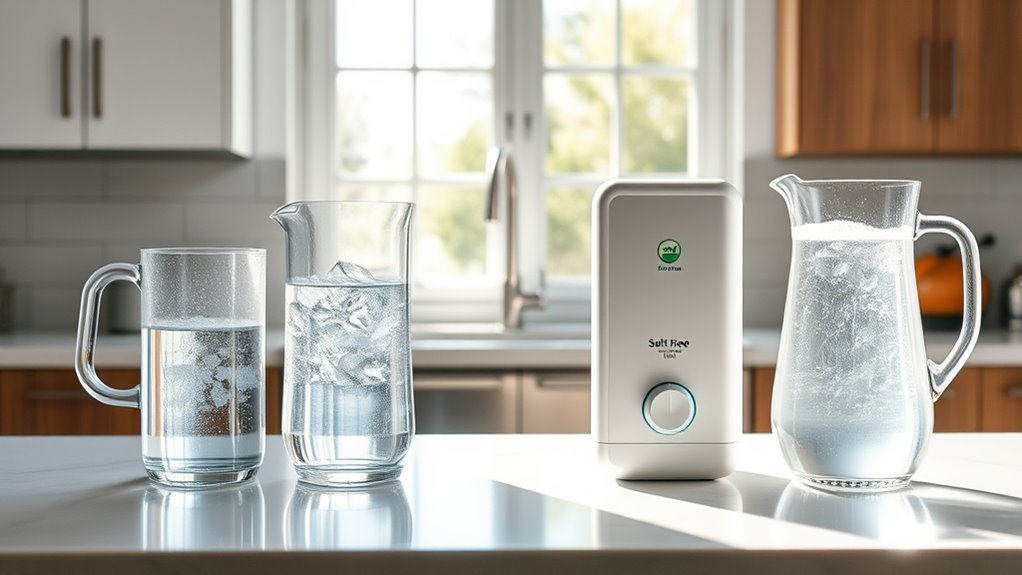
Salt-free water softeners promote environmental health by reducing chemical use and waste. They offer a chemical-free approach that’s safer for your home and the planet. Choosing salt-free systems supports sustainable living and minimizes ecological impact. Additionally, they do not produce excess waste or byproducts, making them an eco-conscious choice for environmentally aware consumers.
Environmental Impact Reduction
Because it eliminates the need for salt and chemical regenerants, salt-free water softening systems considerably reduce environmental pollution. By choosing this eco-friendly option, you support water conservation and make eco-conscious choices that positively impact the planet. You can feel good knowing your decision minimizes salt runoff, which can harm local ecosystems. Here are three ways this system benefits the environment:
- Reduces salt discharge into waterways, protecting aquatic life.
- Lowers energy consumption compared to traditional methods.
- Decreases chemical waste, promoting cleaner soil and water sources.
- Sustainable water management practices are further enhanced by adopting salt-free systems, ensuring long-term resource preservation.
Your choice promotes a healthier environment and demonstrates a commitment to sustainable living. It’s an easy yet powerful way to make a difference—saving water and reducing pollution for future generations.
Chemical-Free Water Treatment
Choosing a chemical-free water treatment method amplifies your commitment to eco-friendly living by eliminating the need for harmful chemicals in your water system. Salt-free systems focus on physical processes like water mineralization, which adjusts mineral content naturally, reducing scale buildup without chemicals. They also promote pH balancing, helping maintain stable acidity levels that prevent corrosion and improve water quality. Unlike traditional methods, these systems don’t introduce additives or rely on salt, making them safer for the environment and your household. By avoiding chemical treatments, you reduce chemical runoff and wastewater contamination. This approach guarantees your water remains pure and balanced, supporting sustainable living while protecting aquatic ecosystems. Additionally, chemical-free water treatment aligns with digital literacy by providing transparent and safe options for consumers seeking environmentally responsible choices. Chemical-free water treatment offers a clean, eco-conscious alternative that aligns with your green lifestyle goals.
Sustainable Living Benefits
Opting for salt-free water softening systems enhances your commitment to sustainable living by reducing environmental impact. These systems improve water quality without producing salty wastewater, helping protect ecosystems. Plus, they promote health benefits by avoiding excess sodium intake from softened water, supporting your well-being. Additionally, salt-free systems often incorporate beneficial ingredients like collagen and hyaluronic acid, which can help maintain the natural moisture and health of your skin.
Speed and Efficiency: Comparing Installation and Setup Times
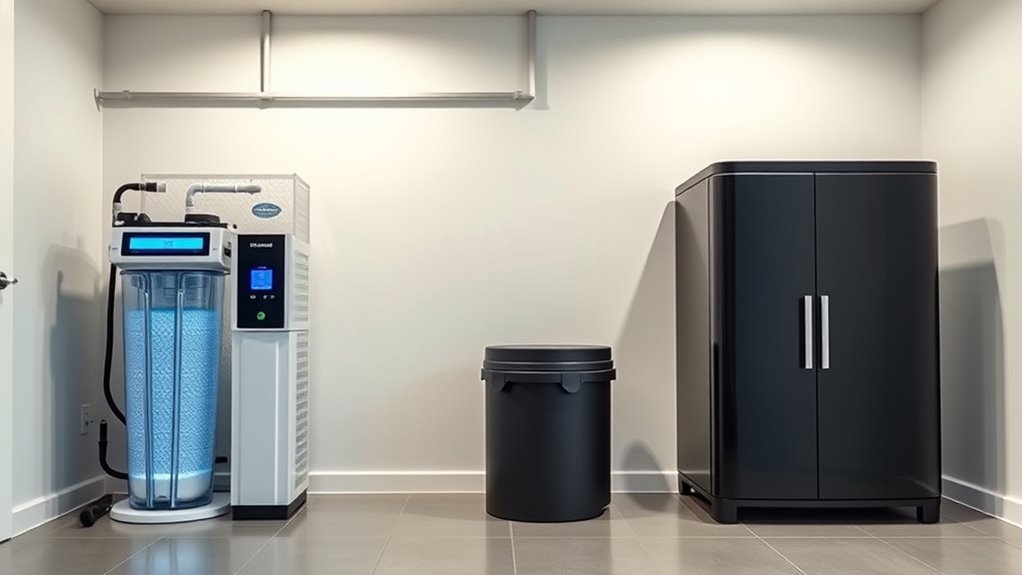
When it comes to installation and setup, salt-free water softeners generally take less time to install than their salt-based counterparts. Their design simplifies the process, reducing installation time and improving setup efficiency. Salt-free systems often require fewer connections and less plumbing modifications, making them more straightforward to configure. You won’t need to handle tanks, brine lines, or salt refills, which speeds up the overall process. Salt-based systems involve more steps, such as installing a resin tank, brine tank, and control valves, all of which extend setup time. With salt-free options, you can often complete installation in a fraction of the time, making them the ideal choice if quick setup is a priority. Overall, salt-free softeners excel in installation speed and setup efficiency. Proper installation is crucial to ensure optimal performance and longevity of the system.
Maintenance and Operating Costs in Short-Term Perspectives
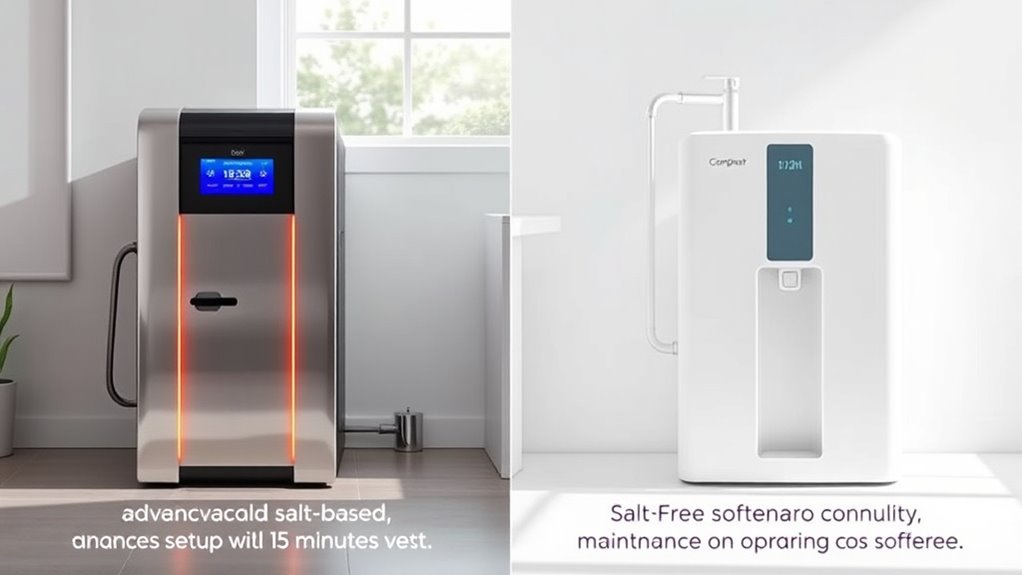
In the short term, salt-free water softeners typically have lower maintenance and operating costs compared to salt-based systems. You’ll benefit from minimal ongoing expenses, as salt-free models don’t require salt refills or regeneration cycles. This results in a more predictable cost comparison and fewer surprises. Additionally, many salt-free systems come with extensive warranty coverage, reducing repair costs during the initial period. Moreover, vetted products ensure safety and effectiveness, which can further decrease the likelihood of costly repairs or replacements.
Environmental Impact and Sustainability Considerations
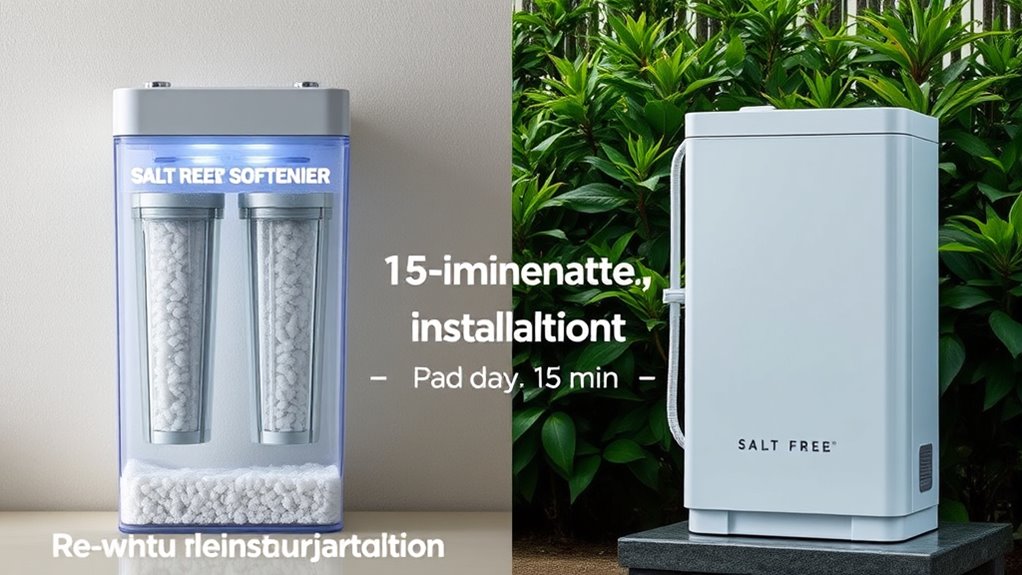
You should consider how each softening method affects resource use and waste production, as these impact the environment over time. Salt-based systems often require ongoing salt supplies and generate brine waste, while salt-free options typically use less consumables and produce fewer pollutants. Exploring eco-friendly operation methods can help you choose solutions that support sustainability and reduce your environmental footprint. Additionally, understanding the raw food principles can inspire more sustainable and health-conscious choices in other areas of resource management.
Resource Consumption and Waste
Salt-based water softeners typically consume more resources and generate more waste than salt-free systems, raising environmental concerns. They use significant amounts of salt and water, impacting resource efficiency and complicating waste management. This high resource consumption can lead to increased energy use and environmental strain. Consider these impacts:
- Excess salt waste can pollute local water sources, harming ecosystems.
- Frequent regeneration cycles waste large volumes of water, straining supply systems.
- Discarded salt pellets contribute to landfill accumulation and environmental degradation.
- The overall resource efficiency of salt-based systems is often lower compared to salt-free alternatives, further emphasizing their environmental footprint.
Eco-Friendly Operation Methods
Eco-friendly operation methods focus on minimizing environmental impact and promoting sustainability. When choosing between salt-based and salt-free systems, consider how each affects water pH and mineral levels. Salt-based softeners often discharge brine, which can raise salinity and harm aquatic ecosystems, while also altering water pH. Salt-free models typically have a lower environmental footprint, relying on media that condition water without adding chemicals or waste. They maintain natural mineral levels, preserving the water’s health benefits. To operate sustainably, regularly monitor your system to avoid excessive mineral removal or pH imbalance. Additionally, understanding the environmental impact of water softening can help you make more informed choices. By selecting eco-friendly methods, you reduce chemical usage, waste, and potential harm to the environment, ensuring your water softening process supports both your needs and the planet’s health.
Which System Offers the Best Quick Solution for Homeowners

When homeowners need a quick solution to softening hard water, salt-free systems often provide the fastest turnaround. They’re simple to install, usually requiring minimal plumbing changes, which appeals to those prioritizing ease and speed. Homeowner preferences vary, with some seeking instant results and others valuing convenience over long-term maintenance.
In terms of quick solutions:
- Salt-free systems often install in under an hour, making them ideal for immediate needs.
- They require little to no ongoing maintenance, saving time and effort.
- Their non-invasive setup reduces disruption, allowing you to enjoy softer water immediately.
If you want a fast, straightforward fix with minimal hassle, salt-free systems are your best bet for quick results.
Frequently Asked Questions
Are Salt-Based Systems Safe for All Household Water Types?
Salt-based systems are generally safe for most household water types, but you should consider salt health and water compatibility. If your water has high sodium levels, this system might increase salt intake, affecting health. Also, check if your water’s mineral content supports salt-based softening without causing issues. Always test your water and consult a professional to ensure the system suits your water quality and health needs.
Can Salt-Free Systems Effectively Treat Very Hard Water?
Imagine you’re back in the 1800s, wondering if salt-free systems can tackle very hard water. They can, but with limitations. While they reduce salinity concerns and have a lower environmental impact, they might not be as effective for extremely hard water. For high mineral content, salt-based systems often outperform salt-free options, so consider your water hardness and environmental priorities before choosing the best solution for your home.
How Do Softening Methods Impact Water Taste and Odor?
You’ll notice that softening methods influence water flavor and odor control considerably. Salt-based systems often improve taste by reducing minerals that cause bitterness, while salt-free systems maintain a more natural flavor but may not fully eliminate odors caused by sulfur or other substances. Your choice affects how fresh or clean your water tastes and smells, so consider your preferences and water quality issues when selecting a softening method.
Are There Any Health Risks Associated With Salt-Based Softening?
Think of salt-based softening as adding a pinch of salt to a recipe; it’s generally safe, but health concerns may arise if you’re sensitive to sodium or have high blood pressure. Excessive sodium intake can impact your health, so consider your personal health risks. While softening methods are safe for most, it’s wise to monitor your sodium consumption and consult your doctor if you have concerns about salt intake or related health issues.
Which System Requires Less Space for Installation?
You’ll find that salt-free water softening systems generally require less space for installation. Their compact design offers better space efficiency and a smaller installation footprint, making them ideal if you have limited room. In contrast, advanced salt-based systems tend to need more space due to their larger tanks and additional components. If space is a priority, opting for a salt-free system provides a more streamlined, space-saving solution for your home or business.
Conclusion
In just 15 minutes, you could transform your home’s water quality forever, choosing between lightning-fast salt-based systems or the eco-warrior salt-free options. Don’t settle for sluggish solutions that waste your time and drain your wallet—embrace the ultimate quick fix that outpaces all others. With the power to revolutionize your water in mere moments, you’ll wonder how you ever lived without this groundbreaking upgrade. The future of softening is here—are you ready to seize it?