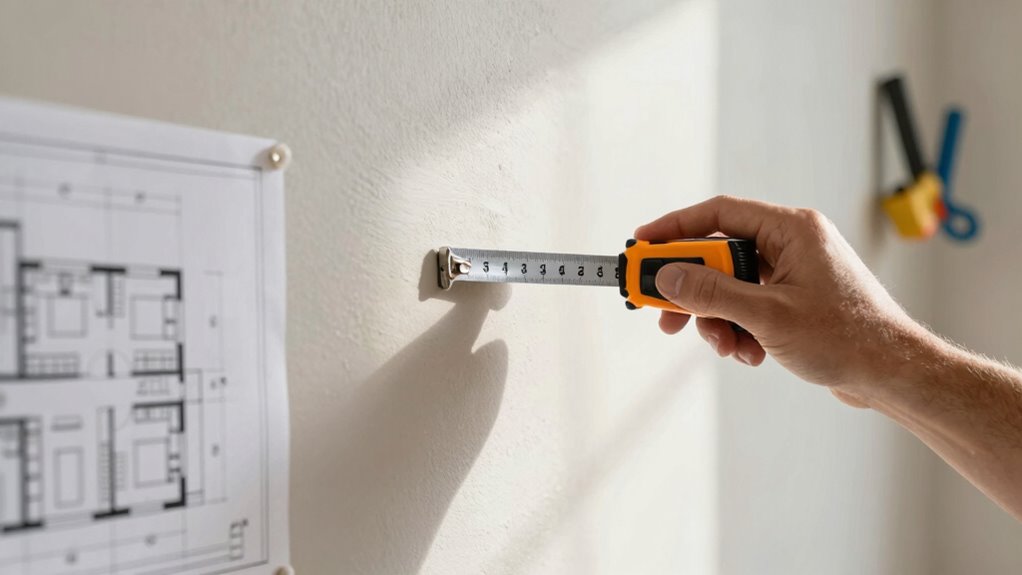

To size your spaces for future remodels, start by planning room dimensions that allow for easy reconfiguration, like wider hallways and oversized doorways. Identify load-bearing walls early, so you know which can be modified later, and plan plumbing and electrical lines with future expansions in mind. Incorporate flexible structural elements and accessible utility areas now, so you’re better prepared for changes without costly overhauls. If you keep these tips in mind, you’ll set a solid foundation for smooth future updates.
Key Takeaways
- Plan room dimensions and doorways generously to allow for easy future reconfiguration and expansion.
- Incorporate flexible structural elements, like beams, and identify load-bearing walls early to facilitate modifications.
- Run extra plumbing, electrical wiring, and outlets during initial construction for easier future upgrades.
- Ensure foundation strength and stability to support future remodels and expansions safely.
- Design accessible utility and storage spaces to minimize disruption during future updates and renovations.

Planning your space carefully now guarantees your home can accommodate future remodels without costly or disruptive changes. When you focus on effective space planning from the beginning, you set a solid foundation that makes future updates smoother and more affordable. A key part of this process is understanding how to size your current layout to meet both your needs today and potential demands later. This involves not only considering how much space you need now but also anticipating how your lifestyle might evolve.
Careful space planning today ensures future remodels are smooth, affordable, and minimally disruptive.
One of the most critical aspects of future-proofing your home is paying attention to structural considerations. These are the elements that support the building—walls, beams, foundations—and they influence how much you can modify or expand your space without major reconstruction. To avoid costly surprises later, you should identify load-bearing walls early and plan your layout around them. This way, you know which walls can be removed or altered during a remodel and which ones require extra support or reinforcement. Incorporate flexible structural elements, like beams that can carry additional weight, to create more open, adaptable spaces in the future.
When you’re doing space planning, think about the dimensions of rooms and doorways. Oversized doorways or wider hallways can make it easier to reconfigure spaces later on. Also, consider the placement of plumbing and electrical systems. Planning for future additions—like a new bathroom or expanded kitchen—means running pipes and wiring in ways that won’t hinder potential changes. Installing extra wiring, outlets, or plumbing lines now can save time and money later, especially if you anticipate adding new features or expanding existing ones.
Another crucial structural consideration is foundation strength. If your home has a strong, well-designed foundation, it provides more options for expansion or renovation. Weak or uneven foundations might limit your remodeling plans or require costly fixes down the line. Consulting with structural engineers during the initial planning ensures your home can handle future modifications without compromising safety or stability.
Finally, think about storage and utility spaces. Incorporating built-in storage solutions and accessible utility areas into your design can make future updates less disruptive. When these elements are well-planned, you won’t need to dismantle large portions of your home during renovations. Additionally, understanding the European cloud infrastructure options available can provide innovative solutions for integrating smart storage and utility management systems that support future adaptability.
Frequently Asked Questions
How Do I Estimate Future Space Needs Accurately?
You can estimate your future space needs by focusing on effective space planning and growth forecasting. Start by analyzing your current usage and project how your team or operations will expand. Consider trends, upcoming projects, and potential changes in your business. Use these insights to create scalable layouts, ensuring flexibility for growth. Regularly revisiting and adjusting your plans will help you avoid costly remodels later, keeping your space aligned with your evolving needs.
What Materials Are Best for Flexible Remodels?
You might think choosing the most durable materials is enough, but for flexible remodels, go for modular furniture and flexible wall systems. They allow you to adapt easily without costly replacements. Ironically, the best materials are those that can change with you—think lightweight, versatile, and easy to reconfigure. This way, your space stays stylish and functional, no matter how your needs evolve.
How Can I Plan Electrical Systems for Future Expansions?
You should plan your electrical system with extra capacity and flexible wiring options to accommodate future expansions. Install additional circuits and conduit runs now, and incorporate wireless technology to support smart home devices. This approach guarantees you can easily upgrade or add new features later without major rewiring. By integrating smart wiring solutions, you make future remodels smoother, saving time and costs while creating a more adaptable, tech-enabled home.
What Design Features Facilitate Easy Future Updates?
You should incorporate design features like modular furniture and smart technology to facilitate easy future updates. Modular furniture allows you to reconfigure spaces quickly, adapting to new needs without major renovations. Smart technology systems can be expanded or upgraded effortlessly, ensuring your home stays current. Planning for accessible wiring and flexible layouts also makes future updates smoother, saving you time and money down the line.
How Can I Budget Effectively for Future Remodels?
Imagine the peace of mind knowing your home can evolve without costly overhauls. To budget effectively, prioritize versatile storage solutions and plan for lighting upgrades that can adapt over time. Allocate funds for flexible materials and fixtures, and set aside a contingency fund for unexpected needs. This approach guarantees you’re prepared for future remodels, making updates smoother and more affordable, while maintaining the comfort and style you love today.
Conclusion
By planning ahead and sizing wisely, you set the stage for a smoother remodel, avoiding the headache of constant updates. Think of it as planting a seed—you nurture it now so it can flourish later. When you consider future needs, you’re not just building for today; you’re creating a space that grows with you. So, embrace the foresight—after all, the best homes are those that evolve gracefully with your changing needs.