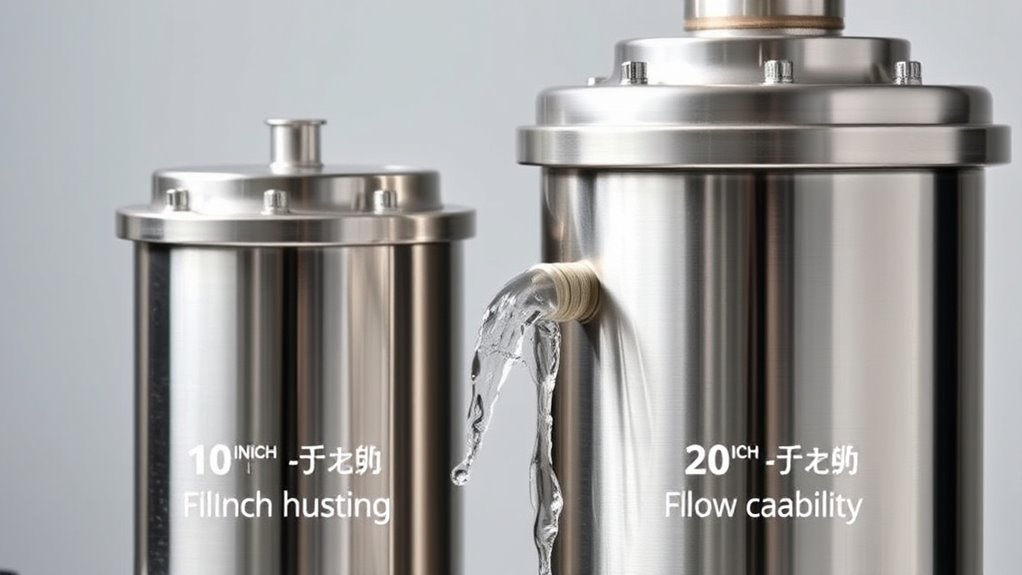

When choosing between a 10-inch or 20-inch filter housing, consider your water flow needs and desired longevity. A 10-inch unit suits smaller households or point-of-use applications with moderate flow, while a 20-inch housing supports higher flow rates and longer service intervals ideal for larger families or commercial use. Larger sizes help reduce maintenance and improve system performance over time. To make the best choice for your setup, keep exploring the key differences and advantages further.

Get home appliances delivered free — and shop member deals
- Fast, free delivery on millions of items
- Access to Prime Big Deal Days deals on October 6–7
- Prime Video, Amazon Music and more included
Key Takeaways
- 10-inch housings suit residential use with moderate pressure, while 20-inch units support higher flow rates and fluctuating pressures.
- Larger 20-inch housings contain bigger filters, enabling longer service intervals and improved longevity.
- 20-inch housings reduce pressure drops, maintaining steady flow and optimizing system performance.
- Smaller 10-inch housings require more frequent cartridge replacements, increasing maintenance frequency.
- Proper size selection based on water demand and pressure ensures efficient filtration and reduces operational costs.
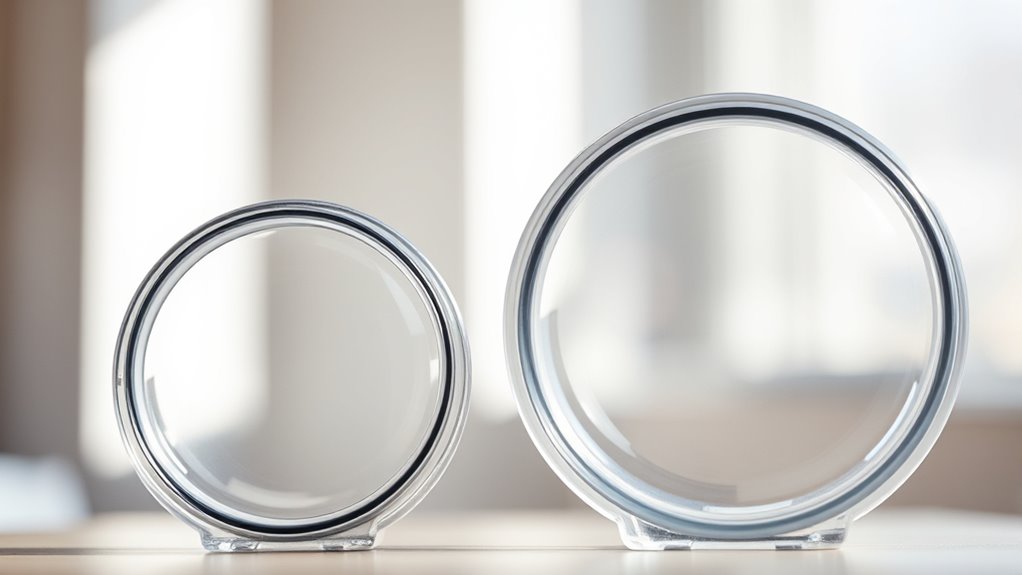
Choosing the right filter housing size is vital to guarantee your filtration system works efficiently and meets your specific needs. Whether you opt for a 10-inch or a 20-inch housing, understanding how size impacts water pressure, flow rate, and longevity helps you make an informed decision. Smaller housings are often more compact and easier to install, but they may restrict flow and require more frequent replacements. Larger housings, on the other hand, can handle higher flow rates and longer service life, but they demand more space and a careful review of your system’s installation guidelines.
Choosing the right filter size ensures optimal system performance and longevity.
When considering water pressure, size plays an important role. A 10-inch filter housing typically handles lower flow rates, making it suitable for residential settings with moderate water pressure. If your system experiences fluctuating or high water pressure, a 20-inch housing can better accommodate these variations by reducing the risk of pressure drops and maintaining steady flow. But remember, installing a larger housing may require adjustments to your plumbing setup to ensure it can handle the increased volume without causing strain or leaks. Always check the installation guidelines provided by the manufacturer to verify compatibility with your existing system and to avoid pressure-related issues.
Flow rate is another critical factor. A 10-inch housing often provides adequate filtration for small households or point-of-use applications. However, if you need a higher flow rate for larger families or commercial use, the 20-inch housing offers a significant advantage. It allows more water to pass through simultaneously, improving efficiency and reducing wait times. That said, larger units also mean larger filter cartridges, which need to be replaced less frequently, extending the time between maintenance tasks and reducing overall downtime.
Longevity is a key benefit of opting for a 20-inch filter housing. Because it contains a bigger filter cartridge, it can hold more dirt and contaminants before requiring a change. This results in longer intervals between replacements and lower operational costs over time. Conversely, the 10-inch model, while more affordable upfront, may require more frequent cartridge changes, increasing labor and material costs. When choosing between the two, consider your water quality, usage volume, and the manufacturer’s installation guidelines to ensure your system’s longevity and performance. Additionally, understanding the flow and longevity implications of each size helps optimize your filtration setup for efficiency and cost-effectiveness.
Frequently Asked Questions
How Does Filter Housing Size Affect Maintenance Frequency?
Choosing a larger filter housing, like 20 inch, means you’ll need less frequent filter replacements and cleaning, as it holds more filter media and manages flow better. Conversely, a smaller 10-inch housing requires more frequent maintenance because it has less capacity. So, if you want to reduce maintenance frequency, go for the larger size, which improves longevity and decreases how often you need to replace or clean your filters.
Are 10-Inch Housings Suitable for Commercial Applications?
Like a trusty steed, 10-inch housings can be suitable for small-scale commercial applications, especially if you’re shifting from residential filtration. They’re ideal for lower flow rates and limited space, but for heavy-duty industrial applications, they might fall short. You need to assess your flow demands carefully—if you expect high volume or extended longevity, consider larger housings. Stay vigilant, and choose the size that best matches your operational needs.
Can a 20-Inch Housing Be Used for High Flow Rates?
Yes, a 20-inch housing can handle high flow rates, providing better housing durability and longer filter life. It’s ideal if you need increased capacity, but keep in mind the installation complexity, which is higher compared to smaller housings. Make certain your system can accommodate the larger size and weight, and guarantee proper setup for ideal performance and longevity. This choice offers reliable flow and durability for demanding applications.
What Are the Cost Differences Between 10 and 20-Inch Housings?
A 20-inch housing costs more upfront than a 10-inch, but it may offer better long-term value through increased capacity. The cost comparison shows that larger housings typically come with higher initial prices and installation costs, impacting your budget considerations. While the 10-inch is more affordable initially, it might require more frequent replacements, possibly increasing overall expenses. Weigh these factors to align with your budget and filtration needs effectively.
How Do Filter Housing Sizes Impact Water Quality?
Larger filter housings improve water quality by enhancing filter efficiency and contaminant removal. When you choose a 20-inch housing, you allow for a higher flow rate and longer contact time, which results in better filtering of impurities. This leads to cleaner, safer water. Smaller housings may restrict flow and reduce overall effectiveness, so size directly impacts how well your system removes contaminants and maintains water quality.
Conclusion
Choosing between a 10-inch and 20-inch filter housing isn’t just about size—it’s about balancing flow and longevity. While a smaller housing offers quick filtration for lighter needs, a larger one provides longer-lasting performance for heavy-duty use. Think of it like a race car versus a freight truck: both get you where you need to go, but the right choice depends on your specific flow demands and how often you want to replace filters. Your ideal fit blends efficiency with durability.
NFL season / tailgating Picks
team gear
As an affiliate, we earn on qualifying purchases.