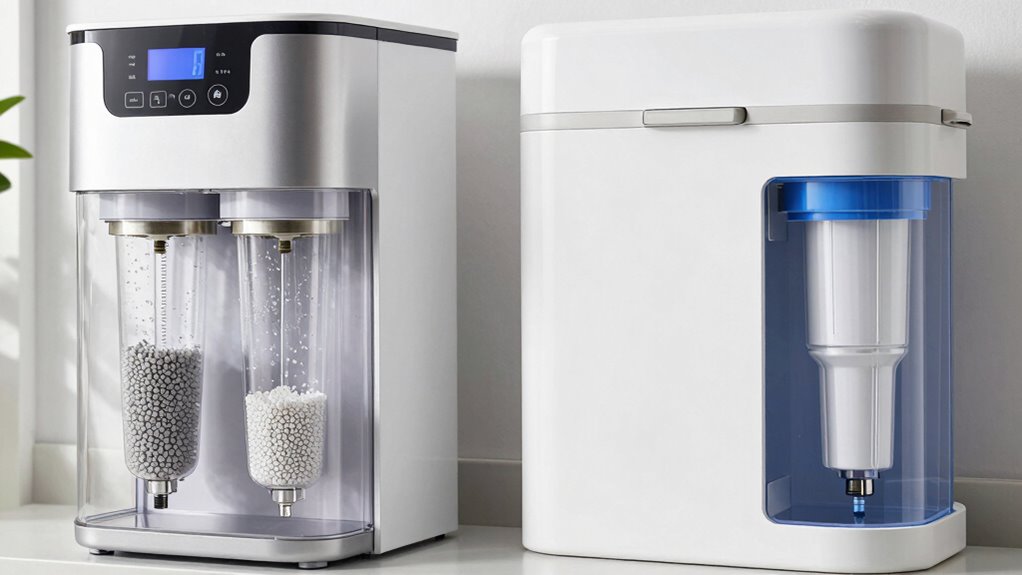
A water softener removes calcium and magnesium ions through ion exchange, effectively preventing scale buildup in appliances and plumbing. A salt-free conditioner, on the other hand, alters mineral behavior using template-assisted crystallization, which keeps minerals dissolved but prevents surface deposits. Softeners are ideal if mineral accumulation causes problems, while salt-free systems suit those wanting scale control without removing minerals. Keep exploring to see which solution best fits your water issues.
Key Takeaways
- Water softeners remove calcium and magnesium minerals to prevent hard water scale buildup in plumbing and appliances.
- Salt-free conditioners alter mineral behavior via crystallization, preventing surface deposits without removing minerals from water.
- Softeners address mineral accumulation issues in appliances, while salt-free systems mainly reduce surface scaling on fixtures.
- Softening requires regeneration with salt or potassium, whereas salt-free conditioners are low-maintenance with no salt needed.
- Choose a softener for comprehensive mineral removal; opt for a salt-free conditioner to prevent surface scale without changing mineral levels.
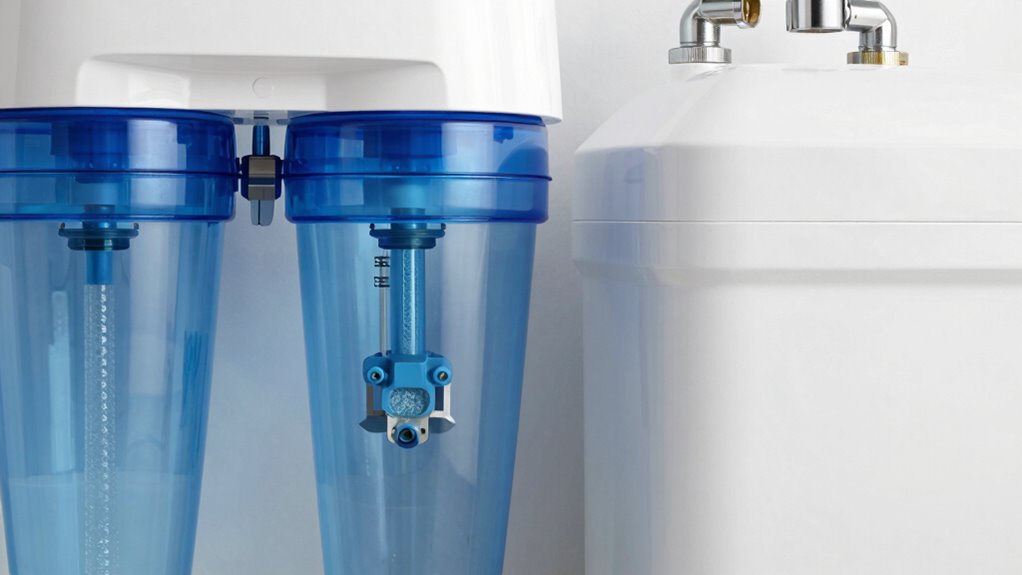
When it comes to treating hard water, choosing between a water softener and a salt-free conditioner can be confusing. Both are designed to address mineral-rich water, but they do so in different ways and target different problems. If you’re tired of dealing with hard water scale and mineral buildup, understanding how each option works will help you make the right choice.
Choosing between a water softener and a salt-free conditioner depends on your specific water issues.
A water softener works by removing calcium and magnesium ions—the primary culprits behind hard water. It uses an ion exchange process, replacing these minerals with sodium or potassium ions. This process effectively prevents the formation of hard water scale on your plumbing, fixtures, and appliances. When hard water flows through a softener, it reduces mineral buildup, which can cause clogged pipes, inefficient heating, and soap scum. Softened water also makes cleaning easier and extends the life of your appliances because it doesn’t leave behind mineral deposits. However, because of the sodium or potassium ions involved, some people with sodium-restricted diets or specific health concerns avoid softeners.
In contrast, a salt-free conditioner doesn’t remove minerals from your water. Instead, it alters the way minerals behave, usually through a process called template-assisted crystallization (TAC). This process converts dissolved calcium and magnesium into tiny, stable crystals that don’t adhere to surfaces. As a result, you won’t see the typical hard water scale forming on fixtures or inside pipes. Salt-free conditioners are often advertised as maintenance-free, requiring little to no salt or regeneration. They work well for preventing mineral buildup on surfaces but aren’t as effective at softening water for certain appliances like water heaters or dishwashers. If your primary concern is surface scaling and mineral deposits, a salt-free conditioner can help keep fixtures cleaner and reduce the need for frequent descaling.
Additionally, the choice between these systems can impact your water quality and the longevity of your plumbing. Ultimately, your choice depends on what problem you want to solve. If you’re dealing with significant hard water scale affecting appliances and plumbing, a water softener provides a more holistic solution by removing the minerals altogether. But if your concern is mainly about mineral buildup on surfaces and reducing scale without changing water chemistry, a salt-free conditioner might be sufficient. Both systems have their pros and cons, but knowing whether you need mineral removal or simply scale prevention makes choosing the right system easier. Consider your water quality, health considerations, and specific issues to decide which option will best meet your needs.
Frequently Asked Questions
Can a Water Softener Remove Iron and Manganese?
Yes, a water softener can remove iron and manganese through iron removal and manganese filtration. It effectively targets these metals when they’re in low to moderate concentrations, preventing staining and buildup. However, if iron or manganese levels are high, you might need a specialized iron filter or oxidizing system. Regular regeneration helps maintain efficiency, ensuring your water stays clear and free of these minerals.
Do Salt-Free Conditioners Eliminate Scale Buildup Completely?
Salt-free conditioners don’t eliminate scale buildup completely, but they do offer effective scaling prevention by reducing mineral deposits. They work by transforming hard minerals into micro-crystals that don’t stick to surfaces, decreasing scale formation. While they considerably cut down on mineral buildup and improve water quality, they don’t remove existing scale or fully prevent it under severe conditions. For thorough scale control, a water softener might be necessary.
How Often Do Salt-Based Systems Require Maintenance?
You’ll need to perform maintenance on your salt-based system roughly every 6 to 12 months, depending on your water usage and the system’s capacity. The maintenance frequency involves refilling the salt tank and occasionally cleaning the resin bed to guarantee ideal salt system upkeep. Regularly checking salt levels and the system’s operation helps prevent issues, ensuring your water softener functions efficiently and prolongs its lifespan.
Are Salt-Free Conditioners Effective in Hard Water With High Mineral Content?
Salt-free conditioners are effective in hard water with high mineral content by reducing mineral buildup and preventing scale formation. They use Template Assisted Crystallization (TAC) technology to convert minerals into micro-crystals, which don’t stick to surfaces. While they don’t remove minerals, they help control scale and improve water quality, making them a good choice if your goal is mineral reduction and scale prevention without adding salt or chemicals.
Which System Is Better for Environmentally Conscious Households?
If you’re looking to go green, a salt-free conditioner is the way to go. It’s more eco-friendly because it doesn’t use salt or produce brine, reducing environmental impact. Plus, it demands less energy and water, making it a better choice for environmentally conscious households. While a water softener tackles hard water, a salt-free system offers a sustainable solution that helps you stay kind to the planet without sacrificing quality.
Conclusion
Choosing between a water softener and a salt-free conditioner depends on your specific needs. A water softener can remove up to 85% of hard minerals, preventing scale buildup and extending your appliances’ life. Meanwhile, a salt-free conditioner offers a low-maintenance, eco-friendly alternative that still helps reduce hard water effects. Consider your water quality and preferences—making the right choice can save you hundreds in repairs and replacements over time.