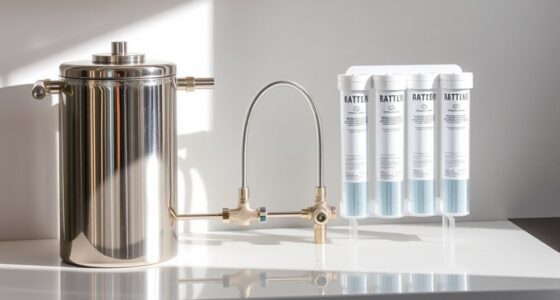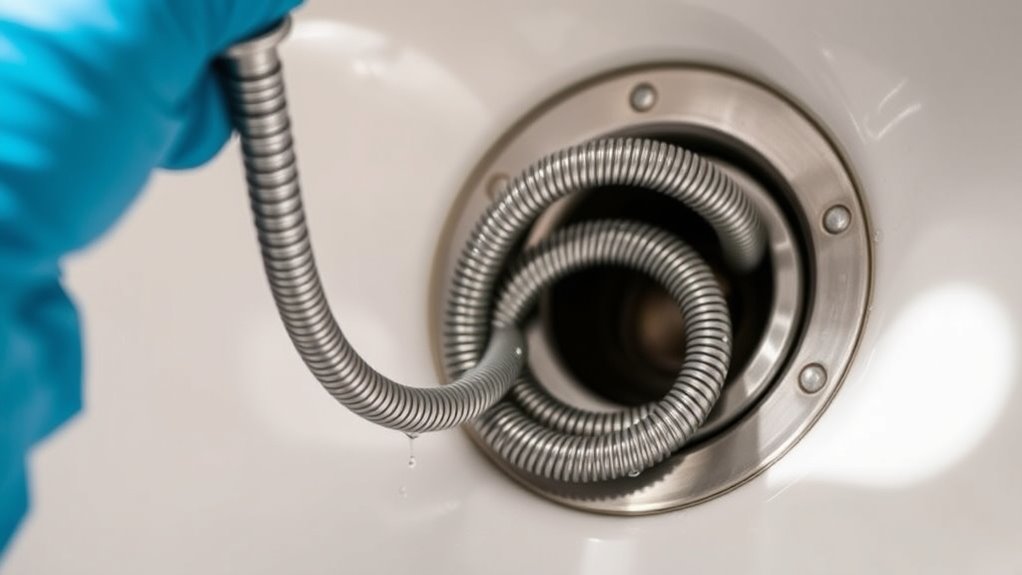

If your drain is slowing down or making gurgling sounds, you might have a clog. Begin by using a plunger or drain snake carefully, and wear gloves for safety. Keep an eye out for foul odors or water backing up, which signal persistent blockages. Regular maintenance like using drain strainers and hot water helps prevent future issues. Stick with it, and you’ll become confident in managing drain line problems before needing a plumber.

Get home appliances delivered free — and shop member deals
- Fast, free delivery on millions of items
- Access to Prime Big Deal Days deals on October 6–7
- Prime Video, Amazon Music and more included
Key Takeaways
- Recognize early signs like slow drainage, gurgling sounds, and odors to address issues promptly.
- Use basic tools such as a plunger and drain snake to clear minor clogs safely.
- Inspect drains regularly with a flashlight and maintain them with eco-friendly cleaners.
- Avoid pouring fats, oils, and large food scraps down drains to prevent future blockages.
- Implement preventative measures like strainers and hot water flushes to keep drains clear.
As an affiliate, we earn on qualifying purchases.
Recognizing the Signs of a Drain Line Clog

A drain line clog often shows itself through noticeable signs that you shouldn’t ignore. You might notice water draining slowly from sinks or bathtubs, or hear gurgling sounds after flushing. A common plumbing myth is that pouring hot water or chemical drain cleaners will fix the problem instantly, but drain cleaning myths like these can be misleading and may even cause damage. You could also see foul odors lingering around drains or water backing up in other fixtures. Recognizing these signs early helps prevent bigger issues later. Keep in mind, don’t fall for quick fixes that promise to solve everything—proper diagnosis is key. Being aware of these warning signs empowers you to take appropriate action and avoid unnecessary repairs. Additionally, understanding how contrast ratio impacts your viewing experience can help you better appreciate quality home cinema setups.
As an affiliate, we earn on qualifying purchases.
Common Causes of Drain Line Blockages
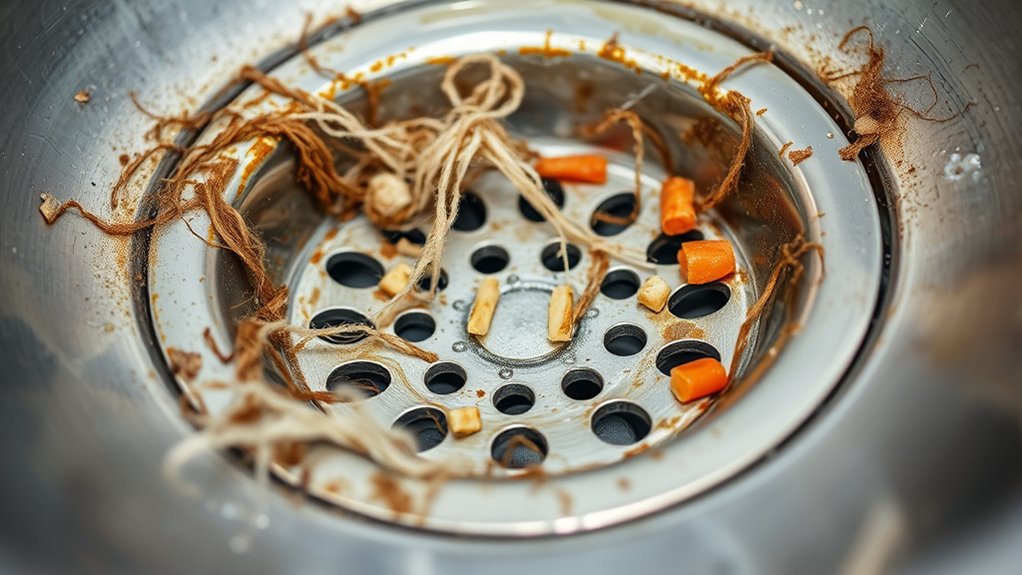
Many common household habits and everyday materials can cause drain line blockages over time. One major culprit is grease buildup, which hardens and sticks to pipe walls, narrowing the passage and eventually leading to blockages. Flushing fats down the drain might seem harmless but creates problems later. Another frequent cause is plant roots; if your sewer line is cracked or damaged, roots can infiltrate and grow inside, obstructing water flow. Hair, soap scum, and food particles also contribute to clogs, especially in kitchen and bathroom drains. Over time, these materials accumulate, reducing pipe capacity and increasing the risk of backups. Being aware of these causes helps you prevent blockages and maintain clear, functional drain lines.
As an affiliate, we earn on qualifying purchases.
Essential Tools and Materials for Clearing Drains

Having the right tools and materials on hand makes clearing drain line blockages much easier and more effective. A plunger is essential for applying water pressure to dislodge minor clogs, while a drain snake or auger helps reach deeper blockages. To combat pipe corrosion, use corrosion-resistant gloves and avoid harsh chemicals that could damage your pipes. A flashlight allows you to inspect for corrosion or damage inside the drain. A bucket and rags are useful for catching water and messes. For stubborn blockages, a plumbing cable or power auger can provide additional force. Remember, applying sufficient water pressure carefully can help loosen debris without damaging your pipes. Properly maintaining drain systems can prevent future blockages and extend the lifespan of your plumbing. Having these tools ready ensures you’re prepared to tackle drain issues confidently and safely.
As an affiliate, we earn on qualifying purchases.
Step-by-Step Methods to Unclog Your Drain
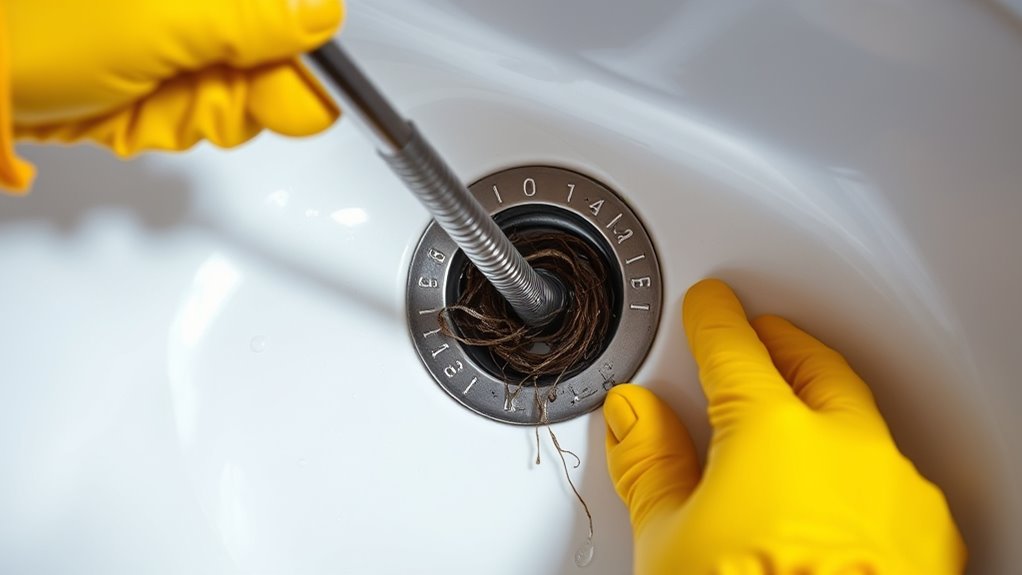
When faced with a clogged drain, your first step is to try a simple manual method before moving on to more advanced tools. Start by removing the drain cover and using a plunger, ensuring a good seal. Pump firmly to dislodge the blockage. Avoid falling for plumbing myths that suggest harsh chemicals are always necessary; many drain cleaning myths can lead to damage or ineffective results. If the plunger doesn’t work, try a drain snake or auger to break up or retrieve the clog. Remember, patience is key. Mechanical methods are often more reliable than relying solely on chemical solutions, which can harm your pipes. Always follow safety instructions and wear gloves, and avoid false claims that quick fixes will solve stubborn blockages overnight. Additionally, regular maintenance, such as using appropriate drain cleaners, can help prevent future clogs and keep your pipes clear.
Preventative Measures to Keep Your Drains Clear

To keep your drains clear and prevent costly clogs, establishing simple routine practices is essential. Using drain strainers helps catch hair, soap scum, and food particles before they enter your pipes. Avoid pouring chemical drain cleaners regularly, as they can damage your pipes over time; instead, opt for natural solutions or enzyme-based cleaners. Regularly flush drains with hot water to dissolve grease buildup. Be mindful of what you dispose of—never pour fats, oils, or large food scraps down the drain. Keep a check on your drain strainers, cleaning them weekly to maintain ideal flow. Additionally, consider periodic use of non-corrosive, eco-friendly cleaning methods to prevent the need for harsh chemicals and keep your drains running smoothly. Proper maintenance is key to ensuring your plumbing remains in good condition over time.
When to Call a Professional Plumber
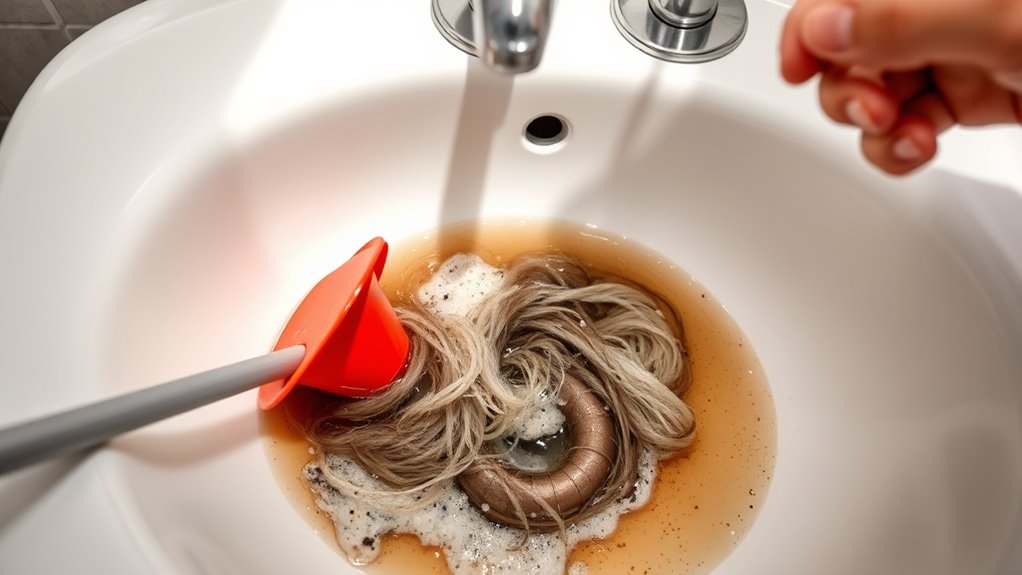
Sometimes, despite your best efforts to maintain clear drains, problems persist or worsen. If you notice persistent clogs, foul odors, or slow drainage, it’s time to call a professional plumber. Attempting DIY safety measures beyond basic unclogging can risk injury or damage, especially if you’re unfamiliar with plumbing regulations. If your efforts haven’t resolved the issue or if you’re unsure about the cause, a licensed plumber has the tools and expertise to diagnose and fix the problem safely. Don’t ignore warning signs that could indicate larger issues, like burst pipes or extensive blockages. Using appropriate tools and techniques designed for plumbing systems can prevent further damage and ensure proper repairs. Knowing when to seek professional help ensures your plumbing system stays in top shape and prevents costly repairs down the line.
Tips for Maintaining Healthy Drain Lines
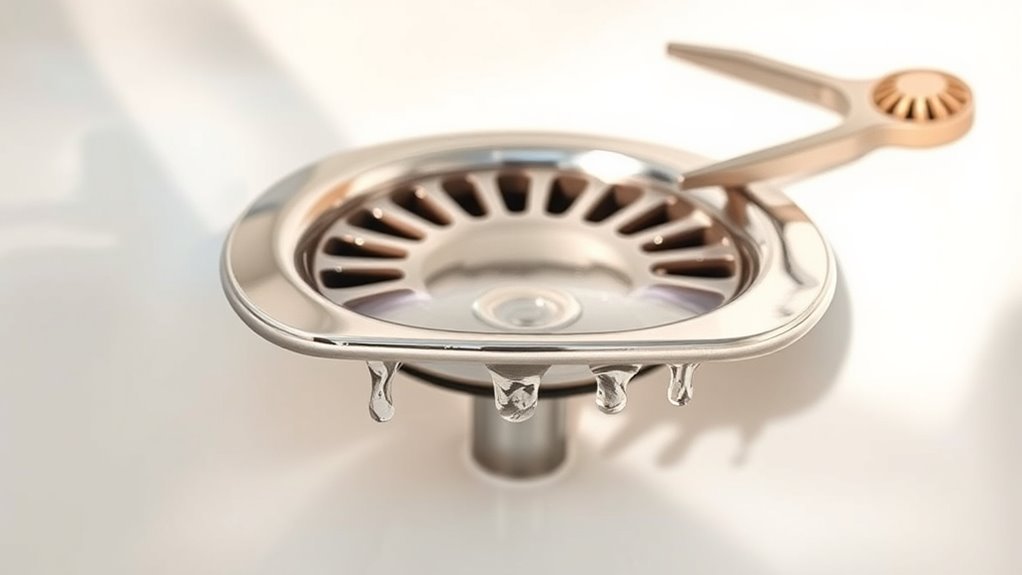
Regularly maintaining your drain lines is essential to prevent clogs and keep your plumbing flowing smoothly. Consistent drain cleaning helps remove buildup before it causes a blockage, saving you from costly repairs. Conduct periodic pipe inspections to identify early signs of damage or slow drains. Here are some tips to keep your drain lines healthy:
- Use drain strainers to catch debris and prevent initial clogs
- Avoid pouring grease or oil down the drain
- Schedule professional pipe inspections annually
- Perform natural drain cleaning with baking soda and vinegar
Additionally, understanding climate control can help you choose the right maintenance practices for your environment. These simple steps help maintain ideal flow and reduce the need for harsh chemical drain cleaners. Regular drain cleaning and inspections are your best defense against drain line issues, ensuring your plumbing stays trouble-free for years to come.
Frequently Asked Questions
How Long Does It Typically Take to Clear a Drain Clog?
It usually takes about 30 minutes to an hour to clear a drain clog, depending on the severity. During drain maintenance, using a plunger or drain snake can quickly break up minor blockages. Regularly practicing clog prevention, like avoiding grease or hair buildup, helps keep your drains flowing smoothly and reduces the time needed for future repairs. Stay proactive to keep your plumbing efficient and hassle-free.
Are Chemical Drain Cleaners Safe for All Types of Pipes?
Chemical drain cleaners aren’t safe for all pipe materials. If your pipes are made of PVC or plastic, harsh chemicals can cause damage or deterioration over time. Metal pipes, like copper or cast iron, might withstand some chemicals better, but safety isn’t guaranteed. Always check the product’s chemical safety and compatibility with your specific pipe material before using. When in doubt, opt for safer, eco-friendly alternatives to protect your plumbing system.
Can Multiple Blockages Occur in Different Drain Lines Simultaneously?
Absolutely, multiple blockages can happen in different drain lines at once, especially in complex plumbing systems with intersections. Imagine your home’s plumbing as a network of highways—when one road is blocked, others might still be clear, but several can clog simultaneously. You might notice slow drains in the kitchen and bathroom, indicating multiple blockages. Regular maintenance and inspections help prevent this chaos and keep your plumbing flowing smoothly.
What Are the Environmental Impacts of Using Chemical Drain Cleaners?
Chemical drain cleaners can harm the environment by releasing toxic substances into water systems. You should consider biodegradable alternatives and eco-friendly solutions to reduce this impact. These options break down naturally without polluting water or harming aquatic life. By choosing eco-conscious products, you help protect the environment while effectively clearing drain blockages. Always read labels and opt for environmentally safe methods to maintain your plumbing responsibly.
How Often Should I Schedule Professional Drain Inspections?
Think of your drain system as the veins of your home—keeping them healthy requires regular check-ups. You should schedule professional drain inspections at least once a year, especially if you notice slow drainage or odors. Proper maintenance scheduling and inspection frequency help catch issues early, preventing costly repairs and ensuring your plumbing runs smoothly. Don’t wait for a crisis; routine inspections keep your home’s flow in perfect harmony.
Conclusion
Now that you’ve tackled drain clogs like a pro, who knew plungers and patience could be so powerful? Ironically, the very things you use to fix a blockage might eventually cause one—like pouring grease down the drain. So, celebrate your newfound confidence, but remember, sometimes it’s smarter to call in the pros before your DIY adventures turn into costly repairs. After all, even drain experts need a break from the mess!
Fall yard work Picks
leaf blowers
As an affiliate, we earn on qualifying purchases.